Ukrainian NGOs urge EU to demand stronger reforms as Brussels reportedly accepts backsliding on rule of law
 on Google
Fifty-nine Ukrainian civil society groups on Nov. 26 called on the European Commission and the Ukrainian authorities to ensure the participation of international experts in reforms of the Supreme Court and the Prosecutor General’s Office.
A Ukrainian civil society source familiar with the negotiations told the Kyiv Independent that representatives of the European Commission have succumbed to the Ukrainian authorities' pressure and agreed that "it was inappropriate to give international experts a decisive role in the selection of Supreme Court judges."
In the past, Ukrainian officials have often backed controversial candidates for top judicial openings, and international experts have been invited to offset their role. Ukraine's anti-corruption and judicial watchdogs believe that international experts are an effective way of ensuring that controversial and tainted candidates are blocked.
There is reportedly an ongoing effort by Ukrainian authorities to reduce the role of international experts on supervisory boards and selection panels in key law enforcement and procurement agencies. Some Ukrainian top officials have said in the past that Ukraine no longer needs international experts.
The report comes as the Ukrainian authorities are dragging their feet on implementing crucial rule-of-law reforms demanded by the European Union. Ukrainian judicial and anti-corruption experts also argue that the European Commission is too lenient with the Ukrainian government and may allow it to get away with botched reforms and even “anti-reforms.”
The Kyiv Independent has requested comments from the European Commission and the Ukrainian authorities and will publish their responses once they are received.
The civil society groups said in a joint statement on Nov. 26 that successful negotiations on Ukraine’s accession to the European Union depend “on how the next months are used, and, above all, on how the two major rule-of-law reforms now underway are conducted: the appointment of Supreme Court judges and the appointment of the Prosecutor General.”
“We therefore call on the Government of Ukraine, the European Union and its Member States to keep independent international experts in a decisive role in both,” the civil society groups argued. “Since 2014, this approach has been the one that has produced lasting results in Ukraine’s rule-of-law institutions. Without it, the reforms are likely to change the form of these institutions but not their substance, and… (Ukraine’s) accession itself would be at risk.”
The non-governmental organizations said that the “introduction of internationally nominated experts and their key role in selections have been the major instrument to deliver real results in the rule-of-law sector.
“The National Anti-Corruption Bureau, the Specialized Anti-Corruption Prosecutor's Office and the High Anti-Corruption Court, all established this way, have shown extraordinary results in fighting corruption,” the NGOs said. “…Where international experts had no decisive role, either because they were absent, as in the previous Supreme Court reform, or because they could only advise, the reform failed.”
Supreme Court reform
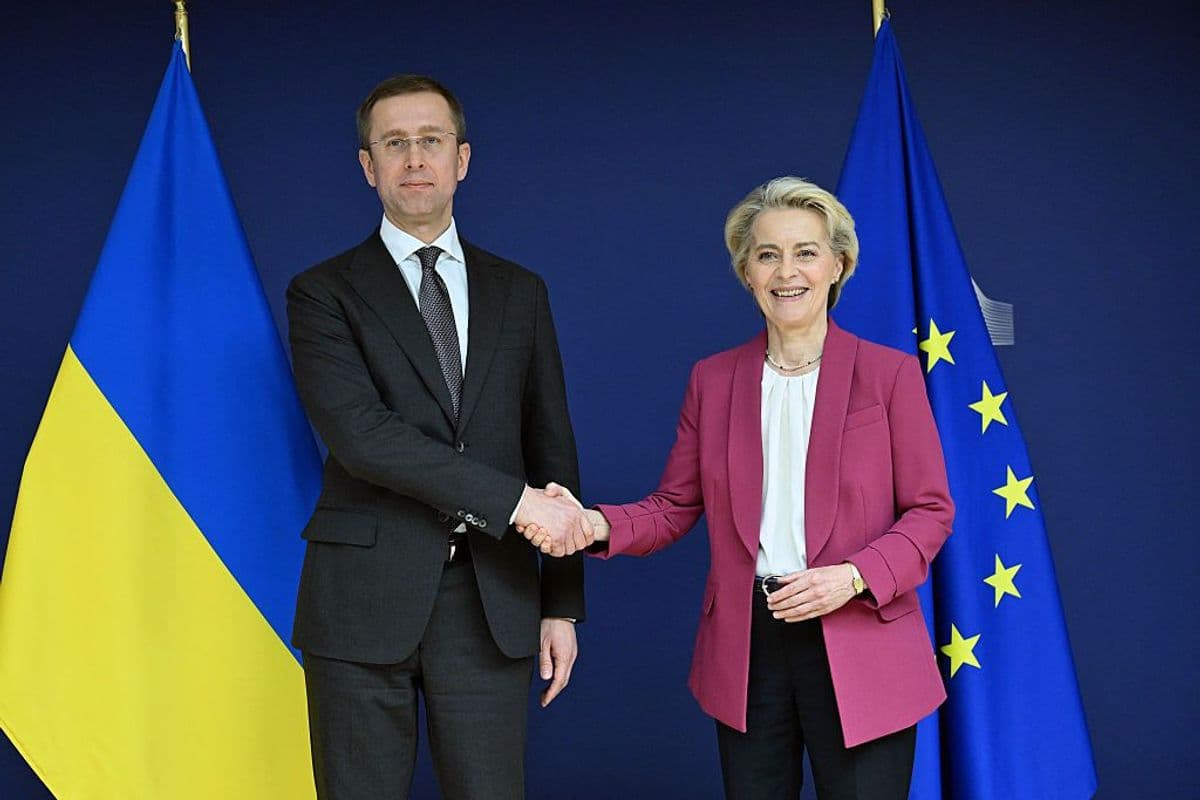
A roadmap approved by EU Enlargement Commissioner Marta Kos and Ukraine's then Deputy Prime Minister for European Integration Taras Kachka in December 2025 envisages auditing the integrity declarations of incumbent Supreme Court judges with the help of international experts.
So far, the Ukrainian authorities have failed to submit a bill on a reform of the Supreme Court, which has been engulfed in corruption scandals.
When the current Supreme Court was created in 2017, a state-sanctioned judicial watchdog established that 22.2% of its judges did not meet integrity and ethics standards, and another 28.8% of the Supreme Court judges could have violated ethics standards.
The authorities ignored the conclusions and appointed the judges nonetheless.
Chickens came home to roost in 2022, when Bohdan Lvov, the Supreme Court’s deputy chairman, was fired due to his concealed Russian citizenship.
The failed reform came back to haunt the judiciary again when a court sentenced Vsevolod Kniazev, a former head of the Supreme Court, to five years in jail for bribery in June 2026.
According to the investigators, Kniazev instructed subordinates to put the money into 13 bags for 13 Supreme Court judges. In May 2026, the National Anti-Corruption Bureau (NABU) charged three incumbent Supreme Court judges and one former judge of the court with receiving bribes in exchange for rulings as part of the same case.
Another EU-linked controversy erupted in September, when the European Union decided to disburse funds to Ukraine in exchange for what Ukrainian experts called a judicial “anti-reform."
The so-called anti-reform is a controversial law on integrity declarations for judges passed by Ukraine in June and heavily criticized by judicial experts. The Ukrainian judicial watchdog Dejure argued in June that "rather than improving the integrity declaration system, (the integrity declarations law) effectively dismantles integrity declarations as a meaningful tool for holding judges accountable."
Prosecutor General's Office
The EU has also demanded a reform of Ukraine's notoriously corrupt and politicized prosecution service and called for making the procedure for picking the prosecutor general less political and more merit-based.
In June, Anastasia Radina, head of parliament's anti-corruption committee from President Volodymyr Zelensky's party, submitted to parliament a bill seeking to select the prosecutor general in a transparent contest with the participation of international experts.
However, the Ukrainian authorities have refused to consider the bill so far.
On Nov. 11, the Ukrainian parliament also passed the first reading of a bill that seeks to re-introduce competitive selection procedures for top prosecutorial jobs, except for the prosecutor general.
However, anti-corruption activists and legal experts have lambasted the recent prosecution reform bill because it does not envisage the participation of any independent or international experts. Prosecutors will dominate all the bodies supposed to reform the prosecution service.
Calls for prosecution reform have intensified since the NABU charged Serhii Kropyva, a top prosecutor, as part of a large-scale corruption case.
Then Prosecutor General Ruslan Kravchenko was fired and fled Ukraine the same month amid speculation that he could face charges in the same investigation.