Ukraine's prosecution service gets a low-profile boss amid high-profile scandals
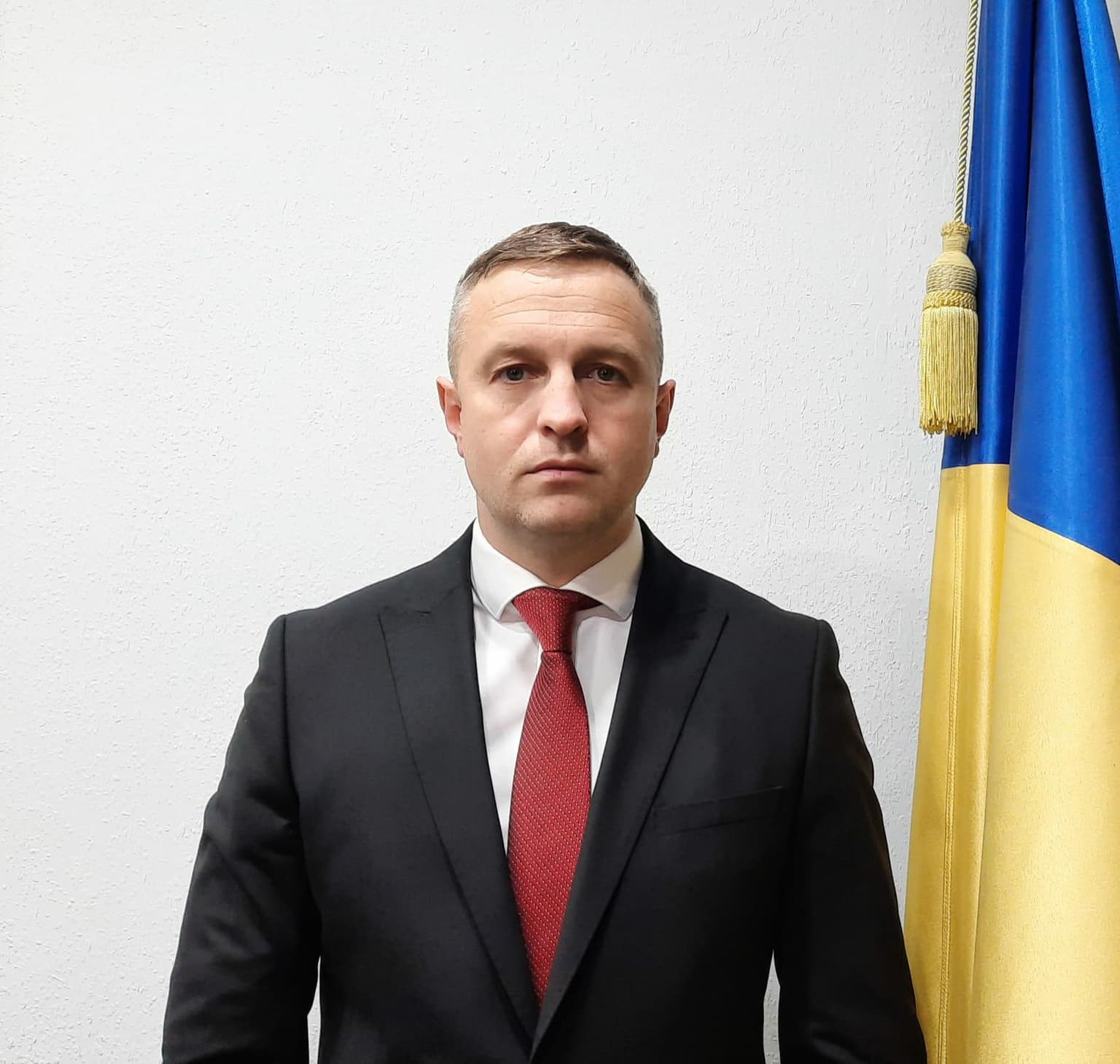
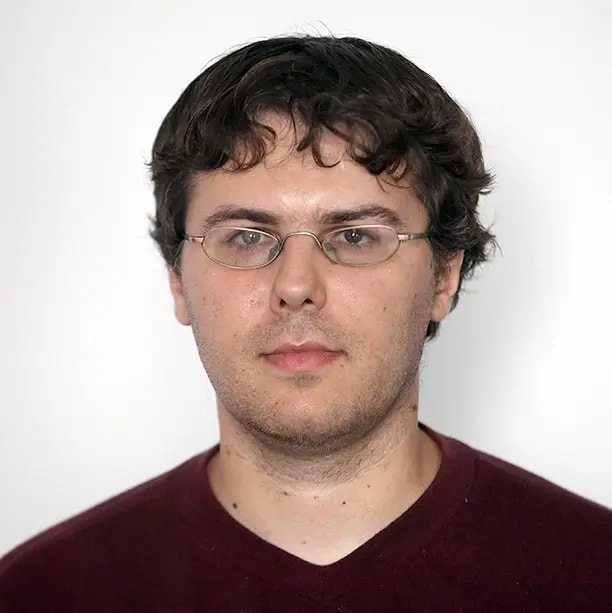
Anton Kovalsky, Ukraine's acting Prosecutor General, in an undated photo. (Khmelnytskyi Regional Prosecutor's Office)
 on Google
Anton Kovalsky, who was appointed as Ukraine's acting prosecutor general on Sept. 17, is taking over a prosecution service mired in scandal and controversy.
His predecessor, Ruslan Kravchenko, fled Ukraine on Sept. 14 amid a large-scale investigation by the National Anti-Corruption Bureau (NABU) into an alleged scam call center protection racket run from the Prosecutor General's Office.
As a result of the investigation, a top prosecutor, described as a "confidant" of Kravchenko, was charged. Publicly revealed evidence hints at Kravchenko being implicated.

In contrast with his predecessor, Kovalsky has kept a low profile until now.
His lack of publicity appears to work in his favor. Analysts say that President Volodymyr Zelensky is likely to choose a prosecutor general not tainted by major scandals.
Nonetheless, anti-corruption activists have raised questions about the assets of Kovalsky and his former subordinates, as well as his wife's business and influential allies.
"The first criterion was whether there were any scandals or red flags in his background — to avoid a repeat of what happened with Kravchenko and make sure he would not become a subject of a corruption investigation in the near future," political analyst Volodymyr Fesenko told the Kyiv Independent.
"Another factor was probably that he is seen as cautious, loyal, and not prone to extremes. He apparently does not display the kind of ambition Kravchenko did — he is more of a low-profile figure."
Will he be appointed as the prosecutor general?
It is not clear when or if Kovalsky's candidacy will be submitted to parliament for appointment as prosecutor general.
"As for candidates for the post of prosecutor general of Ukraine, I have not yet held a single meeting or had any discussions with anyone," Zelensky said on Sept. 25, responding to a question by the Kyiv Independent.
"There may not be enough votes, because there have been too many prosecutor generals in recent years," a lawmaker from Zelensky's Servant of the People party told the Kyiv Independent. "They need to find someone who has the confidence of the president, parliament, and the public alike."
Fesenko also argued that "there is a significant risk that his nomination would not win enough support in the Verkhovna Rada" because nobody knows Kovalsky.
He is unlikely to be nominated for prosecutor general over the next few months, Fesenko said.
"First, (Kovalsky) needs time to settle into the role," he added. "Second, the president needs to get a sense of what kind of person he is — how loyal he will be and whether he will be at least reasonably effective in stabilizing the situation within the prosecution service."
Zelensky is likely interested in keeping Kovalsky as acting prosecutor general because that way he will be dependent only on the president and not on parliament, Yaroslav Yurchyshyn, a lawmaker from the liberal opposition Holos party, told the Kyiv Independent.
Alleged connections
According to sources cited by the media outlets Dzerkalo Tyzhnia and Ukrainska Pravda, Kovalsky may be linked to businessman Illia Pavliuk and ex-prosecutor Ihor Mustetsa.
Both Pavliuk and Mustetsa are from the city of Chernivtsi in western Ukraine, while Kovalsky served as the chief prosecutor of Chernivtsi Oblast from 2021 to 2025.
Mustetsa served as senior deputy of Chernivtsi Oblast's chief prosecutor from 2016 to 2020 and a deputy prosecutor general from 2020 to 2025.


"I crossed paths with Mustetsa back when he worked at the Chernivtsi Oblast Prosecutor's Office," a law enforcement source told the Kyiv Independent. "There were rumors that all the smuggling in the region was under his protection, but those were just rumors. From what I've been told, (Kovalsky) has Mustetsa to thank for his appointment as head of the Chernivtsi Oblast Prosecutor's Office."
The source also confirmed the alleged links between Pavliuk, Mustetsa, and Kovalsky.
Dzerkalo Tyzhnia reported on Sept. 16 that Pavliuk associates had tried to secure Mustetsa's appointment as a deputy of then Prosecutor General Ruslan Riaboshapka in 2019-2020, but Riaboshapka refused due to allegations that Mustetsa protected smuggling schemes.
According to Ukrainska Pravda and Bihus.info, Pavliuk was also accused of running a protection racket for smuggling schemes and controlling a group of lawmakers within the Servant of the People party. His nephew Maksym Pavliuk is a member of parliament from Zelensky's party.
Kovalsky told the Kyiv Independent that he was not acquainted with Pavliuk and that "any suggestion that there are personal, business, or other ties between us is untrue."
Kovalsky said that he is acquainted with Mustetsa and communicated with him "from time to time strictly on work-related matters and solely in the course of performing our official duties" from 2020 to 2025.
"I currently maintain no personal or professional relationship with him," he added. "Neither Illia Pavliuk nor Ihor Mustetsa recommended me for any position, including the post of acting prosecutor general, and neither had any involvement in my appointment."
The Kyiv Independent has requested comments from Pavliuk, Mustetsa, and Riaboshapka and will publish their responses once they are received.
Wife's business
One of the questions raised by anti-corruption activists about Kovalsky concerns his wife's business.
She registered as a businesswoman in 2023 and earned Hr 5.2 million ($120,000) during her first year in business selling sports nutrition products, the Anti-Corruption Action Center reported on Sept. 17.
"Given the nature of the business, such a high level of income for his wife at the very start of her business career raises questions," the watchdog said.
Some family members of Ukrainian officials register businesses that serve as a front for their relatives' illicit income.
"It is basically the classic situation: a prosecutor living on a prosecutor's salary and a wife registered as a sole proprietor who reports income close to the maximum allowed under the relevant tax regime," Tetiana Shevchuk, a lawyer at the Anti-Corruption Action Center, told the Kyiv Independent. "The fact is that his wife earns about three times as much as he does."
Kovalsky told the Kyiv Independent that his wife "has been engaged in business activities since March 2023."
"She currently operates two retail outlets in Vinnytsia, offering products from well-known international brands, including BioTechUSA, Progress Nutrition, and Scitec Nutrition," he said. "She also sells products online."
He also said that Hr 5.2 million declared by his wife for 2023 and Hr 3.55 million declared for 2025 represent total business revenue, not net profit.
"I am not involved in running my wife's business," Kovalsky added. "I report information about her income in my annual asset declarations in accordance with the requirements of Ukrainian law."
A controversial subordinate
Kovalsky served as Khemlnytsky Oblast's chief prosecutor from 2025 to 2026 and appointed Maksym Kuterha as a deputy. He has a controversial reputation.
In 2024, Kuterha and his wife acquired assets with an estimated market value of about $325,000, the media outlet Hromadske reported in January.
Specifically, Kutehra's wife bought a 650-square-meter plot of land in 2024 in a premium gated community in Kyiv Oblast for Hr 240,000, Hromadske reported. A 170-square-meter luxury home was later built on the property, according to the outlet.
"If Kovalsky had genuinely represented a change in the system, he would have done something about his deputies."

"The funds used to purchase the land plot came from (my wife) Anastasiia Kuterha's business income and her own earnings, which were also disclosed in my 2024 asset declaration," Kuterha told the Kyiv Independent. "The subsequent construction was financed with our joint funds, which were likewise reflected in our declarations."
Shevchuk argued that "if Kovalsky had genuinely represented a change in the system, he would have done something about his deputies."
Although he did not have the authority to fire a deputy single-handedly, he could have initiated the procedure of dismissal through the qualification and disciplinary commission, Shevchuk said.
Kovalsky told the Kyiv Independent that then Prosecutor General Ruslan Kravchenko had opened an internal probe into Kuterha's assets in January.
"The investigation found no circumstances indicating that the acquisition of these assets was unjustified or that the sources of the funds used to acquire them were unlawful," he added. "It also found no evidence that Maksym Kuterha had violated the requirements of Ukraine's Law on the Prevention of Corruption."
read also
Other candidates
Although Kovalsky is now the frontrunner, several other names have been floated.
Ukrainska Pravda reported on Sept. 15, citing its sources, that Valeriy Prykhozhanov, chief prosecutor of Dnipropetrovsk Oblast, was one of the candidates for the job.
Zelensky likely rejected his candidacy because one of the main scam call center hubs investigated by the National Anti-Corruption Bureau is located in Dnipropetrovsk Oblast, Fesenko and Yurchyshyn said.
Ukrainska Pravda reported on Sept. 14 that the candidacy of Danylo Hetmantsev, head of parliament's finance, taxation, and customs committee, was also being considered for prosecutor general. However, Hetmantsev denied the report.

Another potential candidacy reported in the media is Deputy Prosecutor General Oleksiy Khomenko.
Shevchuk argued that Zelensky likely decided not to appoint one of Kravchenko's deputies as prosecutor general because one of them could be potentially implicated in the recent corruption scandal.
Yet another potential candidacy circulated in the media is Chief Anti-Corruption Prosecutor Oleksandr Klymenko. But Daria Kaleniuk, executive director of the Anti-Corruption Action Center, said that such an appointment could be detrimental because then the Specialized Anti-Corruption Prosecutor's Office would be left without a chief.