Exclusive: US rules out troops, military bases in Ukraine under post-war security guarantees, falling short of Kyiv's expectations
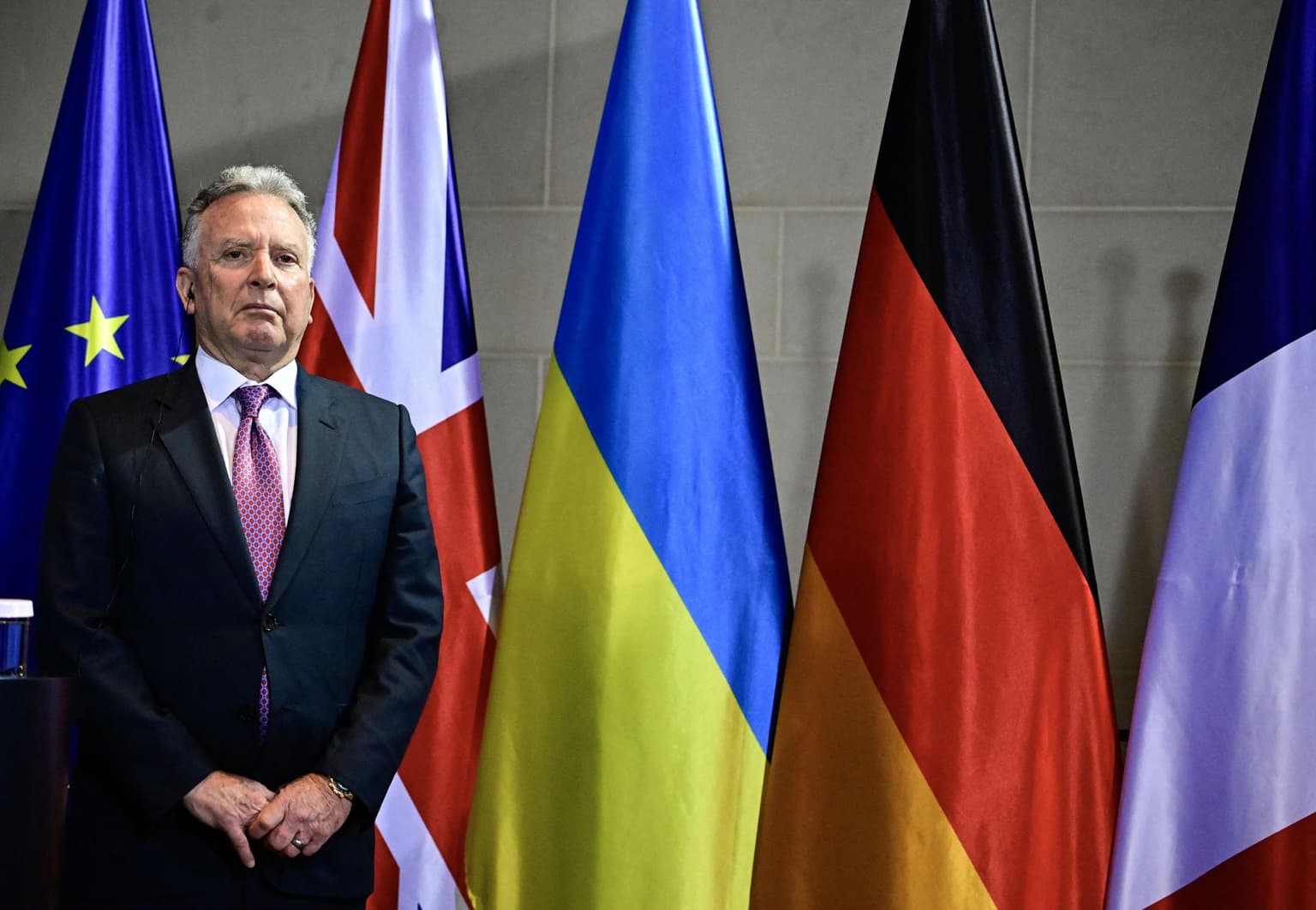
US Special Envoy Steve Witkoff listens during a joint press conference at the end of a summit of the so-called "Coalition of the Willing", a group of Ukraine's most significant allies and supporters, at the Chancellery in Berlin on November 19, 2026. (Photo by Tobias SCHWARZ / AFP via Getty Images)
 on Google
U.S. negotiators have privately ruled out sending troops or setting up military bases in post-war Ukraine as part of security guarantees, exposing a gap between Washington, Kyiv and European allies over what those guarantees should entail, people familiar with the talks told the Kyiv Independent.
President Volodymyr Zelensky is concerned that guarantees without foreign troops would not provide Ukraine with credible protection against another Russian attack.
He has told allies that he does not understand what the U.S. commitments would mean without troops or bases in the country, one person familiar with the matter said.
The disagreement comes as the U.S. pushes for security guarantees modeled on NATO's Article 5. Ukraine wants clear, written commitments explaining what action its partners would take if Russia attacked again. European allies are still working out what role they would play.
Russia continues to want none of it.
At a Nov. 19 meeting in Berlin, U.S. envoys Jared Kushner and Steve Witkoff discussed the guarantees with Ukrainian and European officials. Kushner said U.S. President Donald Trump was ready to consider an arrangement modeled on NATO's collective defense clause.
The envoys believe that security guarantees for Ukraine are the most "promising" track of negotiations, one U.S. official told the Kyiv Independent.
There is a significant difference between an Article 5 commitment and an "Article 5-like" arrangement.

But an "Article 5-like" guarantee is not the same as NATO membership. It does not automatically establish who would respond to an attack or whether the countries involved would be required to use military force.
Responding to a question from the Kyiv Independent, Zelensky said Ukraine still had no clear answer about how the proposed arrangement would work.
"It's not clear yet, because we still don't have a clear answer, a full answer, about what this collective group would be, how it would defend us, and whether this group would be ready to repel the aggressor," he said.
"This has to be on paper. So far, I haven't seen any such steps on paper."
While Zelensky insists that the guarantees be clearly spelled out in writing now, a U.S. official familiar with the negotiations told the Kyiv Independent that Washington wants them included in the final peace deal.
The main challenge is that guarantees strong enough to convince Ukraine to accept a peace deal may be the ones Moscow refuses to accept, while those Washington and its allies are willing to offer may fall short of what Kyiv considers sufficient to deter another Russian invasion.
The problem with an 'Article 5-like' guarantee
Under Article 5 of NATO's founding treaty, an attack on one member is treated as an attack on the entire alliance.
Other members must assist the country under attack, although each ally decides what action it considers necessary, including whether to use military force.
But there is a significant difference between an Article 5 commitment and an "Article 5-like" arrangement.
The latter does not establish who would respond to an attack, what that response would involve, or whether the countries involved would be required to use military force.
U.S. officials do not specify what Washington would be willing to commit to under the proposed guarantees. One U.S. official said the package could include "support or other measures" to help ensure Ukraine's security after the war ends.
"We need security guarantees for more than two years. Preferably forever, or at least for decades."

There is also significant confusion inside the administration more widely as to what form the security guarantees would take, with career diplomats at the State Department increasingly sidelined during negotiations by Trump's envoys, according to two U.S. officials who spoke to the Kyiv Independent on condition of anonymity.
Asked by the Kyiv Independent whether he trusted the Trump administration's proposed commitments, Zelensky said they must remain in force long after Trump leaves office.
"We're fighting to defend our country not just for two years," Zelensky said. "We need security guarantees for more than two years. Preferably forever, or at least for decades."
Europe's role faces a Russian obstacle
The question of who would help defend Ukraine after a ceasefire also puts the Coalition of the Willing under pressure to define its role.
The group, led by France, Germany, and the U.K., has been considering deploying troops to Ukraine after a potential ceasefire. The proposed multinational force would help monitor the peace and deter Russia from resuming its invasion.
U.S. Secretary of State Marco Rubio said on Nov. 9 that any post-war security guarantees for Ukraine would have to be acceptable to Russia.
Moscow has repeatedly rejected NATO-like guarantees for Ukraine, as well as plans to station foreign troops or establish foreign military bases on Ukrainian soil.
Yet one U.S. official told the Kyiv Independent that Russian President Vladimir Putin appeared more willing to "consider" a possible Article-5-like arrangement in private discussions with U.S. envoys.

Washington views this as a significant shift in Moscow's position.
It remains unclear, however, what the Kremlin would actually be prepared to accept. Moscow's public opposition to a foreign military presence in Ukraine has not changed.
European governments see a possible multinational force as one way to deter another Russian attack. Officials believe troops from major European countries could help protect Ukraine, but argue that deploying them without a genuine ceasefire could make the situation more dangerous rather than more stable.
Zelensky, French President Emmanuel Macron, and then-British Prime Minister Keir Starmer signed a declaration of intent in early 2026 for the deployment of a multinational force in Ukraine after the war.

But this has not completely settled the practical questions. European governments still need to legally fix which countries would contribute troops, what their mandate would be, and how they would respond if Russia violated a ceasefire.
Moscow has repeatedly rejected the proposed deployment.
During discussions in Abu Dhabi, Russian officials said foreign troops on Ukrainian soil would be "absolutely unacceptable" and a "legitimate target."
This leaves the coalition with little clarity about what it could actually do.
European countries may be willing to contribute forces, but their deployment depends on a ceasefire and an arrangement that Russia has so far refused to accept.
NATO membership remains unresolved
Alongside discussions about U.S. guarantees and a possible European military presence, Ukraine's potential NATO membership remains part of the negotiations.
Zelensky said on Nov. 21 that Kyiv was still discussing membership with Washington and European allies. U.S. negotiators have even asked whether Ukraine would withdraw from Donbas in exchange for joining the alliance.
"The NATO question is on the table," Zelensky said. "The Americans — and that's good, as we can see — are also raising this issue. We're discussing it."
Among those supportive of bringing Ukraine into NATO are France, Italy, the U.K., and Supreme Allied Commander Europe (SACEUR) Alexus Grynkewich, according to a readout of a Nov. 19 Coalition of the Willing meeting provided to the Kyiv Independent.
According to the readout, Grynkewich identified NATO membership for Ukraine as the cheapest way to guarantee European security.

For Kyiv, NATO membership remains the clearest way to secure long-term protection against another Russian invasion. But Moscow continues to reject the prospect.
Russian Deputy Foreign Minister Sergei Ryabkov said on Nov. 20 that any membership for Ukraine in NATO would be unacceptable.
"Let them recognize the irrevocable nature of our demand that this state must not join NATO," he said.
The coming weeks are expected to bring further discussions between Kushner, Witkoff, and Russian, Ukrainian, and European officials as Washington tries to bridge the differences.
For Kyiv, the priority will be to turn political assurances into written commitments that specify who would help defend Ukraine and what they would be required to do.
Without answers to those questions, a security guarantee may offer little more than just Trump's promise that another war will not happen.
read also