Ukraine's potential Justice Minister Maslov defends judicial reform amid criticism
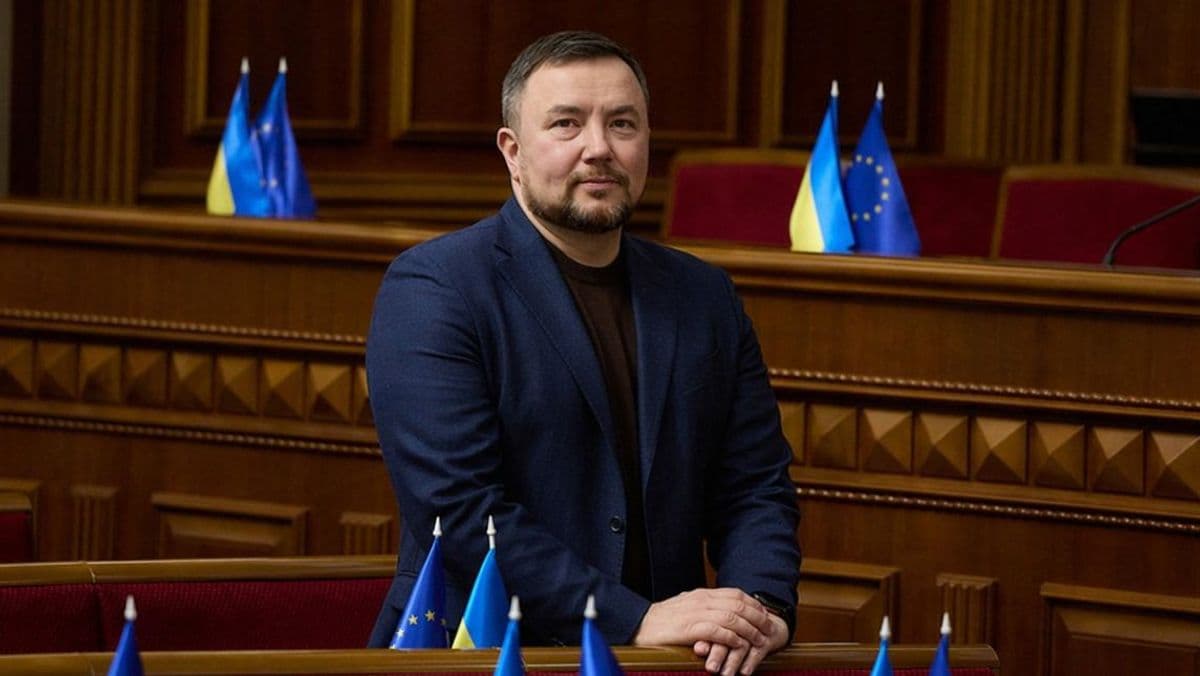
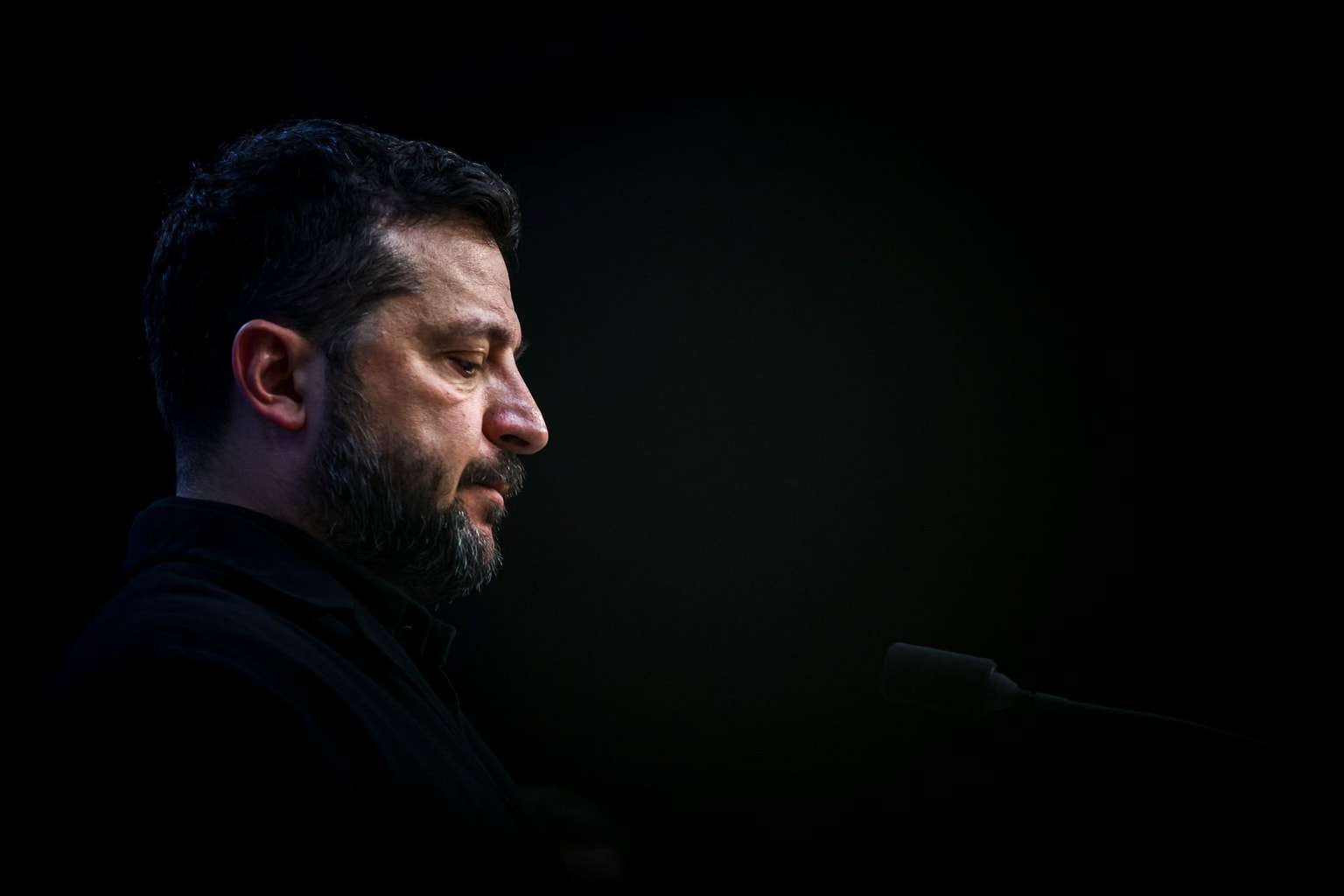
Chair of parliament's judiciary committee, Denys Maslov, who is widely expected to become Ukraine's next justice minister, in Kyiv, Ukraine, in an undated photo. (Servant of the People Party)
 on Google
Editor's note: Denys Maslov was appointed justice minister on July 16.
There are three things to know about lawmaker Denys Maslov. He chairs parliament's legal policy committee, responsible for overhauling Ukraine's courts.
He is widely expected to become the country's next justice minister.
And he insists Ukraine's judicial reform is on track.
Maslov, who sources say could move from parliament to the cabinet as part of this week's government reshuffle, faces mounting pressure from the European Union to advance judicial reform while fending off sharp criticism from Ukraine's civil society.
The failure to reform Ukraine's Supreme Court, coupled with the judicial integrity declarations law passed in June, marked the latest flashpoint in the reform effort led by Maslov and his allies.
In an interview with the Kyiv Independent, Maslov said that "our objective is to strike the right balance: on the one hand, ensuring that the judiciary remains accountable, and on the other, safeguarding the universally recognized principle of judicial independence."
Judicial watchdog Dejure argued that "rather than improving the integrity declaration system, (the integrity declarations law passed in June) effectively dismantles integrity declarations as a meaningful tool for holding judges accountable."
Failure to reform the Supreme Court
The Supreme Court has been engulfed in corruption scandals and other controversies for years.
Vsevolod Kniazev, former head of the Supreme Court, was sentenced to five years in jail for bribery on June 8.
Following Kniazev's arrest in 2023, the European Union has asked that the integrity declarations of incumbent Supreme Court judges be audited with the help of international experts.
Integrity declarations are statements in which judges answer questions linked to integrity and ethics standards.

They are one of the primary tools for assessing judicial integrity because they allow reviewers to identify conflicts of interest, unexplained wealth, unethical conduct, and ties to Russia.
On June 9, parliament passed a bill on judges' integrity declarations that contains a clause instructing the Cabinet of Ministers to draft within six months a separate bill on checking Supreme Court declarations with the participation of independent experts. The bill was signed into law by President Volodymyr Zelensky on June 24.
Dejure has criticized the authorities for dragging their feet on the Supreme Court reform since 2023 and postponing it for an additional six months.
Maslov, who represents Zelensky's Servant of the People party, said the delay was due to the fact that "our international partners have not yet reached a common understanding of this procedure."
"This is therefore a separate issue that would likely require lengthy discussions," he said. "Meanwhile, we were running out of time to complete the milestones under the Ukraine Facility (an EU lending program), and this particular requirement was not part of the plan."
Maslov said that in 2023, he had co-authored a bill that envisaged introducing a new type of monitoring for the Supreme Court to be conducted by the High Council of Justice, the judiciary's top governing body. However, the Venice Commission, an advisory body of the Council of Europe, rejected the plan, suggesting that Ukraine use existing mechanisms, including integrity declarations.
"We therefore halted work on that bill," Maslov said. "That is precisely why we gave the government time to draft a new bill that takes into account both these considerations and the Venice Commission's conclusions."
Will international experts play a role?
Another stumbling block is the role of foreign experts who are expected to check the Supreme Court judges' integrity declarations.
In the past, Ukrainian officials have often backed controversial candidates for top judicial openings, and international experts have been invited to offset their role. Ukraine's anti-corruption and judicial watchdogs believe that international experts are an effective way of ensuring that controversial and tainted candidates are blocked.
The bill on integrity declarations mentions "the participation of independent experts" as part of a future Supreme Court bill.
However, a plan approved by EU Enlargement Commissioner Marta Kos and Taras Kachka, Ukraine's deputy prime minister for European integration, in December 2025 includes different wording. It calls for a declaration verification procedure for Supreme Court justices with "the temporary involvement of internationally nominated independent experts."

Anti-corruption and judicial experts fear that the authorities may try to avoid using international experts and select handpicked appointees to help judges evade responsibility.
This could be part of an ongoing effort by Ukrainian authorities to reduce the role of international experts on supervisory boards and selection panels in key law enforcement and procurement agencies. Some Ukrainian top officials have said in the past that Ukraine no longer needs international experts.
Maslov argued that the road map for Ukraine's European accession does not include the phrase "internationally nominated experts," and the Kos-Kachka plan is not legally binding.
"With all due respect to Ms. Kos and Mr. Kachka, we have to base our work on something," he argued. "I am relying on the road map that has been approved by our government and submitted to the European Commission."
Maslov also argued that Ukrainian experts would be better suited for checking Supreme Court judges' declarations than foreign ones.
"I believe we have more than enough qualified professionals in Ukraine," he said. "It is simply much easier and more effective when those evaluating candidates and the candidates themselves speak the same language."
Asked whether Ukrainian experts could be nominated by international bodies, Maslov said that "this could be acceptable," but it depends on their powers and "how decisions would be made and votes cast."
Controversial integrity declarations
The bill on integrity declarations actually makes them weaker instead of improving them, according to Dejure.
Out of the 28 specific, concrete questions in previous integrity declarations, the new law eliminated 22.
Maslov dismissed these concerns, saying that "it's not the number of questions that matters" but the "substance."
In previous declarations, judges were supposed to answer concrete questions such as whether they had a conflict of interest, whether they issued rulings against protesters, and whether their standard of living matched the income of the judge and his or her family members.
Under the new law, they will answer more general questions on whether they have committed corruption-related offenses or complied with the judicial ethics code, or whether there are grounds to impose disciplinary penalties on them.
"How, exactly, does verifying a judge's declaration undermine judicial independence?"
The new questions are so broad that they give judges considerable leeway to interpret them and avoid responsibility, according to Anton Zelinsky, advocacy manager at Dejure.
"Ukraine's international commitments required exactly the opposite," he said.
The whole point of the law is to make sure that, if Supreme Court judges' declarations are eventually checked by international experts, the procedure will be so emasculated that they will not be able to check them properly or penalize them, he believes.
Dejure also said that "the bill removes the key asset disclosure section from the declaration — the very part in which judges had to certify that their lifestyle was consistent with their declared income."
Maslov responded that "the asset-related section effectively remains part of the integrity declaration because it is covered by the statement that there are no grounds for disciplinary action against the judge."
Judges with links to Russia
Another critique of the law is that it would fail to identify judges linked to Russia amid the full-scale invasion.
New integrity declarations have a question on whether a judge has cooperated with Russia since 2014 and whether they recognize Ukraine's sovereignty over its whole territory.
However, a separate question on whether a judge has visited Russia or the occupied territories or tried to get foreign citizenship only applies to the preceding year, as opposed to the period since 2014.
Maslov dismissed these concerns, saying that judges' trips in previous years would be covered in their previous annual declarations. However, this does not resolve the problem of those who first traveled to Russia and the occupied territory and became judges more than a year later.
"In other words, if a judge files an integrity declaration for the first time in 2026 but traveled to Russia in 2024, that trip would simply fall outside the scope of the review," Dejure said.
Other problems with judges' declarations
Another problem is that judges can only be checked within a six-month deadline, and after that, they cannot be held responsible.
"A six-month deadline for conducting reviews has been introduced, after which any information that has not been verified will automatically be deemed unconfirmed, "Dejure wrote. "This means… that they can simply drag out the process without facing any consequences."

Maslov argued that "the Consultative Council of European Judges considers it unacceptable for judges to remain under the indefinite threat of disciplinary action for an unlimited period of time, as this undermines their independence."
"A deadline for completing the review is necessary, but the proposed framework creates an obvious corruption risk," Zelinsky said. "There is neither accountability for delaying the process nor any mechanism to reassign the case to another member of the commission."
Dejure also argued that, under the law, judges could only be punished for intentionally lying in their declarations, and "proving intent is virtually impossible."
Maslov denied this, saying that both intentional lies and negligence could be punished.
But Zelinsky countered that "gross negligence applies only to the late filing of declarations, but, as for false information, judges can be held liable only if it is proven that they knowingly lied."
There is also a controversial legal collision: one clause of the law says that a judge must list relatives who hold specific government jobs. But another clause, which lists the grounds for checking information submitted by judges, fails to mention this list of relatives.
"As a result, if a judge fails to disclose a relative or conceals that relative's position, the High Qualification Commission of Judges will have no clear legal basis to verify that information," Zelinsky said.
Maslov denied this, arguing that "the bill provides for the verification of all information contained in judges' integrity and family ties declarations." But he did not explain why the second clause does not contain the list of relatives among the grounds for checks.
While defending the bill on integrity declarations, Maslov repeatedly argued that more thorough checks and judicial bodies' excessive authority would undermine judges' independence.
Zelinsky disagreed with this approach, saying that Maslov's aim is to make sure that judges have impunity.
"There's a difference between judicial independence and lack of accountability," he said. "How, exactly, does verifying a judge's declaration undermine judicial independence?"