Bridges become new battlefield between Russia and Ukraine as front line gains freeze
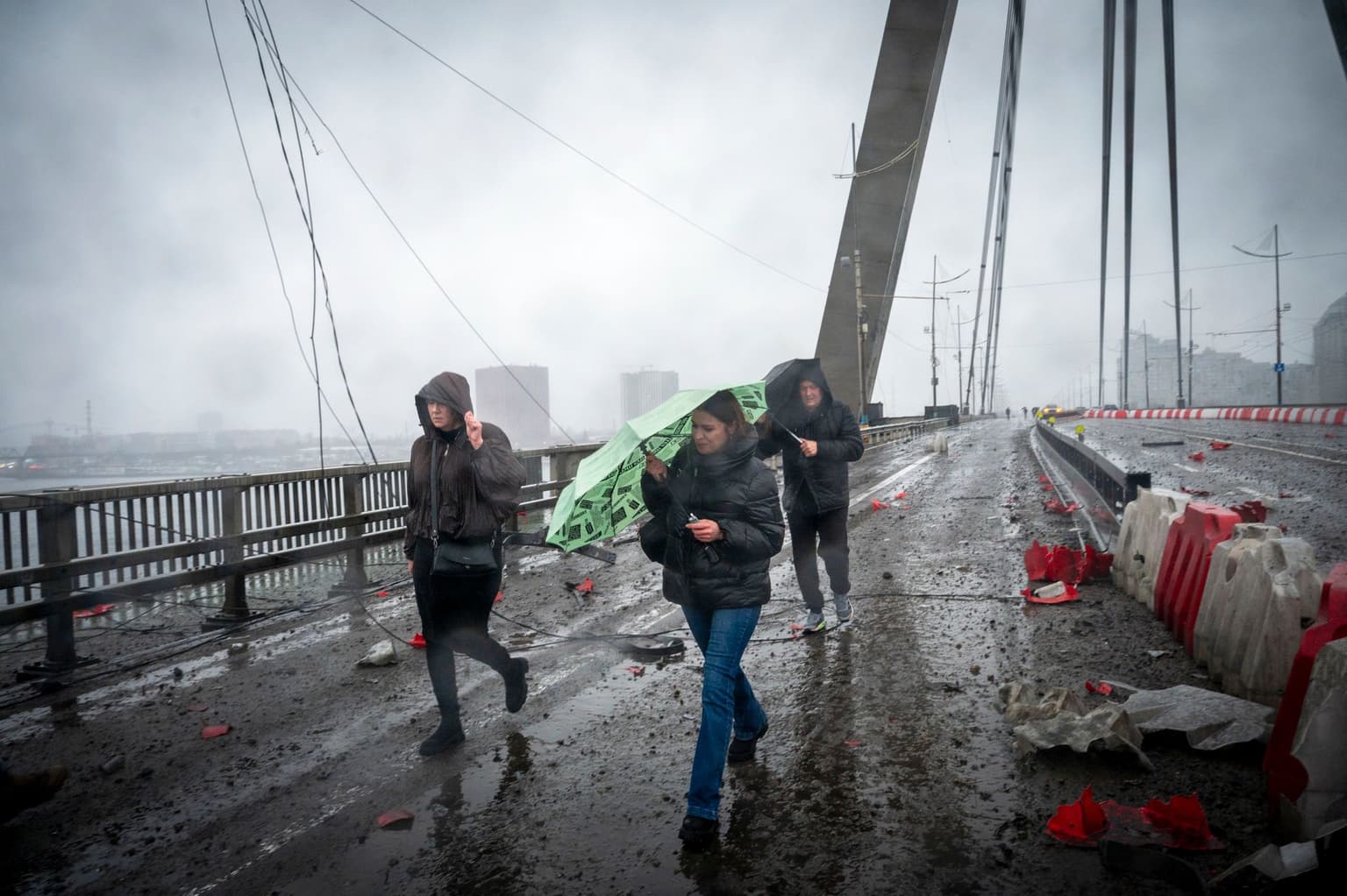
People cross Kyiv's Northern Bridge over the Dnipro River on foot after a Russian missile strike in Kyiv, Ukraine, on Nov. 17, 2026. (Christopher Occhicone / The Kyiv Independent)
 on Google
As the city wakes up, dozens of people stream across Kyiv's Southern Bridge, walking over the Dnipro River on their way to work. Until recently, the same journey took just minutes by metro. Now, with that option gone, their daily commute can stretch into hours.
While Russian attacks had previously targeted bridges in front-line areas, seeking to disrupt supply routes to Ukrainian forces, October marked the first strikes on such infrastructure in the capital. A month later, Ukraine launched a seven-stage- operation that partially destroyed the illegally built Crimean Bridge, linking the occupied peninsula to mainland Russia.
Yet the real target lies elsewhere.
"Destroying bridges in Kyiv would not significantly help Russia accelerate its advance on the front line," Emil Kastehelmi, an analyst at the Finland-based Black Bird Group, told the Kyiv Independent.
"Russia's attack on Kyiv's bridges during the morning rush hour was "a textbook example of terror" aimed at civilian infrastructure in a major city."
"But destroying the bridge in Crimea does not fundamentally change the situation on the front line for Ukraine either," he added.
Why bridges matter in this war
Throughout Russia's war against Ukraine, bridges and river crossings have been key targets for both sides. Destroying them can slow the movement of troops and heavy equipment, disrupt vital supply lines, and make it harder to evacuate wounded soldiers from the battlefield. But the war is now entering a new phase, with bridges in densely populated cities coming under attack.
Since the beginning of autumn, Russian forces have attacked Kyiv's bridges at least five times, damaging five of the city's six crossings. Only the Metro Bridge has remained unaffected. The strikes primarily damage the road surfaces, forcing authorities to close the bridges for repairs. Depending on the extent of the damage, closures can last anywhere from a few hours to several days.

At the same time, attacks of this kind are unlikely to destroy Kyiv's bridges outright, even when ballistic missiles carrying warheads weighing up to 500 kilograms are used. The same applies to long-range drones, whose warheads are around only a tenth of the size.
"For a bridge like this, these strikes are more like mosquito bites," Kostiantyn Kryvolap, an aviation expert and former Antonov test engineer, told the Kyiv Independent, referring to drone attacks.
Built during the Soviet era, Kyiv’s Soviet-era transport network was designed with considerable redundancy, making them difficult to disable completely, Kryvolap said.

A strike could destroy safety barriers, leave a crater in the road surface, or damage individual sections of a bridge. Such damage could put part of the structure out of service for a week or force authorities to restrict traffic temporarily. The same applies to power pylons and transmission lines.
"But is there even a need to destroy the bridge completely? The main goal may be simply to stop traffic, disrupt logistics, and increase psychological pressure on the population," Kryvolap added.


Kyiv, home to more than three million people and roughly comparable in size to the German capital, Berlin, depends heavily on its bridges, as the city is divided by the Dnipro River. Every morning and evening, thousands of commuters cross from one bank to the other, adding to the congestion during already busy rush hours. But when these vital arteries are closed, the disruption can bring much of the city to a standstill.

The Southern Bridge, for example, is a vital commuter route for the cluster of Pozniaky, Osokorky, and Kharkivskyi districts, home to as many as 500,000 people, Hlib Vyshlinsky, executive director of the Center for Economic Strategy, told the Kyiv Independent.
With Kyiv's bridges increasingly under threat, city authorities are also considering temporary pontoon crossings over the Dnipro River.
Attacks on the Crimean Bridge, however, carry far greater symbolic significance, experts told the Kyiv Independent.
"It doesn't really matter how many times Russia strikes (Kyiv bridges), it's never going to be the same as striking the bridge that (Russian President Vladimir) Putin himself opened, which is a monument for the occupation," Kastehelmi said.
Putin's symbol of control over Crimea
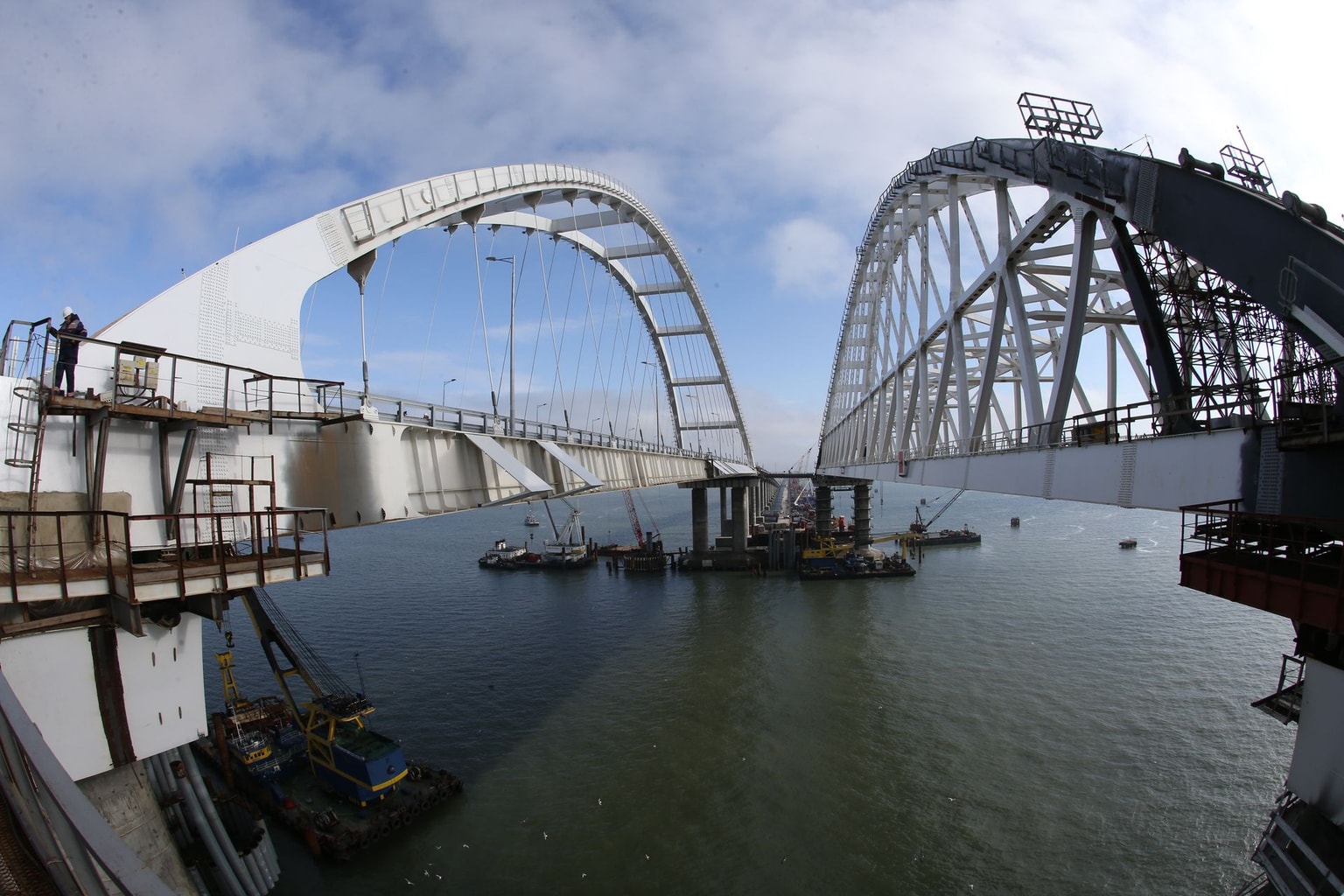
Russia built the Crimean Bridge across the Kerch Strait following its occupation of Crimea in 2014, without Ukraine's consent. The 19-kilometer (11.8-mile) structure carries both road and rail traffic and stands 35 meters (115 feet) above the water — roughly the height of a 10-story building — allowing ships to pass underneath.
With the R-280 highway connecting occupied Crimea to Russia's Rostov Oblast coming under frequent Ukrainian fire, the Crimean Bridge remains a vital supply route for Russian forces moving troops and military equipment to the southern front. For Ukraine, this makes the bridge one of the key targets in its campaign against Russian forces in occupied Crimea.

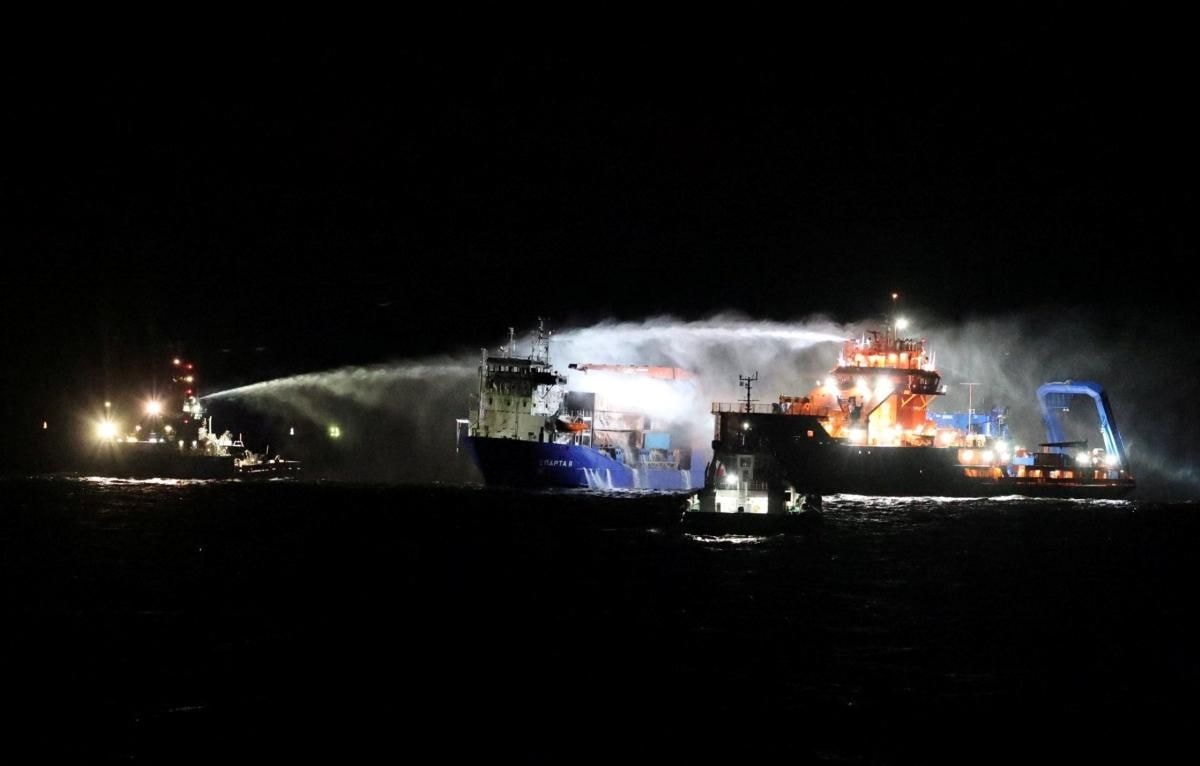
The bridge first came under attack on Oct. 8, 2022, when a massive explosion destroyed two sections of its road span and damaged the railway tracks. It was targeted again in 2023 and 2025. On Nov. 17, 2026, Ukrainian forces carried out a multi-phase operation that caused part of the structure to collapse, rendering the road section unusable and preventing ships from passing underneath.
Because the Crimean Bridge's arches were assembled onshore and then installed at sea using heavy specialized equipment, restoring the structure will be an extremely difficult undertaking. The arches weigh around 11,000 metric tons combined, and Ukraine's control of the air and sea in parts of the Black Sea further complicates the task, Ukrainian military aviation expert Andrii Kharuk told the Kyiv Independent.
"I believe restoring this section will take not just months, but a year or even longer," Kharuk said.
While the Kremlin played down the impact of the Ukrainian attack, queues at gas stations across Crimea continued to grow. The peninsula had already been struggling with fuel shortages since May, as Ukraine's campaign against Russian oil infrastructure increasingly disrupted supplies.
President Volodymyr Zelensky said on Nov. 21, during a meeting with British Defense Secretary Wes Streeting, that Russian forces had attacked Ukrainian bridges 109 times before the operation against the Crimean Bridge, adding that the structure is a legitimate military target.
"This should not be viewed as an emotional, improvised 'retaliation for Kerch.' Such operations are planned well in advance."

On Nov. 17, the same day part of the Crimean Bridge over the Kerch Strait was destroyed, Russian forces also attacked three bridges in Kyiv: the Southern, Northern, and Podilskyi-Voskresenskyi crossings.
"This should not be viewed as an emotional, improvised 'retaliation for Kerch.' Such operations are planned well in advance," Anatolii Khrapchynskyi, a Ukrainian aviation expert and former Ukrainian Air Force officer, told the Kyiv Independent.
The fundamental difference between the two attacks lies in their objectives and the precision of their execution, according to Khrapchynskyi.
Ukrainian forces breached a multilayered air defense perimeter and struck a critical support junction beneath the bridge deck with a heavy weapon carrying a warhead weighing around a ton. The strike sent an entire road span crashing into the water, cutting a key supply route for Russia's entire Southern Group of Forces.
By contrast, Russia's attack on Kyiv's bridges during the morning rush hour was "a textbook example of terror" aimed at civilian infrastructure in a major city, Khrapchynskyi said.

The latest attack on the Crimean Bridge also added to pressure on the Kremlin, exposing the gap between Moscow's assurances and the reality on the ground. Meanwhile, Kyiv appears to still have plans for the Crimean Bridge, where the railway section remains operational.
"This bridge will not stand," Zelensky said in a Nov. 21 interview with NBC News.
What is next?
Even with the Crimean Bridge destroyed, Russian forces would still be able to transport military supplies, including through the occupied territories in southern Ukraine, albeit with greater difficulty. Attacks on Kyiv's bridges, meanwhile, may not cause significant structural damage, but they disrupt the functioning of the city.
"Russia aims to disrupt the life and functioning of the capital, which generates more than 10% of Ukraine's GDP and is home to many military technology companies," Mykola Bielieskov, senior analyst at Come Back Alive and research fellow at the National Institute for Strategic Studies, told the Kyiv Independent.

"If Russia manages to 'cut' Ukraine into two parts, the defense of eastern and southern Ukraine will be undermined. So, it's part of Russia's total war approach — undermining the front by undermining the rear," he added.
According to Bielieskov, Russia's focus on Kyiv is driven by the city's economic, military, and political significance. Moscow may also hope that residents of the capital will put direct pressure on the government — something people in other regions are less able to do, he added.
Still, Russia's intensified attacks are not limited to Kyiv or its bridges.
The impact could be much greater if bridges and river crossings in eastern or southern Ukraine were destroyed. In front-line areas, these routes are often essential for delivering weapons, ammunition, and personnel to troops on the battlefield.
"I'm a little surprised that the Russians are now focusing so heavily on bridges in Kyiv rather than in Dnipro or Zaporizhzhia, where attacks could cause greater disruption for the armed forces," Kastehelmi said.
"But it's also possible that we will see strikes on those bridges in the coming winter."