Update: EU's decision to pay for alleged 'anti-reform' draws criticism from Ukrainian experts
 on Google
Editor's note: The European Commission's response has been added to the story.
A decision by the European Union last week to disburse funds to Ukraine in exchange for what Ukrainian experts called a judicial “anti-reform” has sparked controversy.
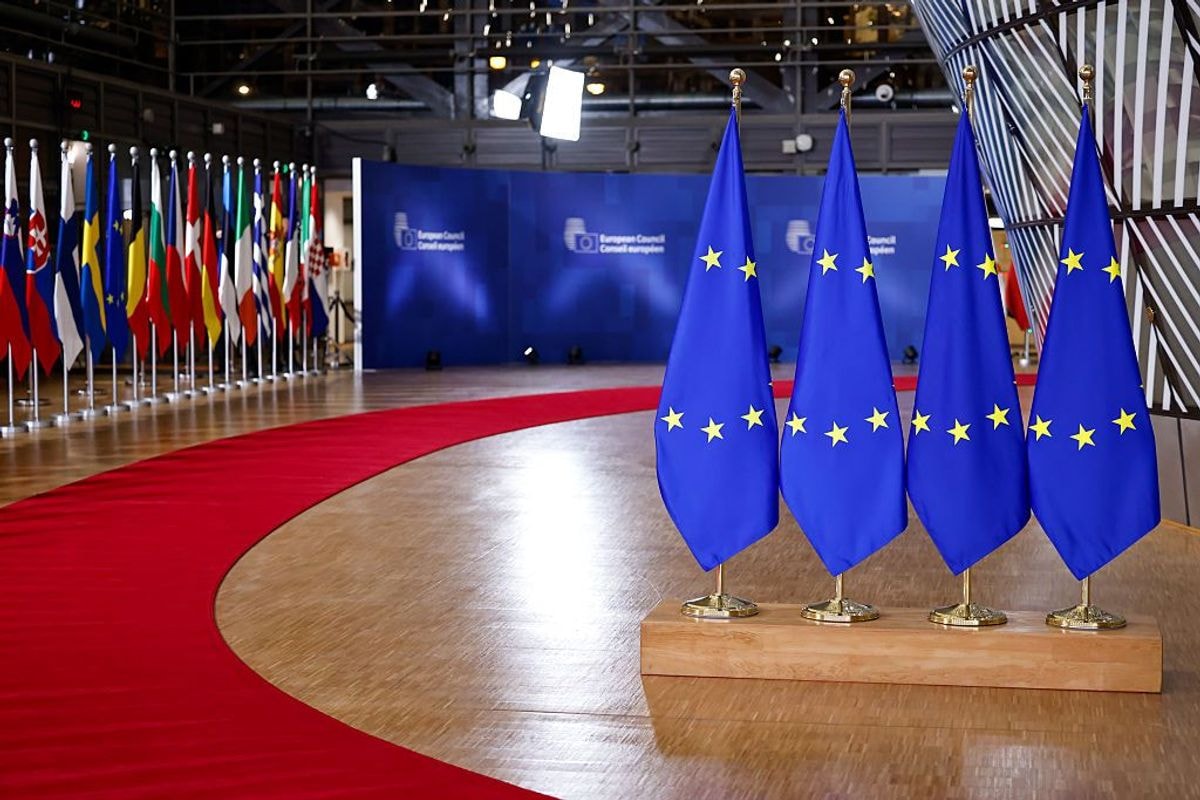
On Sept. 24, the Council of the European Union approved providing 3 billion euros as part of the Ukraine Facility lending plan to Kyiv.
This amount includes 386.3 million euros provided in exchange for a controversial law on integrity declarations for judges passed by Ukraine in June and heavily criticized by judicial experts. Apart from integrity declarations, the requirements for lending the funds included reforming the electric power, banking, agricultural, and railway markets.
Integrity declarations are statements in which judges answer questions linked to integrity and ethics standards.
The Ukrainian judicial watchdog Dejure argued in June that "rather than improving the integrity declaration system, (the integrity declarations law) effectively dismantles integrity declarations as a meaningful tool for holding judges accountable."
The watchdog said that, “while presented as a measure to improve judicial integrity declarations, the law would in fact make it easier for judges to evade accountability for false statements.”
Mykhailo Zhernakov, head of Dejure, criticized the EU’s decision to provide money in exchange for the integrity declarations law.
“If you tell people, ‘Carry out the reform and you’ll get the money,’ but what you actually get is an anti-reform and you pay the money anyway, then you are only going to get more anti-reforms,” he told the Kyiv Independent on Sept. 28. "(The EU) is sending the signal that the Ukrainian authorities can do whatever they want and the EU will keep paying anyway."
He also said that “there are people in the EU who genuinely support Ukraine and reforms, but there are also those who seem to think they are helping by turning a blind eye to the quality of those reforms.”
Kateryna Butko, head of anti-corruption watchdog AutoMaidan, agreed with Dejure, saying that the EU’s position is too mild regarding judicial reform.
“I’d like them to demand more,” she told the Kyiv Independent. “I believe this (integrity declarations) law will not bring about effective cleansing of the judiciary. De facto nothing will change.”
Butko added that the integrity declarations law also fails to address the issue of Supreme Court reform.
In its decision, the Council of the European Union described the integrity declarations law as a “satisfactorily fulfilled” requirement.
A spokesperson for the European Commission told the Kyiv Independent that the commission's "positive assessment is based on the specific requirements agreed in the Ukraine Plan."
"Our assessment is that Ukraine has met these requirements," the spokesperson said. "It does not amount to an assessment of the overall judicial integrity system, which is addressed more broadly in the accession process."
The spokesperson also argued that "this reform strengthens the framework for judges’ integrity declarations by clarifying what must be declared, setting clear grounds and deadlines for verification, and ensuring that findings can inform judicial appointments and career decisions."
"(The reform) also addresses a number of Venice Commission recommendations," the spokesperson said. "The Ukraine Plan supports concrete reforms towards EU accession, while accession itself is assessed against a broader set of requirements. Implementation of the legislation and the effectiveness of judicial integrity mechanisms in practice will continue to be closely monitored as part of the broader accession process."
According to Dejure, the bill on integrity declarations actually makes them weaker instead of improving them.
Out of the 28 specific, concrete questions in previous integrity declarations, the new law eliminated 22.
In previous declarations, judges were supposed to answer concrete questions such as whether they had a conflict of interest, whether they issued rulings against protesters, and whether their standard of living matched the income of the judge and his or her family members.
Under the new law, they will answer more general questions on whether they have committed corruption-related offenses or complied with the judicial ethics code, or whether there are grounds to impose disciplinary penalties on them.
The new questions are so broad that they give judges considerable leeway to interpret them and avoid responsibility, according to Anton Zelinsky, advocacy manager at Dejure.
Dejure also said that "the bill removes the key asset disclosure section from the declaration — the very part in which judges had to certify that their lifestyle was consistent with their declared income."
Another critique of the law is that it would fail to identify judges linked to Russia amid the full-scale invasion.
New integrity declarations have a question on whether a judge has cooperated with Russia since 2014 and whether they recognize Ukraine's sovereignty over its whole territory.
However, a separate question on whether a judge has visited Russia or the occupied territories or tried to get foreign citizenship only applies to the preceding year, as opposed to the period since 2014.
"In other words, if a judge files an integrity declaration for the first time in 2026 but traveled to Russia in 2024, that trip would simply fall outside the scope of the review," Dejure said.
Dejure has also lambasted parliament for failing to fulfill another requirement of the EU — a reform of the Supreme Court, which has been engulfed in corruption scandals for years.
The European Union has demanded that the integrity declarations of incumbent Supreme Court judges be audited with the help of international experts.
The June law on integrity declarations for judges contains a clause instructing the Cabinet of Ministers to draft within six months a separate bill on checking Supreme Court declarations with the participation of independent experts.
However, Dejure has criticized the authorities for dragging their feet on the Supreme Court reform for years and postponing it for an additional six months. So far, no separate bill on Supreme Court reform has been submitted to parliament.
Denys Maslov, former head of parliament’s legal policy committee and now justice minister, denied Dejure’s accusations in a July interview with the Kyiv Independent. He presented the integrity declarations bill as a genuine reform.