Explainer: How a corruption scandal and loyalty to Zelensky brought down Ukraine’s prosecutor general
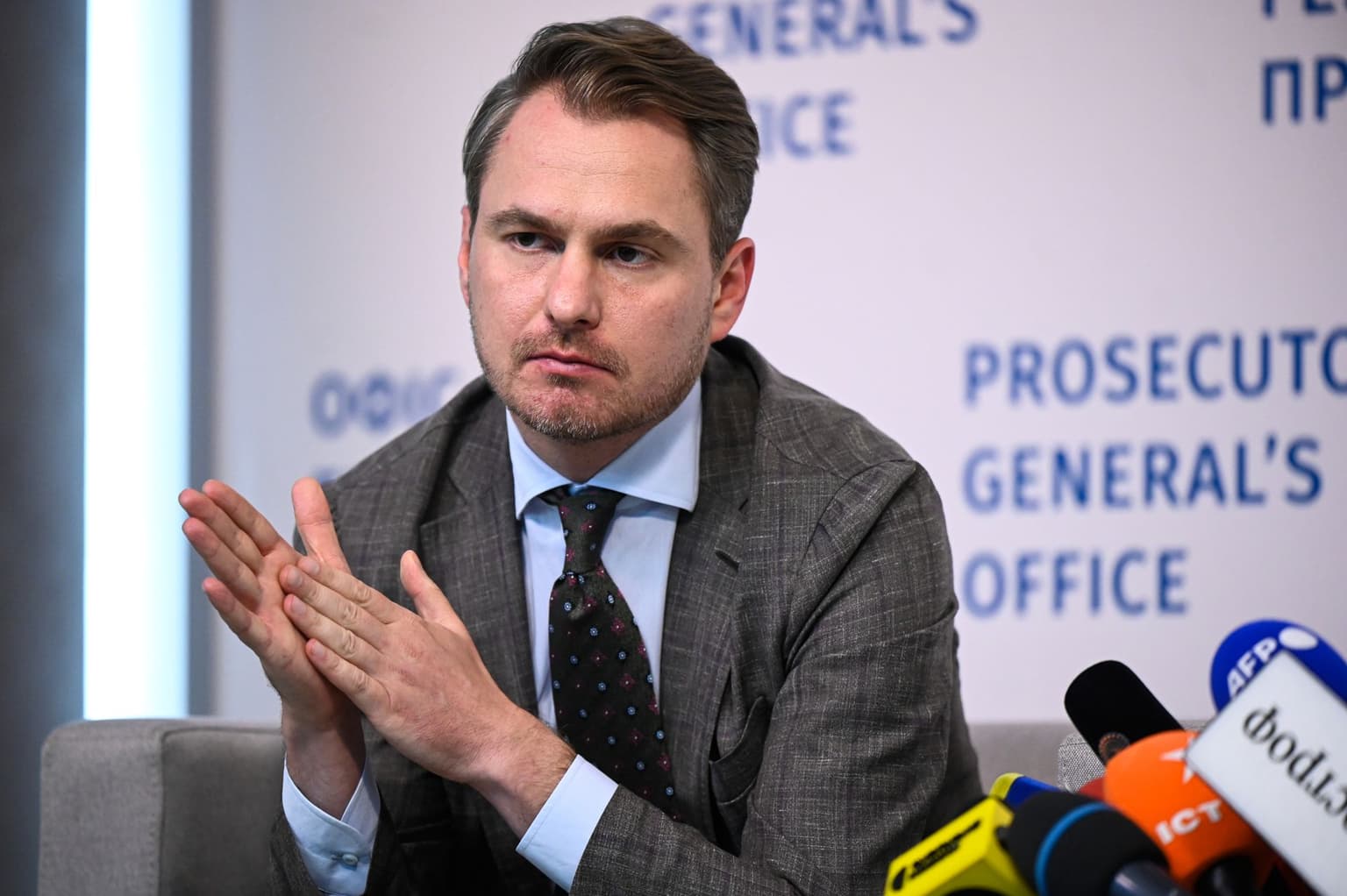
Then-Prosecutor General of Ukraine Ruslan Kravchenko holds a briefing in Kyiv, Ukraine, on July 23, 2025. (Danylo Antoniuk / Ukrinform / NurPhoto via Getty Images)
 on Google
Prosecutor General Ruslan Kravchenko once helped lead the crackdown on Ukraine's National Anti-Corruption Bureau (NABU). On Sept. 7, a corruption scandal ultimately led to his downfall after the same bureau broke through the gates of his office.
Kravchenko, long seen as a staunch loyalist of President Volodymyr Zelensky, resigned on Sept. 7 after NABU detectives exposed an alleged scam call center protection racket run from the Prosecutor General's Office — only the latest in a string of scandals that had forced out top Zelensky allies.
During his more than a year in office, Kravchenko has accumulated plenty of baggage: from helping the presidential administration's failed attempt to destroy the independence of anti-corruption bodies to earning the reputation of a "last line of defense" for lawmakers fearing charges.
But even some in Zelensky's party had come to see him as more trouble than he was worth.

While Kravchenko himself has not yet been charged in the scam call center case, he appears in incriminating recordings, and one of his top prosecutors has been detained.
The NABU operation that brought down the prosecutor general was codenamed Carthage — an apparent reference to a Roman refrain that "Carthage must be destroyed," here referring to the corruption that has taken root in the Prosecutor General's Office.
But anti-corruption activists and some lawmakers argue that replacing Kravchenko with another loyalist will not solve the problem.
The only remedy, they believe, is a transparent selection process for the next top prosecutor and a thorough reform of the prosecutorial system.
Is Kravchenko implicated?
The NABU raid that cost Kravchenko his job started late on Sept. 4 with searches at the office of Serhii Kropyva, a deputy head of the Prosecutor General's Office's international cooperation department and an alleged "confidant" of the prosecutor general.
Kropyva was later charged with organized crime and laundering Hr 90 million ($2 million).
Anti-corruption detectives on Sept. 4 also searched the offices of Kravchenko, his senior deputy Maria Vdovychenko, and Oleh Kiper, governor of Odesa Oblast. None of them has been charged, though Vdovychenko resigned on Sept. 8 nonetheless.
It would be impossible for a prosecutor general not to know about such extensive corruption, a former top employee of the Prosecutor General's Office told the Kyiv Independent.
"There's no way something like this could be going on behind the prosecutor general's back," he said. "No prosecutor general would allow it. He would either put a stop to it — or take charge of (the scheme) himself."
While NABU has not named Kravchenko, evidence released as part of its investigation points squarely to him.

The bureau's recordings refer to a "boss" allegedly protecting the group, a figure whose patronymic, Andriiovych, and prior role as head of the State Tax Service correspond to Kravchenko.
An earlier Telegram post by the Prosecutor General's Office confirms that the investigators understand the term "boss" as referring to Kravchenko.
An anti-corruption prosecutor also described Kropyva as a confidant of Kravchenko during court hearings.
"The problem with the Prosecutor General's Office lies with the prosecutor general, who essentially trades his political loyalty to the president for control over the law enforcement system and the financial benefits he derives from it.
According to NABU recordings, Kropyva arranged repair work at Kravchenko's house in Kozyn, an elite residential area south of Kyiv. Kravchenko said he had chosen the house last winter and had been living there since May.
The house has not been included in Kravchenko's latest asset declaration, with the prosecutor general saying he would declare it in his 2026 disclosure. Kravchenko was supposed to declare the rental if the expenses exceeded Hr 166,400 ($3,748), but there is no information on whether they did.
Kravchenko's own handling of the NABU raid's fallout only deepened the suspicion.
The Prosecutor General's Office initially denied the searches at Kravchenko's personal office — before admitting them the next day. Kravchenko went incommunicado until Sept. 6, when he made a statement denying complicity in the scheme.
"From a communications standpoint, the whole thing was a complete failure — very amateurish and deeply unprofessional," political analyst Ihor Reiterovich told the Kyiv Independent. "His explanations only raised more questions."
read also
Kravchenko's resignation saga
Before Kravchenko’s resignation late on Sept. 7, some lawmakers within Zelensky's own party felt that the situation with the prosecutor general was getting out of control.
"And the situation has only gotten worse," one of them told the Kyiv Independent. "That's why we started discussing within the parliamentary faction that enough is enough — we're going to start collecting signatures calling for Kravchenko's resignation, because this simply cannot go on."
"Kravchenko has accumulated so much negative baggage that they needed to cut him loose before the backlash started spilling over onto Zelensky."
If Kravchenko had not resigned, quite a few lawmakers from the ruling party would be unhappy, the member of parliament said.
Eventually, Kravchenko resigned after Zelensky met with him, David Arakhamia, the parliamentary leader of the president's Servant of the People party, and the heads of NABU and the Specialized Anti-Corruption Prosecutor's Office (SAPO) — Semen Kryvonos and Oleksandr Klymenko, respectively — on Sept. 7.

"Kravchenko has accumulated so much negative baggage that they needed to cut him loose before the backlash started spilling over onto Zelensky," Yaroslav Yurchyshyn, a lawmaker from the liberal opposition Holos party, told the Kyiv Independent.
Another lawmaker from Zelensky's party told the Kyiv Independent that they were not sure parliament would support Kravchenko's resignation.
"They see him as something of a last line of defense — someone who can prevent, for example, lawmakers from being charged," the lawmaker said.
The Kyiv Independent has requested comments from the President's Office and the Prosecutor General's Office and will publish their responses once they are received.
read also
Long-running controversy
Kravchenko's reputational problems began long before he resigned.
When he was appointed in June 2025, Kravchenko was widely seen as a staunch Zelensky loyalist.
He played a crucial role in the authorities' attack on NABU and SAPO in July 2025.
At the time, Zelensky attempted to eliminate the independence of the anti-corruption agencies by subordinating them to the prosecutor general. However, the bureau's independence was later restored amid protests and Western pressure.

The same month, Kravchenko's Prosecutor General's Office, the Security Service of Ukraine (SBU), and the State Investigation Bureau conducted at least 70 searches at NABU. Two detectives of the bureau were arrested and charged with high treason and aiding Russia.
Critics argue that the cases were a political vendetta for the NABU cases against Zelensky allies involving state nuclear power monopoly Energoatom, the biggest corruption investigation during Zelensky's presidency.
Kravchenko's public image took a further hit in December, when he publicly threatened to go after his opponents who demanded his resignation.
Conflict subsides
Kravchenko's conflict with NABU and civil society appeared to have subsided after Zelensky's powerful chief of staff, Andriy Yermak, resigned following NABU's search of his premises in November.
The next month, the two detained NABU detectives were released. Some commentators saw it as a sign that the political will to continue the crackdown on the anti-corruption bodies had evaporated.
Despite his loyalty to Zelensky, Kravchenko reportedly began refusing certain orders from the President's Office in late 2025 and even clashed with Zelensky's controversial deputy chief of staff, Oleh Tatarov, who is responsible for law enforcement, Ukrainska Pravda reported in August, citing its sources.
"I don't think Zelensky has trusted Kravchenko since last year, when Kravchenko failed to prove himself a strong defender of the president's interests, both in the situation involving Yermak and later in his dealings with NABU," political analyst Volodymyr Fesenko told the Kyiv Independent.

What is Arakhamia's role?
Arakhamia, the parliamentary leader of Zelensky's party, reportedly played a major role in keeping Kravchenko afloat.
Following Yermak's dismissal in November, Arakhamia has dramatically increased his clout, with some analysts and lawmakers arguing that he is now the second most influential person in Ukraine.
However, Arakhamia's position became more precarious when NABU charged five lawmakers from his party in December with taking cash in exchange for parliamentary votes.
The same month, the bureau searched the premises of an Arakhamia aide, a law enforcement source told the Kyiv Independent.
But a lawmaker from Zelensky's party told the Kyiv Independent that some members of parliament looked to Kravchenko for political protection from NABU.
Asked whether Arakhamia is under investigation, SAPO chief Klymenko said in August that anti-corruption agencies were constrained in their investigations of lawmakers because they had to obtain the prosecutor general's approval.

Ukrainska Pravda also reported on Sept. 7 that Arakhamia was lobbying against Kravchenko's resignation. Arakhamia declined to comment on the report for the Kyiv Independent.
What's next?
It is not clear who could replace Kravchenko as prosecutor general.
According to media reports, the candidacy of Serhii Ionushas, head of parliament's law enforcement committee, has been repeatedly considered for the post of prosecutor general since 2020.
"Serhii may well want to (become prosecutor general)," a lawmaker from Zelensky's party told the Kyiv Independent. "But it's complicated — who would take over his committee then?”
But anti-corruption activists believe that the only solution to the crisis is to select the next prosecutor general through a transparent contest with the participation of international experts.
"We keep going around in circles," Tetiana Shevchuk, a lawyer at the Anti-Corruption Action Center, an independent watchdog, told the Kyiv Independent.
"The problem with the Prosecutor General's Office lies with the prosecutor general, who essentially trades his political loyalty to the president for control over the law enforcement system and the financial benefits he derives from it. There is no other solution but to hold a transparent competition for the post."
A lawmaker from Zelensky's party said that "a competitive selection process is the better solution because it is systemic and institutional," and "with every scandal like this, the chances (of introducing a transparent competition) go up."
Many also believe the problems at the Prosecutor General's Office run far deeper than the personality of the person at its helm.
For critics, the latest corruption scandal is the clearest evidence yet that previous efforts to reform the body have failed.

"The case has highlighted the lack of proper vetting and selection of prosecutors, the absence of prosecutorial independence in handling cases, continued top-down micromanagement, and the lack of effective internal oversight — all things the reform was supposed to ensure," Shevchuk said.
Kravchenko's resignation also raises the question of whether the authorities will halt their assaults on NABU or launch a counterattack.
Some activists and lawmakers believe that a further attack on the anti-corruption institutions is imminent.
But Fesenko disagrees with this assessment.
Last year, during the authorities' attack on NABU and SAPO, "there was a sense of strength" at the President's Office, he said.
"The situation is completely different now," Fesenko added. "NABU does not see itself as weak. Zelensky, on the other hand, is significantly weakened. (The authorities) are on the defensive now; they are not in a position to attack."