Ukraine war latest: Ukraine strikes both sides of Crimean Bridge, Zelensky warns of 'new massive strike' by Russia
 on Google
Key developments on June 20-21:
- Ukraine strikes both sides of the occupied-Crimean Bridge in overnight drone attack, Zelensky says
- Russia preparing 'new massive strike,' Zelensky warns
- Zelensky mails revoked Polish medal back to Warsaw
- Russian oil, gas sites in Crimea and Siberia hit by Ukrainian drones
- At least 5 dead, 12 injured in Russian bombing in Zaporizhzhia
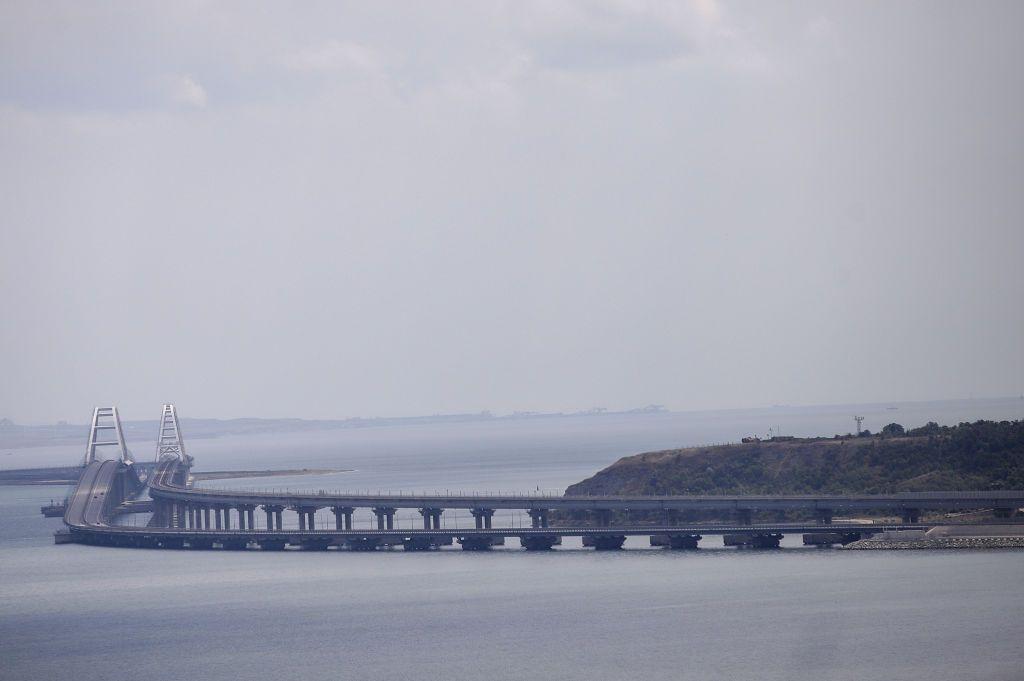
Ukraine's army struck energy and military targets on both sides of the Crimean Bridge, Ukrainian President Volodymyr Zelensky confirmed on June 21.
"This night, our long-range sanctions were applied to the occupiers' military logistics, oil industry, and air defense," Zelensky said in a Telegram post.
"Targets on both sides of the Crimean Bridge were hit: maritime logistics for oil transportation in the Krasnodar region and an oil depot in temporarily occupied Kerch," he added.
Kyiv has routinely targeted Russian military infrastructure in occupied territories, as well as oil and industrial facilities that support Moscow's war effort. The country has stepped up strikes on Crimea in recent weeks in an attempt to isolate the peninsula from mainland Russia.
The Crimean Bridge crosses the Kerch Strait — a 35-kilometer (21-mile) waterway linking the Black Sea and the Sea of Azov and separating Eastern Crimea from Russia's Taman Peninsula. The bridge serves as a key logistics corridor for Moscow.
Commander of the Unmanned Systems Forces Robert Brovdi, known by the call sign "Madyar," said in a post on Telegram that the strikes targeted oil terminals, gas compressors, and radar systems.
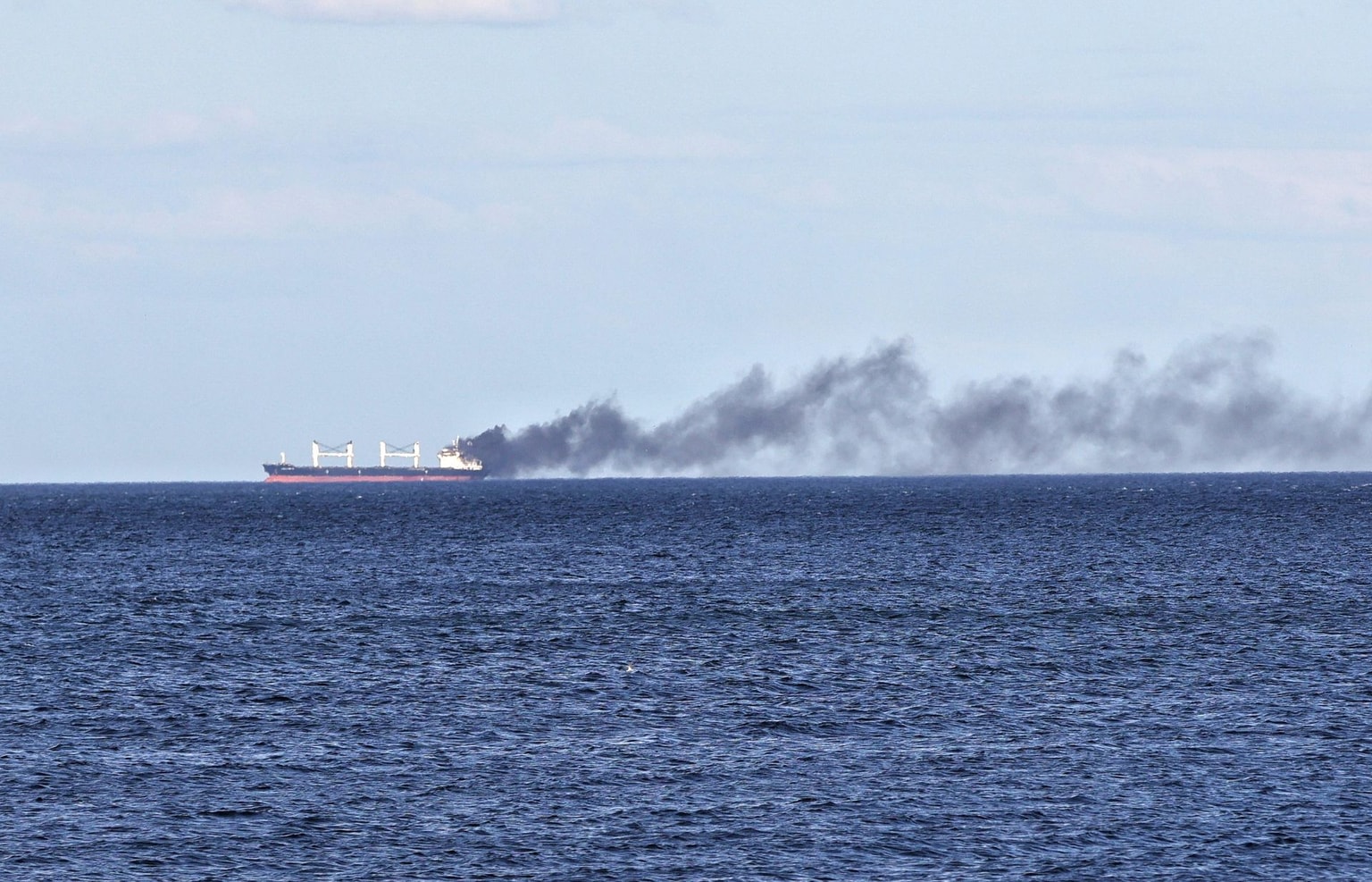
Photos and videos earlier posted to social media purport to show a fire at an oil terminal in the city of Kerch in occupied Crimea. Thick smoke was seen rising from the area of the port. Telegram media channels also reported that fuel transit terminals and port infrastructure on both sides of the bridge were struck, citing resident accounts.
A large fire was reported at the Kavkaz port on the Chushka Spit in Russia's Krasnodar Krai region, the Crimean Wind Telegram media channel reported.
The full extent of the damage was not immediately clear.
The strikes came amid a wider reported Ukrainian attack on the peninsula with explosions reported in Simferopol, Yevpatoria, and Sevastopol.
In the aftermath of the attack, Russian authorities instructed gas stations in Russian-occupied Crimea to completely suspend sales of fuel to civilians, only allowing sales to state services.
The complete ban comes after Russian proxy authorities in June implemented the use of "fuel vouchers" across occupied Crimea, as well as set limits to the amount of gasoline residents of the peninsula can purchase.
In recent months, Crimea has become the primary focus of Ukraine's effective "middle strike" campaign — using mid-range drones to hit Russian targets at operational depth behind the front, typically defined as between 25 and 200 kilometers (15 and 124 miles) from the front lines.
Kyiv has set its sights on targeting the energy facilities amid an ongoing fuel shortages in the region caused by Ukrainian strikes.
Defense Minister Mykhailo Fedoov said on June 17 that Ukraine's drone campaign is turning the peninsula "into an island," as Kyiv attempts to isolate Crimea from the rest of Russia with strikes on supply chains.
Earlier in the day, Ukrainian forces also hit an oil refinery in the Siberian city of Tyumen as Kyiv continues its campaign against Russia's energy sector to throttle Moscow's war machine.
read also
Russia preparing 'new massive strike,' Zelensky warns
President Volodymyr Zelensky warned Ukrainian citizens to be vigilant on the night of June 20, saying Russia was preparing to launch another large-scale attack.
"Tonight and in the coming hours, we must pay particularly close attention to air raid alerts," Zelensky said in his evening address. "The Russians have prepared for a new massive strike. Please, stay safe."
Zelensky's warning comes days after Ukraine launched two daring mass drone strikes against Moscow in one week, prompting vows of retaliation from the Kremlin.
Russian Foreign Minister Sergey Lavrov on June 18 threatened fresh attacks on "targets upon which the combat effectiveness of the Ukrainian armed forces directly depends." His comments were a direct response to Ukraine hitting Moscow with the largest attack against the Russian capital of the full-scale war.
The attack disabled the Moscow Oil Refinery, exacerbating a nationwide fuel shortage and clogging the city with smoke.
Zelensky said attacking Moscow was a "just response to Russian strikes," which have continued to intensify in spring 2026. Two mass missile attacks against Kyiv in June caused widespread damage to cultural and historic sites, including the Kyiv Pechersk Lavra — a UNESCO World Heritage Site and one of Ukraine's most important religious symbols.
As Zelensky issued his warning to Ukrainian civilians the evening of June 20, an aerial alarm was active over Kyiv.
Zelensky's address also included another warning — directed at Belarus.
"Ukraine has repeatedly signaled that Russia's involvement of Belarus in this war could lead to extremely dangerous consequences," the president said.
Zelensky claimed that Kyiv was aware of military equipment installed along the Belarus-Ukraine border to help Russian forces launch drone strikes against Ukrainian territory, including attacks against Zhytomyr, Rivne, and Volyn oblasts.
"Belarus has time to dismantle this equipment," he said. "We are also aware of every factory in Belarus that is working for Russia and supporting its war."
The remarks come a day after Zelensky issued an ultimatum to Belarusian dictator Alexander Lukashenko, saying Minsk had one week to remove the equipment or Ukraine would take action itself. The comments represent one of Kyiv's most direct public warnings toward Belarus since Russia's full-scale invasion began in February 2022.
Zelensky mails revoked Polish medal back to Warsaw
President Volodymyr Zelensky returned his Polish medal to Warsaw on June 20 after Polish President Karol Nawrocki stripped him of the country's highest honorary title during a diplomatic row over the name of a Ukrainian military unit.
Sending the medal back via Nova Post, Ukraine's leading postal service, which operates branches across Poland, Zelensky thanked the Polish people for their support and solidarity during Russia's full-scale invasion.
Writing a message on social media, he stressed that Ukraine would remain open to communication with Poland to prevent "misinterpretations of the complex and painful pages of our peoples' past."
Nawrocki revoked Zelensky's Order of the White Eagle on June 19 following public outcry over Zelensky's decision to name a serving Ukrainian military unit after the Ukrainian Insurgent Army (UPA) — a World War II-era nationalist organization that is remembered in Poland for the massacre of Polish civilians in the Volyn region.
Zelensky was presented with the award in 2023 by then-President Andrzej Duda.
"(The Order of the White Eagle) signifies a special connection with the Polish state and particular gratitude from the people. Such a symbol requires not only merit but also respect for the values that form the foundation of our community," Zelensky wrote.
"Therefore, if it is considered that this special symbol can remain with Catherine II, Benito Mussolini, and Gerhard Schroeder, then we in Ukraine will not argue with this," he added, referencing historical recipients of the award who have not been stripped of the title.
While Zelensky remained quiet on the dispute for a day after Nawrocki's announcement, Ukrainian officials quickly voiced their anger, with many stressing that hostility between Poland and Ukraine ultimately benefits Moscow.
Several other Ukrainian officials, including Kyrylo Budanov, the head of the Presidential Office, renounced their own awards from the Polish government as an act of protest.
Nawrocki commented on the Ukrainian backlash on June 20, saying the Polish people "know what war is."
"Yes, we know what war is, we know what the fight for independence entails, and we understand the nature of the post-Soviet — now Russian — threat," Nawrocki told Polish broadcaster TVN24.
"However, we are a proud Polish nation, and we have a threshold of tolerance regarding matters that affect us and our allies. That threshold has been crossed, which is why I revoked the Order of the White Eagle awarded to President Zelensky."
The tensions come a week before the Ukraine Recovery Conference in Gdansk, which Zelensky is due to attend. There were concerns in Kyiv earlier this month that Zelensky would not participate in the conference — Ukraine's largest economic and business event — due to the Polish controversy.
Russian oil, gas sites in Crimea and Siberia hit by Ukrainian drones
Ukrainian forces hit four gas compressors in Russian-occupied Crimea and an oil refinery in the Siberian city of Tyumen on June 20, the military said, as Kyiv continues its campaign against Russia's energy sector to throttle Moscow's war machine.
Ukraine's Unmanned Systems Forces launched a wave of drones at Russian-occupied territories, hitting four gas compressors in Crimea, a bridge across the Henichesk Strait that connects Crimea to occupied Kherson Oblast, and 13 other military facilities in the occupied territories, Commander Robert Brovdi, known by the call sign "Madyar," wrote on Telegram.
The attack began the previous day, with Brovdi posting footage of Ukrainian drones hitting the Hlibivka underground gas storage facility in western Crimea in the evening on June 19. Smoke was also seen rising from the Tavriiska Thermal Power Plant in the city of Simferopol.
The operation is part of Ukraine's "middle strike" campaign, in which Ukrainian forces use mid-range drones to hit Russian targets at operational depth behind the front, typically defined as between 25 and 200 kilometers (15 and 124 miles) from the front lines.
A wave of Ukrainian middle strikes have targeted occupied Crimea in recent weeks. Kyiv aims to turn the peninsula "into an island," Defense Minister Mykhailo Fedorov said on June 17, by striking Russian supply chains to isolate Crimea from Russia.
0:00/3:271×Footage from Ukraine's Unmanned Systems Forces shows a series of Ukrainian attacks on gas and military infrastructure in Russian-occupied territories. (Robert Brovdi / Telegram)
Around 2,000 kilometers from Crimea, Ukrainian drones also attacked the Tyumen oil refinery, which processes 7.5 million to 9 million metric tons of crude oil per year, Serhii Sternenko, an advisor to Ukraine's defense minister, wrote on social media.
"Local residents reported hearing at least two explosions. Earlier, a drone alert had been declared in the city, and the plant was urgently releasing pressure from its system," he wrote.
President Volodymyr Zelensky later praised the operation in his evening address on June 20.
"Our long-range sanctions have reached the Tyumen region in Russia — which is also an oil-refining hub — more than 2,000 kilometers from our national border. Effective," he said.
Russian authorities claimed that the attack on the refinery was repelled by air defense units. Regional Governor Aleksandr Moor said that emergency crews were working at the sites where wreckage from drone debris had fallen and that the refinery staff had been evacuated.
Moor also claimed that the facility was not damaged in the attack.
The Kyiv Independent could not verify these reports at the time of publication.
The strike on the Tyumen refinery came just two days after Kyiv launched its biggest-ever drone attack on Moscow, hitting the capital's major oil refinery and igniting storage tanks and processing and refining units.
"This is an entirely justified response to Russian strikes on our cities and communities and another important result of our warriors' work against facilities that support Russia's war machine," President Volodymyr Zelensky said, adding that "it is time to end this war."
Russia's oil output reportedly fell to a one-year low last month as Ukraine steps up its campaign on oil infrastructure.
At least 5 dead, 12 injured in Russian bombing in Zaporizhzhia
Russia attacked the southern city of Zaporizhzhia with guided aerial bombs on June 20, killing at least five people and injuring 12 others, Zaporizhzhia Oblast Governor Ivan Fedorov said.
Russian forces launched nine glide bombs on the regional capital, according to preliminary information, Fedorov said.
Five people were killed, including one woman whose body was pulled from beneath the rubble of a destroyed home. Another 11 victims were injured in the attack.
The air strike damaged residential and non-residential buildings, including civilian infrastructure and an equestrian sports club, the governor said.
Nineteen multistory buildings were damaged in the attack, Zaporizhzhia City Council Secretary Regina Kharchenko reported.
Fedorov published photos and videos on his Telegram channel showing damage to houses and apartment buildings, along with thick plumes of smoke rising above the city. Even as the governor shared updates on the latest attack, he issued new warnings to residents about possible ballistic missile strikes in the area.
"Russia is a terrorist state," Fedorov said.
During his evening address on June 20, President Volodymyr Zelensky offered "condolences to the families and loved ones of the victims."
The city of Zaporizhzhia, home to approximately 710,000 residents before Russia's full-scale invasion in 2022, is a frequent target of Russian attacks. The capital of a partially occupied region, the city lies roughly 40 to 50 kilometers (25 to 31 miles) from the front line.
Zaporizhzhia regularly comes under fire from Russian drones, artillery, missiles, and aerial bombs. A combined guided bomb and drone strike on May 5 killed 12 people and injured 42 — making May one of the deadliest months for civilians since the start of the full-scale war, according to the United Nations.
In spring of 2026, Russia also set a new record for guided bomb attacks on Ukraine, dropping 7,987 glide bombs in March alone.
Guided aerial bombs have a shorter range than missiles, but are cheaper to produce. They are launched from aircraft behind the front lines within Russian territory or Russian-occupied territories — beyond the reach of Ukrainian air defense.
The weapons are nearly impossible to shoot down due to their heavy iron construction and their tendency to approach at extremely fast speeds.