Polish president strips Zelensky of honorary title over military unit controversy, as Kyiv calls decision 'strategic mistake'
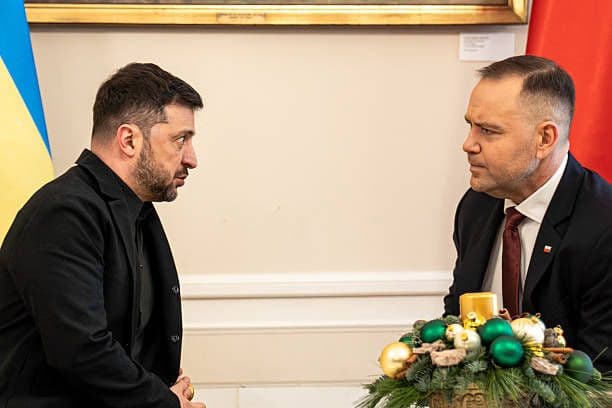
Karol Nawrocki, Poland's president, right, and Volodymyr Zelensky, Ukraine's president, at the Presidential Palace in Warsaw, Poland, on Friday, Dec. 19, 2025. At a pivotal summit in Brussels, European leaders agreed to provide Ukraine with a 90 billion euros loan to support its military and economic needs over the next two years. (Damian Lemanski/Bloomberg via Getty Images)
 on Google
Editor's note: This article has been updated with additional details and comments from officials.
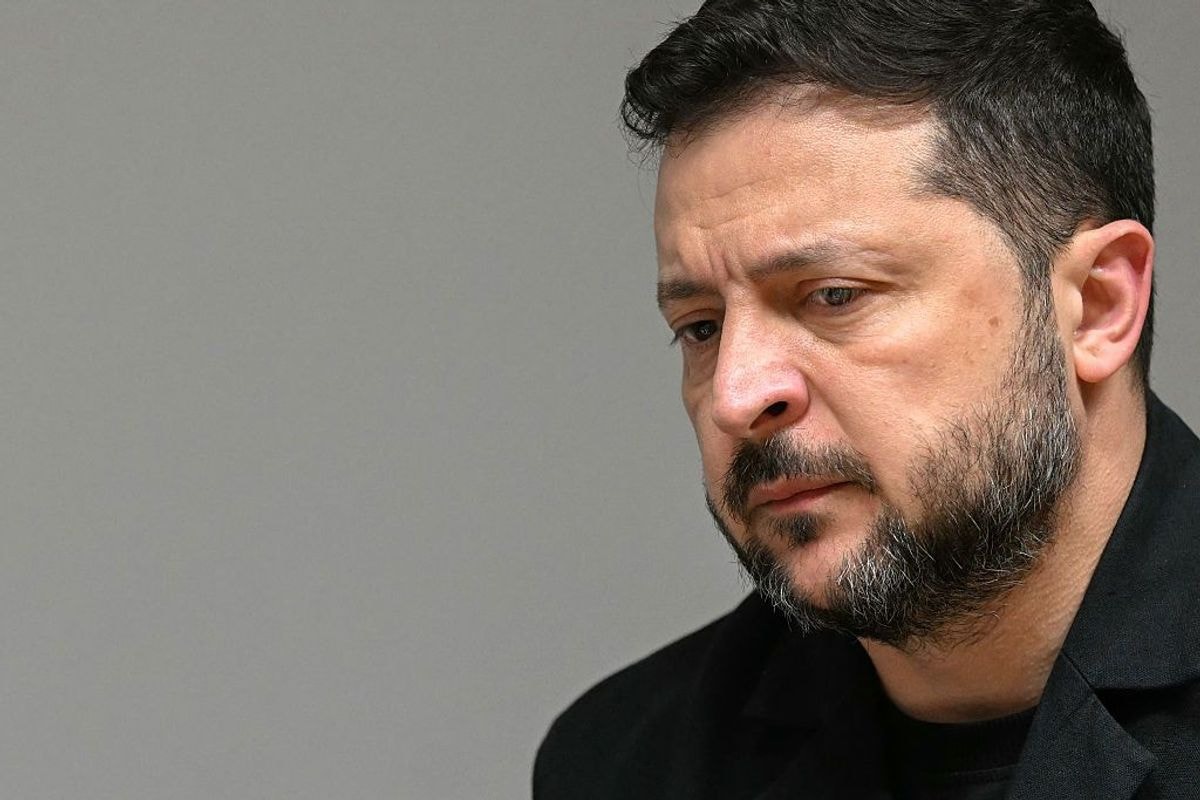
Polish President Karol Nawrocki stripped President Volodymyr Zelensky of the country's honorary Order of the White Eagle title on June 19 following public outcry over Zelensky's decision to name a serving Ukrainian military unit after the Ukrainian Insurgent Army (UPA).
A World War II-era organization that fought for Ukraine's independence, the UPA is remembered in Poland primarily for its role in the massacres of Polish civilians in the Volyn region — one of the most painful chapters in the Ukrainian-Polish history.
Tens of thousands of Poles were killed in what is today western Ukraine, then under Nazi occupation, while thousands of Ukrainians were killed in retaliatory Polish attacks.
"We must not betray the sacrifices of our ancestors with silence. These are graves that must not be forgotten," Nawrocki said in a video address.
"Poland has repeatedly signaled to the Ukrainian side the particular importance of this issue. We have conveyed our position and our expectation that the consequences of this decision for relations between our countries be reconsidered. Ultimately, the Ukrainian side’s position has not changed," the Polish president added.
Zelensky's decision has inflamed Polish politics, with officials and public figures, particularly among the country's conservative political figures, widely criticizing the decision. A poll conducted earlier this month found that 52% of Poles say their attitude toward Ukraine and Ukrainians has worsened due to Kyiv renaming the military unit.
Polish Prime Minister Donald Tusk wrote in a post on X that the latest controversy "pleases Putin and shocks our allies," further calling on the Polish and Ukrainian presidents to "tone down emotions, not to fuel tensions" — echoing previous call for both sides to engage in an open dialogue and not to allow Moscow to benefit from a Polish-Ukrainian rift.
Kyiv fires back as tempers flare
The revocation prompted swift condemnation from Kyiv, with Ukrainian officials sharply criticizing Nawrocki amid a renewed diplomatic rift between the two neighbours, whose relations have repeatedly been strained in recent years over unresolved historical grievances.
In response to Zelensky being stripped of his award, Kyrylo Budanov, the head of the President's Office, said on June 20 that he had renounced Poland’s Golden Officer's Cross of the Order of Merit, which he received last year.
"I cannot stand aside and simply watch as the flywheel of hatred is unreasonably and artificially spun against our citizens," he wrote on Telegram.
"Ukraine will undoubtedly assess this event. But despite everything, we will continue to stand firmly on the principles of open partnership with all our allies. However, a partnership of equal rights, based on the principles of mutual respect," he added.
Ukraine's ambassador to Poland, Vasyl Bodnar, also returned his award, the Knight's Cross of the Order of Merit of the Republic of Poland. He stressed that Zelensky is a "a friend of Poland" and wrote on social media that the dispute benefits Moscow.
Former Ukrainian Presidents Leonid Kuchma (1994-2005), Viktor Yuschenko (2005-2010), and Petro Poroshenko (2014-2019) announced on June 20 that they, too, would renounce their Order of the White Eagle honors.
"I believe that friendship and allied relations between Ukraine and Poland will be preserved," Kuchma said. "But today I feel sad and anxious."
Poroshenko urged Ukrainians and Poles not to haggle over history.
"I don't want Poles to edit our textbooks, and I in no way claim that we Ukrainians should correct Polish textbooks, because otherwise they'll send us a joint textbook from Moscow," he said.
Foreign Minister Andrii Sybiha called Nawrocki's decision a "strategic mistake... from which only Moscow benefits."
"We regret that emotions have prevailed in Warsaw and have pushed Polish politicians to take unjustified, impulsive, and disrespectful steps not only toward President Zelensky, but primarily toward the Ukrainian state," Sybiha continued.
In light of the revocation of Zelensky's title, Sybiha said he is refusing the Commander's Cross Order of Merit award previously conferred onto him in 2022 by former Polish President Andrzej Duda.

Chairman of the Verkhovna Rada Ruslan Stefanchuk took an even firmer stance, calling the move a "catastrophic mistake that will have far-reaching negative consequences for the Ukrainian–Polish partnership."
Stefanchuk lambasted the timing of Nawrocki's announcement, which comes a week before the start of the Ukraine Recovery Conference set to be held in the Polish city of Gdansk, calling it "deliberate, planned, and harmful."
"Ukraine is fighting not for medals or orders, but for its survival and independence. And if short-sighted internal political games are more important to someone than unity in the face of a common enemy, that remains solely on their conscience."
Ukrainian Member of Parliament Mykola Kniazhytskyi, the head the Verkhovna Rada's Cultural Subcommittee and co-head of the Ukraine-Poland Interparliamentary Group, also decried Nawrocki's decision, writing on social media that the decision "shows President Nawrocki’s attitude toward the entire Ukrainian people and the Armed Forces of Ukraine."
Sybiha previously assured Polish partners that the Ukrainian soldiers who requested the UPA name change "had absolutely no anti-Polish intent."
"For them, it was about honoring those who, similarly many years ago, fought against imperial Moscow, Bolshevik-communist occupation, and repression," Sybiha said.
While Zelensky himself did not immediately comment on Warsaw's decision, he shared photos on June 20 of him mailing the Order of the White Eagle back to Nawrocki.
"We believed that the Order of the White Eagle, awarded in 2023, was meant for the Ukrainian People and our army. That is what was said at the time," Zelensky wrote on social media.
"Today, I sent the Order back to the President of Poland. I believe the future will confirm the respect Ukrainians deserve."
A deepening diplomatic rift
As rhetoric in both Warsaw and Kyiv begins to sharpen, questions surrounding the broader diplomatic implications between the two allies continue to grow.
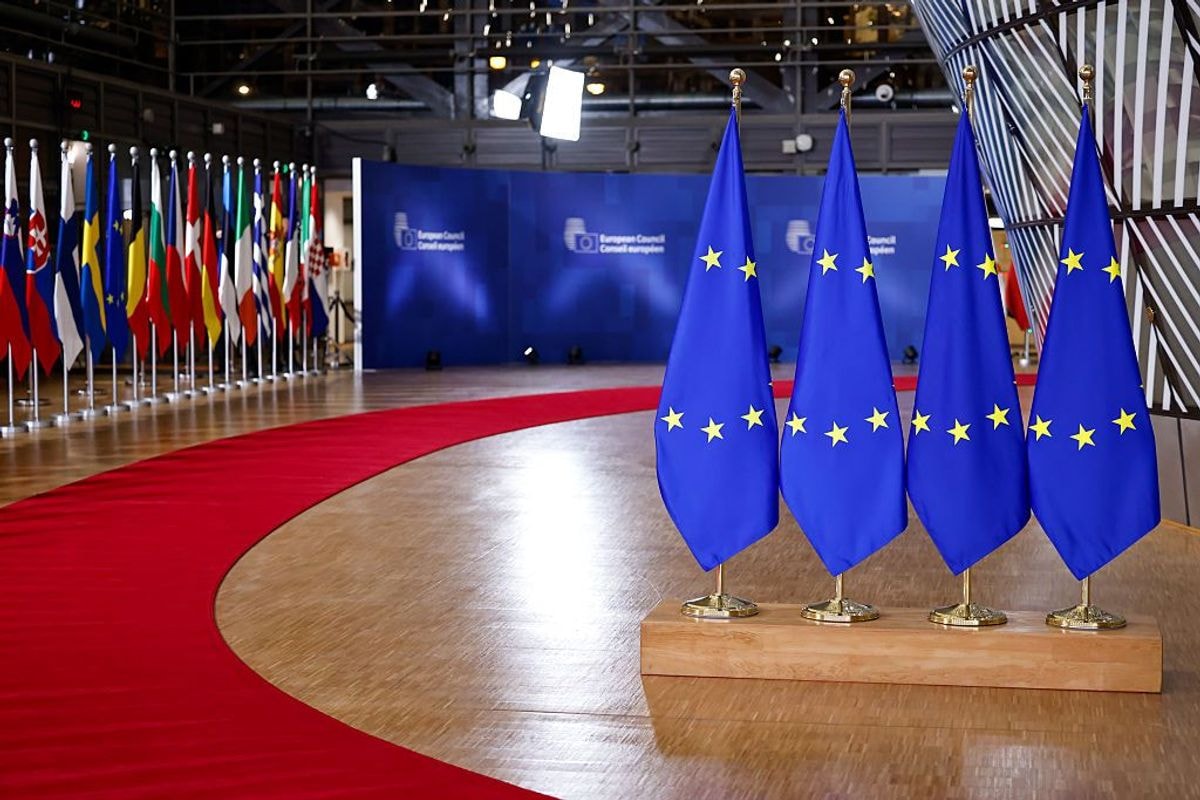
In a thinly veiled threat, Nawrocki warned Kyiv about the importance of maintaining positive relations with Poland, just days after the EU opened the first of six so-called enlargement clusters with Kyiv.
"Ukraine’s path toward European structures also requires a willingness to honestly confront the difficult chapters of its own history. A united Europe was built on the rejection of totalitarianism and the cult of violence. These principles must apply to everyone," Nawrocki said. "For those who do not understand this, there can be no place in the European Union, and Poland will certainly not allow it."
Warsaw has previously issued objections for Ukraine's progress toward accession into the European Union, stemming from fears about Ukraine’s powerful farming and trucking industries. The EU's Enlargement Chief Marta Kos said on June 8 that the issue had "been solved at the working level."
Nawrocki himself has previously expressed his own skepticism about Ukraine's fast-tracked accession into the EU amid the ongoing war, telling reporters in September 2025 "discussion should be postponed."
Despite previous resistance, all 27 EU member states formally agreed on June 15 to open the first accession negotiation cluster with Ukraine and Moldova.
Poland has been a close ally of Kyiv since the outbreak of the full-scale Russian invasion in 2022, providing billions of dollars in aid, a key logistical route for military aid flowing to Ukraine, and currently hosts close to 1 million Ukrainian refugees.
Despite the latest controversy, Nawrocki said that "nothing has changed" in regards to Warsaw's continued support for Ukraine amid Russia's full-scale invasion.
"We have supported and continue to support Ukraine because we know that Russian aggression poses a threat to the security of Poland and all of Europe," he said. "Russia is the aggressor, and Putin is a criminal who bears responsibility for unleashing a war that has brought Europe its biggest armed conflict since the end of World War II."
Editor's note: Got an opinion on anything you've read in the Kyiv Independent so far? Send it to letters@kyivindependent.com, and it may appear in our Letters section.
Note from the author:
Hi, this is Dmytro Basmat, the author of this article.
At the Kyiv Independent, we deliver breaking news on global geopolitical developments, and show how it continues to shape Ukraine's relations with its neighbors today.
This work is only possible thanks to the support of readers like you. If you value independent journalism, please consider joining the Kyiv Independent's community.