'Nature of the threats has changed' — Kyiv removes protective structures from city monuments
 on Google
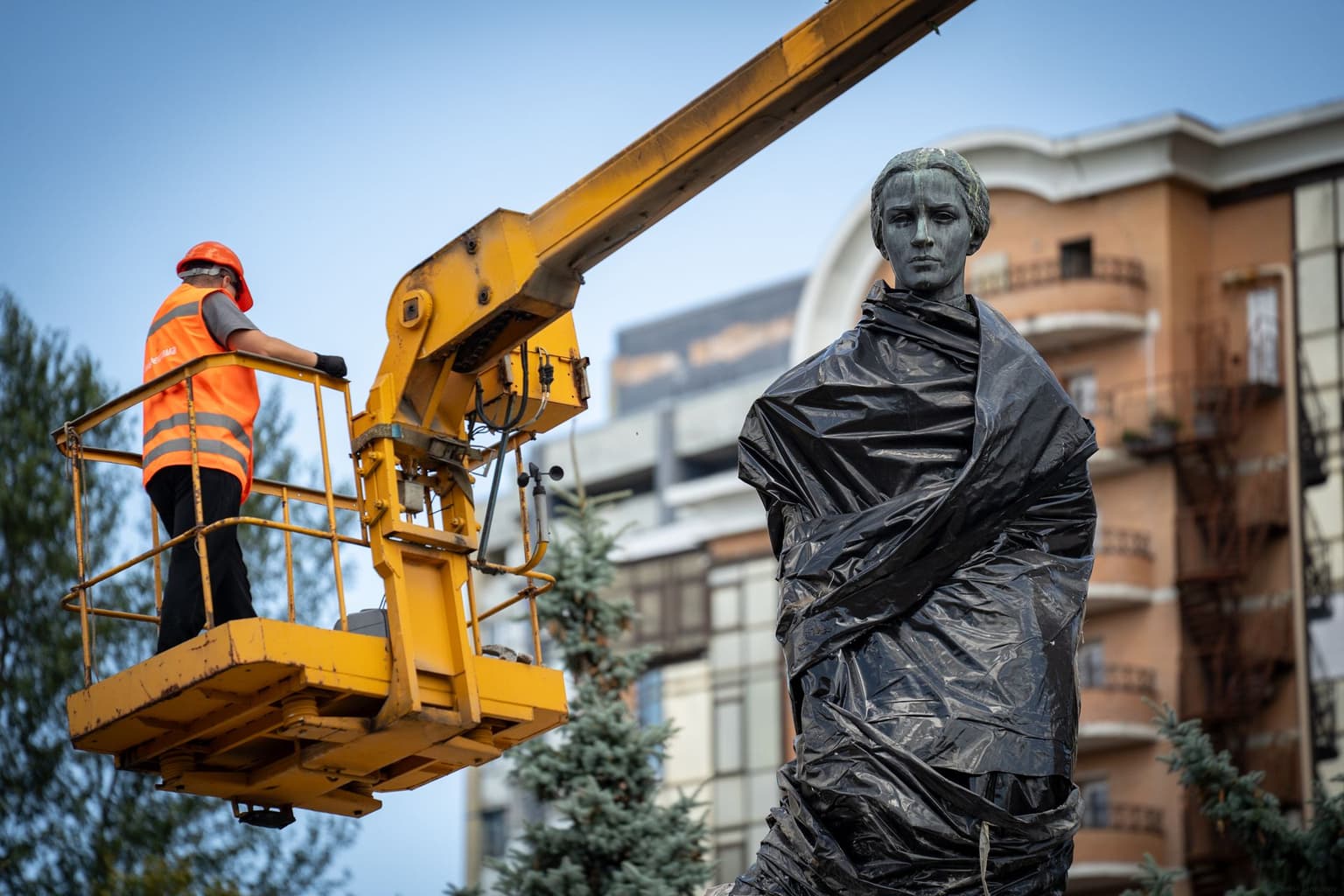
Kyiv removed the protective structure from the statue of 19th-century author Lesia Ukrainka in the Pechersk District as part of a "phased removal" of such structures from monuments across the city, officials reported on July 30.
Monuments throughout Kyiv have been enclosed in sandbags, wooden frames, and other temporary barriers since the start of the full-scale war to shield them from blast waves and shrapnel.
The decision to begin removing the protective structures, according to officials, followed a marked escalation in Russia’s deployment of ballistic missiles and other high-powered weaponry — threats that the protective structures are not designed to withstand.
"At the beginning of the full-scale invasion, protecting monuments with modular structures and sandbags was a necessary measure. It helped minimize the risk of damage from shrapnel and the blast waves of attacks at that time," Serhii Anzhyiak, director of the city's Department of Culture, said.
"However, after more than four years of war, the nature of the threats has changed, and so have our approaches to preserving monuments."
Additionally, city officials noted that moisture accumulating inside the protective enclosures poses an environmental risk to the integrity of the statues' materials.
The situation highlights the complex dilemma of preserving Ukraine’s cultural heritage, which has been repeatedly targeted by Russia throughout the full-scale war.
In late June, Kyiv announced plans to remove protective coverings from statues to allow for professional cleanings of the monuments and the surrounding areas. The city government noted that all the work was being carried out by volunteers and that no city budget funds were reportedly being used for the conservation efforts.
According to Anzhyiak, protecting monuments "means more than simply covering it."
"Above all, it means being able to continuously monitor its condition and carry out timely preventive conservation and restoration work. This approach offers the best chance of preserving our cultural heritage under wartime conditions," Anzhyiak said.