At least 8 killed, more than 50 injured across Ukraine as Russia launches massive ballistic missile, drone attack
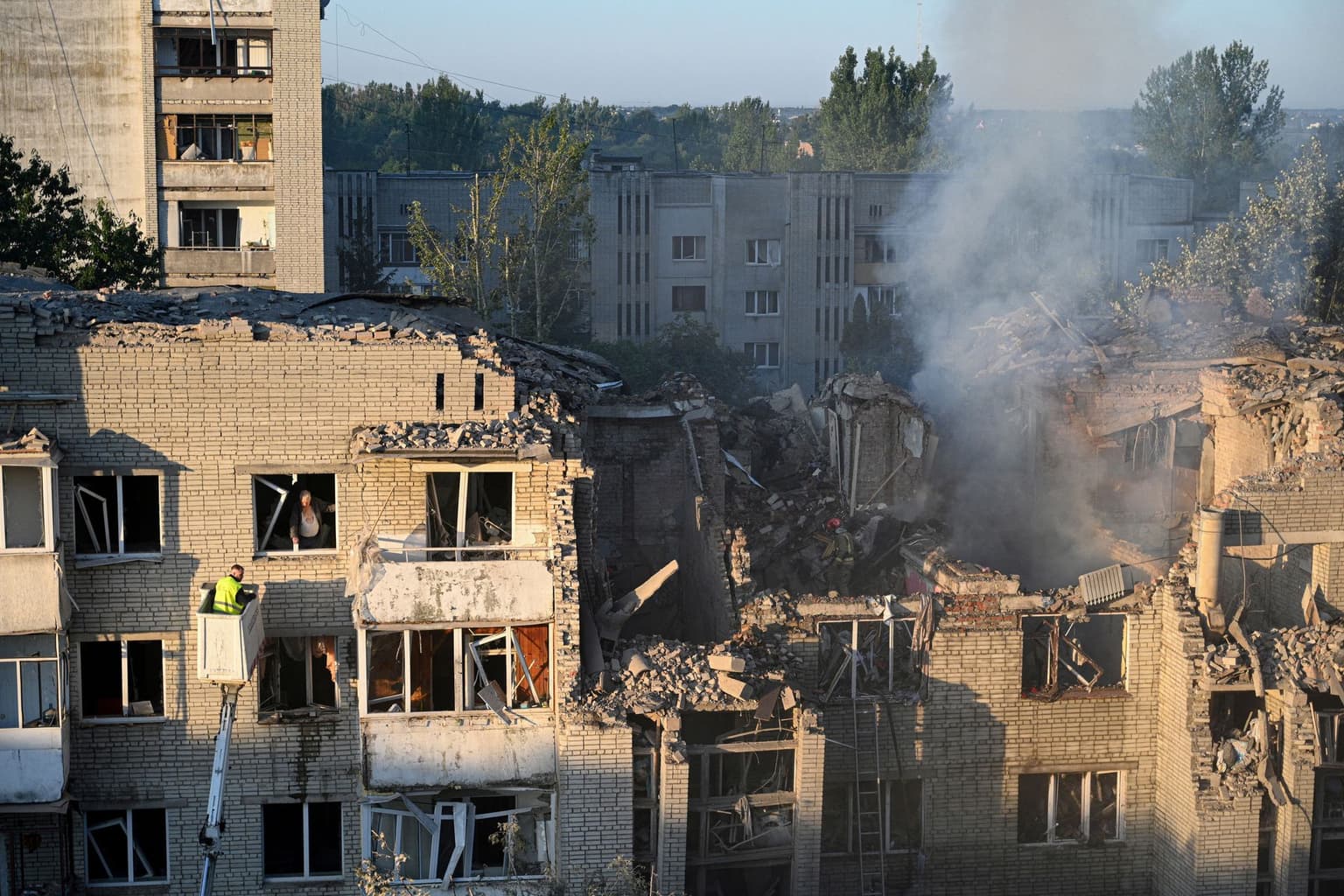
First responders operate at a residential building partially destroyed by Russian missile strikes in Lviv, Ukraine, on July 30, 2026. (Yuriy Dyachyshyn / AFP / Getty Images)
 on Google
Editor's Note: This is a breaking story and is being updated.
A mass Russian aerial attack on Ukraine overnight on July 30 killed at least eight people, injured more than 50 others, and triggered air raid alerts in eastern Poland after what is believed to have been a Russian missile fell into a field in the Lublin region.
Damage and casualties were reported in cities across Ukraine, including Kyiv and Lviv, just hours after President Volodymyr Zelensky warned that Russia was preparing another large-scale attack.
In Radushne near the city of Kryvyi Rih, a direct hit on a family home by a Russian Iskander missile killed at least five members of the same family of ten, Zelensky said in a post on social media.
The parents and three children — a girl aged six, and two boys aged 11 and 17 — are known to have died, and the fates of five others are being determined. Local media reported that all ten members of the family had been killed. Rescuers are continuing to search through the rubble of the family's destroyed home.
Local outlet Suspilne Dnipro reported that at least six people were killed, nine were injured, and five remain missing following the Russian attack on the village of Radushne.
"This Russian evil can only be stopped by the whole world. No one in the world can be left alone against such terror," Zelensky said in a post on social media.
"And when we say that Ukraine needs Patriot missiles, when we seek capabilities to defend itself against Russian ballistic missiles, we are not talking about abstractions — we are talking about precisely such families."
Also amid the attack, Polish Prime Minister Donald Tusk said an object that crashed into a Polish field was probably a Russian missile.
"All the indications are that it was a Russian Kh-101 ballistic missile, but we want to be 100% certain about the type of missile and who launched it," Tusk said at the site of the incident near the village of Tarnawa-Kolonia in the Lublin region.
In Ukraine overnight, explosions rang out across several oblasts, including Ukraine's far-western regions, located hundreds of kilometers from the front line.

Attacks target central Ukraine, regions bordering NATO countries
Throughout the night, Ukraine's Air Force warned of ballistic and cruise missiles heading toward various regions of the country, including Ukraine's far west, as air raid alerts were issued across the entire country.
Multiple explosions were heard in the western city of Lviv, located only about 70 kilometers (45 miles) from the Poland-Ukraine border, beginning around 4:40 a.m., according to public broadcaster Suspilne.
Maksym Kozytskyi, head of the Lviv Oblast Military Administration, said that two high-rise residential buildings were struck in the city. At least 38 people were injured in the attack on Lviv, Kozytskyi added.
Around 5 p.m. local time, Lviv Mayor Andrii Sadovyi said the body of 35-year-old police officer Volodymyr Shandra was recovered from the rubble.
"I never thought that by morning I'd be left barefoot, with nothing. My home was completely torn apart."

"I didn't hear the alert because I was asleep," 67-year-old Iryna Yefimenko, a resident of one of the buildings that was hit, told the Kyiv Independent.
"I only heard it after something hit me on the head, the window flew into the room."
Pointing to her damaged apartment, she added: "When I went to bed last night, I never thought that by morning I'd be left barefoot, with nothing. My home was completely torn apart."
Moments after the attack on Lviv, explosions also rang out in the city of Ivano-Frankivsk, as well as the surrounding oblast that borders Romania.
Dozens of missiles were reportedly flying over the country's western regions amid the attack.
Multiple explosions were also heard in the capital, Kyiv, beginning at 1:18 a.m. local time, according to Kyiv Independent journalists on the ground. A second wave of explosions was later heard around 3:50 a.m.
Ukraine's State Emergency Service reported that one person was killed and three others injured in the capital amid the attack.
Fires broke out at a garage in Kyiv's Sviatoshynskyi district, as well as a market in the Obolon district after falling debris fell at the sites according to Mayor Vitali Klitschko. A large fire was seen in the direction of Obolon by a Kyiv Independent journalist.

On the outskirts of the capital in Kyiv Oblast, three homes were damaged in Brovary. A total of five people were injured in the strike, including one child.
At the site of the damaged market, Svitlana, 63, told the Kyiv Independent that the strike destroyed two storage units where her family had kept vintage bags, porcelain, glassware, paintings, icons, and antiques collected over two decades.
"You spend 20 years collecting, searching, looking for these things. And now we have been left with nothing. All of the merchandise burned," she said.
Among the destroyed items were wooden display cabinets dating back to the late 19th century, early 20th-century tableware, crystal, porcelain, icons, and paintings. Svitlana said many of the objects had been handmade and could not be replaced.
"People did not come here only to find something cheap. These things have a soul. Some of them were crafted by hand, and they carried history," she said.
In response to the Russian attack, Poland's Air Force said it scrambled fighter jets to protect Polish airspace.
Bracing for another Russian onslaught
President Volodymyr Zelensky warned earlier on July 29 that Russia would likely carry out a massive attack on the country overnight, in a message posted on social media.
"The Russians prepared a massive attack several days ago, and there is a high probability that the strike will be carried out tonight," Zelensky said in a post on X.
"Please, in all regions of Ukraine, pay attention to air raid alerts today and take care of yourselves," he added.
Thousands of people bunkered down in Kyiv's metro stations amid warning of the attack. Social media reports point to overcrowding at some metro station in some of Kyiv's densest neighbourhoods.

Mass attacks have targeted Ukraine's capital with alarming frequency throughout spring and summer 2026. As Russia's offensive on the battlefield has slowed, Moscow has adopted a new tactic in its full-scale invasion of Ukraine: overwhelm the country's strained air defenses with ballistic missiles, attacking residential neighborhoods and cultural sites.
Russian President Vladimir Putin said on July 3 that Moscow's large-scale missile attacks against Ukraine "must continue."
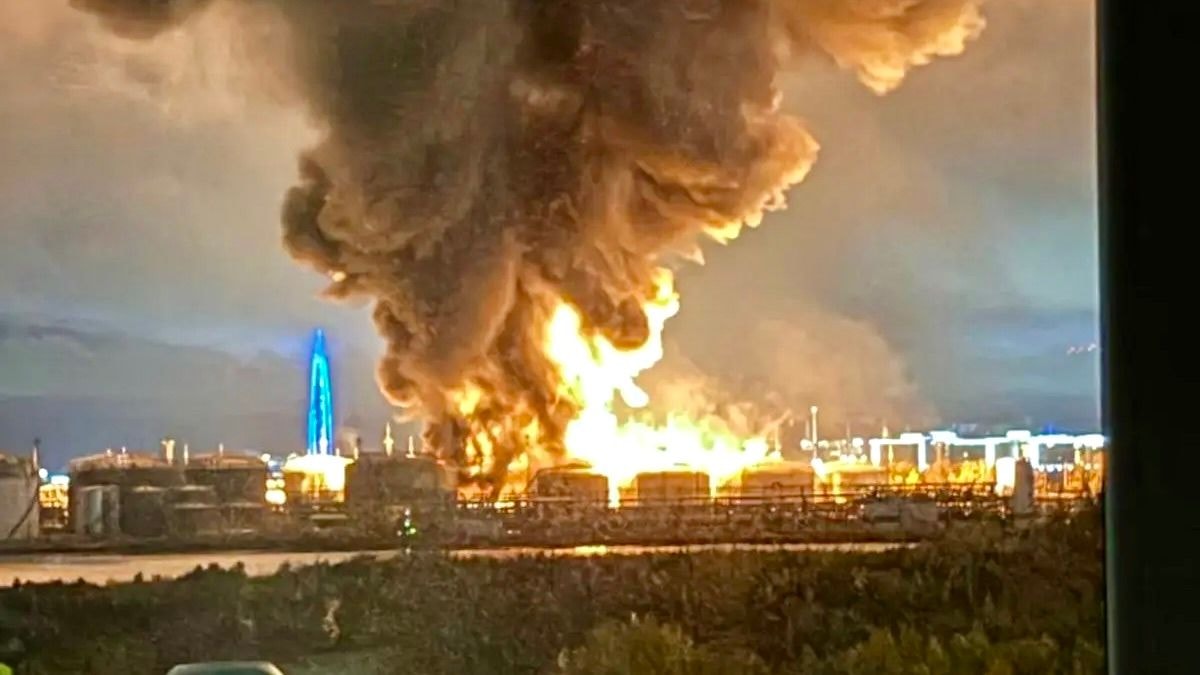
Ukraine has hit back, launching successful deep strikes against Russia's oil infrastructure and military facilities — even attacking traditional strongholds such as Moscow and St. Petersburg. The effectiveness of Kyiv's aerial campaign has changed the stakes of the war and mounted serious pressure on the Kremlin.
But setting refineries aflame in Russia does not protect the Ukrainian cities that have run out of Patriot interceptors, the only air defense ammunition capable of shooting down Russia's ballistic missiles.

It may, however, persuade Russia to accept a partial truce in the sky. Ukraine and the U.S. are preparing a new round of peace proposals to present to Moscow in the near future, including a ceasefire on aerial attacks, officials told the Kyiv Independent on July 24.
President Volodymyr Zelensky met with U.S. President Donald Trump at the White House on July 28 to discuss Patriot interceptors and reviving the peace process between Russia and Ukraine. The air truce proposal was reportedly on the agenda for their meeting.
Zelensky and Trump said afterwards that they held a good conversation, reflecting an apparent thaw in the White House's attitudes toward Kyiv. In a television interview following the meeting, Zelensky said Putin has lost the initiative in the war with Ukraine but stubbornly refuses to declare a ceasefire.