Russia's war of conquest and its war on civilians
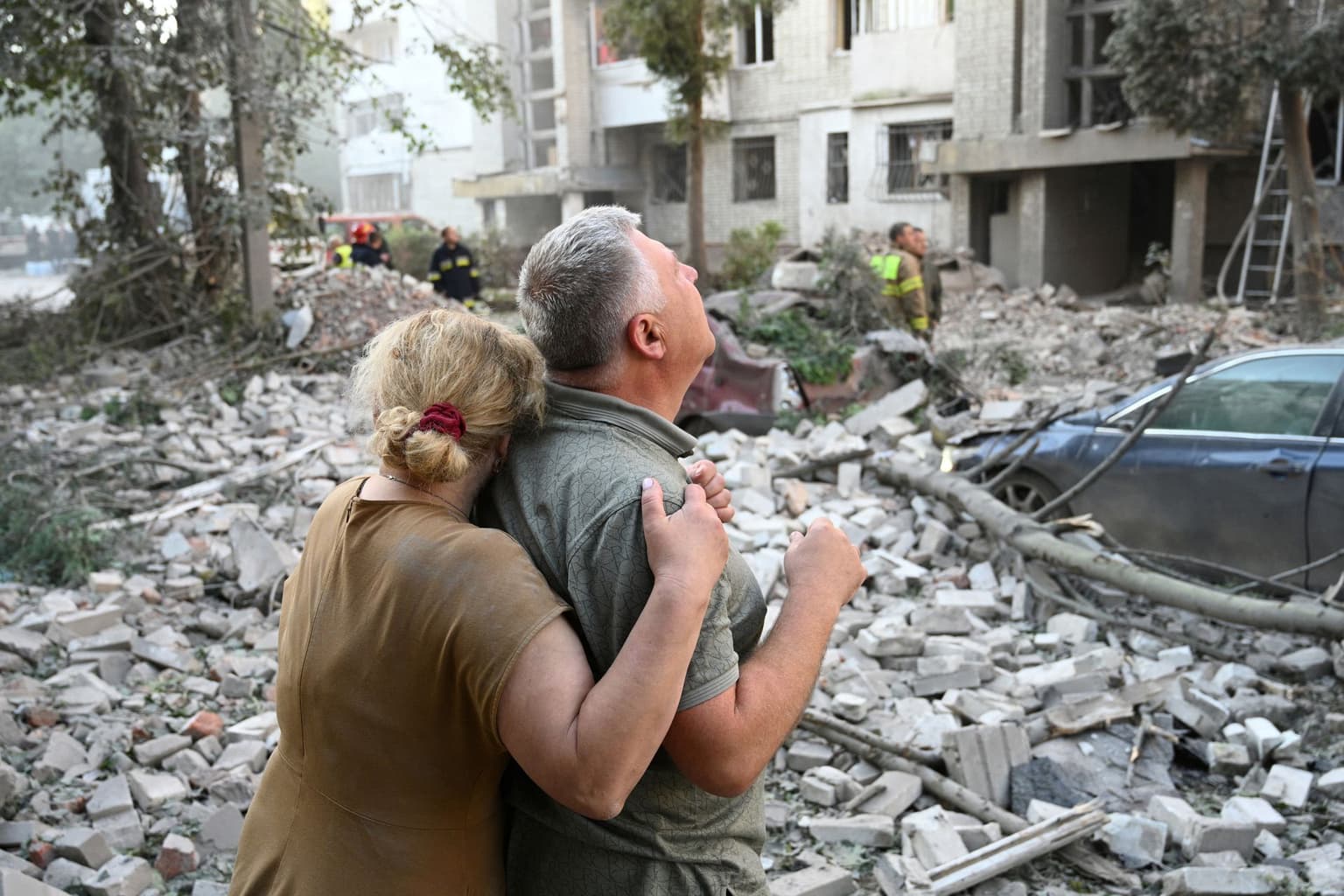
Local residents react outside a residential building partially destroyed by Russian missile strikes in Lviv, Ukraine, on July 30, 2026. (Yuriy Dyachyshyn / AFP / Getty Images)
 on Google
Irwin Redlener
Senior advisor to the Institute for Global Politics at Columbia University
The hotel where we like to stay in Lviv, one of Europe's most picturesque cities, sits on a small square, a block from City Hall. Cafes and cobblestones, church towers and small shops enchant visitors, though the city bustles with locals going about their daily lives.
Kitty-corner to our hotel is the Saints Peter and Paul Garrison Church, a 17th-century stone building that has long served the military and their families. Each morning during our visit, we woke to the sounds of funerals for soldiers from Lviv who had died on battlefields 600 miles to the east.
We watched the processions leave the church — the priest and dozens of mourners carrying a coffin through the city center, accompanied by a military dirge. Some of the fallen were professional soldiers; most, however, were not.
They were shopkeepers, teachers, entrepreneurs, ordinary Ukrainians who volunteered to defend their country from Vladimir Putin's invasion. Their pictures are displayed on easels along the corridor by the pews inside the church.
These soldiers died in a war provoked by an outrageous, illegal invasion — one that Russia justified with the false claim that Ukraine was run by Nazis and, anyway, he asserts, wasn't even a legitimate nation. That is the war that has cost Putin, by conservative estimate, 1.2 million of his own troops and made Russia a pariah to much of the world.
Yet, there is a second war, one that has consumed Ukraine since the full-scale invasion on Feb. 24, 2022 — a war that explicitly targets civilians, far from the killing fields of the front line. The war on civilians has been one of the most defining features of Russia's aggression.
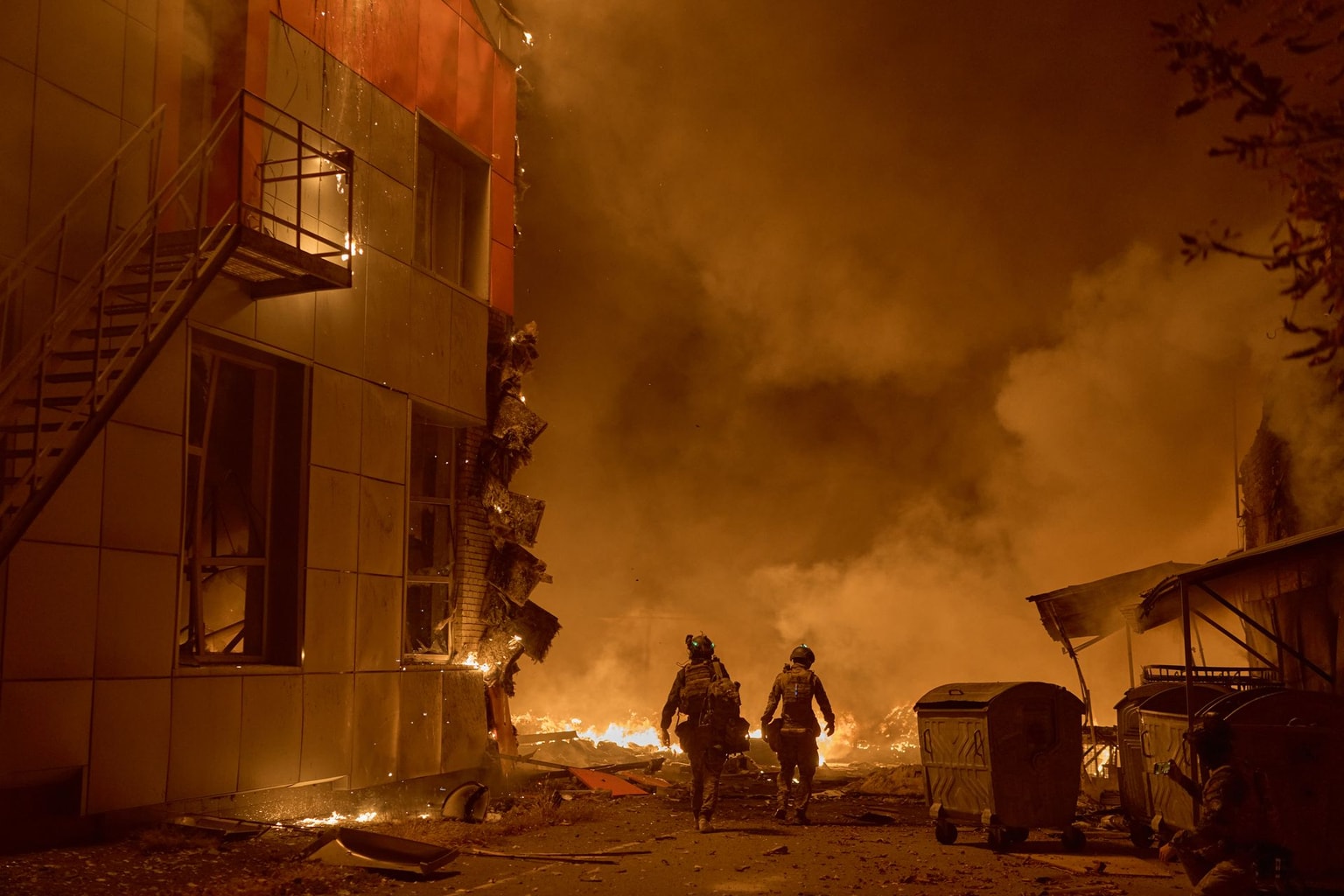
Moscow has used its vast supplies of ballistic and cruise missiles, along with waves of drones, to strike more than 2,500 schools and at least 3,000 healthcare facilities. It hits energy infrastructure to knock out heat and electricity through frigid winters, and it regularly targets apartment buildings. At this point, there is no doubt that the targets of these attacks are ordinary Ukrainians.
Earlier this month, we visited the site of a home in a Lviv suburb that had been hit by a missile, destroying two houses and killing a family, including a 15-year-old girl.
That afternoon, I made rounds with doctors at St. Nikolas Children's Hospital and met a teenager recovering from massive third-degree burns — sustained when a Russian incendiary bomb hit her home in eastern Ukraine, killing her mother and grandfather.
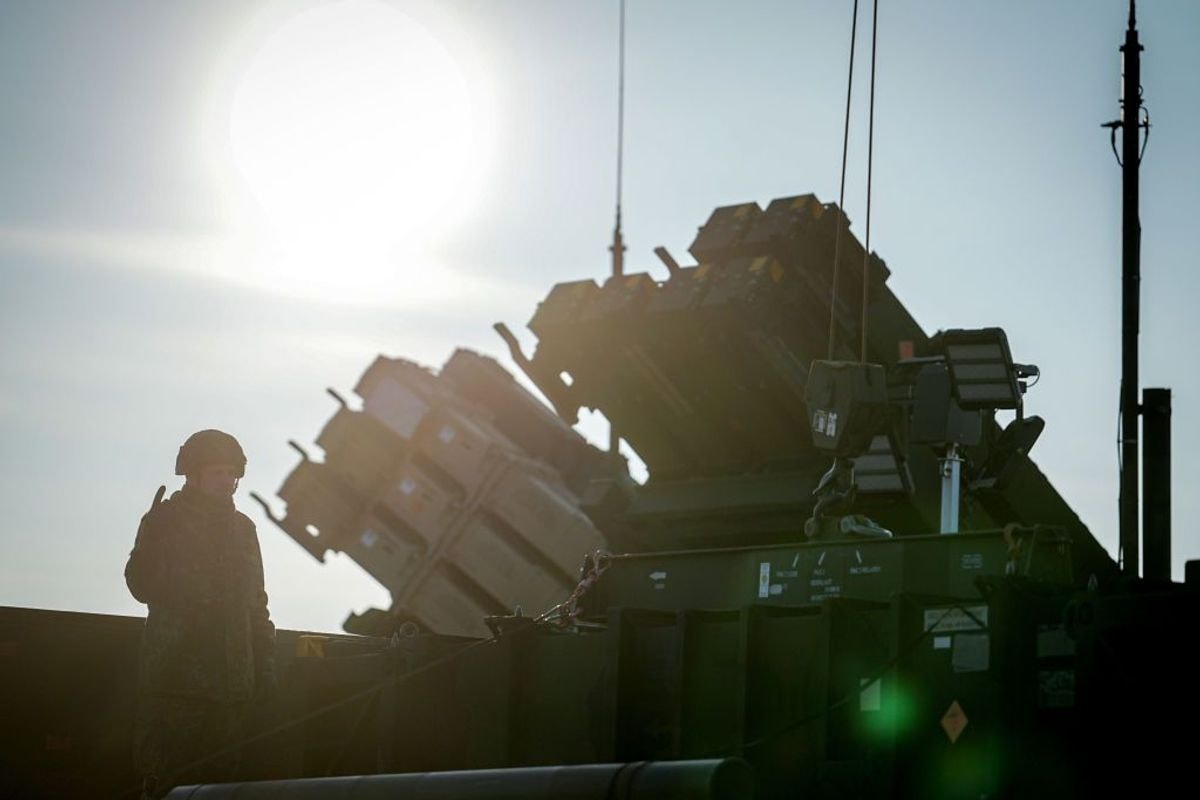
On our last night in the country, we learned of a massive air attack on Kyiv that destroyed residential buildings, killing 31 people and injuring more than 100. What the city desperately needed, and didn't have, were more Patriot missile defense systems, now in increasingly short supply. Even now, as these words are being written, news breaks from Ukraine that a Russian attack has killed an entire family of five in their home.

Russia has also abducted more than 20,000 Ukrainian children and youth, taking them to Russia for adoption or pre-military training to fight against their own homeland.
In the roughly 20% of Ukraine's sovereign territory under Russian occupation, a campaign called "Russification" is working, through propaganda and indoctrination, to erase Ukrainians' cultural and historical ties to their own country.
None of this — the terror campaign, the civilian casualties I have personally encountered — is what might be called "collateral damage" incidental to war. It is one of the longest, most sustained series of war crimes in modern times.
Russia, in effect, is waging two parallel wars: one for territorial conquest, the other for cruelty and demoralization. Both must be stopped, but they call for different responses.
On the war of conquest, Ukraine's technological and war-fighting capability is now recognized as state-of-the-art globally; what it lacks is sufficient supply from the U.S. and Europe to defend itself fully.
On the war of terror, U.N. commissions, the International Criminal Court, and other investigative bodies increasingly describe a pattern of conduct against civilians and children that raises profound questions under international humanitarian law. The data bears this out: the U.N. Human Rights Monitoring Mission found that with 2,283 civilians killed or injured, June 2026 was the deadliest month for non-combatants since April 2022.

The situation may be about to get worse. Ukraine's expanding drone campaign inside Russia has coincided with a renewed Russian assault on civilians in Kyiv and other cities — not because such attacks are inevitable, but because terrorizing civilians remains a deliberate instrument of the Kremlin's war.
Ending this will require sustained pressure that only the U.S. and its allies can supply: full and timely delivery of already-approved military aid, more missile defense systems, and economic pressure severe enough to make continued bombardment of Ukrainian children and families more costly to Moscow than stopping it.
As the U.S. government and the world continue to deliberate how to bring an end to these dual wars of conquest and terror, there are hopeful signs. These include pending legislation that would impose severe economic pressure on Russia, the possibility that Ukraine could eventually be licensed to produce its own Patriot anti-missile systems, and much greater support for Ukraine now flowing from Europe.
But while governments negotiate macro-defenses, there are immediate, daily psychological survival, medical care, and education needs of these traumatized children that can – and must - be supported by civil society.
On the ground, grassroots initiatives and organizations like our Ukraine Children’s Action Project are equipping Ukraine's teachers with trauma-informed training, supporting programs that are assisting thousands of children cope with severe psychological trauma, repairing damaged schools, and expanding medical capacity for children impacted by the war.
Clearly, the priorities now are ending the war, expelling the Russians from all of Ukraine's sovereign territory, and holding Putin and his government accountable for years of war crimes. But doing everything possible to assure the health, education, and well-being of Ukraine's children and civilians must remain front and center, too.
Editor's note: The opinions expressed in the op-ed section are those of the authors and do not purport to reflect the views of the Kyiv Independent.