How Ukraine's strikes on Wildberries warehouses put Russians in a real jam
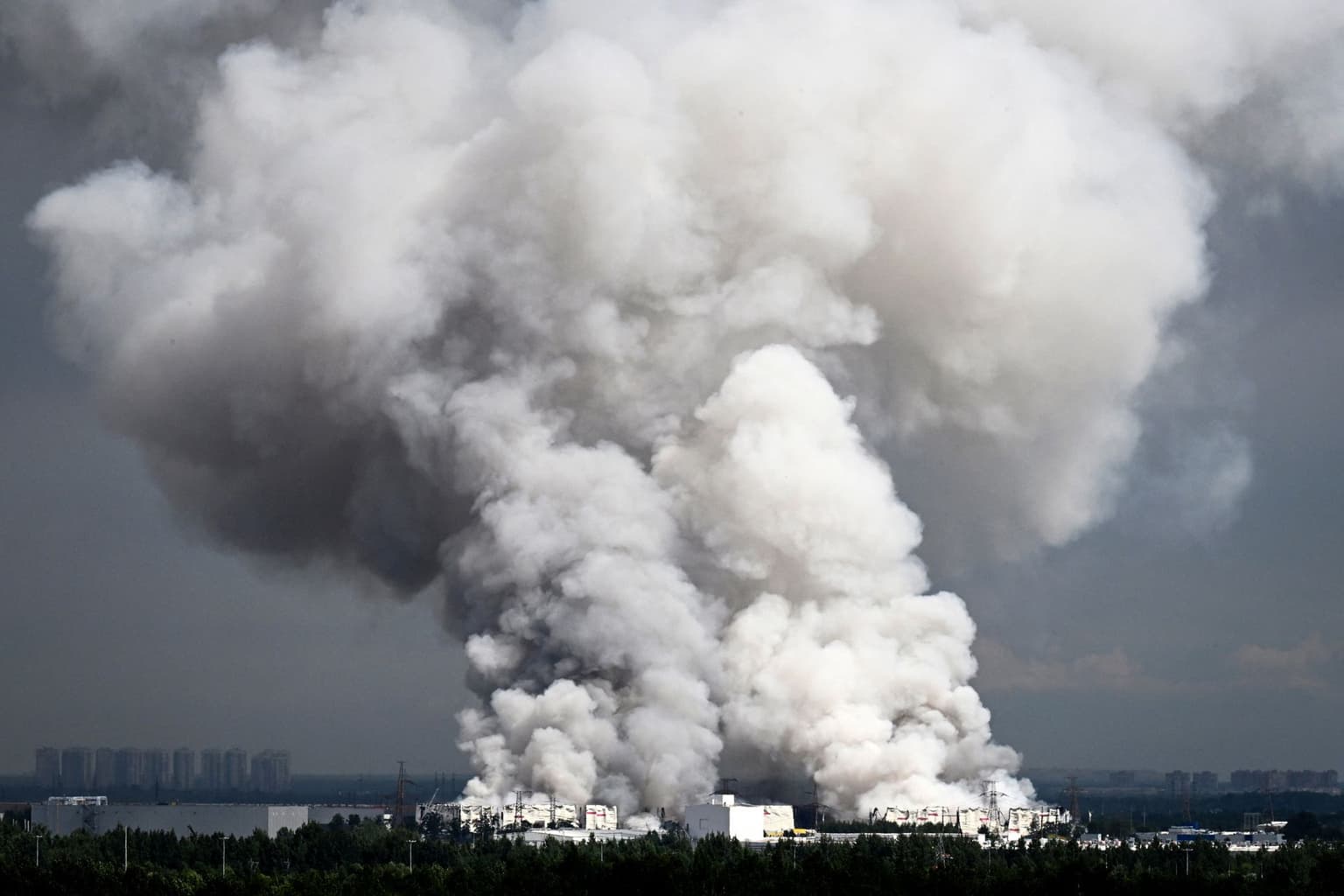
Smoke rises from a warehouse belonging to Russian e-commerce giant Wildberries near St. Petersburg, Russia, after being hit by Ukrainian drones early on July 24, 2026. (AFP / Getty Images)
 on Google
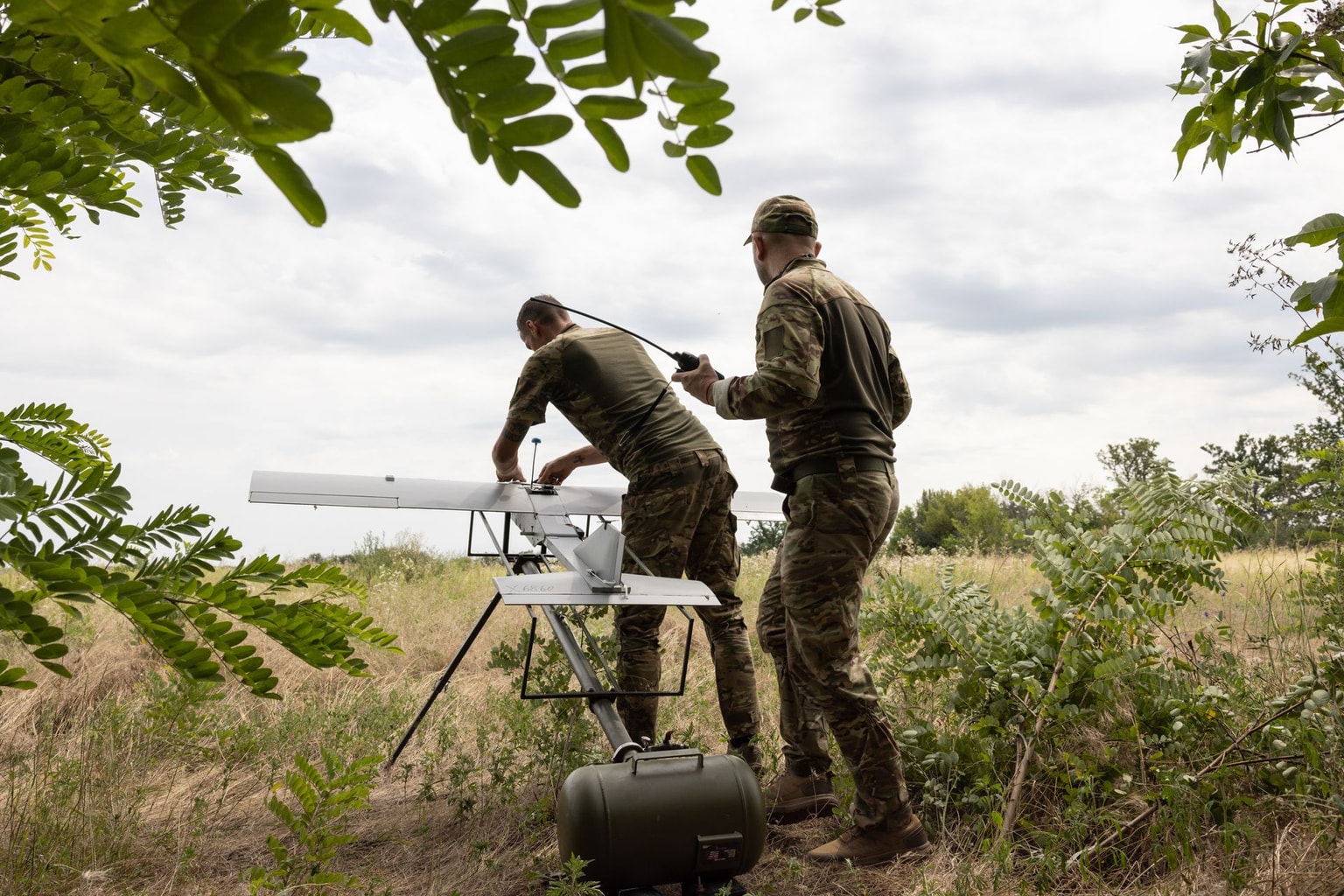
Ukraine's long-range drone campaign has acquired a new target in recent days — Wildberries, Russia's online retailer, an equivalent of Amazon.
The e-commerce behemoth accounts for almost 50% of Russia’s online retail market but its operations have been severely dented by drone strikes on several warehouses belonging to the company.
Dramatic videos of huge fires engulfing the logistics centers in several parts of Russia have emerged all week, with seven warehouses hit since the weekend, two of them overnight on July 24.
As of July 23, approximately 10% of the company’s logistics hubs had been damaged in Ukrainian strikes, according to estimates by Russian state-controlled outlet Kommersant.
But unlike Ukraine's strikes on military targets and the oil and gas infrastructure that helps fund Russia's war machine, the reason for the recent targeting of online shopping infrastructure isn't as immediately obvious.
Why is Ukraine targeting Wildberries?
According to Kyiv, Ukraine is targeting Wildberries as a number of dual-use items that can be used on the battlefield against Ukraine can be purchased on the platform.
Aside from regular consumer goods, such as shampoos, vacuum cleaners, or computers, the company is also an intermediary for the sale of military products, including bulletproof vests and fiber-optic cable for drones.
As such, the attacks are intended to disrupt Russian army logistics. But experts who spoke to the Kyiv Independent also point to a secondary effect of the strikes that is already having a serious impact on the morale of many Russians.

An economic giant serving Russia’s war machine
Founded by Tatiana Kim, now Russia’s wealthiest woman, Wildberries makes up almost 50% of Russia’s online retail market, well ahead of its main competitor, Ozon, according to market estimates.
While its warehouses are civilian objects, supplying equipment to the Russian army may make them legitimate military targets. According to international law, effective contribution to military action can justify proportionate attacks on such objects — as long as precautions are taken to minimize civilian casualties.
In practice, Wildberries supported Russia’s war effort by making no exemptions for military products in its online sales.
"In Russia, official procedures mostly only cover arms procurement," explained Pavel Luzin, a senior fellow at the Center for European Policy Analysis.
"So military units and individual soldiers need to buy a lot of things themselves: uniforms, food, gasoline, electric power generators, drones, cars, motorcycles, spare parts… that’s why it is possible to buy goods necessary for warfare on Wildberries."
In parallel, since 2022, Russia’s war effort has been supported by pro-war volunteer movements — which commonly use marketplaces such as Wildberries to buy crowdfunded military equipment.
"Sales of military and auxiliary equipment on online platforms are a fact — even if the share of equipment bought directly by Russian military units (not through state-run procurement) has been falling in recent years," said Dmitry Kuznets, a military observer at exiled Russian outlet Meduza.
"Still, this is not the main supply channel for the Russian army."
The secondary effect of Ukraine's drone strikes on Wildberries
While the Russian army is able to buy a great deal of equipment through Wildberries, the online platform is just as significant for another reason — as a pillar of Russia's small and mid-sized companies trying to reach as many customers as possible.
"In 2025, online sales made up about 26% of all retail sales in Russia," said Valeria Pozychaniuk, a journalist at The Bell, a business-focused Russian media in exile.
"So these strikes are already creating serious issues not only for Wildberries, but for sellers who market their products there — we are talking about hundreds of thousands of small and mid-sized businesses."
In the aftermath of the first strikes that targeted one warehouse on the outskirts of Moscow and one in Tambov Oblast, Russian entrepreneurs took to social media to voice their anger.
Nearly all demanded full compensation for their losses from Wildberries. Emotional videos posted online highlighted the vulnerability of these businesses, with the strikes revealing that few were insured against the loss of inventory or had the financial cushion to survive such disruptions.
"This is why these companies were expecting some form of compensation directly from Wildberries," Pozychaniuk said. "These businesses don’t usually have many savings, especially since taxes in Russia were raised earlier this year and because marketplaces recently increased their commissions."

In response, Kim quickly attempted to reassure sellers by promising some kind of compensation. The fine print, however, showed that this would not go beyond discounts and advantages for using the company’s services.
Soon after, Russian media also reported that closest competitor Ozon had changed its terms of service, explicitly mentioning it would not be compensating sellers for losses caused by military activity.
While Wildberries inserted similar clauses in its contracts even before the attacks, the company later announced on July 22 it would be compensating sellers for goods lost in Ukrainian strikes, though this could further stoke Russia's current issue with inflation.
"I think that to make these compensations work, the Russian state will find a way to subsidize Wildberries, for instance with a highly favourable loan from Sberbank," Konstantin Sonin, an exiled Russian economist and professor at the University of Chicago, told the Kyiv Independent.
"Obviously, Sberbank loses money on these credits, but they’re compensated by the Central Bank, and this ends up translating into high inflation," Sonin added.
"This is how the Russian government has been compensating companies for war-related losses since the start of the full-scale invasion."
Beyond the effects on businesses, Ukrainian attacks on marketplace warehouses will have a wider effect on Russian consumers: destroyed warehouses mean more difficult logistics — and higher prices for goods, the Russian economist explained.
While the Russian economy is unlikely to be seriously harmed, the effects will be felt by "millions of Russians," Kuznets said.
"Online sales are a crucial sector of the Russian economy. They provide thousands of people with jobs. So, these strikes are likely to have a serious effect on Russian society."
Wildberries' links to the Kremlin?
There is also some evidence to suggest that the financial costs of the strikes on Wildberries could be felt directly by those close to Russian President Vladimir Putin.
Initially, the platform was a small project created by Kim with her ex-husband, Vladislav Bakalchuk. Following its exponential growth, the company eventually merged with Russian outdoor advertising operator Russ — a company that, according to Russian media reports is de facto controlled by relatives of Russian lawmaker Suleyman Kerimov.

The transaction was personally approved by Vladimir Putin, who delegated his Deputy Chief of Staff Maksim Oreshkin to oversee the deal.
The Wildberries-Russ merger raised eyebrows far beyond Russia’s retail sector, not just because the business rationale behind it was unclear. Soon after the move was announced, Vladislav Bakalchuk met with Chechen leader Ramzan Kadyrov, with both claiming that the co-owner’s wife had "left home and gotten involved with unclear people, who are stealing a business and disguising this as a merger."
The dramatic exchanges ended with Kim filing for divorce from Bakalchuk, which was granted by a court in Moscow in February 2025.
Following Ukraine’s recent strikes, Russian investigative projects speculated that figures close to Putin were now cashing in most of the profits made by Wildberries. While the evidence is not conclusive, the conglomerate’s financial documents would show that structures linked to Russ received over 50 billion rubles ($600 million) of dividends in 2025 — at the same time, Wildberries was paid nothing.
"Tatiana Kim remains the owner of Wildberries, but it is pretty obvious that large stakes in the company are now owned by people in Putin’s administration," Sonin said.