How Zelensky created a rival
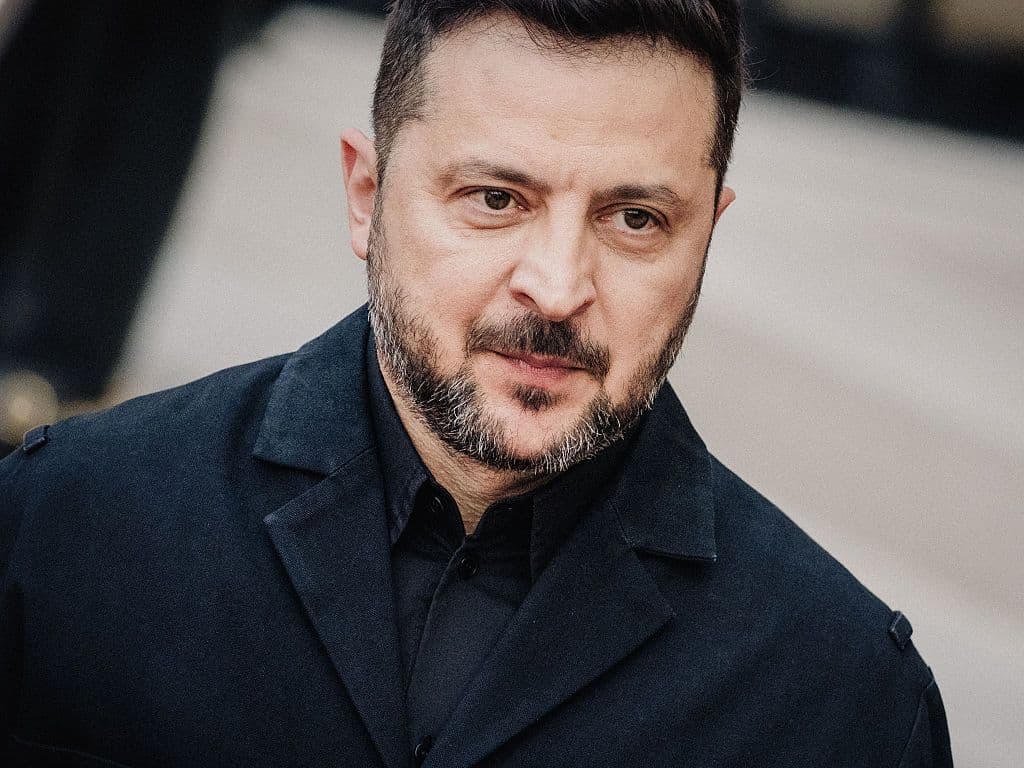
President Volodymyr Zelensky on his arrival for a dinner hosted on the occasion of the Summit of the Coalition of the Willing to Support Ukraine at the Elysee Presidential Palace in Paris France on July 13, 2026. (Bastien Ohier / Hans Lucas / AFP via Getty Images)
 on Google
President Volodymyr Zelensky appears to have miscalculated.
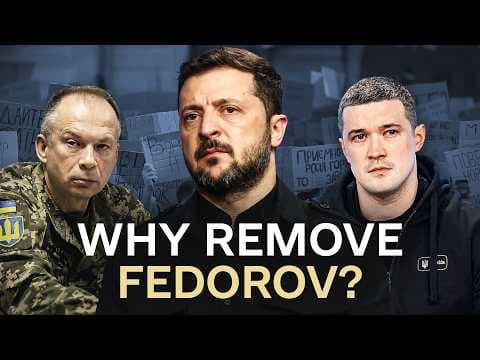
By dismissing the widely popular Defense Minister Mykhailo Fedorov, he created two problems at once: he triggered a political crisis that continues to spill onto the streets, and transformed a loyal ally into a political opponent whose popularity now rivals his own.
Public opinion has overwhelmingly rejected Zelensky's decision to oust Fedorov. According to a Rating Group poll published on July 22, 72% of respondents opposed Fedorov's dismissal, while only 5% supported it.
"Zelensky gave Fedorov a boost with his own actions and drove up his ratings," Oleksiy Haran, a political science professor at Kyiv Mohyla Academy, told the Kyiv Independent. "You can see how his rating surged almost immediately. Fedorov's statements at the press conference after his dismissal fell on fertile ground because the public was already receptive to them."
Fedorov now joins Zelensky, his Chief of Staff Kyrylo Budanov, and former Commander-in-Chief Valerii Zaluzhnyi among the country’s most popular political figures who could run for president once conditions allow an election to be held.
With his youth, reformist credentials, and promise to break with the old, corrupt political establishment, Fedorov is increasingly projecting the image that propelled Zelensky to power in 2019 — effectively positioning himself as "Zelensky 2.0."
Fedorov's surge in opinion polls
Fedorov's trust rating had soared from 35% to 65% in the week after his ouster, surpassing Zelensky's, according to the Rating Group poll.
By comparison, 31.2% trusted Fedorov, and 24.5% distrusted him in 2024, when he was digital transformation minister, according to a Razumkov Center poll.
Fedorov is the runner-up in terms of trust ratings, while Zaluzhnyi, who serves as Ukraine's ambassador to the UK, tops the list with 70%. Budanov's trust rating stands at 62%, according to the Rating Group's latest poll.
Zelensky ranks fourth with a trust rating of 59%.

Fedorov also emerged for the first time as a potential contender in a presidential election in the same poll. In previous electoral ratings, Fedorov did not feature at all.
Out of all the respondents, 22.3% said they would vote for Zelensky in the first round of a future presidential election, 14.9% would vote for Zaluzhnyi, 13.4% would choose Fedorov, and 7.2% would vote for Budanov.
The survey did not provide any information on a potential run-off.
Both Zaluzhnyi and Budanov would beat Zelensky in the run-off, according to a Socis poll published in December 2025.
A Rating Group poll published on July 1 gave a different picture: in a second round between Zelensky and Zaluzhnyi, the president would win by a small margin. The poll did not provide any information on a potential run-off between Zelensky and Budanov.
A new alternative to Zelensky
Just weeks earlier, Fedorov had been one of Zelensky's closest allies, with seemingly little political ambition.
Since leading Zelensky's social media campaign during the 2019 elections, Fedorov has remained at the president's side for years, first as an advisor, then as digital transformation minister, and since early 2026 as the country's defense minister.
When he was fired, unlike many other ousted ministers, Fedorov decided not to back down.
"Until now, essentially since January, a three-horse race has taken shape," political analyst Volodymyr Fesenko told the Kyiv Independent. "The two main options were Zelensky and Zaluzhnyi, with Budanov as the wild card."

Fesenko said that now "a fourth potential candidate is emerging — Fedorov."
"The key factor at this point is the mythology that has formed around him — the image of Ukraine's most successful reformer and the father of drone warfare," Fesenko added.
He also said that Zelensky's popularity had been damaged by Fedorov's dismissal and the protests that followed.
Fedorov, who was widely seen as highly effective, was removed as defense minister amid a Cabinet reshuffle on July 16. Since then, thousands of people have taken to the streets to demand the reinstatement of the minister.
Zelensky and Fedorov remain locked in a political standoff, with the president declining to reappoint Fedorov but offering him alternative jobs, while the former minister says he would only agree to the job of defense minister.
Haran said that Fedorov "is a modern politician and could run a sophisticated election campaign."
He has also been successfully eating into the electoral support of his potential rivals.
Zaluzhnyi's electoral rating fell by 9% from July 2025 to June 2026, according to a survey published by Rating Group on July 1.
"There has been some cooling toward Zaluzhnyi, particularly over the past six months," Fesenko said. "The emergence of both Budanov and Fedorov as potential new alternatives poses a risk to him. Zaluzhnyi is no longer seen as the only viable alternative to Zelensky."
He said that "this is precisely because Zaluzhnyi has been outside of politics for two and a half years."

Budanov is also being sidelined as his electoral rating is now lower than Fedorov's.
"When Zelensky appointed him as chief of staff, and his ratings began to rise, the main expectations surrounding him were tied to the peace negotiations," Fesenko said. "So far, those negotiations have gone nowhere, and there are already signs that public enthusiasm for Budanov is (also) cooling."
Fesenko said that Budanov cannot position himself as an opposition figure, and "this uncertainty over his future role is now working against him rather than in his favor."
What are Fedorov's prospects?
Despite the quick rise in approval and trust, it is not clear if Fedorov will be able to keep the momentum.
Fesenko said that Fedorov's "current surge in the polls is largely a product of the hype around him, and it happened almost overnight."
"In early July, before all this buzz began, just under half of Ukrainians — around 40% to 45% — did not even know who Fedorov was," he added. "I wouldn't read too much into his current poll numbers. We need to see where his numbers settle once the current hype dies down, and much will depend on what Fedorov himself chooses to do next."
Fedorov's electoral prospects will depend on whether he joins the opposition, rejoins Zelensky's team, or leaves politics for business, analysts say.
Before his ouster, Fedorov was seen as someone who could help Zelensky be re-elected or lead his political project into parliament. Now, that prospect appears unlikely.
"If Fedorov returns specifically as defense minister after issuing ultimatums, it will be seen as a defeat for Zelensky and a victory for Fedorov," Fesenko said.
When will an election be held?
Another crucial issue is when an election will be held. If the next electoral cycle is several years away, Fedorov may lose his relevance, but Zelensky will also face major problems, analysts say.
Ukraine's martial law, imposed at the beginning of Russia's full-scale invasion in 2022, explicitly bans presidential, parliamentary, and local elections.
The only way to hold a presidential election is to either cancel martial law or change legislation. Ukraine is likely to hold an election only after the war is over, but Russia has shown no indication of agreeing to any ceasefire.
The media outlet Ukrainska Pravda reported on July 1, citing its sources, that the Zelensky administration was considering holding an election this fall and was trying to persuade Zaluzhnyi and Budanov not to run. Zaluzhnyi reportedly refused to comply with the request, while Budanov neither agreed nor refused.
According to a person familiar with the matter, the Ukrainian leadership had indeed considered holding elections, but any election remains contingent on a ceasefire.
Fesenko said that the Zelensky administration had considered an election this fall because "Zelensky's political strategists hoped that wartime conditions would rally voters around the commander-in-chief."

However, the plan to hold an election this year appears to have been abandoned, according to analysts and lawmakers.
The idea of a wartime election has also been criticized by civil society groups. They argue that it will face huge security risks and is unlikely to be fair, competitive, or democratic.
"For us to have any elections at all, the country first has to survive," political consultant Oleksiy Kovzhun told the Kyiv Independent. "For electoral politics to matter, we have to survive first. Because electoral logic means nothing if we're dead."
In a post-war election, new contenders are likely to emerge, reshaping the current electoral field and further reducing the incumbent’s chances.
"When it comes to domestic politics, (Zelensky has made) one mistake after another, including the situation with Fedorov," Fesenko said, adding that corruption scandals had contributed to this trend.
"Zelensky is not well-equipped to deal with domestic political challenges and issues. Voters will take that into account as well."
Fedorov's dismissal has reshaped Ukraine's political landscape, transforming a loyal member of Zelensky's team into a potential challenger. Whether that shift proves durable or fades will largely depend on when Ukraine holds its next election.