Ukraine and Iran's dangerous new standoff, explained
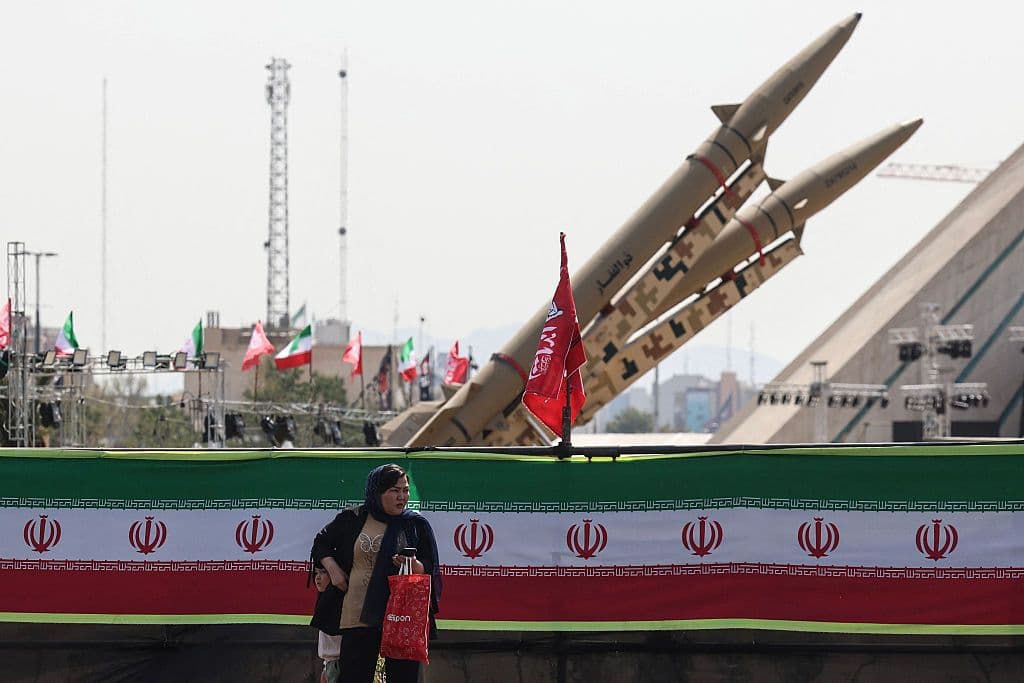
A woman stands next to Iranian-made Zolfaghar missiles displayed at Azadi Square in Tehran, Iran on July 24, 2026. (AFP via Getty Images)
 on Google
The escalating tensions between Ukraine and Iran over the past few days have prompted fears of a military conflict between the two countries.
Kyiv and Tehran have many reasons to be at odds with each other.
Iran has supported Russia's war effort against Ukraine since 2022, while Ukraine responded recently by backing the U.S.-Israeli war against Iran.
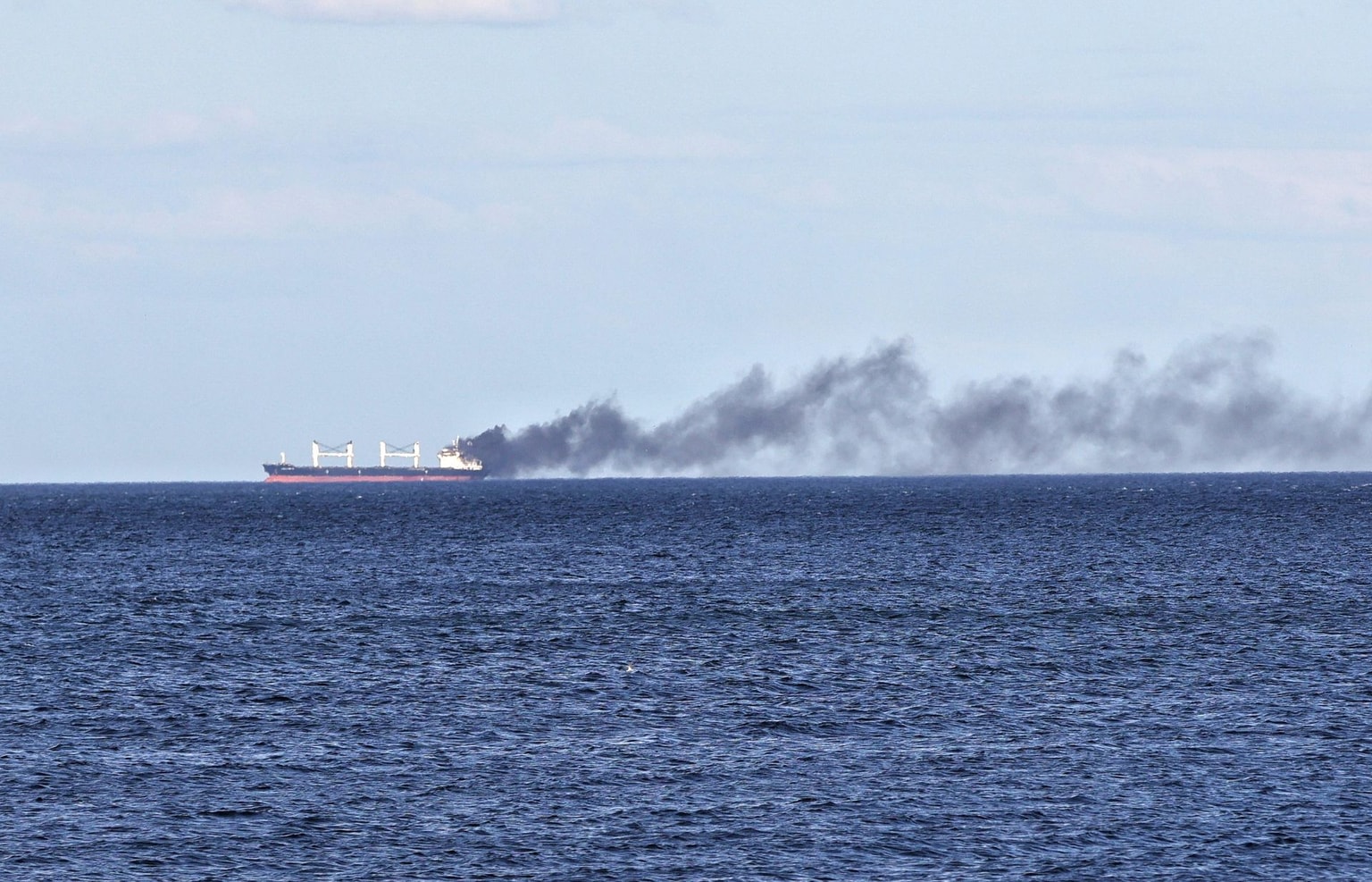
The most recent escalation was prompted by a Ukrainian attack on an Iranian vessel in the Caspian Sea on July 25.
However, analysts say that neither Ukraine nor Iran is interested in a direct military confrontation since they have a lot on their plates already.
The U.S. launched the war against Iran in February, reached a ceasefire in April, and signed a memorandum to end the war in June. However, the ceasefire has effectively collapsed, with both countries launching regular attacks.
Ukraine's Caspian Sea attack, along with pro-Iranian Yemeni rebel attacks on Saudi Arabia, are signs of the Middle East war's escalation and spillovers into new regions, Michael Sahlin, a Middle East specialist at the Stockholm International Peace Research Institute, told the Kyiv Independent.
How did the tensions escalate?
Ukraine said on July 25 that it had struck a vessel transporting military cargo between Iran and Russia in the Caspian Sea.
Iran's Foreign Ministry later claimed the strike targeted a commercial vessel, killing one sailor and injuring another. Iran condemned the strike as "an act of aggression" and said that it "cannot go unanswered."
Iran was considering launching a missile attack against Ukraine, a source familiar with Ukrainian intelligence told the Kyiv Independent.

The New York Times reported on July 28, citing Iranian and Western officials, that Iran had been considering attacking a seaport in Ukraine.
The tensions appeared to have subsided on July 28, when Ukraine's acting Foreign Minister Andrii Sybiha spoke by phone with Iranian Foreign Minister Abbas Araghchi.
"Yesterday's phone call was an example of de-escalatory diplomacy," a Ukrainian diplomatic source told the Kyiv Independent.
The source added that "we first want to make sure that the threats have indeed passed, as the New York Times' sources say, and then we will be ready to discuss the issue in greater detail."
Following the call, Araghchi said that Sybiha had described the attack as unintentional and added that Iran was not seeking escalation.
Araghchi represents the moderate wing of the Iranian regime, and the hawks in Tehran might have a different stance on Ukraine, according to Olli Ruohomäki, a Middle East expert at the Finnish Institute of International Affairs.
Reasons for conflict
Ukraine and Iran have had a tense relationship for years, with Russia’s full-scale war further driving a wedge between the two countries. Tehran began supplying Shahed combat drones to Russia in 2022 and later licensed their production to Moscow.
Iranian-made and Iranian-licensed drones have killed hundreds of Ukrainians, shifting the battlefield balance in Russia’s favor for a time.
"Ukraine's strike in the Caspian Sea appears to be in line with Kyiv's broader strategy of targeting Russian military capabilities and undermining the infrastructure that sustains Moscow's war effort, rather than opening a new theater against Iran," Natia Seskuria, an associate fellow at the Royal United Services Institute (RUSI), told the Kyiv Independent. "The key strategic objective is to disrupt the flow of Iranian military support to Russia and create additional pressure on the logistical networks that enable Moscow to sustain its military campaign."

Sascha Bruchmann, a military analyst at the Middle East office of the International Institute for Strategic Studies, told the Kyiv Independent that the Iranian ship hit by Ukraine was "likely transporting components for UAVs" to Russia.
At the same time, Ukraine has backed the U.S.-Israeli war against Iran, as Ukrainian President Volodymyr Zelensky seeks to secure his U.S. counterpart Donald Trump's support.
Specifically, Ukraine has sent its military experts to Gulf states in recent months to help them defend against Iranian drone attacks.
"The U.S.-Israeli war against Iran and especially Iran's retaliatory strikes on U.S. bases in the Middle East have provided Ukraine with an opportunity to demonstrate that Kyiv has valuable technology and battlefield-tested knowledge that can be useful to the U.S. and its allies," Jenny Mathers, a lecturer in international politics at the U.K.'s Aberystwyth University, told the Kyiv Independent.
"Rather than always being the one to ask for help from the West, Ukraine is now in a position to offer it, and this is an important symbolic moment. It allows Ukraine to demonstrate strength as well as competence, knowledge, and experience."
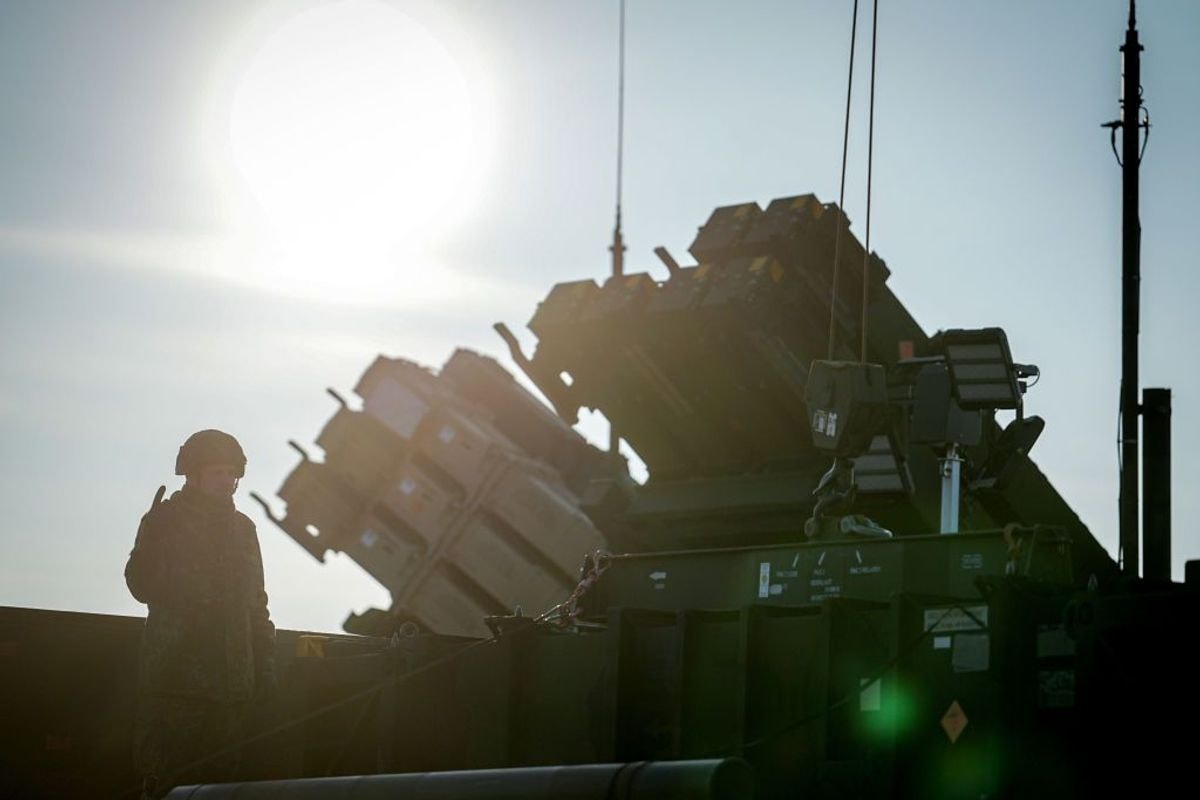
Zelensky discussed Iran during his meeting with Trump in Washington on July 28, a source familiar with the negotiations told the Kyiv Independent. Specifically, Zelensky sought to obtain more Patriot air defense systems from the U.S. if Iran launched a missile towards Ukraine, according to the source.

Zelensky also said on July 25 that Moscow had been providing Tehran with satellite imagery of U.S. and Gulf military installations throughout the U.S. war against Iran.
"The history of Iran supplying Russia with weapons that Moscow uses to strike Ukraine gives Kyiv a reason to take a position on this conflict, just as the continued need and desire by Kyiv to regain U.S. support is a powerful incentive to demonstrate Ukraine's value as an ally," Mathers said.
Neil Quilliam, a Middle East expert at Chatham House, said that "Ukraine has aligned itself politically with Washington and has drawn attention to its experience in countering Iranian drones and missile attacks."
"At the same time, growing cooperation between Moscow and Tehran has reinforced Ukrainian concerns about Iran's role in supporting Russia," he told the Kyiv Independent. "The result is that developments in the Middle East and the war in Ukraine are becoming more closely connected than before."
Is a Ukraine-Iran war possible?
Sidharth Kaushal, a military analyst at the RUSI, told the Kyiv Independent that "quite a few Iranian ballistic missiles can hit at least parts of Ukraine — the Shahab 3 and Khorramshahr 4, for example."
Bruchmann said that Shahed 136 drones "could also reach Ukraine" from Iran.
"In turn, Ukraine now possesses long-range drones and missiles like the Flamingo that can reach Iran, which balances the threat equation," he added.
Analysts say, however, that a direct military conflict between Iran and Ukraine remains unlikely, as opening another front would serve neither country's interests.
Ruohomäki said that Iranian attacks on Ukraine and the other way around are "within the realm of the possible" but unlikely.
"Neither side has a strong incentive to open a new war," Quilliam said. "What is more likely is a continuation of indirect confrontation linked to Iran's support for Russia, whether through intelligence activities, cyber operations, supply networks, or limited strikes against assets associated with the Russia-Iran partnership."
read also