Ukraine war latest: Russia's recruitment of foreign nationals 'amounts to human trafficking'
 on Google

Key developments on Sept. 10:
- Russia's recruitment of foreign nationals amounts to human trafficking, Amnesty International says
- US destroys 5 Iranian oil tankers, 3 linked to Russia's shadow fleet, Ukrainian official says
- NATO allies disrupt Russian exercise involving secret weapon targeting subsea cables, Reuters reports
- 4 dead after Russian attack on Pavlohrad shopping center
- Russian drone attacks hit Kyiv morning and evening, injuring 4
Russia exploits and deceives foreign nationals to enlist them in its armed forces and send them to fight in Ukraine, and in many cases these practices amount to human trafficking, the human rights organization Amnesty International said in a report published Sept. 10.
Russia primarily targets people from low-income countries in the Global South, the report said. Russian recruiters lure people from abroad under false pretenses and exploit the precarious situation of migrants in Russia by weaponizing overstayed work visas or supposed criminal offenses and offering military service as an alternative to detention or deportation, it added.
"Once victims sign the paperwork, often in a language they do not understand, military commanders restrict their movements, deploy them to the front lines with minimal preparation, and threaten those who seek a way out," the report stated.
The Russian army misrepresents the nature of the work and the risks involved to these foreign nationals as a key tactic to recruit them, according to Amnesty International. Russian recruiters also offer lucrative payments and pathways to Russian citizenship as incentives that rarely are fulfilled, the report said.
Many foreign recruits lack any kind of military training and get deployed to active combat zones after just two weeks of training, in what Amnesty International called "an apparent disregard for human life."
Two Sri Lankan nationals interviewed in the report said they were led to believe they would be working as cooks but were sent to fight on the front lines and captured within weeks by Ukrainian forces. "The scale of fighting is unimaginable. You do not see Ukrainian soldiers, only drones. Drones everywhere," one said.
"I would never go back there."
US destroys 5 Iranian oil tankers, 3 linked to Russia's shadow fleet, Ukrainian official says
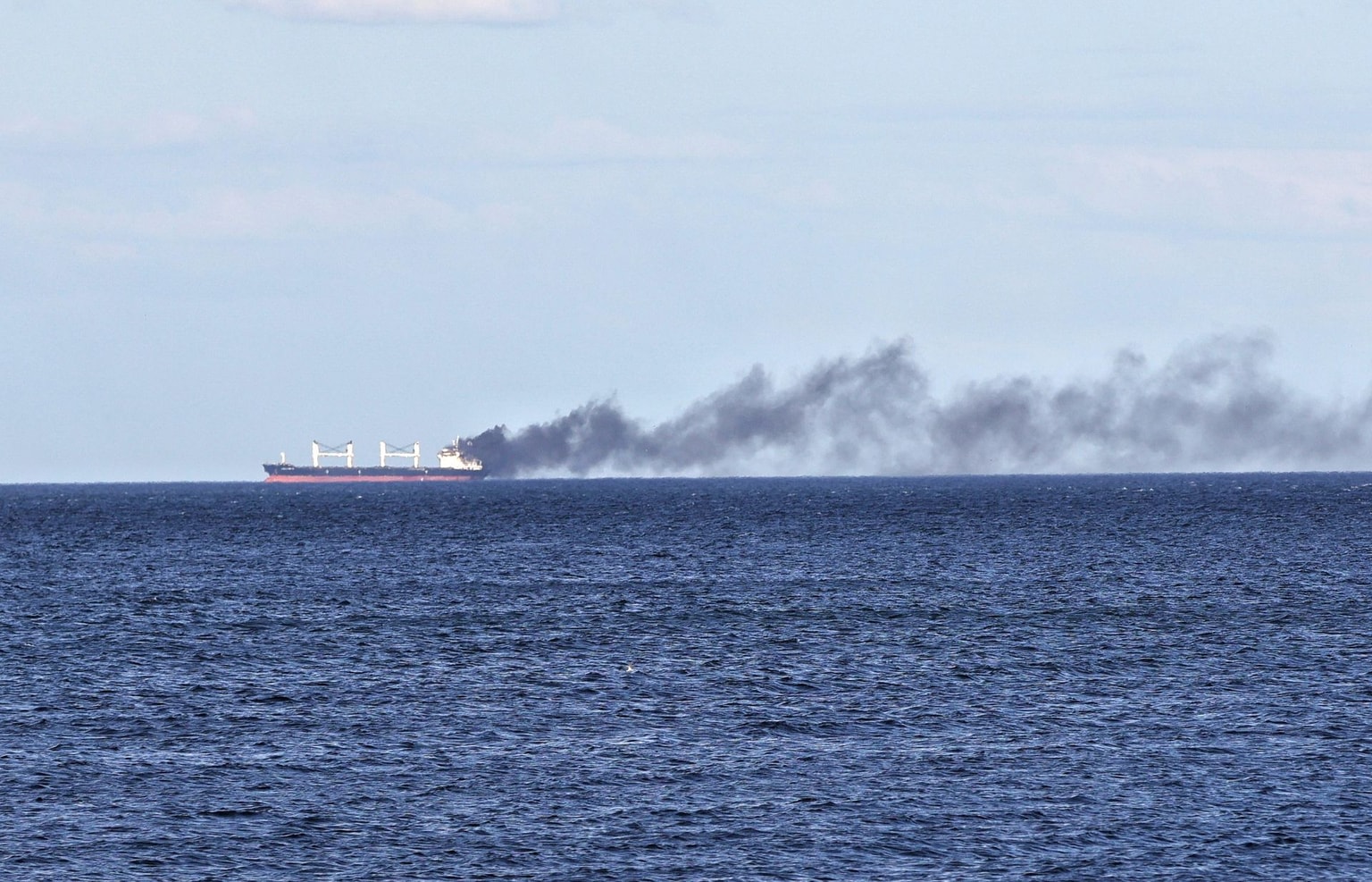
The U.S. military destroyed five Iranian crude oil tankers on Sept. 8, three of which have ties to Russia's shadow fleet, Ukraine's sanctions commissioner Vladyslav Vlasiuk said in a comment shared with the Kyiv Independent.
U.S. Central Command (CENTCOM) on Sept. 9 said its forces struck the five vessels in response to attempts by Iran's Islamic Revolutionary Guard Corps (IRGC) to target a U.S. Navy warship with ballistic missiles.
The five vessels were the Kaviz, Charminar, Horizon 1 and Riesco in the Gulf of Oman, as well as the Derya near Iran's Kharg Island. U.S. forces instructed the crews to abandon the vessels before striking them, CENTCOM said.
Three of the tankers, the Kaviz, Charminar, and Riesco, have direct links to Russia's shadow fleet and have been involved in transporting Russian oil, Vlasiuk said.
The Kaviz had called at the Russian ports of Ust-Luga and Novorossiysk and transported Russian oil, according to Vlasiuk. He added that the vessel had repeatedly switched off its Automatic Identification System (AIS), which ships use to broadcast information including their location and identity.
According to Ukraine's military intelligence agency (HUR), the Kaviz was previously affiliated with Fractal Marine DMCC, a company sanctioned by the U.K. for servicing Russia's energy sector and identified by HUR as a key operator of Russia's shadow fleet. HUR also lists the tanker as sanctioned by the U.S., Ukraine, the EU, Switzerland, the U.K. and Canada.
The Charminar had previously called at the Russian ports of Ust-Luga, Primorsk, Vysotsk and St. Petersburg, Vlasiuk said.
read also
NATO allies disrupt Russian exercise involving secret weapon targeting subsea cables, Reuters reports
NATO allies disrupted a covert Russian naval exercise near Norway's Svalbard archipelago involving technology designed to disable critical subsea cables without leaving a trace, Reuters reported on Sept. 10, citing Western officials.
The operation was carried out by Russia's Main Directorate for Deep Sea Research (GUGI), which used deep-sea submersibles to simulate deploying the technology, according to two Western officials who spoke to Reuters on condition of anonymity.
Britain, Norway, and the United States tracked and confronted the Russian vessels at sea, preventing them from completing the exercise before they eventually left the area, the officials said.
No subsea cables were damaged during the operation. The exercise focused on simulating how the technology could be used in the event of a conflict with NATO, while officials declined to explain how the system works.
"Through our joint operation, we sent a clear message to Russia that they cannot operate covertly," Norwegian Defense Minister Tore Sandvik said in a statement to Reuters.
"We have made it unequivocally clear to Russian authorities that any attempt to target our critical infrastructure will be detected and met with consequences," he added.
The operation took place near Svalbard, where two roughly 1,400-kilometer-long (870 miles) fiber-optic cables connect the Arctic archipelago with mainland Norway. The cables carry satellite data from the SvalSat ground station, which is part of NASA's Near Space Network.
Undersea sabotage has climbed up the political agenda across Europe with instances of damage to subsea cables and Russian vessels lurking near critical underwater infrastructure on an increasingly frequent basis since Moscow launched its full-scale invasion of Ukraine.
In April 2026, the U.K. said it had intercepted a Russian operation near critical underwater infrastructure in British waters. A Russian attack submarine entered U.K. waters while other vessels linked to GUGI were detected conducting what the British government described as "nefarious activity" over critical undersea infrastructure.
Between 2024 and 2026, more than 20 subsea cables in the Baltic and Arctic regions were damaged, though many of the incidents have not been formally attributed to Russia.
NATO has since stepped up patrols and monitoring around critical underwater infrastructure, including through missions in the Baltic and High North.
Russia's Defense Ministry did not respond to Reuters' request for comment on the Svalbard operation.
4 dead after Russian attack on Pavlohrad shopping center
Four people have been killed and more than 60 injured after a Russian strike on a shopping center in Pavlohrad, Dnipropetrovsk Oblast, authorities said on Sept. 10.
Among those injured are three teenage boys aged 13, 14, and 15.
"About an hour ago, the Russians struck a shopping centre in central Pavlohrad. In the middle of the day, when there were many people on the streets," Interior Minister Ivan Vyhivskyi said in a post on social media.
"The world sees what Russia is doing. There will be support for Ukraine. One hundred percent of our attention is focused on this," President Volodymyr Zelensky said on Telegram, stressing that decisions with partners on additional support, including strengthening Ukraine’s air defenses, were expected later in the day "to protect Ukrainians from such Russian terror."
It has not been confirmed which type of weapon Russia used in the attack, but videos posted on social media suggest at least one drone struck after the initial explosion.
The National Police said two emergency workers were among those injured.
Pavlohrad, roughly 75 kilometers (45 miles) from the front line, became a relatively safe haven for those fleeing the war further east, but the situation has changed dramatically in recent months.
On July 20, the first glide bomb (KAB) attacked the city. KABs, while having a shorter range than missiles, are cheaper to produce, launched from aircraft within Russian territory or Russian-occupied territories, and carry warheads up to 1,500 kilograms — enough to level an entire apartment block.
Russian drone attacks hit Kyiv morning and evening, injuring 4
Russian jet-powered drones struck Kyiv early on Sept. 10, injuring four people and damaging a gas station in the Holosiivskyi district, Kyiv Mayor Vitali Klitschko said, as Moscow continues its near-daily attacks on the Ukrainian capital.
The impact of the Russian drone sparked a fire and set one vehicle ablaze before emergency crews extinguished the flames, while three of the four injured were hospitalized, Klitschko said.
A non-residential building was also damaged in the district, according to the mayor.
Local Telegram channels published footage appearing to show a fire at a gas station near the Respublika Park shopping mall. Monitoring channels had earlier reported a drone falling in the area.
Separate morning attacks also hit the surrounding Kyiv Oblast, where one person was killed in the Obukhiv district and two others injured there and in Fastiv district, according to local authorities.
In Bucha district, private houses were damaged and a fire broke out in an open area. In Fastiv district, drone debris damaged a veterinary clinic and a private house.
In Obukhiv district a warehouse also caught fire following the attack, according to preliminary information.
Later in the evening, Russian drones again targeted Kyiv.
Klitschko said a drone fell on a two-story office building in the Obolonskyi district, while another struck the roof of a four-story business center in the Solomianskyi district.
Russia's attacks on Kyiv resumed almost immediately after a brief pause linked to the visit of U.S. envoys Steve Witkoff and Jared Kushner to the capital.
A day earlier, on Sept. 9, Russian jet-powered drones struck residential buildings and other sites across Kyiv, killing one person and injuring at least 17 others, including two children.
On Sept. 8, a mass Russian missile and drone attack on the capital killed five people and injured 35, while large fires broke out across the city.
Russia has previously used drone attacks on gas stations to disrupt fuel supplies and road logistics, particularly in Kharkiv, Sumy, and Zaporizhzhia oblasts. By August, the tactic had spread into central regions, with dozens of gas stations struck over the summer.