Ukraine war latest: Russia uses drone with warhead designed to cut power pylons for 1st time, Zelensky adviser says
 on Google
Key developments on Sept. 30:
- Russia uses drone with warhead designed to cut power pylons for first time, Zelensky adviser says
- Drone crashes in Moldova, Romania scrambles fighter jets amid Russian mass attack on Ukraine
- Missile alerts cost Ukraine $45 million for every hour businesses stop, economy minister says
- Zelensky visits Lyman sector, says Operation Vivaldi reclaimed 125 square kilometers
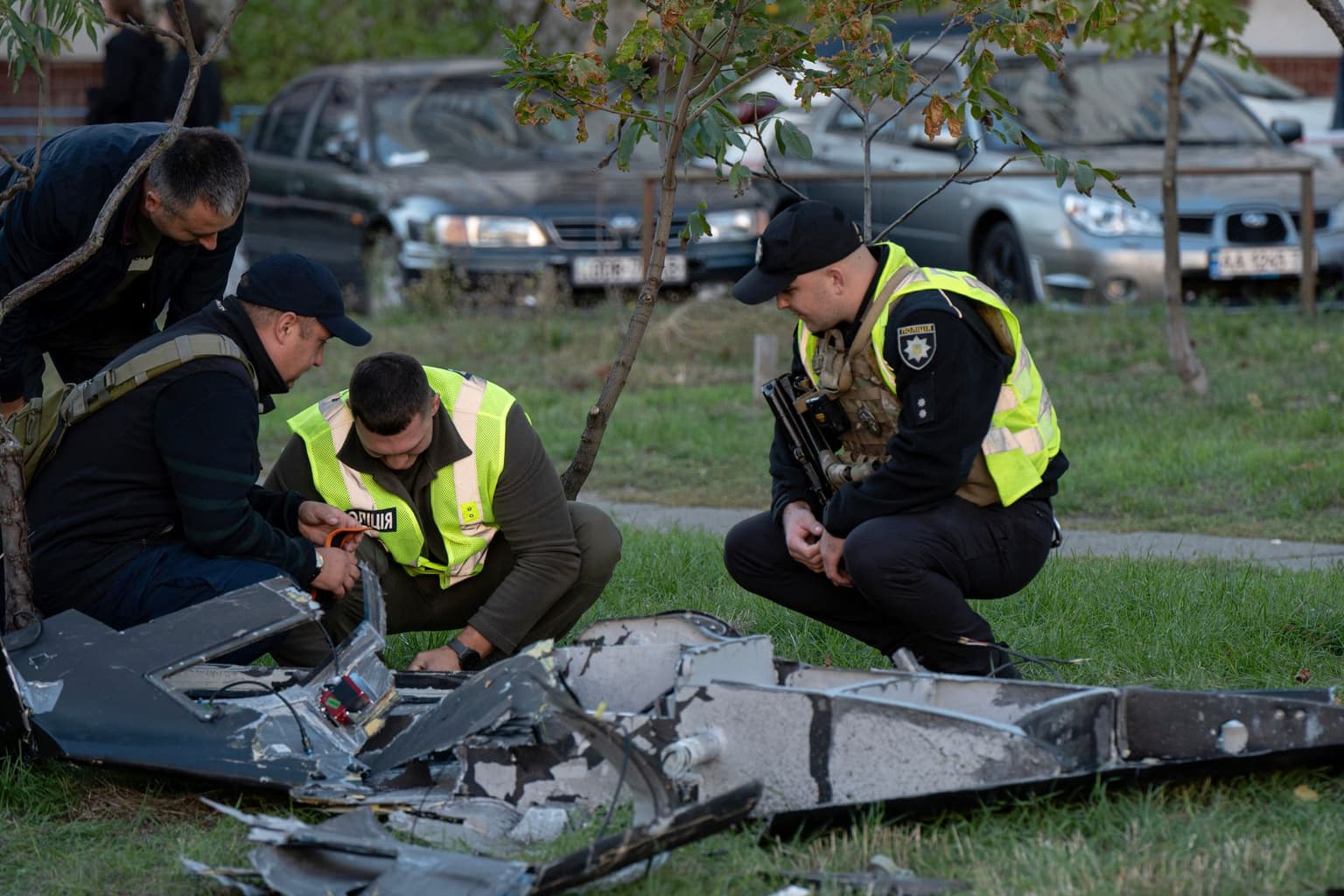
Russia has for the first time used a jet-powered drone equipped with a warhead designed to destroy high-voltage power pylons and steel bridge structures, presidential adviser Serhii "Flash" Beskrestnov said on Sept. 30.
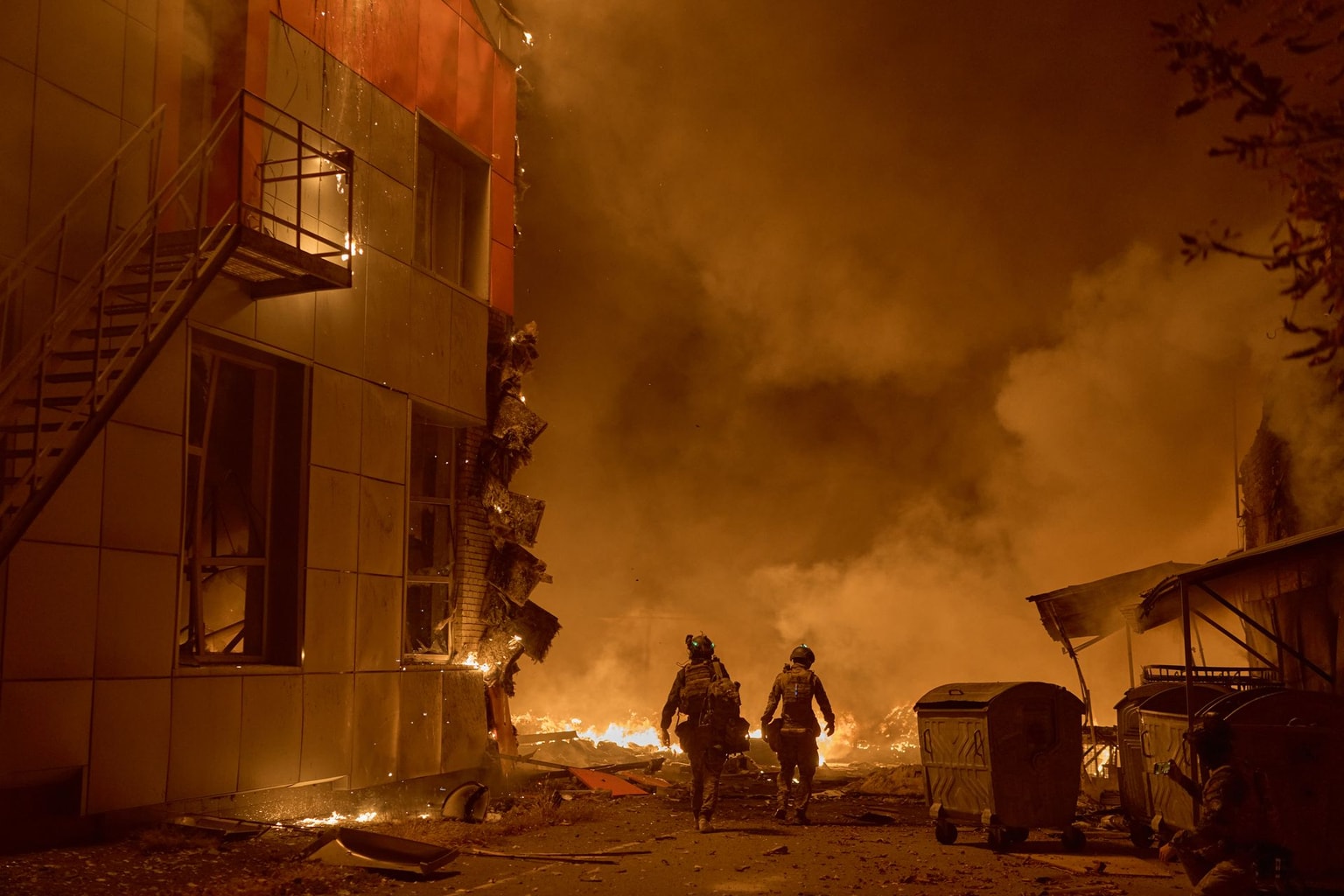
The development comes as Moscow renews its large-scale campaign against Ukraine's energy system ahead of winter, launching its heaviest combined attack on energy infrastructure in months overnight on Sept. 30.
"Bad news. Today, the enemy for the first time used a special shaped-charge cutting warhead on a jet-powered unmanned aerial vehicle (UAV)," Beskrestnov, an adviser to President Volodymyr Zelensky on defense technologies, wrote on Telegram.
According to Beskrestnov, the warhead was developed specifically to destroy high-voltage pylons and steel bridge structures. It consists of a 40-kilogram main charge and four additional destructive modules.
"I think the enemy plans to attack important high-voltage power transmission lines," he said.
Russia's overnight assault involved nearly 190 attack drones as well as ballistic missiles, Zelensky said. Energy infrastructure in Kyiv and Kyiv Oblast was the primary target, while critical infrastructure was also struck in several other regions.
By the evening, emergency power outages had been introduced in the capital and surrounding region as well as in Chernihiv and Zhytomyr oblasts following repeated Russian attacks on energy infrastructure, according to the Energy Ministry.
The Sept. 30 attack marked a sharp escalation in Russia's renewed campaign against Ukraine's power system.
"Since the summer, there has been practically no day when the enemy has not attacked energy infrastructure. But such a massive and combined attack has occurred for the first time since the end of the last heating season," Prime Minister Serhii Koretskyi said following the attack.
Drone crashes in Moldova, Romania scrambles fighter jets amid Russian mass attack on Ukraine
A drone flew into Moldovan airspace, crashed outside a village, and exploded in the early hours of Sept. 30 amid a Russian mass attack on Ukraine, Moldova's Defense Ministry said.
The drone entered Moldovan airspace around 5:43 a.m. local time and fell down near the village of Hirbovat in the central Anenii Noi district, where it exploded, according to the ministry.
According to preliminary information, no injuries were reported from the explosion. Moldovan police and army teams were headed to inspect the site.
Romania's Defense Ministry said that its radars detected an aerial target east of Izmail during the night and two F-18 fighter jets of the Spanish air force stationed in the NATO country scrambled as a precaution. No object entered Romanian airspace, the ministry said.
Overnight, Russia attacked across Ukraine with 188 drones, 86 of them jet-powered, as well as with Zircon, Onyx, and Iskander missiles, according to Ukraine's air force. The air force said it shot down or suppressed 5 missiles and 155 drones.
Missile alerts cost Ukraine $45 million for every hour businesses stop, economy minister says
Missile alerts cost Ukraine an estimated $45 million for every hour they force businesses to stop operating, Economy and Environment Minister Oleksandr Kravchenko told the Guardian in an interview published on Sept. 30.
"If people are in a bunker, business stops," Kravchenko told the Guardian.
Kravchenko said prolonged missile alerts can bring large parts of the economy to a standstill as workers move into shelters, with some alerts lasting for hours.
Ukraine introduced a two-tier air raid warning system on Sept. 2 to reduce the economic disruption caused by prolonged alerts. Red alerts are issued when there is a missile threat and require businesses to halt operations and people to seek shelter. Yellow alerts warn primarily of drone threats and allow many businesses to continue operating.
Russia has intensified its aerial campaign against Ukrainian cities and critical infrastructure. Kravchenko said more than half of businesses continue operating during yellow alerts, but those warnings do not mean there is no danger.
On Sept. 28, a Russian jet-powered drone struck the National Academy of Sciences building in central Kyiv during a yellow alert while employees were still inside. The attack killed an aide to former National Security and Defense Council Secretary Volodymyr Horbulin and injured others.
"What we had not fully anticipated was how quickly Russia would develop these jet-powered drones and use them to target everything," Kravchenko said.
Russian attacks have caused an estimated $10 billion in damage to fixed assets in Ukraine this year alone, according to Kravchenko. Steel plants, warehouses, logistics hubs, and data centers have all been hit as Moscow increasingly targets infrastructure supporting the country's economy.
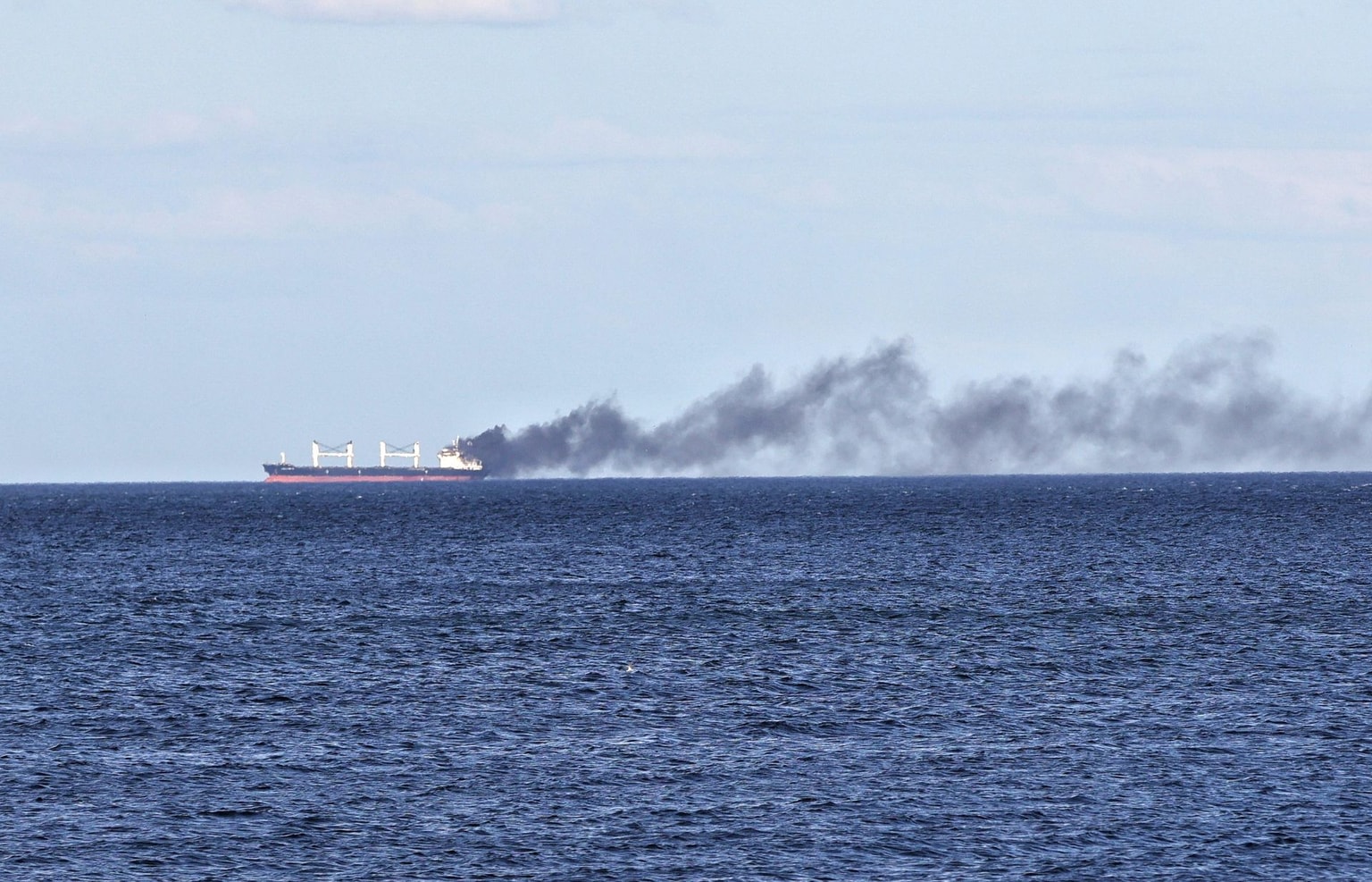
Russia has also stepped up attacks on Ukraine's Black Sea ports and maritime export infrastructure, adding pressure on one of the country's main trade routes.
The government is now discussing ways to allow more private companies to purchase Ukrainian air-defense systems to better protect their facilities, Kravchenko said, while acknowledging that businesses cannot fully shield themselves from Russian missiles and drones.
Zelensky visits Lyman sector, says Operation Vivaldi reclaimed 125 square kilometers
Ukrainian President Volodymyr Zelensky visited the command post of the 66th Separate Mechanized Brigade in the Lyman sector running across Donetsk and Luhansk oblasts to award soldiers and meet brigade comannders on Sept. 30.
Zelensky thanked the troops for returning more than 125 square kilometers of territory from Russian occupation to Ukrainian control, in cooperation with other units of the Third Army Corps as part of Operation Vivaldi.
"Thank you for protecting our state, sovereignty, and territorial integrity," he said.
In his talks with the commanders, the President discussed issues of procurement, especially pick-up trucks for brigades, and increasing funding for drones, simplifying procurement, and expanding staffing, Zelensky said. He also highlighted the need for long-range artillery.
Ukrainian forces under the command of the 3rd Army Corps liberated three villages in northern Donetsk Oblast as part of the ongoing Operation Vivaldi, corps commander, Brigadier-General Andrii Biletskyi said on Sept 28.
The villages of Ridkodub, Nove, and Katerynivka were liberated, while full Ukrainian control was restored over Karpivka and Novomykhailivka.
This phase, described as the "third season" of Operation Vivaldi, inflicted over 2,000 Russian losses and saw over 250 Russian soldiers taken prisoner, according to Biletskyi.
The two previous "seasons" of Operation Vivaldi were each announced in similar updates, first on Sept. 15 when the offensive was given its name, and then on Sept. 20, when the liberation of the villages of Shandryholove and Derylove were announced.