Global grain prices rise as Russia-Ukraine war escalates in Black Sea

Combine harvesters collect wheat in a field of Gagarin Agricultural Firm LLC in Kharkiv Oblast, Ukraine, on Aug. 3, 2026. (Viacheslav Madiievskyi / Ukrinform / NurPhoto via Getty Images)
 on Google
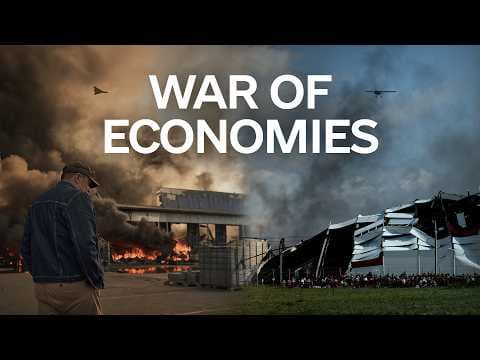
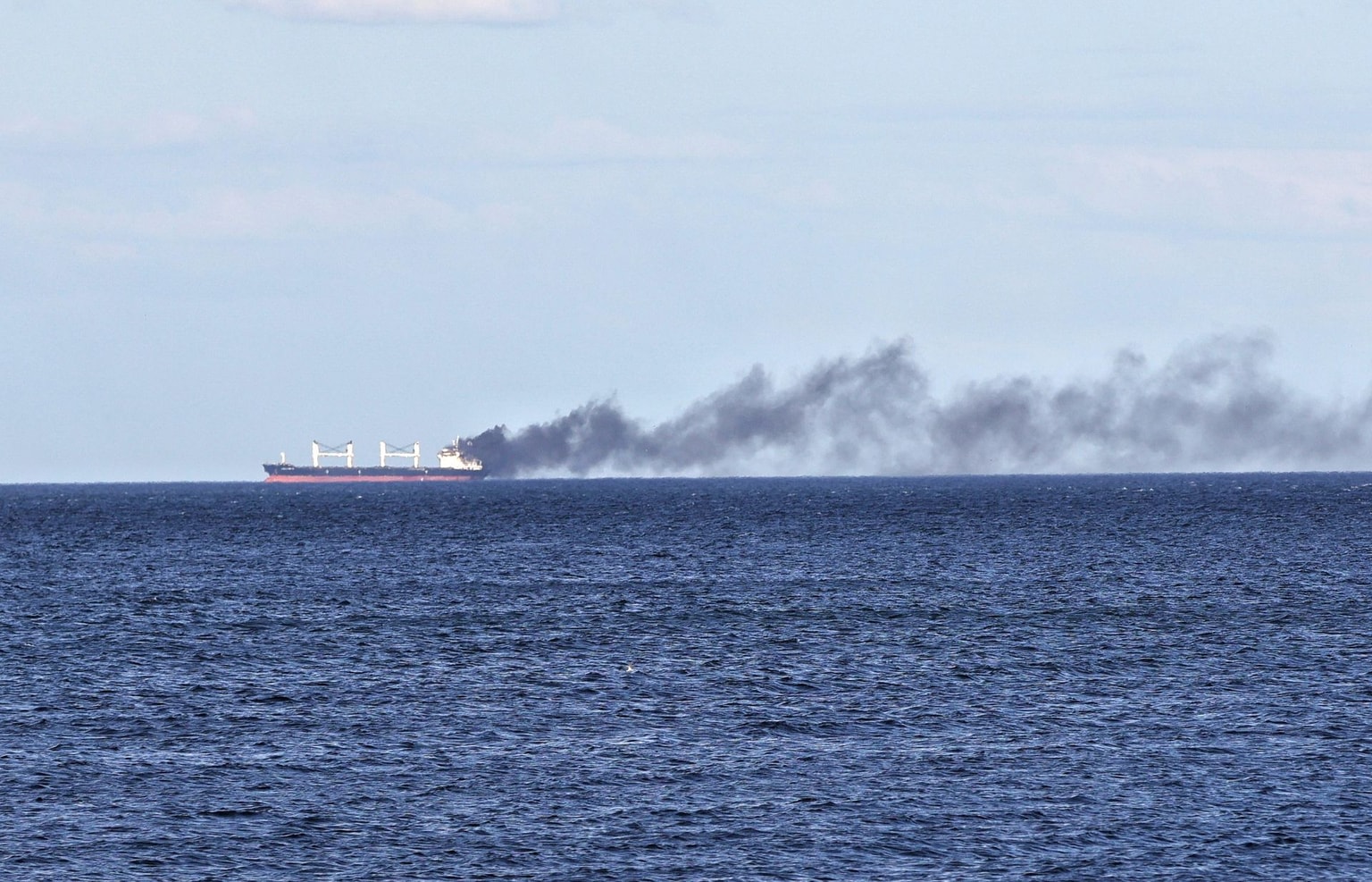
Global grain prices are rising steeply as Ukraine and Russia intensify attacks upon one another's main export infrastructure on the Black and Azov seas — leaving both countries struggling to find alternative outlets with the harvest in full swing.
Russia and Ukraine are both major grain producers, with the bulk of their exports bound for the Global South — particularly the Middle East and Africa — via the Black Sea, through which around a third of the world's supply passes.
The obstruction of ports on the Black and Azov seas is a "huge issue" for the world, as Russia is the largest exporter of wheat, grain reporter Masha Belikova of the Fastmarkets Agricensus price reporting agency told the Kyiv Independent.
Ukraine is also one of the world's largest producers and exporters of agricultural products, such as corn, wheat, barley, and sunflower oil, on which it relies for much of its foreign currency earnings.
In recent seasons, Ukraine has accounted for some 6% of world wheat exports, as well as 11% of corn exports; before the 2022 full-scale Russian invasion, it provided 10% of world wheat exports, 15% of corn, and half of sunflower oil.
The EU delegation to Ukraine said in early August that "Russia is systematically strangling Ukraine's ability to feed the world" and "weaponizing hunger against millions in Africa, Asia, and the Middle East."
World wheat prices have been rising since the U.S. and Israel attacked Iran in late February, exacerbating inflation already spurred by Russia's full-scale invasion of Ukraine.
"The world has already been reacting; prices went up a lot, but there is still huge room to go higher as we are not yet at levels we saw in 2022, while the situation is much more critical now," Belikova explained.
Black Sea trade under pressure
In August, world food prices hit their highest level since November 2022, rising to an average of 133.3 points from a revised 130.8 in July, as measured by the U.N.'s Food and Agriculture Organization (FAO) price index, which tracks monthly changes in a basket of internationally traded food commodities.
World wheat prices stood 15% higher than a year ago as hot, dry weather across parts of Europe made matters worse, according to the FAO.
Meanwhile, with almost all major grain terminals shut down, domestic wheat prices in Russia have collapsed well below breakeven, posing big problems, the head of grain consultancy Sovecon, Andrey Sizov, told the Kyiv Independent on Sept. 7.
Russia and Ukraine continued long-range aerial strikes against one another over the weekend — even as they paused attacks on each other's capitals for a visit by U.S. negotiators to Moscow and Kyiv.
An unspecified target on "Black Sea waters" was among those hit by Ukraine, Zelensky said in a Sept. 7 post on X. Ukrainian ports in Odesa Oblast were struck early on Sept. 8 by Russian drones and missiles.

Over the summer, both Russia and Ukraine have stepped up attacks against ports, terminals, and commercial vessels, and have had to export what volumes they can over land and by river.
Russia has targeted Ukraine's crucial agricultural exports throughout the war, hurting its main source of export revenue.
Kyiv, in turn, has expanded its campaign of long-range attacks to Russian grain exports in recent months, as it also continues to hit the country's oil and gas industry.
There is little prospect of the wheat situation normalizing in the coming weeks, according to Sovecon.
Russia is redirecting some grain to its Baltic ports and terminals in Latvia and Lithuania, but these can only handle about 10% of the volumes usually shipped by its southern ports. It also increases costs by some $30 to $50 per metric ton, squeezing already meager profits.
Latvia, however, plans to impose a tariff of 300% on grain arriving from Russia and Belarus, Latvian Prime Minister Andris Kulbergs said on Sept. 7.
The Estonian Foreign Ministry also said on Sept. 10 that it would ensure no Russian grain passes through its ports and would impose sanctions to prohibit it if necessary.
Tallinn pledged to work with Latvia and Lithuania to find a means of halting the transit of Russian grain and preventing the export of grain stolen from the occupied Ukrainian territories, according to the ministry's press release.
Russian wheat exports tumbled 56% to just 2 million metric tons in August from 4.5 million metric tons a year earlier, according to preliminary estimates by Sovecon.
Exports are expected to remain around the same level in September, versus 4.6 million metric tons last year.
Since mid-July, Ukrainian strikes have forced Russia to close the Sea of Azov to vessels and suspend three major grain terminals at its largest southern port, Novorossiysk, in August.
The capacity of Russia's other ports and land routes could only handle about half the volume that usually goes via the Azov and Black seas, according to a Russian Grain Union estimate cited by Reuters.
Meanwhile, exports via land and river routes are being hindered by low water levels, infrastructure bottlenecks, and further attacks, according to S&P Global.
"Buyers are holding off and doing their best, trying to postpone purchases, but obviously they can't wait forever," Sizov told the Kyiv Independent.
Saudi Arabia took the unusual decision to cancel a tender over the weekend in light of high prices due to the lack of Black Sea supply, he noted.
"It's quite obvious that buyers like Saudi Arabia and other large importers, probably many of them, are already sitting on limited stocks, which means that they will have to import shortly, and probably they will have to buy a lot," Sizov explained. "In all the previous months, they were buying from hand to mouth, and stocks are likely to be historically low."
For now, buyers are looking elsewhere, and there has been more demand for Romanian, Bulgarian, and other European wheat, and a bit more for U.S. and Australian wheat, depending on the destination, according to Belikova.
With the backlog of unexported grain accumulating, the Kremlin is suspending export duties on wheat, barley, and corn until the end of the year, and a moratorium on bankruptcies is under consideration.

The measures are almost negligible in light of the closure of almost all the main grain terminals and are unlikely to provide much support to revenue and prices, according to Sizov.
"Farmers' P&L (profit and loss statements) in both countries doesn't look good, and I suspect that for Russia it is worse than for Ukraine," Sizov explained.
While the magnitude of the current problems facing both countries is similar, Russian farmers came into the season in worse financial shape than their Ukrainian counterparts because of strict export taxes of 10% to 30% of revenue, he said.
Despite a difficult start to the harvest in Russia amid fuel shortages and unseasonal rains, the harvest is already 10.5 million metric tons ahead of last year's, with over 110 million metric tons of grain gathered as of Sept. 4, Russian Agriculture Minister Oksana Lut said, as reported by the Russian news agency Interfax.
Meanwhile, Ukraine could lose over $5 billion in export revenue if grain exports via the Black Sea remain obstructed until the end of the 2026-2027 marketing year, according to a recent estimate by Forbes Ukraine.
Food as Russia's 'silent weapon'
Russia's all-out invasion of Ukraine in 2022 created a major grain crisis, which was only alleviated in the summer of that year by an agreement known as the Black Sea Grain Initiative between Russia, Ukraine, Turkey, and the U.N. Russia, however, backed out of the agreement a year later, in July 2023.
Within weeks of the start of the full-scale invasion, Russia's former president Dmitry Medvedev called food Russia's "silent weapon."
Agriculture, which does not face direct Western sanctions, has taken on greater importance as the Kremlin's traditional export markets — not least its fossil fuel supplies to Europe — have faded.
Russia has also sought to undermine Ukraine's position as a key supplier of grains in particular.
Between 2022 and mid-2025, Russia looted 15 million metric tons of Ukrainian grain from the occupied territories, Ukraine's Economy Ministry said. Kyiv estimates that Russia exported more than 2 million metric tons of grain through occupied Ukrainian ports last year alone, with Africa, the Middle East, and Asia as the main destinations.
Although grain exports account for only a fraction of the revenues generated by other Russian commodity exports, which are dominated by oil and gas, they serve an important geopolitical function, Professor Theocharis Grigoriadis of the Free University of Berlin's Institute for East European Studies told the Kyiv Independent.

"Wheat is a politically sensitive staple, and Russia's position is linked to the asymmetry between a large exporter and import-dependent countries that cannot easily substitute away from Russian supply."
Oleh Ivashchenko, Ukraine's military intelligence chief, recently made clear that Ukrainian strikes on the Black Sea aim to disrupt Russia's grain exports and thus increase pressure on its war economy.
And while tax receipts from the grain industry may be small in comparison to oil and gas, the Russian budget is nevertheless under growing strain as hydrocarbon revenue falls — even despite the war in Iran — and military spending rises.
The Russian budget does not look good, to say the least, when it comes to finding any additional support for the sector, Sizov said.
"What actually would support the sector on a longer-term basis, not just temporarily, is a permanent lifting of those export taxes," he added.
If Russian exports do not resume, inventories will continue to grow, domestic prices will keep falling, and the losses will be shifted onto increasingly strained banks and the state budget, or so Ukraine's Foreign Intelligence Service noted in a Sept. 6 press release.
On the other hand, the Central Bank of Russia, ever optimistic, is already anticipating a much-needed ease in persistent inflation from the slump in domestic wheat prices, with pressure only mounting for it to keep lowering interest rates well into the double digits — as the economic fallout from the war poses ever greater problems for the Kremlin.