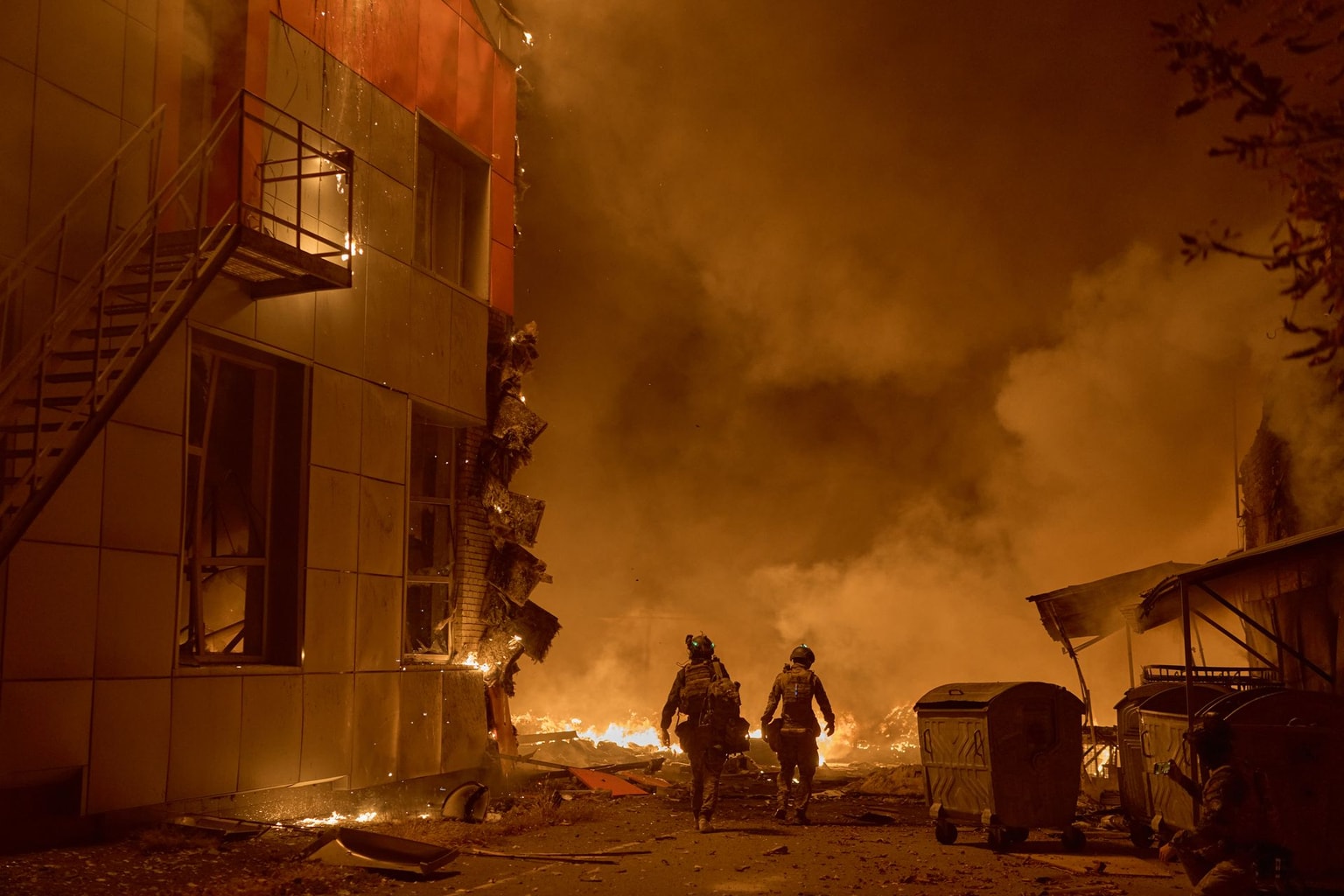
'Until safer times' — Kyiv’s cultural life pauses as the city adjusts to new drone threats
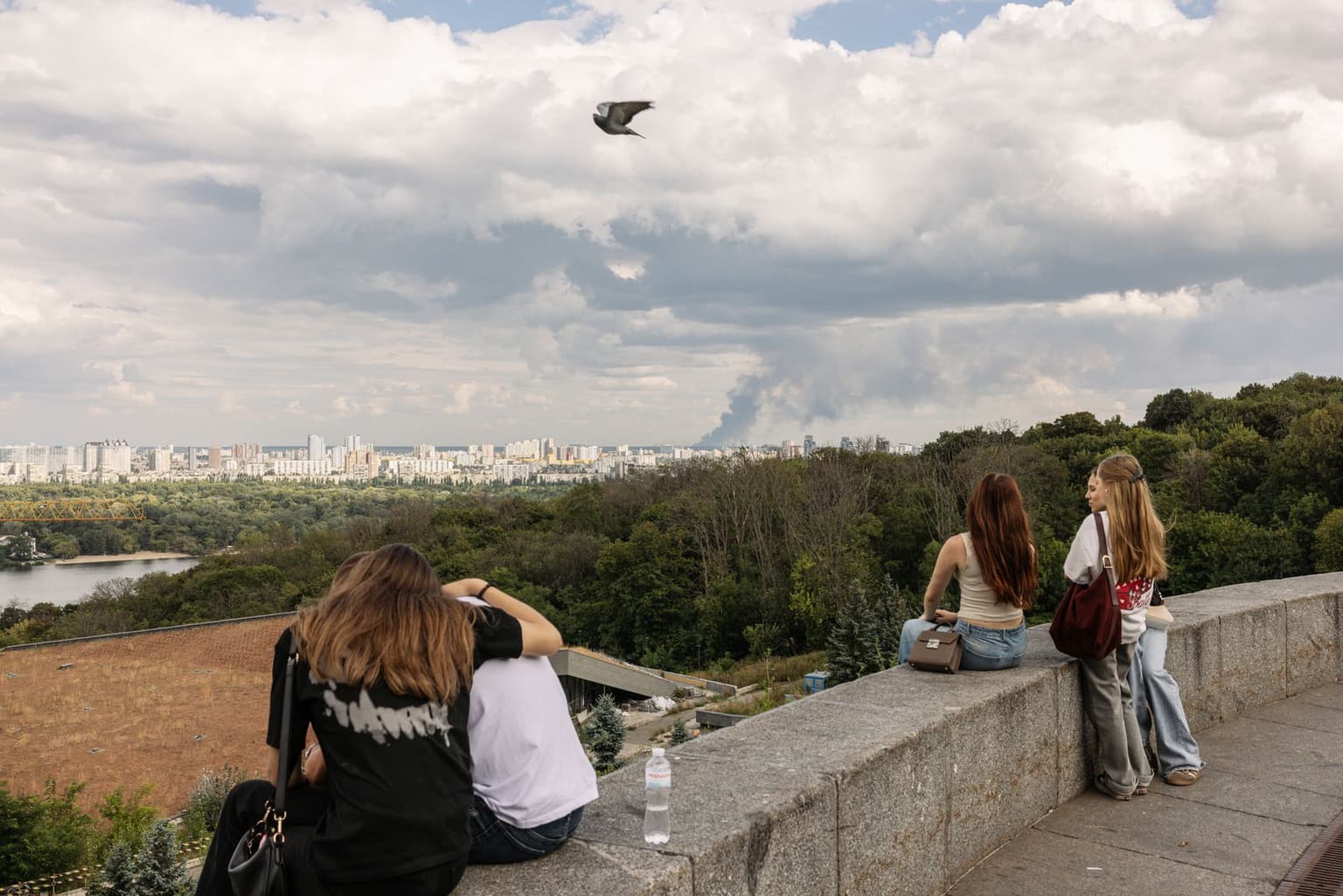
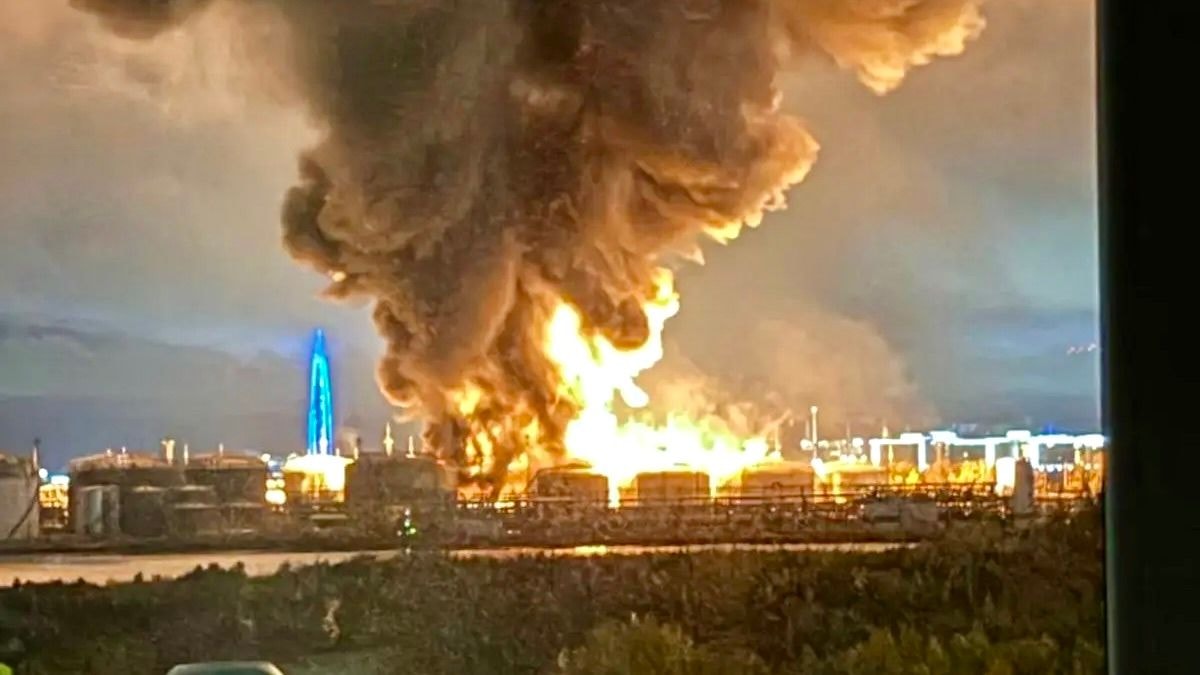
People gather at an overlook near the Kyiv Pechersk Lavra as smoke rises from a Russian drone strike in Boryspil district, in Kyiv, Ukraine, on Aug. 27, 2026. (Diego Fedele / Getty Images)
 on Google
In a post on Instagram, Alyona Gudkova sits with her head in her hands.
The founder of Kurazh, a popular Kyiv festival combining a flea market, food, music, dancing, and fundraising, had just announced that the project would suspend operations "until safer times."
Another post on Instagram showed a crowd dancing at Kurazh, with Light Dark Light Again by Angie McMahon as the soundtrack — capturing the rhythm of Kyiv in the fifth year of full-scale war, moving between moments of normality and sudden danger.
Together, the posts drew thousands of likes and hundreds of comments, many filled with broken-heart and hugging emojis. They came at the end of another summer Kyiv had managed to live through. But by its final weeks, that sense of normality was slipping, raising a harder question: had adaptation itself reached a limit?
Kurazh had paused before — during the COVID pandemic, and again after Russia launched its full-scale invasion in 2022. But each time, it came back. Since 2023, the project has held 20 events, including three this year.
This time, Gudkova does not know when Kurazh will return, saying it could possibly be not until spring. And the pause will also be costly: it means freezing an operation that employs 14 people, brings together more than 200 businesses at each event, and normally generates around Hr 7 million (about $157,000) in revenue per event.

She estimates the shutdown alone will cost around Hr 4 million (about $90,000) through March 2027, not including lost revenue.
"The hardest times are now," she told the Kyiv Independent.
It was not one problem, she said, but the accumulation of many: worsening security, falling spending, exhaustion, and uncertainty over what comes next. People are saving money for winter and basic needs rather than spending it on entertainment, she added.
For much of the full-scale war, Russian aerial attacks on Kyiv came mostly at night in the form of mass missile and drone strikes, allowing residents to recover some sense of normality during the day. Packed concerts, festivals, restaurants, and bars became symbols of a city determined to keep living despite the war. Rare daytime attacks could disrupt plans, but they rarely disrupted the rhythm of the whole city.

In recent weeks, the pattern has changed, and Russia now sends a steady stream of its newer jet-powered attack drones around the clock, giving the capital a constant soundtrack of air raid sirens, air defense fire, and explosions.
"Now Russia is terrorizing cities every day, both day and night. People are getting used to the alerts," Gudkova said. "There is a certain fatalism — life has to go on anyway. But as an organizer, what scares me is that people may lose their vigilance."
read also
Other organizers followed suit. The Book Country festival was postponed until spring. GogolFest, returning to Kyiv after a nine-year break, moved part of its program to spring. In Zhytomyr Oblast, the Deruny festival — a famous celebration of the traditional potato pancake — was canceled as well. Several smaller events were also called off or postponed.
Kyiv authorities later announced new restrictions on mass events, temporarily banning outdoor entertainment and sports events at venues without shelters.

New rules
On Aug. 27, Kyiv recorded 13 air raid alerts in a single day, the highest number since the start of the full-scale invasion. The grim records continued into autumn, with the capital spending around 17 hours under alerts on Sept. 8.
By late August and early September, repeated Russian drone attacks were stretching across both night and day, paralyzing life across the city. A brief lull during a visit by U.S. envoys for peace talks on Sept. 6 ended the following day, after they left Kyiv.
The city is now looking for new ways to live with the threat.
"To pretend that we are unbreakable and holding on — Ukrainians are sick of those words."
Authorities introduced different levels of air raid alerts, allowing businesses to keep operating during lower-level drone threats while requiring them to stop during more serious attacks.
Kyiv also shortened its curfew and extended public transport hours to keep the city functioning as the threat became more constant.
For Gudkova, however, continuing at any cost no longer felt like resilience.

"To pretend that we are unbreakable and holding on — Ukrainians are sick of those words," she said. "I don't see the point in carrying that further. There is no point in lying."
"Sometimes you have to take one step back to take two steps forward," she added, trying to stay optimistic.
Reading the room
Not everyone is stopping. Founded in 2024, the ethno-techno project CMYK was built during the full-scale war and has known little but adaptation.
Liliya Chernenko, CMYK's PR manager, says every season has brought a different challenge. For the team, simply continuing to develop the project and hold events in Kyiv in the fifth year of the war already means a lot.
"Especially because CMYK is meant to reconnect audiences with traditional Ukrainian music, a link disrupted by Russian and Soviet policies," she told the Kyiv Independent.
When the Deruny festival in Zhytomyr Oblast was canceled over security concerns, CMYK, which was in charge of the music program, and local authorities found a way to move forward: they kept the concert program, scaled down the event, and shared the exact location only with those planning to attend.

"You constantly have to read the room. You can spend several months planning an event, and then suddenly have to ask whether it is appropriate to hold it that day at all — for example, if the city declares a day of mourning after a Russian attack," Chernenko said.
They have done this before. In January, amid extreme cold, mass blackouts, and heating disruptions, CMYK still held its Malanka (a Ukrainian winter carnival celebration). "We see these circumstances as part of reality," Chernenko said, "and remember that it can always get worse."
Now, the team expects large events in Kyiv to become smaller and move to venues with shelters or underground spaces.
"We will probably have to learn from front-line cities and develop our own solutions," she said.