Ukraine war latest: 'Revenge is inevitable' — Ukraine sinks Russian border guard ship involved in 2018 Kerch Strait attack
 on Google
Key developments on July 14:
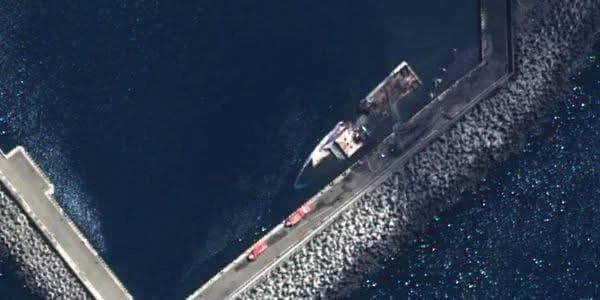
- 'Revenge is inevitable' — Ukraine sinks Russian border guard ship involved in 2018 Kerch Strait attack
- June deadliest month for civilians in Ukraine since April 2022, U.N. says
- Ukraine hits 2 Russian oil refineries, 11 vessels in strike spanning hundreds of miles
- Head of Ukraine's state-run defense giant steps down week after deadly Vyshneve depot blast
- Russian attacks kill 7, injure 78 across Ukraine over past day as Kyiv comes under another ballistic missile strike
The Ukrainian Navy said on July 14 it hit and sank a Russian border guard patrol ship off the coast near Novorossiysk in Russia's Krasnodar Krai, around 300 kilometers (186 miles) from the front line.
The vessel — the Izumrud — was hit by a Sargan-3000 sea drone, and the strike killed and wounded members of its crew, the Ukrainian Navy said, without disclosing further details.
It added that the Izumrud participated in Russia's attack on three Ukrainian naval vessels in the Kerch Strait on Nov. 25, 2018, during one of the most significant clashes between the two sides before Russia launched its full-scale invasion of Ukraine in 2022.
During the incident, Russian forces opened fire on and seized two Ukrainian gunboats and a tugboat as they attempted to transit the Kerch Strait from Odesa to Mariupol. Twenty-four Ukrainian sailors were captured and later released in a prisoner exchange in 2019.
"Revenge is inevitable. To be continued," the Ukrainian Navy said in a post on social media.
Commissioned in 2014, the Izumrud was a second-rank border guard patrol ship equipped with a helicopter landing pad, the Ukrainian Navy said.
It was approximately 62.5 meters (205 feet) long, displaced between 630 and 750 metric tons, and had a top speed of 27 knots, it added.
June deadliest month for civilians in Ukraine since April 2022, U.N. says
June was the deadliest month for civilians in Ukraine since April 2022, with at least 293 people killed and 1,990 injured, the U.N. Human Rights Monitoring Mission in Ukraine (HRMMU) said in a report released July 14.
June's casualty total surpassed the previous record set in May, when 282 people were killed and 1,794 injured, and was 37% higher than the total in June 2025.
"Following the sharp increase documented in May, civilian casualties continued to rise, reaching the highest total number of civilians killed and injured since April 2022," the mission said.
According to Danielle Bell, head of the HRMMU, the steady increase in civilian casualties during the first half of 2026 reflects Russia's intensified attacks and growing use of powerful weapons.
"This trend should serve as a warning that the risks faced by civilians are not only persisting but are increasing in both scale and complexity," Bell said.
The U.N. documented 1,396 civilians killed and 7,978 injured during the first six months of 2026, representing a 37% increase compared with the same period in 2025 and a 114% increase compared with the first half of 2024.
Long-range missiles and drones remained the leading cause of civilian casualties in June, accounting for 45% of all casualties, with 126 people killed and 907 injured. Most of those attacks struck urban centers far from the front line, including Kyiv and Dnipro, according to the report.
Meanwhile, civilian casualties caused by short-range drones near the front line reached their highest monthly level since the start of Russia's full-scale invasion, killing 89 people and injuring 588 others. Aerial bombs, artillery, and multiple-launch rocket systems also continued to inflict heavy civilian losses.
read also
Ukraine hits 2 Russian oil refineries, 11 vessels in strike spanning hundreds of miles
Ukraine has struck two major Russian oil refineries, a ship-loading area, several vessels, and other military and logistics targets overnight, Ukraine's General Staff said on July 14.
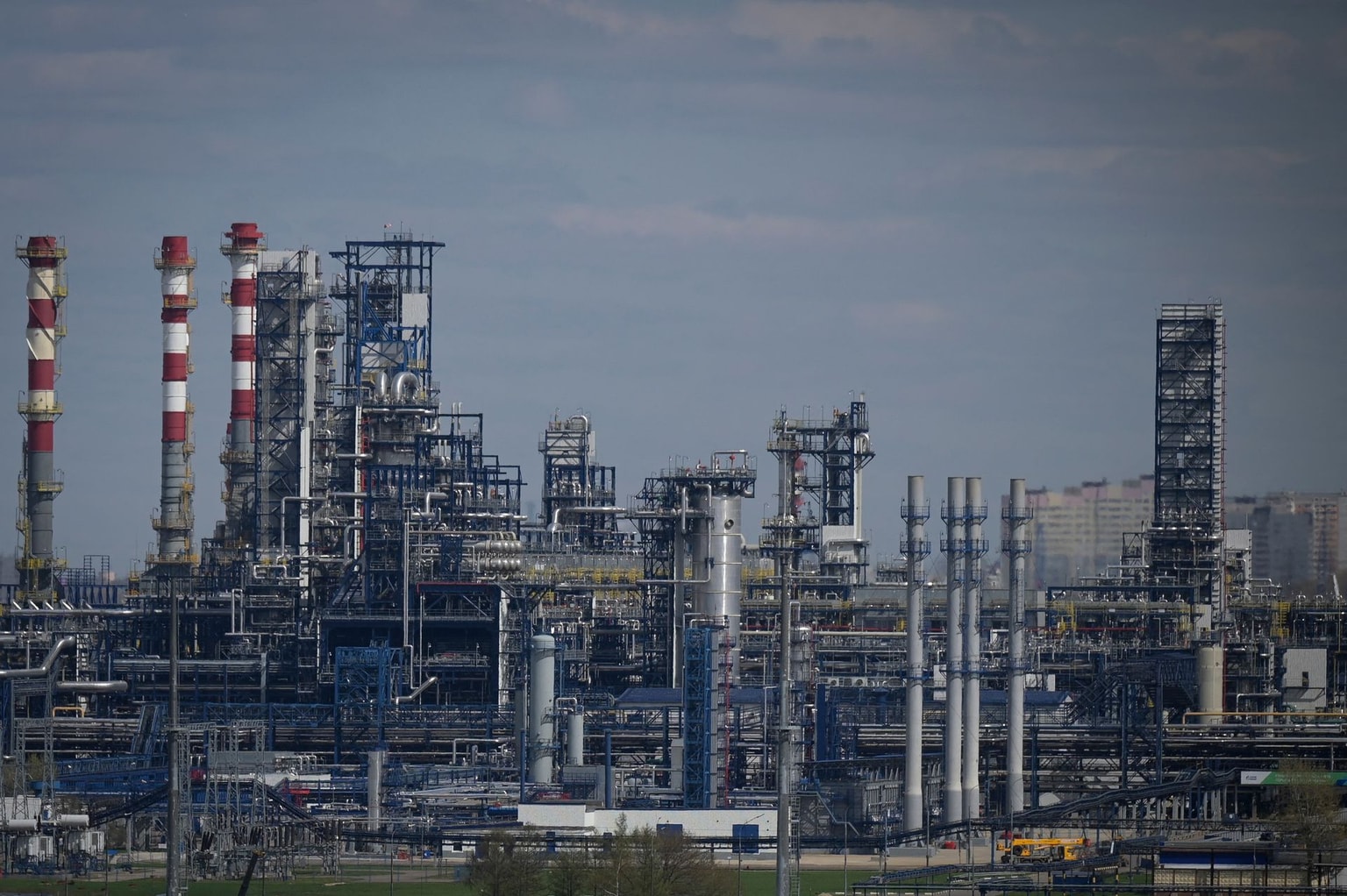
The Gazprom Neftekhim Salavat complex in Russia's Republic of Bashkortostan and the Afipsky oil refinery in Russia's Krasnodar Krai came under Ukrainian attack overnight on July 14, the General Staff said.
President Volodymyr Zelensky said the facility in Bashkortostan was located about 1,300 kilometers (810 miles) from the front line, while the refinery near the village of Afipsky was about 400 kilometers (250 miles) away.
0:00/0:201×Video purportedly showing the aftermath of Ukrainian strikes on Russian oil infrastructure and vessels overnight on July 14, 2026. (Volodymyr Zelensky/X)
The Gazprom Neftekhim Salavat complex is one of Russia's largest oil refining and petrochemical facilities, with a designed annual processing capacity of about 10 million metric tons of oil, according to the General Staff.
A fire was reported at the facility, and the AVT-6 primary crude oil distillation unit, along with other production facilities at the plant, was damaged, the Special Operations Forces said.
The refinery was previously struck twice by Ukrainian drones in September 2025.
Ukraine also struck the Afipsky oil refinery in Russia's Krasnodar Krai, with a fire was reported near the facility, the statement said. The refinery, which has a designed annual processing capacity of around 6.25 million metric tons of oil, is involved in supplying fuel to the Russian military.
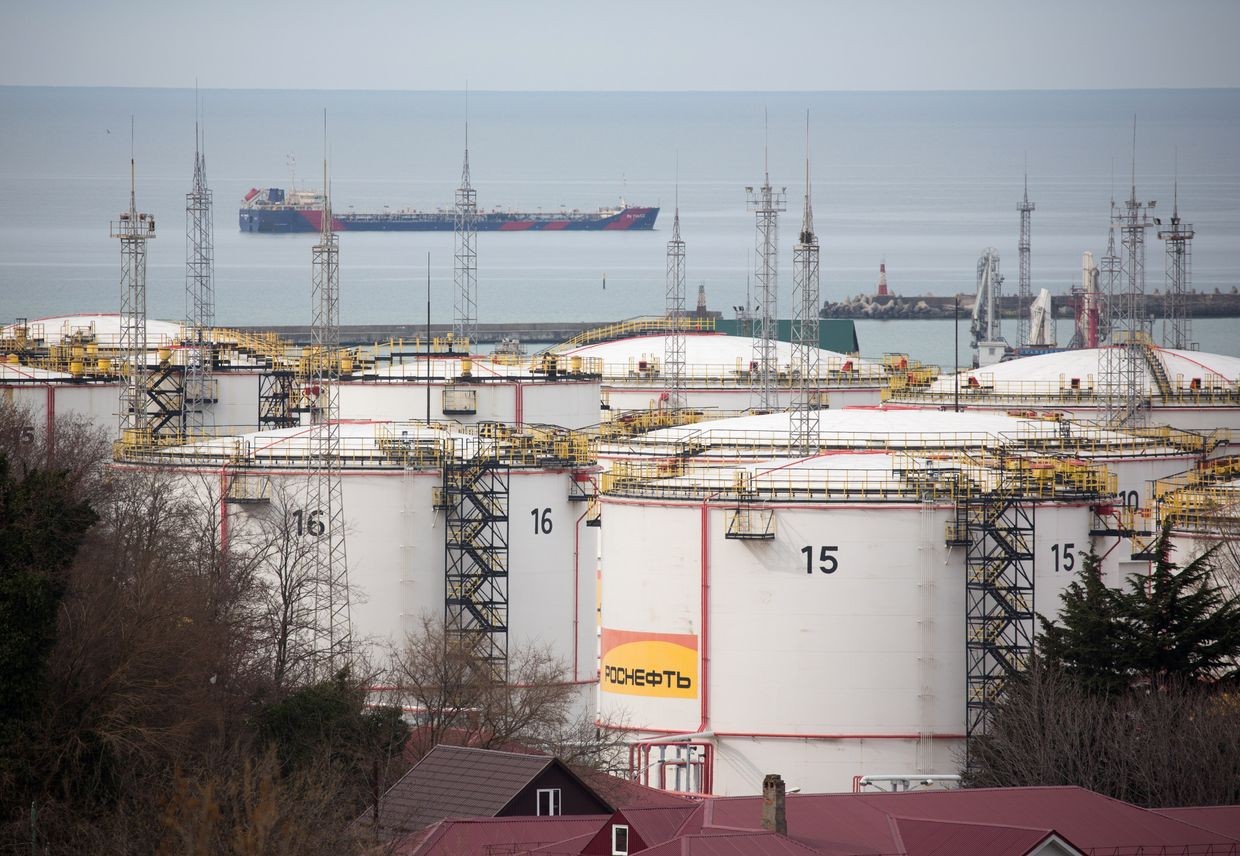
In addition to oil infrastructure, Ukrainian forces targeted Russia's maritime logistics network. The General Staff said a ship-to-ship cargo transfer site near Gelendzhik in Russia's Krasnodar Krai, used to transship Russian oil and support military naval logistics, was struck. Ukrainian forces also hit five oil tankers, five bulk carriers, and a harbor tug in the Sea of Azov.
The extent of the damage to the facilities and vessels is still being assessed, the General Staff added.
Russia's Agriculture Ministry said on July 14 it is working on alternative cargo routes amid repeated Ukrainian strikes on vessels in the Sea of Azov.
Russia's Defense Ministry claimed it shot down 288 Ukrainian drones overnight over Russia, occupied Crimea, and the Azov and Black seas.
Head of Ukraine's state-run defense giant steps down week after deadly Vyshneve depot blast
Herman Smetanin, the general director of Ukraine's largest state-owned defense company, Ukroboronprom, announced on July 14 that he is stepping down from his position.
"It has been an honor to lead Ukraine's largest defense company," Smetanin said when he announced the news on his Telegram channel.
"I believe our greatest achievement is the strong, professional team we built — both within the company itself and across the enterprises of the group."
The news follows a major controversy at Ukroboronprom, centered around a deadly explosion at one of its ammunition depots during a Russian attack on the Kyiv suburb of Vyshneve on July 6.
The incident prompted an investigation into violations of ammunition storage regulations, leading to the dismissal of two senior Ukroboronprom officials.
Smetanin's resignation also comes amid a major shake-up in the Ukrainian government, with Prime Minister Yuliia Svyrydenko being dismissed by the parliament earlier on July 14.
The outgoing director did not specify the reasons for his resignation. It remains unclear whether he will be offered a new position in government or defense-industry structures.
Ukroboronprom, also known as the Ukrainian Defense Industry, is Ukraine's largest state-owned defense manufacturer.
The conglomerate comprises around 100 enterprises that develop and produce weapons, military equipment, and ammunition, including missiles, drones, armored vehicles, and other defense systems.
Smetanin first headed Ukroboronprom between 2023 and 2024, before being appointed the strategic industries minister. He returned as the state company director in the summer of 2025 after a previous government reshuffle.
read also
Russian attacks kill 7, injure 78 across Ukraine over past day as Kyiv comes under another ballistic missile strike
A Russian overnight missile and drone attack across Ukraine on July 14 killed at least seven people and injured 78 others, with Kyiv hit by ballistic missiles, local authorities said.
Explosions rocked the capital shortly after air raid sirens sounded at 12:15 a.m. local time. Sixteen sites were damaged, including a school and a civilian enterprise, but no casualties were reported in Kyiv, according to President Volodymyr Zelensky.
Russian strikes also hit critical infrastructure in Dnipropetrovsk, Donetsk, Zhytomyr, and Odesa oblasts over the past day, Zelensky added.
"No time can be lost. Every day sanctions are delayed gives Russia additional time to prepare. Everything Russia uses to prolong this war and attack people — chips, microelectronics, dual-use goods — must be stopped," Zelensky said, urging the European Union to adopt its 21st sanctions package.
Zelensky also stressed the importance of developing a European anti-ballistic missile defense system — a project seen as a more affordable, mass-produced alternative to the U.S.-made Patriot system.
"This is something that can truly provide greater security for our people," he said.
Beyond the attack on Kyiv, Russia launched a total of eight Iskander-M/S-400 ballistic missiles, two Kh-59/69 cruise missiles, and 135 drones against Ukraine overnight, the Air Forces said. Ukrainian air defenses intercepted seven missiles and 108 drones.
In Kharkiv Oblast, Russian attacks injured 11 people, including a 11-year-old girl, Governor Oleh Syniehubov said.
A Russian attack on the Synelnykove district in Dnipropetrovsk Oblast on July 13 killed a 73-year-old man and injured three others. Overnight into July 14, the death toll rose to two, while the number of injured increased to four, Governor Oleksandr Haznha said.
Another six people were injured in Russian attacks in the region, including in the Nikopol and Kryvyi Rih districts, according to the local military administration.
In Chernihiv Oblast, Russian forces injured three people, the local authorities said.
Russian attacks on Kherson Oblast killed three people and injured 25 others, including a child, over the past day, Governor Oleksandr Prokudin said.
Russian forces continued using camera-equipped FPV (first-person-view) drones to hunt civilians in Kherson, a tactic that has become known as a "human safari." In separate morning strikes, an 86-year-old man and a 68-year-old man suffered blast injuries, concussions, and multiple shrapnel wounds as a result of such attacks.
Earlier, Russian artillery struck the city's Korabelnyi district, injuring a 17-year-old girl and a 54-year-old woman.
Russian attacks on Zaporizhzhia Oblast killed one person and injured 17 others, including a child over the past day, according to the local military administration.
The overnight attack continued into the morning. A Russian FPV drone struck a civilian car in the village of Tavriiske, killing a woman and injuring a 60-year-old man. At around 10:49 a.m., authorities also warned of a renewed threat of guided aerial bomb (KAB) strikes.
Russian attacks on Sumy Oblast killed one person and injured five others over the past day, local authorities said.
Russian attacks injured three people in Donetsk Oblast, Governor Vadym Filashkin said.