Beyond the protests — How legal mechanisms became tools of pressure
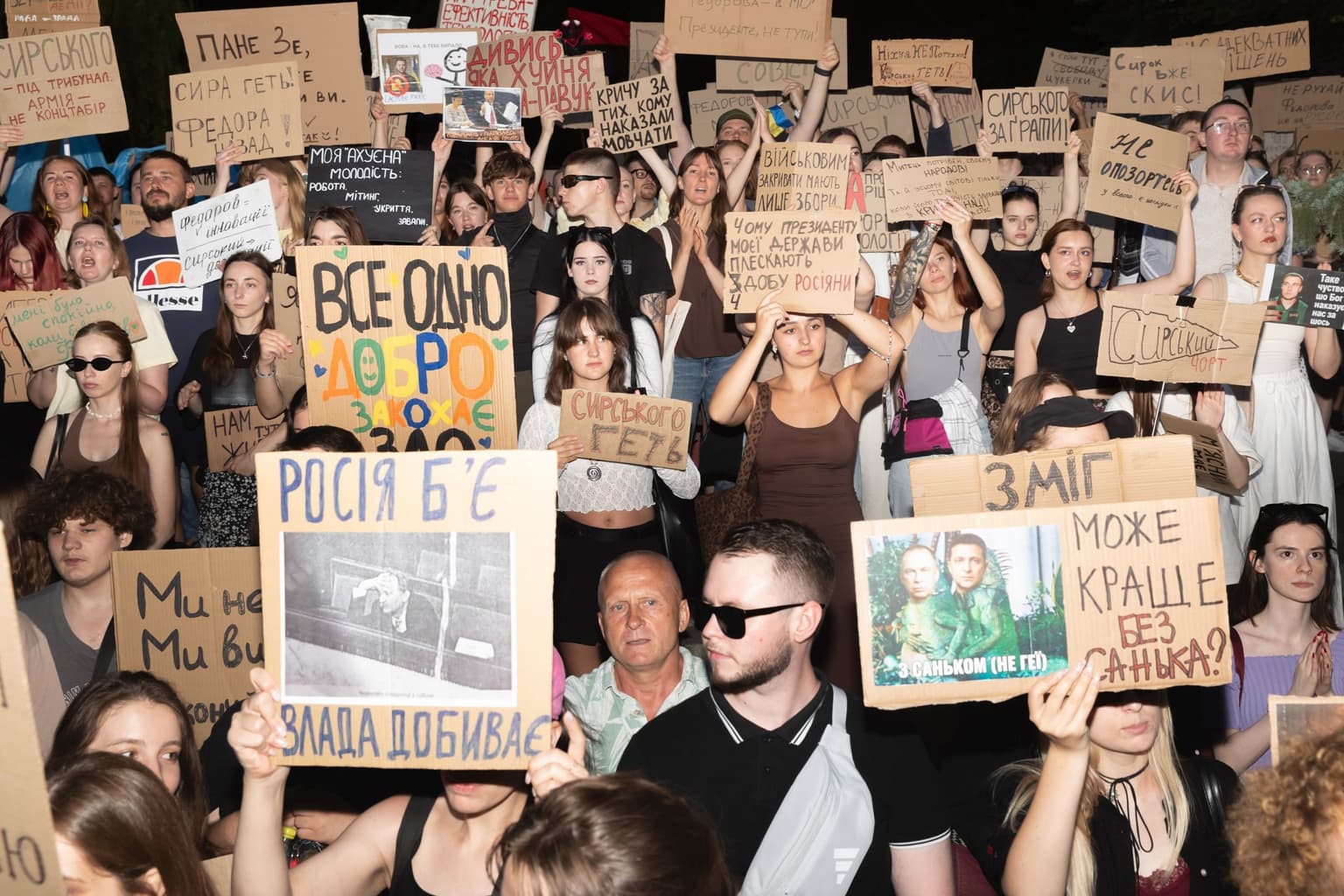
People hold signs protesting the dismissal of Defense Minister Mykhailo Fedorov and demanding military reforms while criticizing current leadership and the military command structure in Kyiv, Ukraine, on July 20, 2026. (Mykhaylo Palinchak / SOPA Images / LightRocket via Getty Images)
 on Google
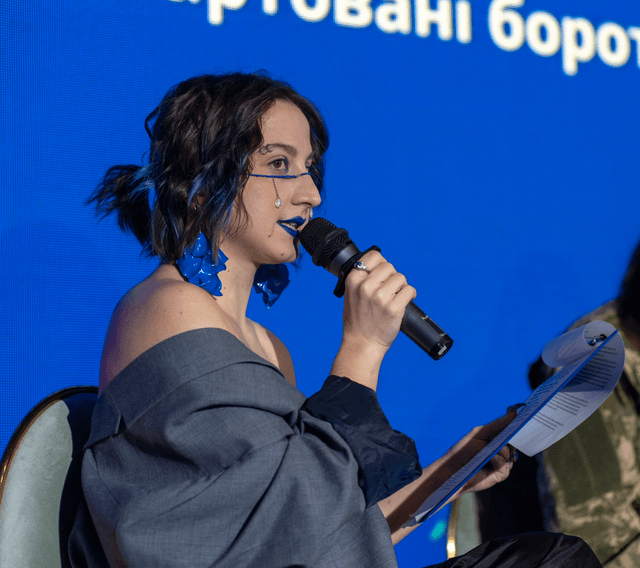
Ana More
Head of the Civil Society Protection Program at ZMINA
"Every time I come to Kyiv, there are protests," my French colleague once told me. "That's so great that at least in Ukraine, protests work. You can't persist while fighting on both fronts."
He's right: protests do work. But only to a degree. More importantly, they are symptoms of a far more problematic phenomenon: the systematic use of ostensibly legal mechanisms to undermine civil society. If left unchecked, this practice could jeopardize Ukraine's democratic future.
Last July, the swift adoption of a new law, which effectively subordinated Ukraine's anti-corruption watchdogs NABU and SAPO to the Prosecutor General, triggered the first large-scale protests since the beginning of Russia's full-scale invasion. Thousands of people gathered on the streets and squares across Ukraine, calling for the legislation to be overturned. The government ultimately reversed course.
While it seemed that the public outcry had prevailed over these questionable reforms, the pressure dissolved into the shadows, where it became harder to detect.
In our analytical report, my colleagues point to a concentrated wave of interconnected criminal procedural, administrative, political, and information-based measures targeting individuals and institutions involved in exposing high-level corruption.
Unfortunately, we can already see the results of this systemic pressure.
According to the leadership of NABU and SAPO, some whistleblowers have suspended their cooperation with the anti-corruption authorities due to concerns about their own safety.
Establishing these contacts takes a lot of time, and such disruptions may lead to systemic disruptions in the work of anti-corruption institutions, including delays in investigations, the loss of evidence or of its procedural admissibility, and an overall reduction in the effectiveness of investigations into high-level corruption, especially in the case of ongoing investigations.

Overall, ZMINA has documented 29 cases of pressure on anti-corruption activists from the second half of 2025 through 2026.
There were 28 criminal proceedings initiated against them, their close relatives, and witnesses, primarily under serious offenses under the Criminal Code of Ukraine, including articles on high treason and aiding the aggressor state.
Out of the cases we documented, 24 involved arbitrary searches. In 20 of them, security services labeled the searches "urgent" to bypass prior judicial authorization, and 19 searches took place simultaneously across the country on the morning of July 21.
In many cases, authorities had opened the investigations only 12–20 days earlier. In others, they had allowed the proceedings to sit dormant for years.
Yevhen Tokar, Head of the NABU Detective Unit, for example, recounted how an armed group barged into his home early in the morning after one of the massive Russian attacks on Kyiv.
That’s so great that at least in Ukraine, protests work.
After hearing aggressive shouting and pounding on the door, he and his wife managed to throw on some clothes. Then the outer door was forced open. The NABU official saw armed men carrying a ballistic shield and shining a torch into his face. Shouting "State Bureau of Investigation!" they pinned him against the wall.
Under the psychological pressure exerted by eight armed SBI officers, who controlled the movements of his wife and daughter, the NABU official, at the investigator's request, handed over his daughter's and wife's laptops, a storage device belonging to NABU, several USB flash drives, and his own phone.
Tokar's case, to which the search ostensibly was related, concerns a road traffic accident that occurred in May 2021.
Of those whose houses, homes of their relatives, in some cases even their garages, were searched that morning, two other detectives, Ruslan Mahamedrasulov and Viktor Husarov, were detained and spent 5 months in the Kyiv detention center with poor conditions.
Overall, the documented practices indicate violations of several articles of the European Convention on Human Rights, including the prohibition of torture and the right to a fair trial.
But most importantly, they show that this pressure was exercised primarily through formally lawful mechanisms: criminal proceedings, searches, preventive measures, parliamentary procedures, and public communications by state authorities.
This is precisely what makes it particularly dangerous: mechanisms that appear lawful begin to function as instruments of deterrence, discreditation, and forced subordination of the anti-corruption infrastructure to political interests, posing a direct threat to the rule of law, Ukraine's democratic development, and our European integration path.

Later that year, the "Midas" case was exposed, and notices of suspicion were issued against Justice Minister Oleksii Chernyshov, Ukraine's former energy minister Herman Halushchenko, and even former head of the Presidential Office Andriy Yermak. NABU, SAPO, and anti-corruption activists who have suffered this pressure have worked on and continue to work on these cases.
The investigation is still ongoing, and the so-called "Mindich tapes" continue to be released. Those behind the attack on the anti-corruption sector have not only avoided punishment but have also received promotions and awards, according to NABU's director Semen Kryvonos.
On the other hand, a year later, none of the criminal proceedings against NABU detectives on suspicion of high treason or aiding the aggressor state have resulted in a conviction. But still, people were beaten, put behind bars, and attacked via social media discreditation campaigns.
All of it while using ostensibly legal mechanisms. This is why ZMINA sees the principal threat in the gradual "normalization" of the use of criminal procedural and administrative instruments to control the anti-corruption ecosystem through fear, uncertainty, and discrediting.
Unless this practice is halted and reversed, it has the potential to transform anti-corruption institutions from mechanisms for combating corruption into merely formal components of the system, lacking genuine guarantees of independence.
So yeah, protests do work. But only partially. What we can do about it is shed light on what is happening in the shadows and increase international pressure. Ukraine desperately needs a state policy protecting those engaged in anti-corruption and human rights work.
This policy should provide for a mechanism to respond to incidents of pressure, designate the responsible authority, and ensure periodic public reporting on its implementation.
Editor's note: The opinions expressed in the op-ed section are those of the authors and do not purport to reflect the views of the Kyiv Independent.