'They must face the most severe punishment' – How Vyshneve's ammunition depot multiplied the toll of Russia's strike
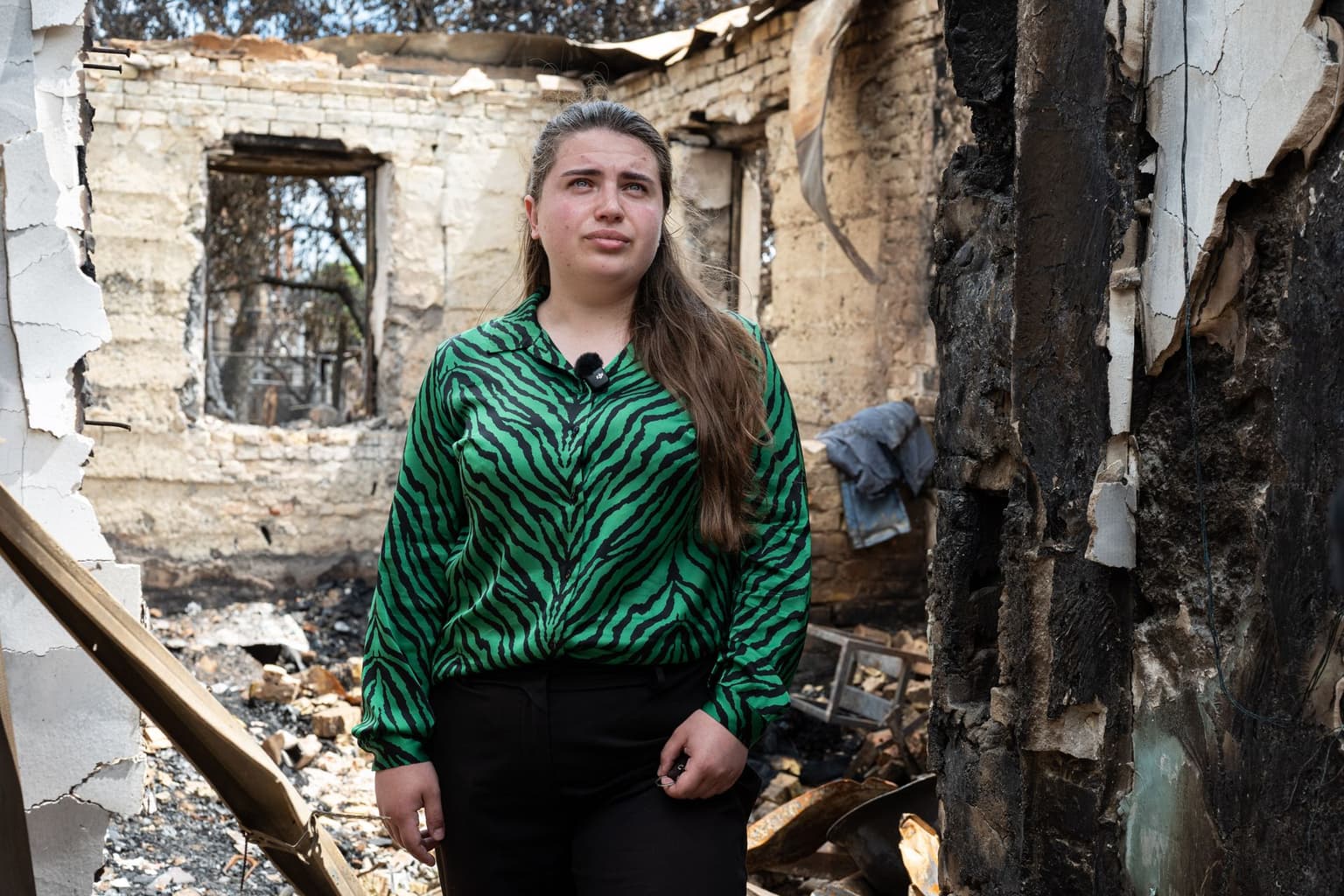
Anastasiia Mysaka, 21, speaks during an interview in Vyshneve, Kyiv Oblast, Ukraine, on July 13, 2026. (Danylo Antoniuk / The Kyiv Independent)
 on Google
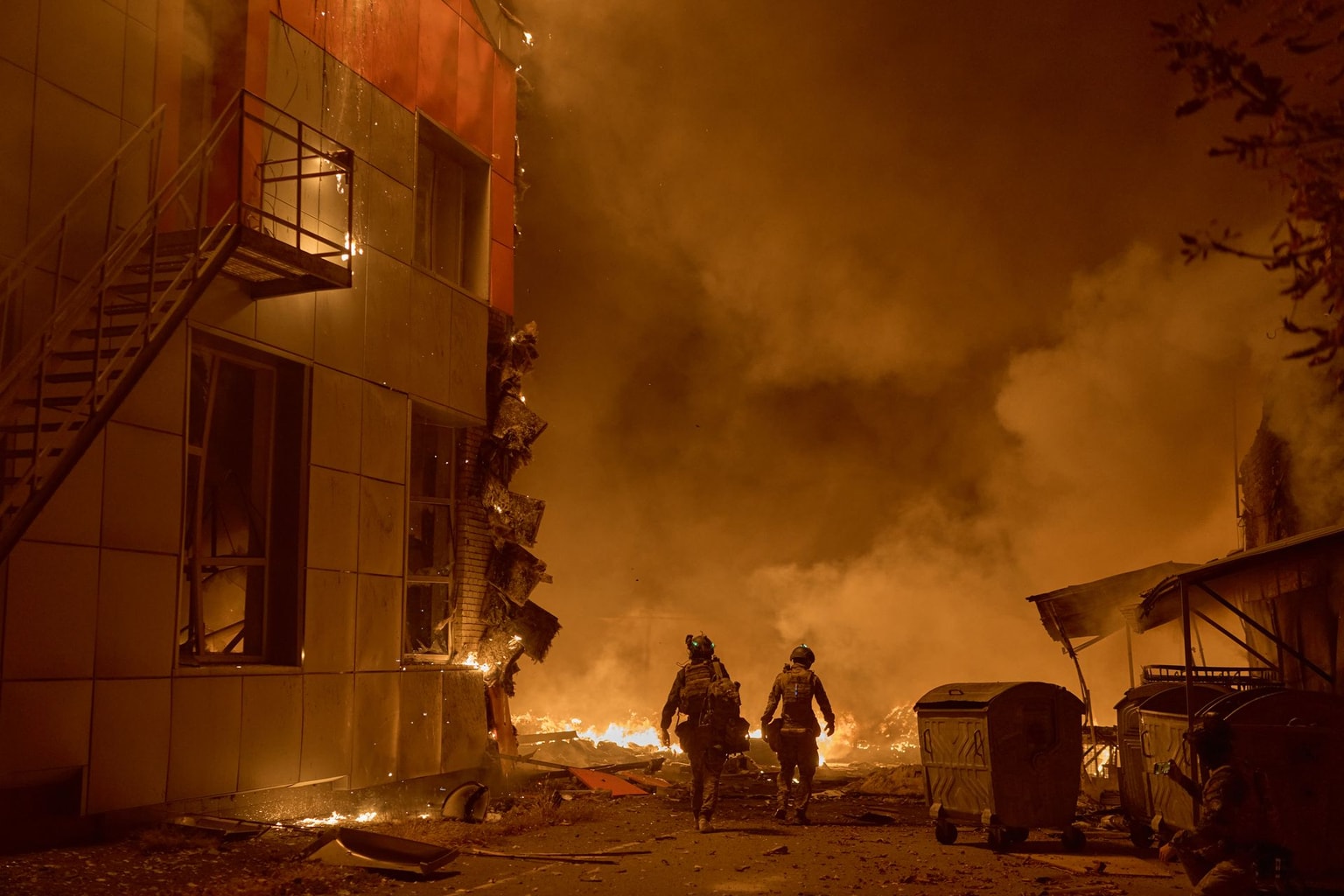
VYSHNEVE, Kyiv Oblast – After a Russian missile strike tore through a quiet suburb just southwest of Kyiv on July 6, causing massive explosions at a warehouse near a residential area, entire streets resemble a front-line town.
Where neat gardens, cherry trees, and family homes once stood, there are now scorched foundations, collapsed roofs, and piles of twisted metal. The blast resulted in the most extensive damage to residential areas since Russia's full-scale invasion began, Ukrainian officials said.
That night, a Russian attack hit an ammunition depot belonging to an enterprise under Ukroboronprom, Ukraine's largest state-owned defense manufacturer, triggering a powerful secondary explosion, President Volodymyr Zelensky and the Security Service of Ukraine (SBU) said.
Russia has struck defense industry sites in this part of Vyshneve before, including an attack on the Vizar machine-building plant on April 15, 2022, which Ukroboronprom confirmed at the time. Russia's Defense Ministry said it hit the same plant on July 6, while Ukrainian authorities have only confirmed that the struck site belonged to a Ukroboronprom enterprise.
Ukrainian authorities have since launched an investigation to identify those responsible for storing explosives in a warehouse less than 18 meters (60 feet) from a residential house, a distance prosecutors say was prohibited by law.

Several residents said they had known about the military facility in their neighborhood, but they told the Kyiv Independent they want to know who authorized the storage of the explosives — and when the state will compensate them for what they lost.
Anastasiia Mysaka, 21, was not at home when the explosions began. Her grandmother, who would have turned 80 on Aug. 1, was bedridden and unable to evacuate. She died in the fire.
"It is important to me that those responsible face a fair and the most severe punishment provided for by law," Mysaka told the Kyiv Independent.
"My grandmother didn't deserve such a death."

On the night of the attack, Mysaka spent four hours trying to reach her parents by phone. Later, she found out that they had been taken to a nearby shelter.
Her family had lived in the same house since it was built in the 1960s. Four generations lived there — her great-grandmother, grandmother, parents, and eventually Mysaka herself.
"The house where entire generations of my family lived is now ruined," she said, standing on the rubble of her home.
"I could never have imagined something like this. My grandmother didn't deserve such a death," she added.
The night of July 6
Then-Prime Minister Yuliia Svyrydenko said on July 6 that the explosion caused the most extensive damage to residential housing since the start of Russia's full-scale invasion, damaging 13 hectares (32 acres) of residential area in Vyshneve.
"The scale of the destruction is staggering," Liudmyla Martynenko, head of the Information and Public Relations Department at Vyshneve City Council, said. She added that 253 private houses and 27 multi-story buildings were damaged in the attack, and 91 houses were completely destroyed.
Martynenko also claimed that municipal authorities had not been aware of the warehouse.
More than 600 Vyshneve residents were evacuated from the areas near the attack site on July 6, local authorities said, including 117 people from a shelter near the epicenter of the explosion, who were taken by municipal buses to reception points and aid centers set up around the town.

Some local residents were running for hours from the explosions in directions opposite to the warehouse as Diana Liashchuk, 21, told the Kyiv Independent on July 6. Liashchuk joined dozens of others fleeing the secondary explosions, running through fields and a cemetery on the outskirts of Vyshneve in the darkness around 4 a.m. as debris continued to fall around them.
Eight residents were killed, Vyshneve City Council told the Kyiv Independent, and 21 people sought treatment for injuries of varying severity at the city hospital, three of whom remain hospitalized.
Anna Dorokhina, 22, and her uncle were among those killed. Her husband survived because he ran in another direction.
Nataliia Ponomarchuk is a seamstress in a neighborhood near the warehouse. She fled the war in her native Donetsk Oblast and found a new home in Vyshneve. Ponomarchuk had known Dorokhina as a customer.

"She had such a difficult life, but she was always smiling, always so polite," Ponomarchuk said.
Three days before the attack, Dorokhina stopped by her workshop to ask that her curtains be hemmed. "She even left me a tip and said she'd bring me more work soon. I still can't come to terms with her death."
It took emergency crews 10 days to declare the area safe. The State Emergency Service for Kyiv Oblast told the Kyiv Independent that its teams checked the entire site and surrounding streets and distributed leaflets to residents showing the kinds of unexploded ordnance they might find and what to do if they came across one, before completing their work on July 16.
read also
The street of 'Peace'
Myru Street, whose name means "street of peace" in Ukrainian, was one of the hardest hit. Along it, many families had spent decades, and in some cases generations, building their lives, only to lose everything in a single night.
For Anatolii Holovakha, 64, the destroyed house was where he had spent his childhood. His 93-year-old mother and 70-year-old sister survived only because they took shelter in the cellar. His mother remains in intensive care, and the family has yet to tell her the house no longer exists.
"I never thought my retirement would look like this," Holovakha said.
Retired serviceman Vitalii Nikolaienko, 62, said his family had long been accustomed to seeking shelter whenever Russia targeted the nearby defense plant.
"I spent my whole life creating a home. Now we've been left with nothing."

Shortly after 1 a.m. on July 6, they evacuated in two cars to a school on the edge of town, leaving one vehicle behind. Around 4 a.m., believing the danger had passed, he and his wife returned home while their children stayed at the shelter.
The yard appeared intact, with only small fires burning nearby. As they unlocked the front door, a powerful explosion erupted. They jumped back into the car and fled for a second time.
Nikolaienko spent years building the house and filling it with everything his family owned. By morning, nothing remained.
"I spent my whole life creating a home. Now we've been left with nothing," Nikolaienko said.
Anna Kuzmenko, 53, a bank employee, returns every day to the ruins of the house where she and her husband spent two decades raising their children. She stands where her living room used to be and shows the remains of a piano bought for her as a child and later played by her daughter.
"I didn't know whether we would survive."

"I'm very much aware that some people suffered far more. And I just lost my home," she said. "But it's not just a place where you sleep — it's where you draw your strength, it's the place where your memories live."
Kuzmenko and her husband fled around 4 a.m., when the secondary wave of explosions began. They took one of their cats with them, which they had rescued weeks earlier from Kharkiv Oblast. The second, trapped inside, did not survive. Her husband turned back for a bag of documents and cash and was thrown to the ground by a blast, leaving him with minor injuries.
"I was screaming the whole way out of Vyshneve," Kuzmenko said. "I didn't know whether we would survive."
Local resident Yurii Kustov's house was one of the closest to the blast site. Today, only its charred foundation remains. "I still can't put into words how I feel," he said, standing where his house once was.
Ongoing investigation
President Volodymyr Zelensky announced on July 11 that a criminal investigation had been launched and promised dismissals at Ukroboronprom, saying the company had illegally stored weapons near civilian areas. He also ordered inspections across the defense sector, warning the heads of defense enterprises that they would be personally responsible for similar violations.
Ukroboronprom dismissed the directors of the two state-owned enterprises involved on July 12, saying a preliminary internal investigation had uncovered violations of ammunition storage regulations and other legal requirements.
On July 14, Herman Smetanin resigned as director general of Ukroboronprom, becoming the highest-ranking official to step down in the aftermath of the Vyshneve tragedy.
On July 16, the SBU said counterintelligence officers and investigators had detained the general director and the deputy director for production of a state-owned defense enterprise within Ukroboronprom. The agency said the warehouses were never designated for ammunition storage and were used without the required permit documents. Neither the SBU nor the Prosecutor General's Office named the men or the enterprise. Both were served notices of suspicion for official negligence, causing grave consequences.

The same day, Prosecutor General Ruslan Kravchenko said in a Telegram post that a significant quantity of ammunition had been stored on premises that failed to meet safety requirements and lacked authorization documents, and that a 9M723 Iskander ballistic missile was used in the attack.
"The Russian missile was the root cause, but it was precisely the disregard for basic rules on ammunition storage and public safety that determined the scale of the subsequent explosion and its consequences," Kravchenko said.
He added that locating such facilities near civilian buildings is expressly prohibited by legislation, government decrees, and the decisions of the Supreme Commander-in-Chief's Headquarters. "These requirements were ignored."
"The distance from the site's perimeter fence to the nearest buildings was approximately 24 meters, and less than 18 meters to one of the residential houses. The officials responsible for these decisions could not have failed to be aware of the risks," he wrote.
On July 17, Kyiv's Solomianskyi District Court ordered both men held for 60 days without bail.
"The fact that there are suspects will not bring back our home and our lives, but I very much hope that they will be held to account for their actions," Mysaka said.
Military expert and former SBU officer Ivan Stupak told the Kyiv Independent that local officials may genuinely have been unaware that ammunition was stored near residential areas. Under martial law, many civil servants avoid asking questions about military facilities out of concern that showing interest could expose them to accusations of espionage.

"Many officials believe it's safer not to ask questions and not to know what's happening around military facilities," he said.
Stupak said investigators should look beyond lower-level officials. "It has to be real accountability. Not simply finding a couple of people to blame, but identifying who actually made the decisions and signed the documents," he said.
The Prosecutor General's Office and the SBU said they could not comment further, citing restrictions on disclosing pretrial investigation material. Ukroboronprom, the Defense Ministry, and the President's Office did not respond to requests for comment.
Rebuilding Vyshneve
According to Ukraine's Ministry for Communities and Territories Development, the government plans to allocate more than Hr 3 billion ($72 million) from the state reserve fund to help rebuild housing and restore critical infrastructure in the town.
Martynenko, head of the Information and Public Relations Department at Vyshneve City Council, said there is no estimate yet of how long reconstruction will take. The main factor slowing reconstruction, she said, is that residents no longer have their documents. She added that affected residents will also receive financial support from the Vyshneve City Council.
Meanwhile, many residents were still sifting through the ruins, hoping to recover a family photo, a document, a wedding ring, or anything that survived. People left homeless were also seeking some form of compensation from the government.
Mysaka, the 21-year-old who lost her grandmother and the house where four generations of her family had lived, is still waiting to hear whether the state will help her rebuild.
"As for the reconstruction, we do not have any further information at this stage," Mysaka said. "We are awaiting specific decisions regarding compensation and the timeframe for reconstruction."
"I don't know how we will survive this winter," she said.