Analysis: New Commander-in-Chief Drapatyi faces a manpower mess of Syrskyi's making
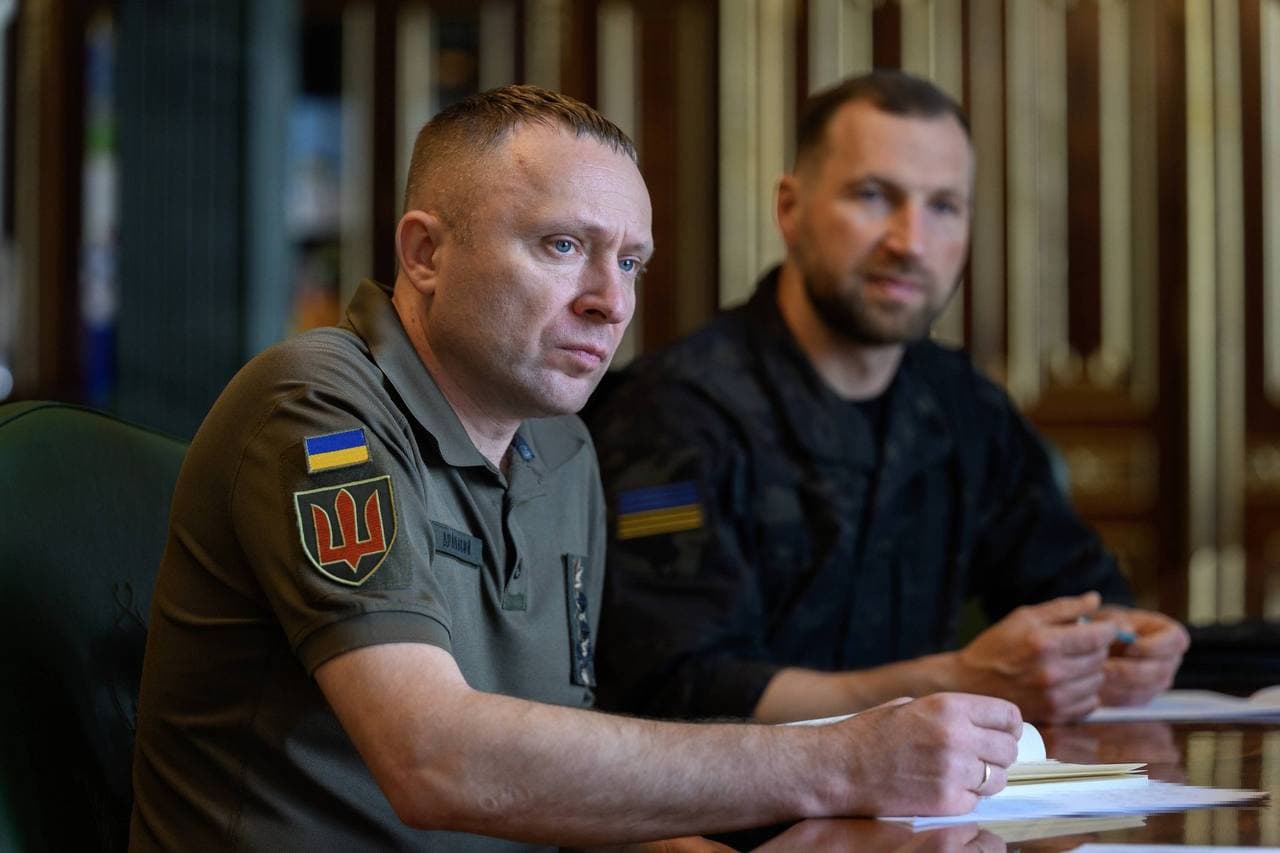
Commander-in-Chief of Ukraine's Armed Forces Mykhailo Drapatyi during his meeting with President Volodymyr Zelensky in Kyiv, Ukraine, on July 24, 2026. (Volodymyr Zelensky / Telegram)
 on Google
"The transformation of the defense forces cannot end with a change of minister, team, or department head.
"It must continue until fair and understandable rules become the norm for everyone who serves the state."
The words of Mykhailo Drapatyi, posted on Facebook just days before he was named Commander-in-Chief of Ukraine's Armed Forces, foreshadowed the challenges he would soon face.
Two and a half years after he took over the job from popular general Valerii Zaluzhnyi, Oleksandr Syrskyi's tenure as head of Ukraine's military is over.
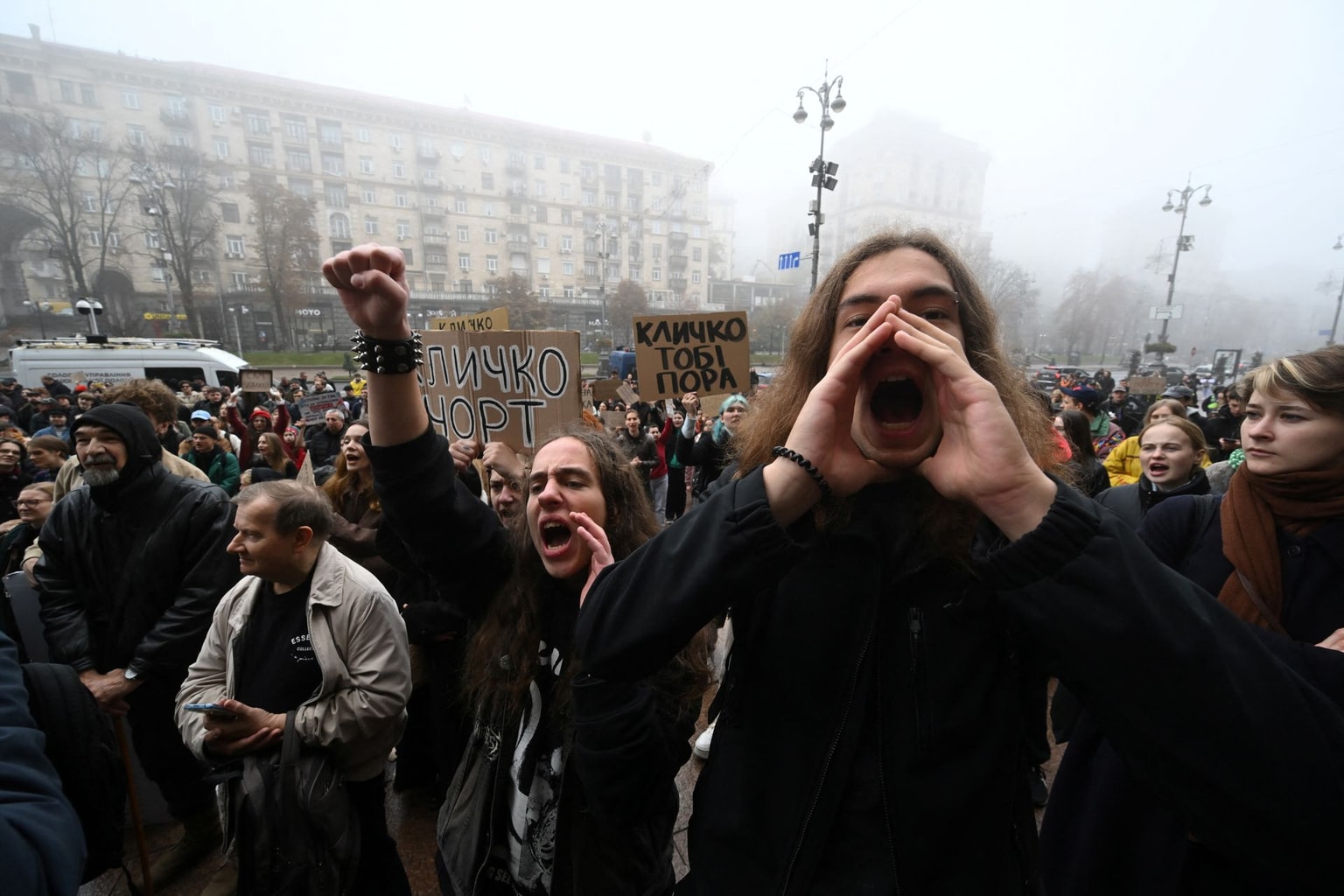
Mass protests triggered by President Volodymyr Zelensky's firing of young, reform-minded Defense Minister Mykhailo Fedorov soon shifted their focus to Syrskyi, seen as the antithesis of Fedorov's modernizing, data-driven strategy that had started to show results in the war effort.
Replacing Syrskyi is 43-year-old Drapatyi, who for years has been elevated as a general with a reputation for being everything Syrskyi wasn't: progressive, forward-thinking, and with a dedication to truth and responsibility.
Despite the positive shift for Ukraine in the balance of power in the war — especially on the narrative front — Drapatyi has inherited a military beset by problems with its command culture, resource allocation, and, above all, manpower.
With Russia increasingly projected to double down on its war of attrition with some form of mass mobilization, deep strikes and asymmetrical warfare may not be enough to force Vladimir Putin to the table.
More than ever, Ukraine's military, with Drapatyi at the head, will need to face its systemic issues if it is to survive what could be years of more brutal positional warfare against a numerically superior opponent.
Taking control
On the one hand, Drapatyi is lucky to assume the job of commander-in-chief at a time when the front line is largely stable.
Rapid advances across the southern front line this time last year, combined with a quickly worsening situation around the nearly surrounded city of Pokrovsk, meant that Ukraine's already overstretched military was stuck in a long-familiar bind.
Units were broken up and spread all across the front line under command structures that didn't take ownership of them, in an effort to fight fires across a line of defense riddled with weak spots.

Now, the southern front line has not only stabilized — Ukrainian forces are mounting slow, methodical counterattacks.
The toughest situation remains in Donetsk Oblast, where, although Russian forces failed to push far beyond Pokrovsk, the battle for the great fortress belt has begun in earnest after Russian forces overran most of Kostiantynivka earlier in the summer.
Here, although the situation remains more or less under control and there are no immediate operational threats, Drapatyi will be faced with the challenge of untangling and reorganizing a force that has reached its current state largely because of Syrskyi's leadership.
The situation in Kostiantynivka is a clear example of the unfinished and unsatisfactory state of the transition to a corps-based command system that Kyiv announced in February 2025.
Some of the newly formed corps, made up of around five brigades each, have become unified and formidable fighting units because they were built around an already strong brigade like Azov or Khartiia, or placed under a competent command, such as that of the Air Assault Forces.

But most other army corps remain disjointed and often dysfunctional entities, bringing together a handful of exhausted brigades and attached units while often lacking the resources to set up effective corps-level assault, artillery, and drone units that corps like Azov have been able to establish.
When one throws into the mix large assault units like the notorious 425th Skelia Regiment — which often acted independently of the corps and answered directly to Syrskyi — maintaining proper, efficient command and control was often impossible.
With the corps command functioning much the same as the temporary operational-tactical groupings (OTUs) and other command structures that preceded it, responsibility for any failures on the battlefield remained stuck at brigade level.
Culture change
The most intangible but perhaps most crucial change Drapatyi must bring to the way Ukrainian forces fight is a transformation of professional culture throughout the chain of command.
As the embodiment of a rigid, top-down, Soviet-style command culture, Syrskyi was notorious, whether for tactical-level micromanagement, a de-facto "no step back" policy, or the removal of brigade commanders for any and all form of perceived mistake.
Another hallmark of Syrskyi's command culture was how it often incentivized false reporting from commanders in the field.

One example was commanders claiming not to have lost positions that they no longer had any infantry left to even occupy, knowing that reporting the loss would lead to, at best, impossible orders from the General Staff to take them back, and at worst, investigation, dismissal, or even criminal prosecution.
All of these issues converge in one central criticism, one that Fedorov himself made during his press conference after being dismissed.
A simple lack of responsibility existed throughout the military, perpetuated and encouraged from the very top.
In contrast, Drapatyi is well known for placing responsibility at the core of his leadership.
Drapatyi was in the middle of important reforms as Ground Forces commander when a spate of attacks on training grounds — not a direct result of his actions — led him to resign, because he believed the buck had to stop with him.
As commander-in-chief, Drapatyi must embark on the difficult task of reversing this command culture from top to bottom, by listening to task force, corps, and brigade commanders, incentivizing truth from the bottom up, and fostering understanding and constructive cooperation from the top down.
Reorganizing the force
Despite a more stable front line and strategic pressure on Russia through longer-range drone strikes, Ukraine's greatest weakness in its attritional war against Russia remains its dire, chronic manpower crisis.
After more than four years of full-scale war, many of Ukraine's motivated volunteer soldiers have either been killed or wounded, while many of those remaining are increasingly physically and emotionally burned out, with a bitter sense of injustice after having to fight for years on end without seeing any light at the end of the tunnel in the form of demobilization.
Meanwhile, the soldiers still being mobilized through Ukraine's chaotic and often coercive draft offices are of increasingly lower quality and motivation. Many suffer from health problems but are denied exemptions; others are older, physically unfit, or suffering from substance abuse.

The continued forcible mobilization of Ukrainians is also putting growing social and political pressure on the Ukrainian state, as the population, while unwilling to capitulate to Russia, increasingly views military service in the Ukrainian army as a one-way trip to death, captivity, or injury.
But even more than the politically toxic question of mobilization, the manpower crisis is the direct result of how incoming recruits are allocated across the force — a question that dictates how they are used on the battlefield.
Herein lies one of the most serious and increasingly common criticisms of Syrskyi's leadership, as well as an issue Fedorov was understood to be trying to fix.
Over the last year, more and more of Ukraine's mobilized men have been sent to rapidly expanded units of the Assault Forces, in particular to two assault regiments that have become notorious for abuse and violence on base, as well as the reckless and wasteful use of troops on the battlefield.
To get better results on the front line with Ukraine's existing pool of manpower, the disproportionate flow of mobilized recruits to controversial assault regiments should be redirected.
While standard mechanized maneuver brigades were getting just a few dozen new recruits per month, units like Skelia often received over 1,000, the fate of many of whom was to be sent to attack across the front line for unclear tactical or operational gain.
The damaging nature of this practice was on full display in the days leading up to Syrskyi's dismissal, when Skelia soldiers were sent on a mission into contested Kostiantynivka to raise a Ukrainian flag, only to later emerge on Russian Telegram channels as having been taken into captivity.
Sending so many men into the Assault Forces not only cripples Ukraine's ability to properly staff its regular brigades, let alone create reserves, but also severely damages society's trust in the state and the way it is leading and fighting the war, exacerbating the inevitable tension around mobilization.

The same problem is also present in many of Ukraine's newest mechanized brigades formed under Syrskyi's command, even after Zelensky officially put a stop to the practice.
These brigades, typically those numbered 150 and above, are designed to one day provide scope for the rotation of combat units, but in reality have low-quality command, are under-resourced, and their lack of combat effectiveness only leads to higher losses and makes them liabilities on the battlefield.
To get better results on the front line with Ukraine's existing pool of manpower, the disproportionate flow of mobilized recruits to controversial assault regiments should be redirected, with those recruits either spread out more evenly across the force or used to restore the attacking potential of Ukraine's traditional elite offensive units, the Air Assault Forces.
Meanwhile, poorly performing brigades with bloated staff could be disbanded, with their personnel and equipment likewise redistributed.
Drapatyi's quick decision to launch an assessment on the staffing of combat units and the allocation of people is an early sign that the ball is rolling.
The humane general
Ultimately, the most important change that Drapatyi is expected to bring to his leadership of the General Staff and the military is one of values.
Not some deep, complex military philosophy, but simply the basic human values that Ukrainians have long felt were lacking.
As former Azov chief of staff Bohdan Krotevych, who has since become one of Syrskyi's greatest critics, put it, the military is in dire need of leadership that regularly displays a basic level of humanity.
As much as the issues with Syrskyi's leadership came down to flawed and chaotic organization, bad strategy, or personalized leadership, one problem was evident everywhere one looked: a basic lack of empathy for the Ukrainian soldier in the trench, doing the hardest job imaginable to defend his country.
"These decisions, these orders, are influenced by simple things we're talking about: honor, dignity, empathy."

"These decisions, these orders, are influenced by simple things we're talking about: honor, dignity, empathy," Krotevych said in a recent interview with the Kyiv Independent.
"If you treat people as just numbers, if you approach war like it's just math, then we've already lost."
Without idealizing the new military chief, shades of the values needed can be found not only in how other commanders speak of Drapatyi but also in his own words after stepping down as Ground Forces commander last year.
"We began to speak to society and to our own personnel in a language of respect, accuracy, and honesty," he wrote at the time.
"For the first time, systemic communication is built not on intimidation or moralizing, but on responsibility."