David Arakhamia and the power of being useful
Meet David Arakhamia, the Ukrainian parliament's linchpin, key negotiator, and political player, whose influence far exceeds his public profile
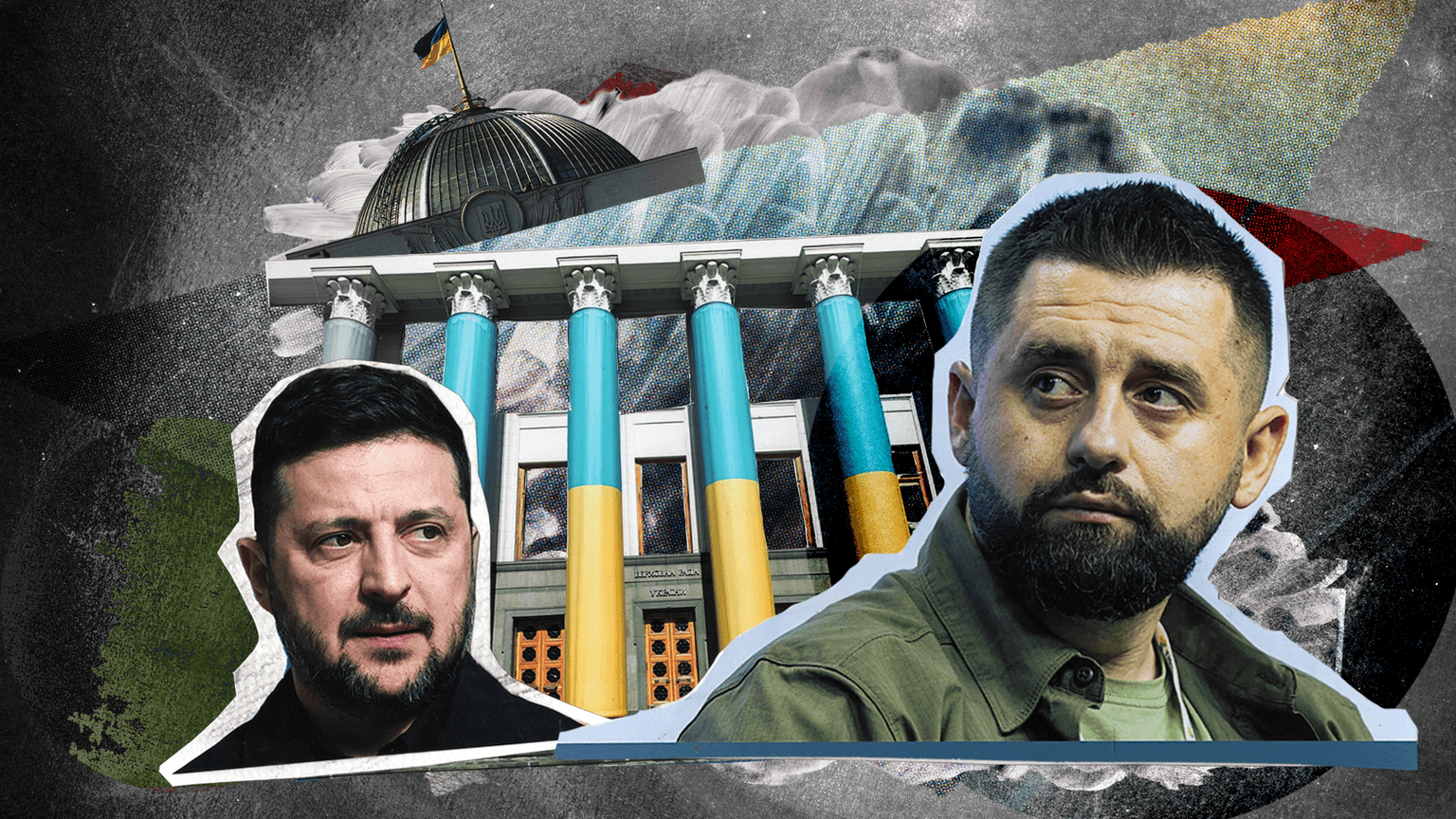
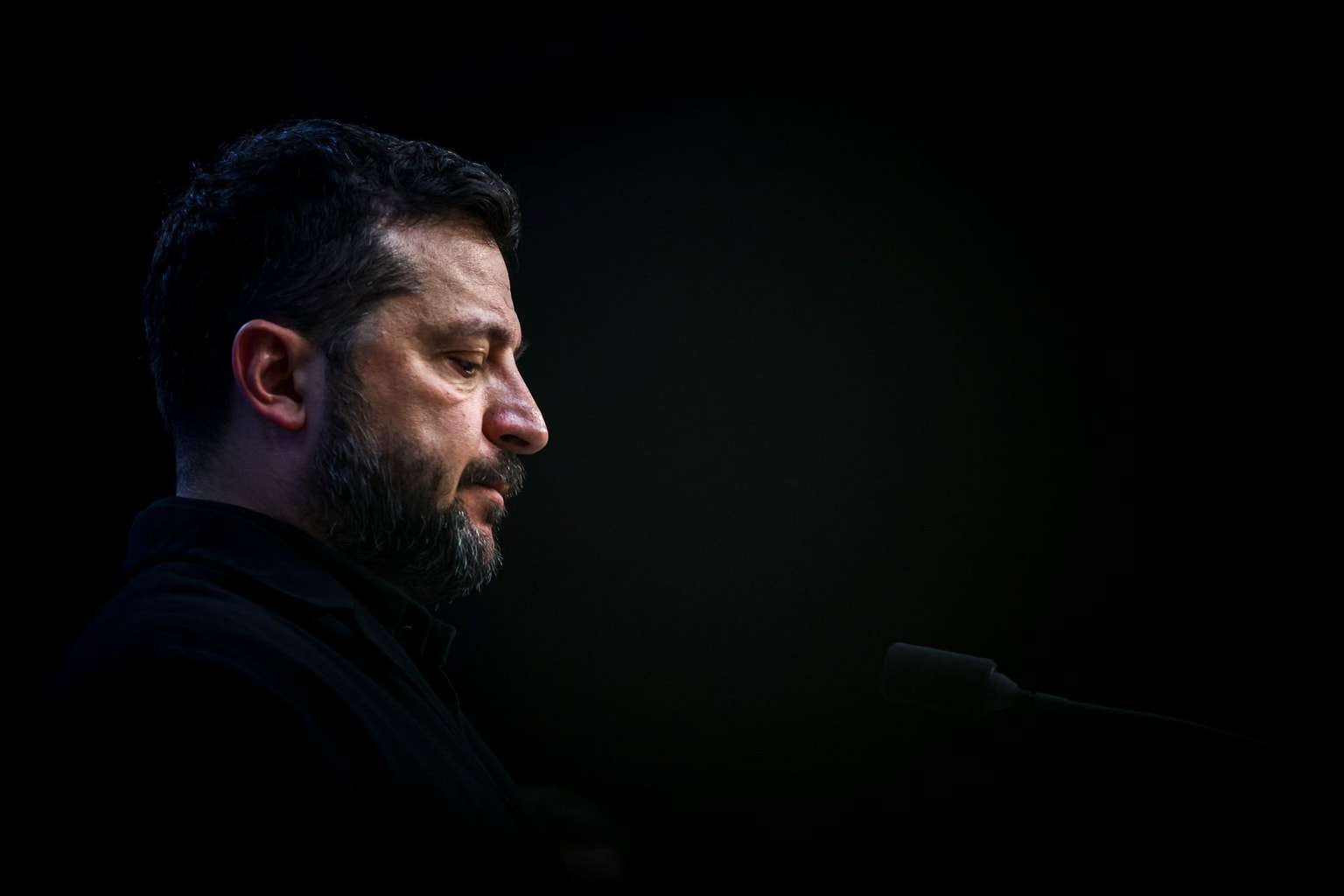
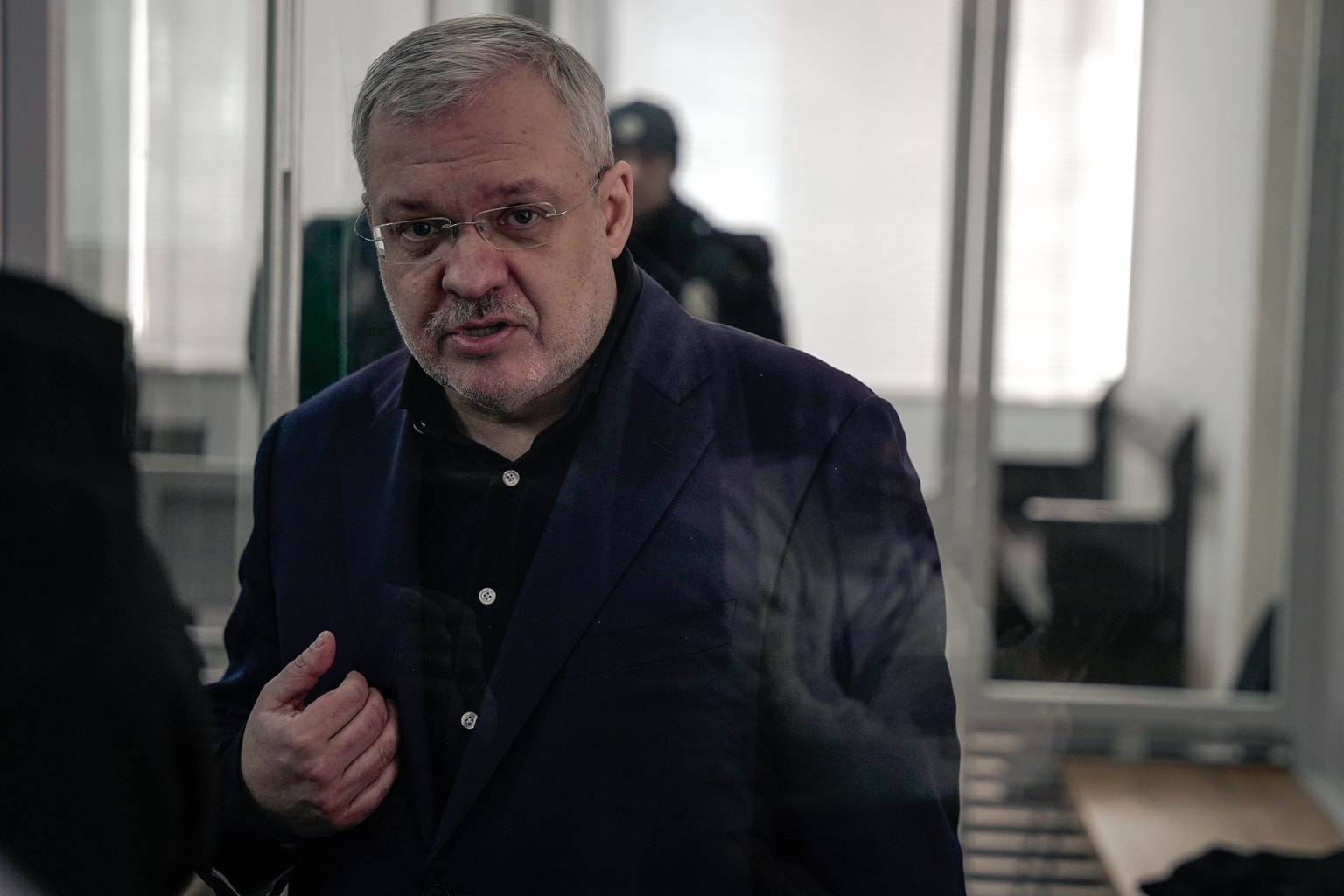
Despite a relatively low public profile, David Arakhamia (R), head of the Servant of the People faction in parliament, occupies a position few officials can match. (Lisa Litvinenko/The Kyiv Independent)
 on Google
As the Ukrainian government was engulfed in a major corruption scandal last November, the biggest one in years, a number of lawmakers from President Volodymyr Zelensky's party saw it as a do-or-die moment.
The attention was fixed on one man: Andriy Yermak, the president's powerful chief of staff. For years, Yermak had accumulated influence to a degree that frustrated ministers, lawmakers, and even some members of the president's inner circle. Now, as investigators closed in and the political pressure mounted, some of his rivals sensed that his position was finally at risk.
Among them was David Arakhamia, the 47-year-old head of the ruling parliamentary faction, who was one of the few officials still able to reach the president despite Yermak's roadblocks.
"David was one of the first to go to the president and tell him that (Yermak) should be removed," a pro-government lawmaker familiar with the events told the Kyiv Independent.
"We were playing our part," the lawmaker added, speaking on conditions of anonymity to be able to talk freely. "It wasn't a simple story with Yermak. We all knew exactly what each of us was doing to make sure he finally left."
Yermak was tossed following searches at his office. Inside the ruling party, his subsequent departure brought relief.
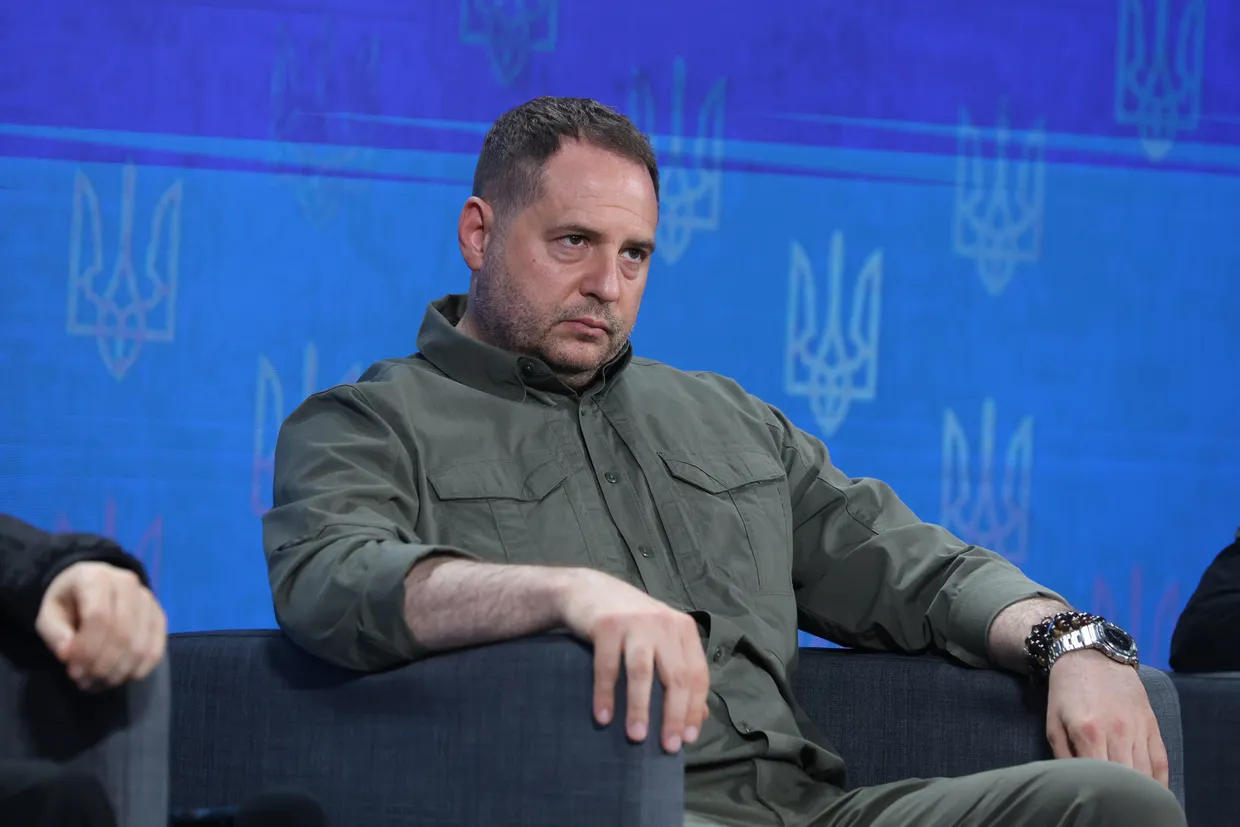
For Arakhamia, the shift marked a change that, according to lawmakers, officials, and experts who spoke with the Kyiv Independent, gave him room to expand his influence. Within just a few months, in January, he was back at the negotiating table, joining Ukraine's delegation in Paris for talks with U.S. envoys, Steve Witkoff and Jared Kushner.
In June, he accompanied the president to the high-stakes G7 and NATO summits, the only lawmaker to do so.
When Arakhamia entered public life, he presented himself as an outsider to politics — a tech entrepreneur more comfortable discussing startups than statecraft. More than a decade later, he finds himself at the heart of Ukraine's wartime establishment, occupying a position few officials can match.
Associates and critics alike describe his approach as distinctly managerial: less ideological than transactional, with an emphasis on negotiation, deal-making, and maintaining functional relationships across competing centers of power.
Arakhamia is a master at persuading people, even that black is white and white is black.
In both appearance and demeanor, Arakhamia seems more like a seasoned dealmaker than an official. He favors designer sneakers over polished shoes, rarely wears a suit, and ignores the military-style dress code adopted by much of Ukraine's leadership after the full-scale invasion.
His manner of speaking mirrors the way he dresses — punchy, with sarcasm and profanity being integral parts of his communication style.

Unlike some of Zelensky's other key allies, Arakhamia is rarely the subject of public opinion polls or media fascination. His influence is exercised largely out of view. Yet he has played a pivotal role in keeping Ukraine's increasingly strained parliament — now in its seventh year — operational, while leading the governing Servant of the People faction through defections, political fatigue, and the pressures of a prolonged war.
Arakhamia's strained relations with Prime Minister Yuliia Svyrydenko have also been a topic of conversation among lawmakers and government officials who spoke to the Kyiv Independent, with the latter now being on her way out.
In response to a request for comment, Arakhamia's spokesperson said he doesn't give interviews. The Kyiv Independent also sent him questions, but received no response by the time of publication.
A life between two wars
Arakhamia would never have built a career in Ukraine if it weren't for Russia's war against his home country, Georgia.
When war first reached his hometown, Arakhamia was 13 years old. Gagra, a seaside resort in Abkhazia, became one of the flashpoints of the conflict that tore through Georgia in the early 1990s. More than 30 years later, it remains part of a Russian-controlled breakaway territory closed off from the outside world.
Like thousands of others, the Arakhamia family was forced to flee their home. They eventually settled in Mykolaiv, a southern Ukrainian city that became a destination for refugees escaping conflicts across the collapsing Soviet Union.
With neither Ukrainian citizenship nor the necessary documents, Arakhamia's mother brought him to a local school, number 36, asking that he be allowed to enroll. The school's principal at the time, Yurii Hranaturov, chose to waive the rules and accepted him.

He describes Arakhamia as an outstanding student who graduated with the highest academic honors. Yet, he says, Arakhamia's receiving the honors nearly became another obstacle: a local official opposed awarding it because Arakhamia lacked Ukrainian citizenship. The school principal says he pushed back and ensured the student received the medal he had earned.
"I don't think he himself expected to climb so far up the political ladder," Hranaturov told the Kyiv Independent in a phone interview. "There is also an element of chance. Sometimes circumstances put people in a position where they can't simply stand aside — they become involved, and one thing leads to another."
Before entering politics, Arakhamia, then better known by his pseudonym David Braun, built a successful business career. After graduating from a Mykolaiv university, he co-founded the IT company Template Monster and later moved to the U.S. for a few years, where he turned the company into a global web development platform.
In one interview from 2019, Arakhamia said that he had adopted Braun as his pseudonym since his Georgian last name was difficult for English speakers to pronounce. "Braun" was a spur-of-the-moment choice, inspired after he glanced at his shaver.
Arakhamia said he sold Template Monster in 2013 in a deal worth around $100 million. A few years later, he launched another IT venture, Weblium, a website builder.
In 2014, after Ukraine's EuroMaidan Revolution, Russia occupied Crimea and invaded the eastern part of the country. Arakhamia found himself swept into the rapidly emerging civilian volunteer movement dedicated to supporting and equipping Ukraine's Armed Forces.
Being forced to flee his home as a child left a lasting mark, Arakhamia says in both public and private conversations.
"When you lose something important, you begin to appreciate its value. For example, I lost my home… I don't want to lose the country that has become my home as well," Arakhamia said in one of his old interviews.
In early 2014, Arakhamia became one of the most visible members of Mykolaiv's pro-Ukrainian volunteer movement, the Mykolaiv People's Militia, to fight back against the Russia-friendly political forces in the region that had become increasingly active across eastern and southern Ukraine after the EuroMaidan Revolution.

Together with other pro-Ukrainian activists, he began buying Ukrainian flags and placing them on their cars, driving through the city in a visible show of support for the country and its pro-European course.
The same year, Arakhamia found himself at the negotiating table for the first time, sitting across from a pro-Russian group in Mykolaiv. The talks showed his pragmatic approach. Rather than engaging in ideological confrontation, videos from that event showed Arakhamia focusing on de-escalation and on keeping the city from sliding into chaos. In the end, the pro-Russian movement was dispersed, and Mykolaiv remained firmly under Kyiv's control.
As Russian troops were fighting Ukraine in the country's eastern Donetsk and Luhansk oblasts, Arakhamia relocated to Kyiv, where he helped scale volunteer efforts in support of Ukraine's poorly equipped army.
He went on to establish the Narodnyi Proekt (People's Project) foundation, which organized civilian support for the military and helped deliver equipment to the troops.

He was soon appointed an adviser to Defense Minister Stepan Poltorak, where he worked to bridge coordination between volunteers and the military, contributing to the creation of the Volunteer Council within the Defense Ministry, which he himself then headed.
In 2015, Arakhamia was granted Ukrainian citizenship by then-President Petro Poroshenko.
Grip on parliament
The same combination of circumstance and opportunity that shaped Arakhamia's path into public life also brought him into Zelensky's inner circle.
His rise within the president's team reflected the unconventional way the comedian-turned-president built his administration — through personal recommendations and quick assessments rather than traditional political experience, an approach that at times became one of the government's vulnerabilities.
Arakhamia has told reporters that shortly after Zelensky's 2019 election victory, Andriy Bohdan, soon to become head of the President's Office, contacted him to arrange a meeting with the incoming president, who was looking for people to help him govern. The two spent hours at Zelensky's media company office discussing Arakhamia's media experience.
Arakhamia, who had never met Zelensky prior, said he helped him select a defense minister, a role that was handed to Andriy Zahorodniuk on Arakhamia's recommendation.
After establishing a rapport with Zelensky, Arakhamia joined his team, initially focusing on attracting investment to Ukraine. He later became secretary of the National Investment Council and head of the supervisory board of UkraineInvest, the government's foreign investment office.

When Zelensky called snap elections in July 2019, Arakhamia was handed the fourth spot on the newly created Servant of the People party list, named after the president's successful TV show. He soon established himself as the leader of the president's faction that secured a staggering majority of 254 seats in the 450-seat parliament.
Drawn from different walks of life, none having previous experience sitting in parliament, the populist Servant of the People party soon found itself to be a coalition of interest groups rather than a monolithic entity.
Arakhamia's role was now to secure the necessary votes for key legislation. To pass certain bills, Arakhamia is said to often strike informal deals with other factions in exchange for their support.
He has also been alleged, by lawmakers and experts, to have lobbied for bills that would give preferential treatment to some interest groups.
"He tries to please everyone and always smiles."
"Arakhamia is a master at persuading people, even that black is white and white is black. He does it so skillfully that his interlocutor may not even realize they are being completely played. It's actually very talented. He's a good negotiator and knows how to stick to a line that is advantageous to him," one lawmaker from Zelensky's party told the Kyiv Independent on condition of anonymity to discuss sensitive political matters.
"He's a very good salesman. That's really what it comes down to," another lawmaker from the opposition said. "He's a skilled businessman who knows how to strike deals and sell things well."
"He talks to anyone — businessmen, criminals, crooks, decent people. He tries to please everyone and always smiles," the opposition lawmaker said. "But he is not someone who has any political or strategic vision for the country's development."
Investigative journalists have reported on Arakhamia's ties to dubious businessmen. He met with oligarch Dmytro Firtash in Vienna in 2022 and traveled to Austria on a private jet owned by companies linked to the oligarch. According to other reports, Arakhamia also has connections with businessman Borys Kaufman, previously involved in a corruption probe.
After Russia's 2014 invasion, Arakhamia's organization, People's Project, worked with UkrSpecSystems, one of Ukraine's pioneering drone companies. The company has since become one of Ukraine's leading developers and manufacturers of unmanned aerial systems. At the time, UkrSpecSystems was described as part of the volunteer initiative, and soon they jointly developed the People's Drone PD-1.
In a 2018 interview, Arakhamia said he mentored UkrSpecSystems. He also said that, during a defense exhibition in the United Arab Emirates the same year, he had signed a contract with the crown prince of Abu Dhabi.

According to Arakhamia's asset declaration, he loaned the company Hr 698,000 ($15,700) in 2020 while serving as a lawmaker. Some lawmakers and people in the drone industry allege that Arakhamia still wields influence over Ukraine's drone sector.
In July, he joined National Security and Defense Council Secretary Rustem Umerov to present the Drone Deal program as part of a new fast-track mechanism for exporting Ukrainian weapons.
After parliament slowed significantly earlier this year in passing key bills required for Ukraine's European integration and Western financing, some lawmakers attributed the dysfunction to Arakhamia's focus on peace talks with the U.S. and Russia, which they say has left the faction effectively without its leader.
When the peace negotiations were put on hold in February and Arakhamia returned to parliamentary work, the legislature began slowly moving forward with some of the required laws.
However, a number of lawmakers told the Kyiv Independent that Arakhamia might be intentionally gathering votes less frequently. They suggest this could reflect internal political tensions, including his efforts to weaken Prime Minister Svyrydenko, whom Zelensky tasked with managing relations with parliament.
"In David's view, Svyrydenko's dismissal could change the government's configuration, bringing in more representatives from the Servant of the People faction, with whom he has personal ties. And that could significantly strengthen his position," one lawmaker told the Kyiv Independent.

Svyrydenko's office didn't respond by the time of publication.
One of the lawmakers from the opposition said Arakhamia was in a "wait-and-see position," anticipating that Zelensky will personally turn to him and recognize his indispensability.
"I think his main goal is to leave the president without his entourage and replace it with himself," another lawmaker told the Kyiv Independent.
In a surprising move, Zelensky announced on July 12 that Svyrydenko would leave her post after less than a year to lead "a new important direction of cooperation with a key partner."
How he does it
Despite his complicated relationship with Yermak, there were moments when Arakhamia aligned with the President's Office head.
In July 2025, lawmakers said Arakhamia helped secure votes for a bill that would have stripped Ukraine's anti-corruption bodies of their independence. The effort was coordinated by his first deputy, Andrii Motovylovets. Lawmakers and anti-corruption activists identified Yermak as the driving force behind the move, a claim he denies.
After street protests erupted over the legislation, Arakhamia rejected accusations that the bill would undermine the National Anti-Corruption Bureau (NABU) and the Specialized Anti-Corruption Prosecutor's Office (SAPO) or strip them of their powers. Critics argued that it did exactly that.

"Arakhamia belongs to the camp that views NABU as acting on Washington's behalf, using anti-corruption investigations to pressure the governing majority into accepting an uncomfortable peace settlement," one lawmaker told the Kyiv Independent on condition of anonymity.
According to the theory, shared predominantly by those eyed by anti-corruption agencies, the timing of the high-profile cases against them coincided with peace talks between the U.S. and Ukraine and served as an attempt by Washington to weaken Zelensky's government and parliamentary majority. They base their claim on the fact that the U.S. helped Ukraine establish the institutions back in 2015, even though no evidence has ever been presented to back this claim.
"(Arakhamia) buys into the idea that NABU detectives are tools of the United States, which is why he has long been critical of NABU," the lawmaker continued.
When it comes to investigations by anti-corruption agencies, lawmakers from Zelensky's party tend to go tight-lipped. Lawmakers from the opposition, meanwhile, say that such behavior reflects fear among members of the president's faction.
When the bureau's powers were restored, some lawmakers said that anti-corruption agencies were destabilizing their work.
In late 2025, Ukraine's anti-corruption agencies said they had exposed a criminal group involving lawmakers who received cash in exchange for parliamentary votes. Five lawmakers from the ruling party were charged in the case, including Yurii Kisel, head of the parliamentary transport committee and one of Arakhamia's deputies.
At the time, searches were also conducted at the premises of Arakhamia's aide, a law enforcement source told the Kyiv Independent.
According to the source, the investigation could involve more members of parliament, and some lawmakers had been questioned in the case.
"I don't believe the whole story at all," a lawmaker from Zelenky's party told the Kyiv Independent. "There will be a trial, and they'll have to present the evidence."
Allegations that Ukrainian lawmakers secretly receive cash as an unofficial allowance or a way to encourage certain votes have circulated for years.
In 2022, Arakhamia denied that lawmakers were receiving unofficial cash payments. But lawmakers from other parties argued that, as head of the faction, he could not have been unaware of the practice and may have even helped establish the system to maintain control over its voting.
Useful in any room
When Russia launched its full-scale invasion in 2022, Arakhamia was at the president's side in Kyiv. Within days, he was appointed to lead Ukraine's delegation in talks with Russia.
His selection reflected the qualities that had defined his political rise: he was seen as a pragmatic communicator, comfortable dealing with people across different circles of power and less constrained by diplomatic convention.

"He is an easy communicator. He doesn't really recognize authority in the traditional sense, and that matters. He doesn't feel overawed by ranks or titles," said former Defense Minister Oleksii Reznikov, who took part in the talks.
From the outset, the Ukrainian delegation didn't expect the talks with Russia to produce any actual breakthrough. According to Reznikov, the talks were viewed primarily as a way to buy time.
Reznikov told the Kyiv Independent that while negotiators could have been open to "reasonable compromises," the Russian side lacked anyone with direct personal access to Russian President Vladimir Putin.
The only person with such access to Putin, who could pass on information, didn't sit at the table, but was present during all rounds of talks. It was Russian oligarch Roman Abramovich, a long-time contact of Arakhamia, with whom he still remains in touch.

After the initial talks collapsed, Arakhamia returned his focus to parliament, while the all-powerful Yermak increasingly took control of Ukraine's diplomatic track. But Arakhamia continued cultivating his own channels abroad, particularly in Washington.
Following Donald Trump's 2025 election victory, Arakhamia viewed his contacts in the U.S. as a potential asset, even boasting about them, according to lawmakers.
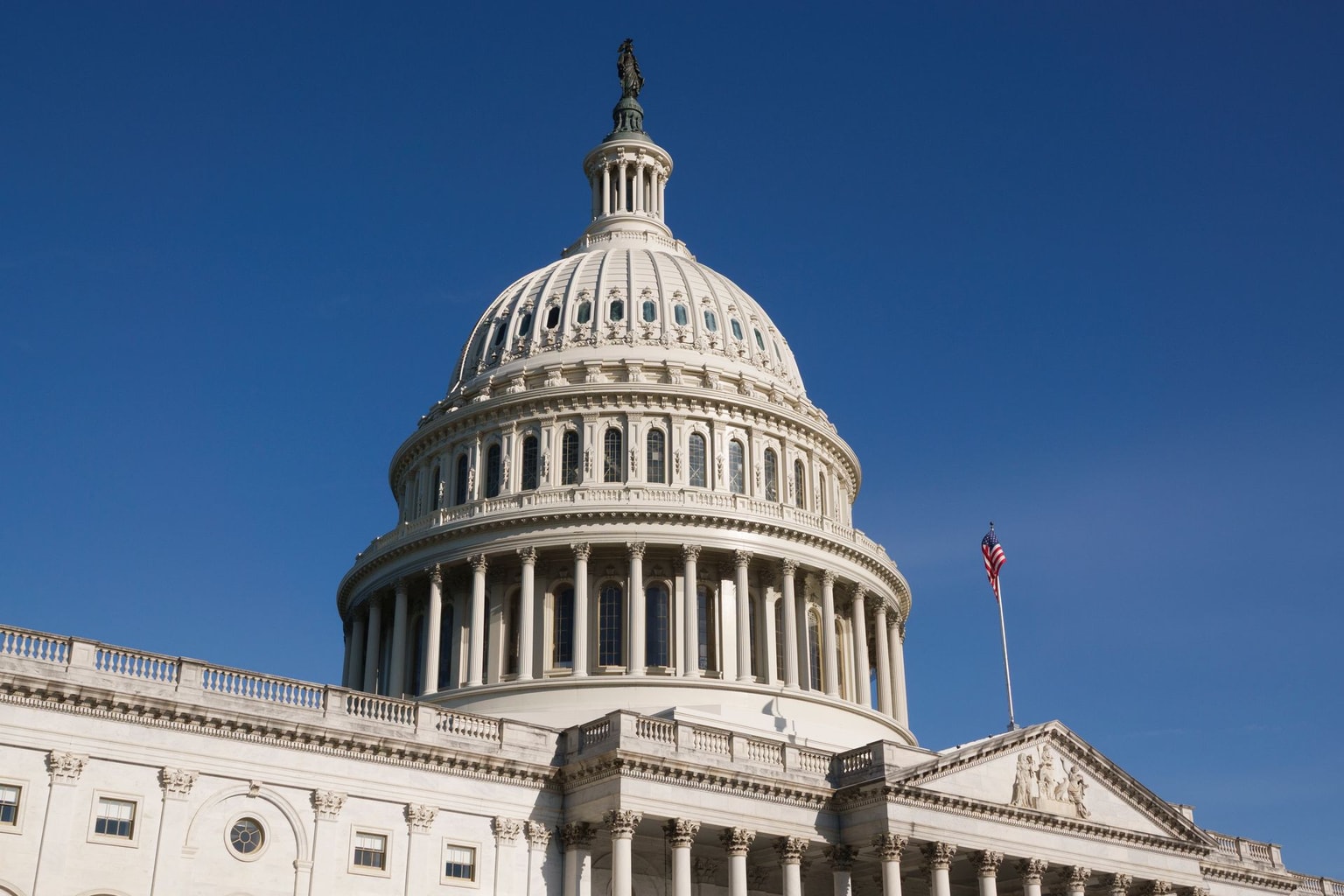
Arakhamia attended Trump's 2025 inauguration and was among the small number of foreign officials granted access to the U.S. Capitol for the ceremony. According to two sources familiar with the matter, Arakhamia held talks with at least two senior officials close to Trump around that time. The substance of those conversations remains unknown.
"The very idea of having different conversations and contacts with our American partners clearly didn't appeal much to Andriy Yermak," one pro-government lawmaker told the Kyiv Independent.
Arakhamia returned to Ukraine's official negotiating team in January 2026, less than two months after Yermak's ousting, when talks involving the U.S., Ukraine, and Russia were already underway. During the negotiations, he briefed lawmakers on their progress and continued to push for a rapid path toward a settlement.
His unconventional negotiating style — and his apparent efforts to appeal to Trump — also surfaced during the talks.

When negotiators discussed the idea of creating a free economic zone in the Donbas, it was Arakhamia who coined the name "Donnyland" — a play on Donald, Donbas, and Disneyland, several people familiar with the matter told the Kyiv Independent.
"We had to play along with the Americans," a source familiar with the proposal told the Kyiv Independent. "At the time, it was the only sensible policy."
First reported by the New York Times, the U.S.-backed proposal envisioned the creation of a demilitarized zone, with the possibility that it would be administered by the U.S. under a special legal regime.
Although Zelensky viewed the plan as a potential compromise, the talks ultimately stalled. Ukraine refused to withdraw its troops unless Russia did the same, leaving the initiative deadlocked.
Lawmakers who attended meetings with Arakhamia said he consistently pushed for a faster path toward a peace agreement, even as Ukraine's negotiating position shifted over time.
"One day, it was 'we'll fight to the last Russian'; the next, it was 'everything is falling apart, and we need to make peace,'" one lawmaker told the Kyiv Independent.
Another lawmaker said Arakhamia had argued that sanctions relief for Russian oligarchs could serve as a deterrent against another invasion.
"He keeps pushing for it — peace, peace, peace as fast as possible. What peace? And where does that lead?"
Today, Arakhamia wields authority that extends beyond parliament and into presidential decision-making and the realm of diplomacy, where he serves as a key liaison with the U.S., Russia, and Belarus, a Moscow ally that Kyiv has warned in recent months could be drawn deeper into the war.
Arakhamia said that Belarusian dictator Alexander Lukashenko called him on Feb. 24, 2022, the first day of Russia's full-scale invasion, and claimed that Belarusian troops wouldn't join Russia's forces.
In June, amid heightened tensions, Lukashenko said that Zelensky's representatives had visited Minsk. A source familiar with the matter said the delegation included a person who had previously maintained contact with Lukashenko.
The ability to maintain contacts across competing centers of power has served Arakhamia throughout his career. Those who spoke with the Kyiv Independent said it remains his greatest political asset.
Note from the author:
Hello there! This is Kateryna Denisova, the author of this piece. While Russia's full-scale war remains Ukraine's defining challenge, the decisions made in Kyiv continue to shape the country's future. I believe understanding the people behind those decisions is more important than ever.
If you value this kind of in-depth articles, please consider supporting our reporting. We promise to deliver more stories on this topic going forward.
Thank you.