Ukraine keeps changing defense ministers. Is that hurting the war effort?
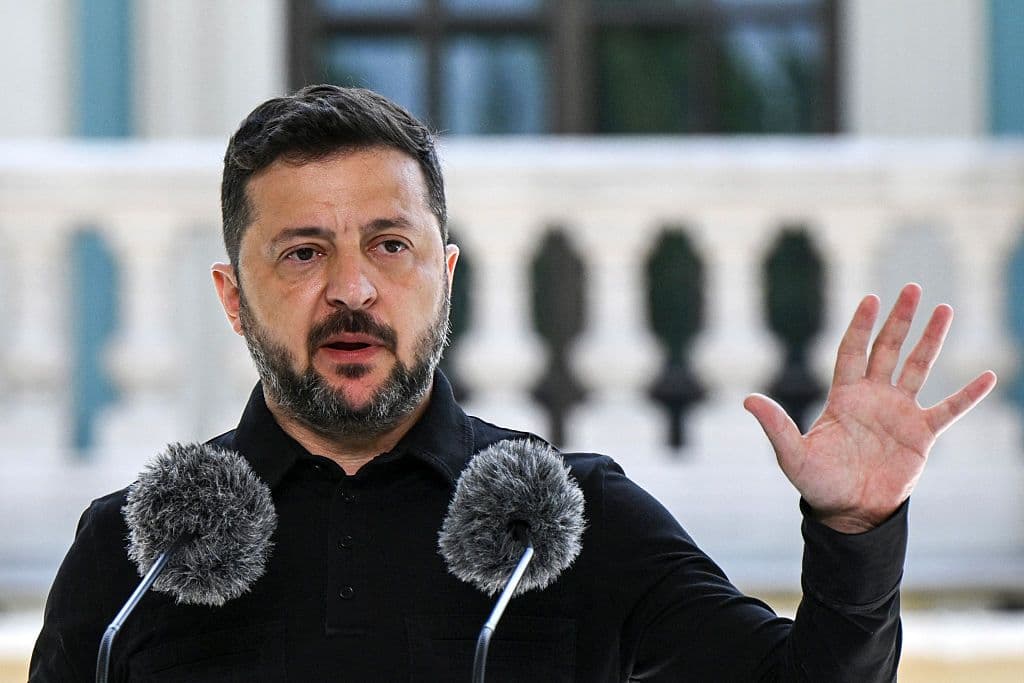
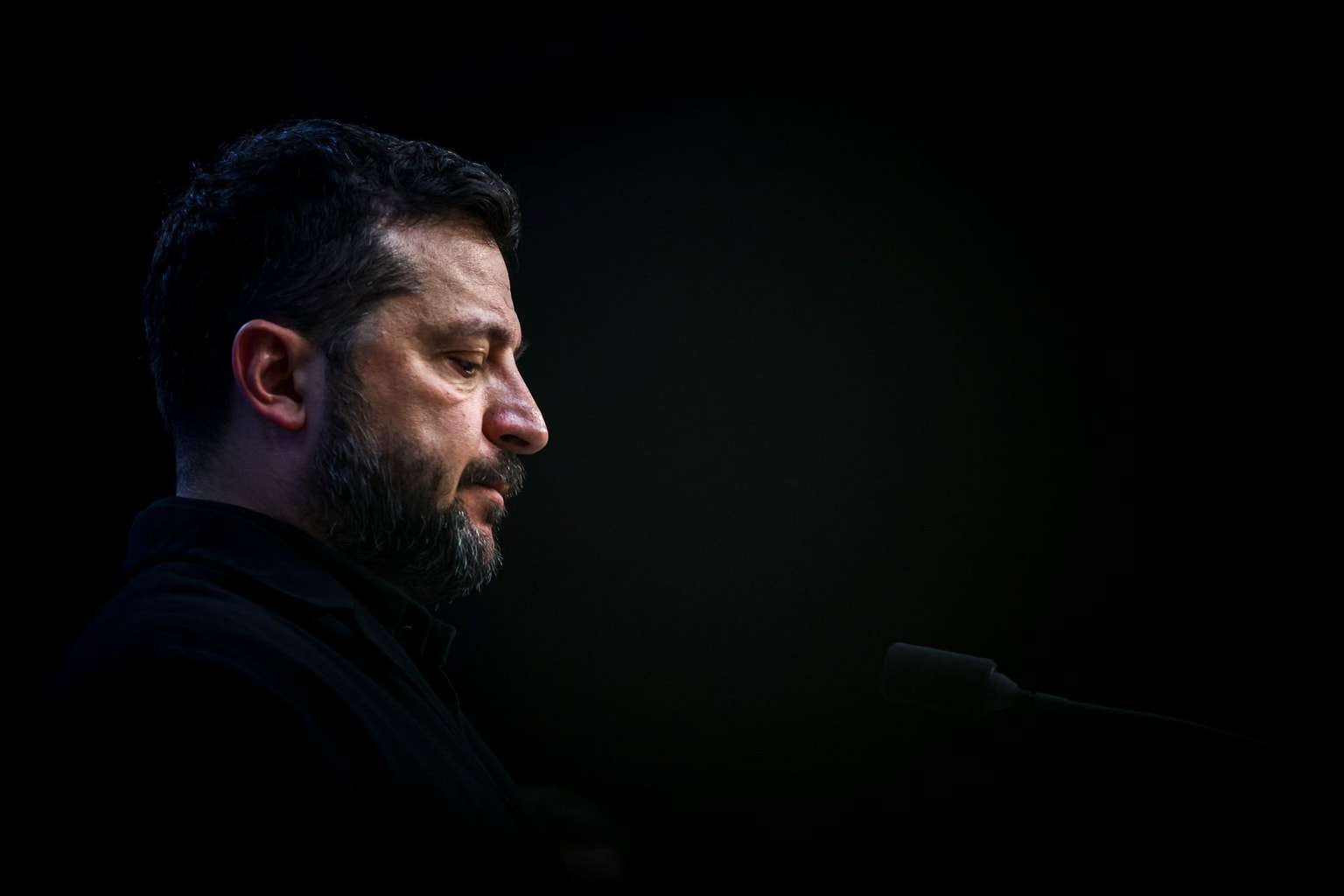
President Volodymyr Zelensky in Kyiv, on July 16, 2026, amid the Russian invasion of Ukraine. (Genya Savilov / AFP via Getty Images)
 on Google
President Volodymyr Zelensky's unexpected dismissal of Ukraine's defense minister triggered protests across the country and caught some of Ukraine's foreign partners off guard.
Mykhailo Fedorov is the fourth person to leave the post since Russia launched its full-scale invasion, an extraordinary turnover at one of the country's most critical ministries.
His removal comes at an especially precarious moment, as Ukraine races to secure additional Patriot interceptors and launches multi-billion-dollar defense partnerships with allies.
Officials and experts who spoke to the Kyiv Independent fear the abrupt dismissal — and the leadership vacuum now gripping the Defense Ministry — could disrupt carefully cultivated relationships with Western partners at a critical stage of the war.
Fedorov, a tech-savvy reformer, led efforts to modernize Ukraine's Armed Forces and build a drone-driven edge on the battlefield. Just as importantly, officials credit him with forging personal ties with Western counterparts that helped accelerate deliveries of desperately needed military aid.
The turmoil is already being felt inside the ministry. A Defense Ministry employee, speaking on condition of anonymity, said the repeated leadership shakeups have sparked a wave of resignations among staff, driven by uncertainty over the ministry's future.
"With frequent changes, some of the initiatives people had worked on have died out," the employee said. "Due to demotivation and constant casting aside of their projects, they worked on, people leave."
Fedorov's networks
EU Defense Commissioner Andrius Kubilius, who was signing new partnerships with Fedorov just a day before his dismissal, called his dismissal a "big surprise."
On his way out, Fedorov also received positive appraisals from German Defense Minister Boris Pistorius — who maintained close ties with the former minister — and the EU's envoy in Kyiv, Katarina Mathernova.
Privately, Western officials voiced similar sentiments.
Fedorov was seen as efficient and was very well liked, one national diplomat told the Kyiv Independent, expressing confusion about his dismissal.

The public's perception of Fedorov matches ours, one EU diplomat said about the minister whose firing sparked mass protests.
And there is visible work behind his outreach to foreign partners.
Listing his achievements after six months in office, Fedorov said that Ukraine secured $40 billion in military aid for this year — not counting EU loans — after the three Ramstein-format meetings he attended.
Ukraine's growing prowess in drone warfare, largely attributed to Fedorov, also coincided with Kyiv concluding new drone deals with European and Middle Eastern countries.
Fedorov was "very popular in the West" and "trusted by Western partners," said Oleksandr Merezhko, head of Ukraine's parliamentary foreign affairs committee.
"In politics, a lot depends on interpersonal relations," and "someone who already has an elaborated network of connections" can secure foreign support more effectively, the lawmaker told the Kyiv Independent.
Fedorov also cultivated influential relationships beyond government circles, building direct ties with senior executives at major U.S. technology companies.
He persuaded Elon Musk — the billionaire whose relationship with Ukraine's leadership has often been strained — to restrict Russian forces' access to Starlink in occupied areas, while also forging a close partnership with Palantir, whose software has become integral to Ukraine's efforts to incorporate AI into its defense sector.

According to information first reported by The Atlantic, and confirmed by the Kyiv Independent, following Fedorov's dismissal, the President's Office began searching for intermediaries to relay messages to Musk, suggesting that the direct line of communication established by the former minister had broken down.
What about the Patriots?
The abrupt swap in the critical posting comes as Kyiv faces increasingly destructive ballistic missile attacks while its air defense stockpiles are running dry.
Serhii "Flash" Beskrestnov, a former advisor to Fedorov, said on July 6 that Ukraine has no more PAC-3 interceptors, the advanced version of Patriot missiles best suited to shoot down ballistic projectiles.
Ukraine's Air Force spokesperson has declined to comment on whether the country has any Patriot interceptors left at the moment.
"Such a sudden replacement of a key minister after only six months in office appears absurd and could have damaging consequences."
Closing this critical gap was one of Fedorov's top priorities, namely, securing additional Patriot pledges through NATO's PURL initiative — where allies purchase hardware for Ukraine directly from U.S. stockpiles — and the U.S. Jumpstart mechanism.
PURL itself currently accounts for about 75% of the Patriot missiles Ukraine receives.
When it comes to Ramstein and PURL, "Fedorov and his team kept international partners firmly focused on these initiatives," says opposition lawmaker Yaroslav Yurchyshyn in comments for the Kyiv Independent.
"That is no easy task, as we constantly have to persuade Western allies to finance Ukraine's defense," he added.

Ihor Fedirko, CEO of the Ukrainian Council of Defense Industry, a non-government organization, notes that Fedorov has built trust due to his precision with requirements and deadlines.
"If personalities keep changing or different Ukrainian institutions present different priorities, trust is lost very quickly," Fedirko says.
But even U.S. supplies via PURL are being stretched thin as producers fail to meet global demand, also driven by the war in Iran.
Fedorov was working on alternative tracks for Patriots, ranging from appealing directly to European allies to share their existing arsenals to concluding a new contract with Germany for hundreds of PAC-2 interceptors.
The ex-minister took initial steps to purchase additional weapons — including PAC-3 interceptors — via the Ukraine Support Loan, and an EU official admitted that Fedorov's dismissal "could weigh on the whole thing."
Nevertheless, the EU contract for PAC-3 is still in the bureaucratic pipeline, and German PAC-2 deliveries will not begin before 2027, meaning these will not impact the most acute shortages.
"Any change in the Defense Ministry leadership halts the system for two to six months, depending on how quickly the new team is assembled and understands what is happening," said Arthur Pereverziev, head of the non-government Defense Procurement Reform Project and an advisor at the defense ministry in 2019-2020.
Fedorov served as defense minister for just over six months. His predecessor, Denys Shmyhal, led the ministry for a similar period.
"Usually, there is no transition book or a proper handover of the business — (the new team) has to do everything from scratch," Pereverziev said.
A leadership vacuum
Ukraine's Defense Ministry currently finds itself in a state of limbo.
Protesters who took to the streets following Fedorov's dismissal demand his reinstatement, a step Zelensky does not currently intend to take.
Fedorov, in turn, ruled out accepting any position other than the ministerial seat, which is currently held in interim by Yevhenii Khmara, a former acting head of Ukraine's Security Service (SBU).
Khmara — already the fifth person in that chair since 2023 — was not officially nominated by Zelensky to the position permanently.

In any case, a formal appointment of the defense minister will likely have to wait until the end of the parliament's recess on Aug. 18.
Whether the ministry will be led by Khmara, Fedorov, or someone else entirely next month remains unclear — not an ideal state of affairs as Ukraine jump-started fresh initiatives from Drone Deals to the Freya air defense project.
"Such a sudden replacement of a key minister after only six months in office appears absurd and could have damaging consequences," Yurchyshyn noted.
"Stable Western institutions are not accustomed to such frequent — and at times unjustified — leadership changes."
They need clear, predictable, and transparent relationships, the kind that Mykhailo Fedorov had been building."