Ukraine war latest: Drones strike another Yandex data center in Russia
 on Google

Key developments on October 09:
- Second Russian Yandex data center damaged by drone attack in two days, company says
- Twenty Russian officers killed in Ukrainian strikes on Donetsk, independent monitors claim
- Russia forcibly removes 25 Ukrainian civilians, including children, from occupied Kharkiv Oblast, ombudsman says
- Russian airports closed amid alleged Ukrainian balloon and drone raid
- Ukraine confirms strikes on Russian cruise missile fuel plant, missile facilities
A drone attack damaged a Yandex data center in Russia's Kaluga Oblast overnight on Oct. 9, disabling several modules at the facility and threatening further disruptions to the company's services.
Several modules of the data center were completely disabled, Yandex said in a statement carried by pro-government Russian newspaper Vedomosti.
"Some Yandex services may experience disruptions as a result," the company said, adding that the full extent of the damage was still being assessed.
Yandex reported no injuries at the facility.
The attack came as drones struck other parts of Kaluga Oblast overnight, injuring nine people, regional Governor Vladislav Shapsha said. He also reported damage to houses in two districts of the oblast. Russian authorities claimed to have shot down 26 drones over the region.
Ukraine has not publicly confirmed responsibility for the attack on the Kaluga data center.
The strike marks the second reported attack on a Yandex data center in Russia in two days.
On Oct. 8, a drone attack caused a fire at a major Yandex data center in Sasovo, Ryazan Oblast, forcing the facility to suspend operations and disrupting parts of Yandex's cloud infrastructure.
The Sasovo facility houses tens of thousands of servers and two of the company's three supercomputers used to develop artificial intelligence models. Yandex said it was still assessing whether damaged equipment could be restored.
The attack coincided with reports of widespread internet disruptions across Russia, affecting banking services, transport websites, and online platforms.
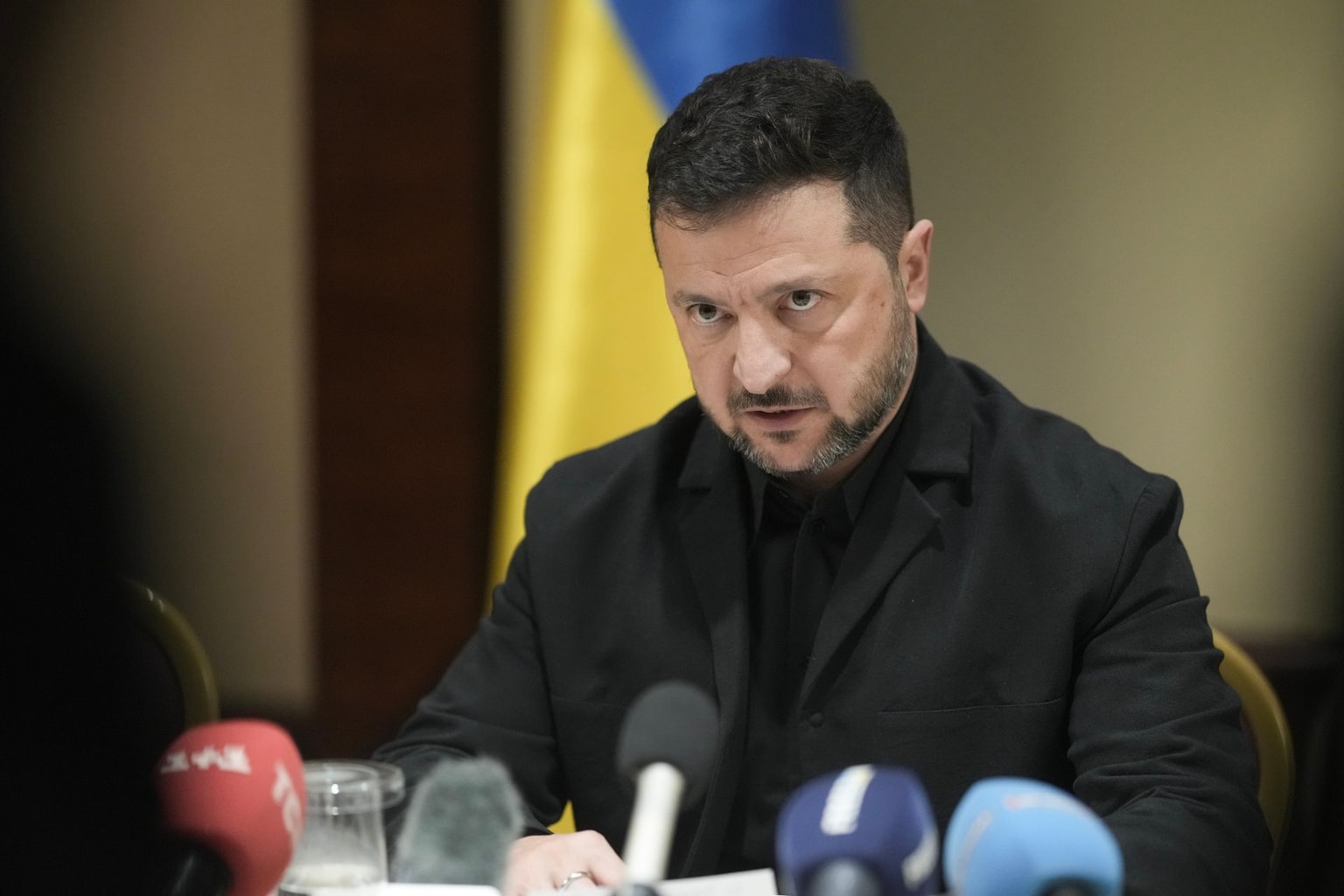
Responding to questions about the Sasovo strike on Oct. 8, President Volodymyr Zelensky said Ukraine would continue retaliating against Russian attacks on Ukrainian data centers.
"We certainly are capable," Zelensky said. "We always respond in kind. Regarding data centers, as you all know, they have been and still are striking our data centers."
"We responded to them," he added. "I cannot share all the details."
Russian forces struck several Ukrainian internet providers and data centers in Kyiv in late September, disrupting internet access for approximately 100,000 households, according to Ukrainian officials.
Record 20 Russian officers killed in Ukrainian strikes on headquarters in Donetsk, monitors say
Ukrainian missile strikes on Russian army command posts in Donetsk on Aug. 26 killed more Russian officers than in any other single attack during the war, independent monitors claim.
Mediazona, an independent Russian outlet that tracks Russian military deaths in collaboration with the BBC Russian Service, identified 20 officers killed in the attack.
Each of the dead Russian officers was identified by name, age, and rank by Mediazona. Seven colonels, six lieutenant colonels, five majors, one captain, and one senior lieutenant were killed in the strikes, which hit the headquarters of the Central Military District and the 41st Combined Arms Army in occupied Donetsk.
According to Mediazona, 18 of the Russian officers died immediately in the missile strike, while two succumbed to their injuries.
Denis Pushilin, the head of the Russian illegal occupation administration in Donetsk Oblast, confirmed in a post on Telegram that Ukraine had launched an attack on targets in Donetsk on Aug. 26, claiming that Anglo-French "Storm Shadow" air-launched cruise missiles were used, and that eight civilians were injured.
Mediazona also identified two other instances of "mass casualties" amongst staff officers of the 41st Combined Arms Army, according to their research, eight officers were killed on Aug. 4, with an additional four killed on Sept 8, 2025.
At least 276,113 Russian soldiers have been killed in Ukraine since 2022, according to Mediazona, which tracks individuals killed by searching through obituaries, posts on Russian social media networks, and leaked Russian databases.
Russia forcibly removes 25 Ukrainian civilians, including children, from occupied Kharkiv Oblast, ombudsman says
Russian forces forcibly removed 25 Ukrainian civilians, including children, from occupied territory in Kharkiv Oblast to an unknown destination, Ukraine's Human Rights Ombudsman Dmytro Lubinets said on Oct. 9.
The civilians, including children, young people, and elderly residents, were taken from an area of the oblast where active fighting continues. Their current whereabouts and the conditions in which they are being held remain unknown, Lubinets said.
"Russia calls this an 'evacuation.' But when people are taken away against their will, intimidated, and left with no choice, it is not a rescue. It is coercion," Lubinets said.
The ombudsman did not specify which settlement the civilians were taken from or where they had been transported.
According to Lubinets, Russian forces published footage of what they described as a rescue operation on their Telegram channels. He said the footage showed signs of intimidation and pressure on civilians who had not consented to being relocated.
The Kyiv Independent could not independently verify the circumstances of the reported removals.
Lubinets also warned that Russian occupation authorities had created a Telegram bot to collect personal information under the pretext of evacuation, potentially putting civilians and their relatives at risk.
Forcible transfers and deportations of civilians from occupied territory are prohibited under Article 49 of the Fourth Geneva Convention.
Lubinets said he had appealed to Russia's human rights commissioner, demanding information about the 25 civilians, their whereabouts and conditions, and measures to secure their return to Ukraine.
He also appealed to the International Committee of the Red Cross, the United Nations, and other international organizations for assistance.
Russia has repeatedly forcibly transferred and deported Ukrainian civilians, including children, from occupied territories since launching its full-scale invasion in 2022.
In March 2026, a United Nations commission concluded that Russia's deportation and forcible transfer of Ukrainian children amounted to crimes against humanity.
Russian airports closed amid alleged Ukrainian balloon and drone raid
Several Moscow airports temporarily suspended flights on Oct. 9, as suspected Ukrainian drones and balloons entered airspace around the Russian capital.
Domodedovo, Sheremetyevo, Vnukovo, and Zhukovsky airports all halted operations during the alleged Ukrainian raid, disrupting flights and causing long delays.
According to FlightRadar24, an open-source air traffic monitoring website, multiple Russian government aircraft from the Rossiya Special Flight Detachment, which transports top-level Russian government officials, were scheduled to fly into Moscow's airports on Oct. 9.
At least one of the aircraft, an Ilyushin Il-96-300PU flying from Türkmenbaşy in Turkmenistan to Vnukovo Airport in Moscow, was reportedly forced to divert to St. Petersburg, according to FlightRadar24.
Moscow Mayor Sergei Sobyanin claimed "the Ministry of Defense's air defense forces repelled an attack by 15 UAVs" on the Russian government's messaging app, MAX.
A number of unknown balloons, which both Russian and Ukrainian Telegram channels claimed were launched by the Ukrainian military, were also seen in the Russian skies.
Local Russian Telegram channels showed mysterious balloons in the skies near Moscow, and air defense activity.
Russian outlet BAZA claimed that, "reconnaissance balloons launched from Ukraine," were shot down over Yaroslavl Oblast, a region of Russia north of Moscow.
By 5:42 p.m. Moscow time, Russian wire service RIA Novosti reported that Domodedovo, Vnukovo, and Zhukovsky airports had reopened.
On Sept. 1, Ukrainian President Volodymyr Zelensky announced a plan to close Russia's skies.
"There will simply be drones in Russia's skies on a scale that has to be taken into account," he said, as he warned "every airline that uses Russian airspace" against flying over the country.
"The Russian sky will be de facto closed," he added.
In the weeks following the announcement, Ukrainian drone raids have caused severe disruption to Russian air travel, but the result has fallen short of the complete closure Zelensky promised.
Ukraine confirms strikes on Russian cruise missile fuel plant, missile facilities
Ukraine's military launched an attack on several Russian regions overnight on Oct. 9, striking three Russian facilities involved in missile launches and fuel production, including a factory that manufactures fuel components for Kh-55 and Kh-101 cruise missiles, Ukraine's General Staff confirmed.
The attacks targeted facilities in Tver and Nizhny Novgorod oblasts, while Russian and Ukrainian monitoring channels separately reported strikes on oil infrastructure in other regions.
In Nizhny Novgorod Oblast, Ukrainian forces struck a facility belonging to the V.P. Barmin Research Institute of Launch Complexes near Dalneye Konstantinovo-5, the General Staff said.
The institute is part of Russia's Center for Operation of Ground-Based Space Infrastructure (TsENKI), which develops, maintains, and operates rocket launch complexes, fueling equipment, and missile control systems.
Another strike targeted the Center for the Disposal of Intercontinental Ballistic Missiles near Surovatikha, also in Nizhny Novgorod Oblast. According to the General Staff, the attack was intended to weaken Russia's capacity to produce explosives and rocket fuel.
In Tver Oblast, the General Staff confirmed a strike on the Redkino Experimental Plant, where Telegram monitoring channel Exilenova+, citing resident accounts, had earlier reported flashes of explosions and smoke.
The plant, which produces components of Decilin-M rocket fuel, as well as fuel additives for diesel and aviation kerosene, was previously struck in a Ukrainian attack in February 2026. The attack destroyed around 6,000 FPV (first-person-view) drones and their components, the General Staff said.
The plant is under sanctions imposed by the U.S., the U.K., and several other countries.
Russia routinely uses Kh-55 and Kh-101 cruise missiles missiles to attack Ukrainian cities, including during recent mass missile strikes on Kyiv.
Elsewhere in Russia, a Ukrainian attack reportedly led to a fire at an oil depot located north of the city of Belgorod, according to NASA's Fire Information for Resource Management System (FIRMS) monitoring platform.
The extent of the damage caused was not immediately clear.
In Russia's Komi Republic, Ukrainian drones reportedly struck the Lukoil-owned Ukhta oil refinery on the morning of Oct. 9, with footage showing black smoke rising from the facility, independent Russian outlet The Moscow Times reported.
Independent Russian media outlet Astra geolocated eyewitness footage showing smoke rising from the refinery, while Ukrainian monitoring channel Supernova+ reported explosions and drone activity in Ukhta.
The refinery processed approximately 3 million metric tons of oil in 2025, accounting for around 1.1% of Russia's total oil refining output. It produces gasoline, diesel fuel, fuel oil, and vacuum gas oil.
Russian aviation authorities temporarily suspended flights at Ukhta airport amid the attack. Local authorities also declared a drone alert, while the city's mayor, Marina Meteleva, described the situation as under control.
The refinery, located approximately 1,700 kilometers (1,056 miles) from the Ukrainian border, was previously targeted by Ukrainian drones in February 2026 and August 2025.
The Kyiv Independent cannot immediately verify the reports. Ukraine's military has not yet commented on the reported attack.
While the weaponry used in the reported attack was not immediately clear, Ukraine has often used long-range drones to strike facilities and oil infrastructure that directly support Russia's war in Ukraine.