Analysis: Why Ukraine's strike on the Crimean Bridge is such a big deal
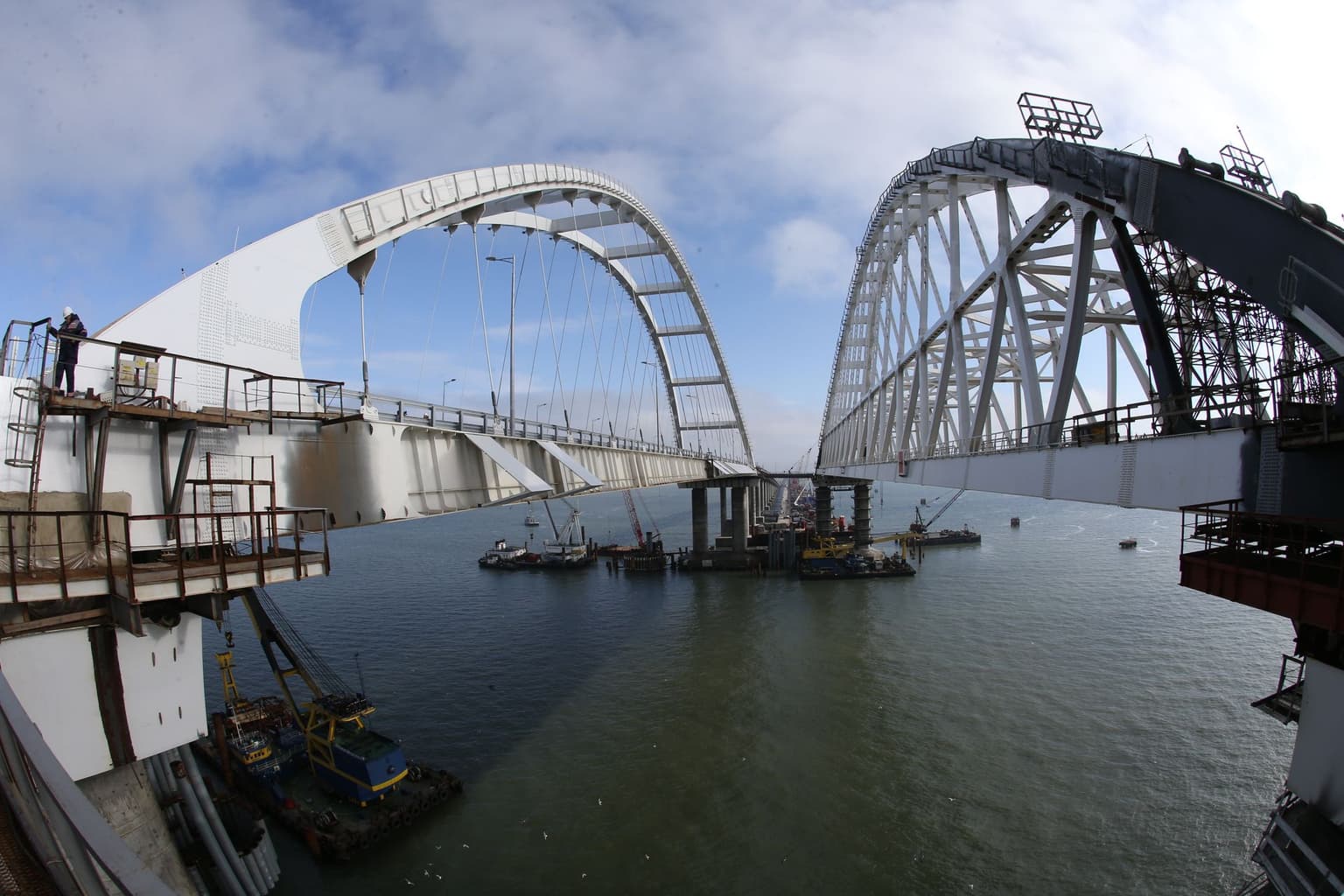
A general view of the Crimean bridge on the Crimean Peninsula across the Kerch Strait, March 14, 2018 (Mikhail Svetlov/Getty Images)
 on Google
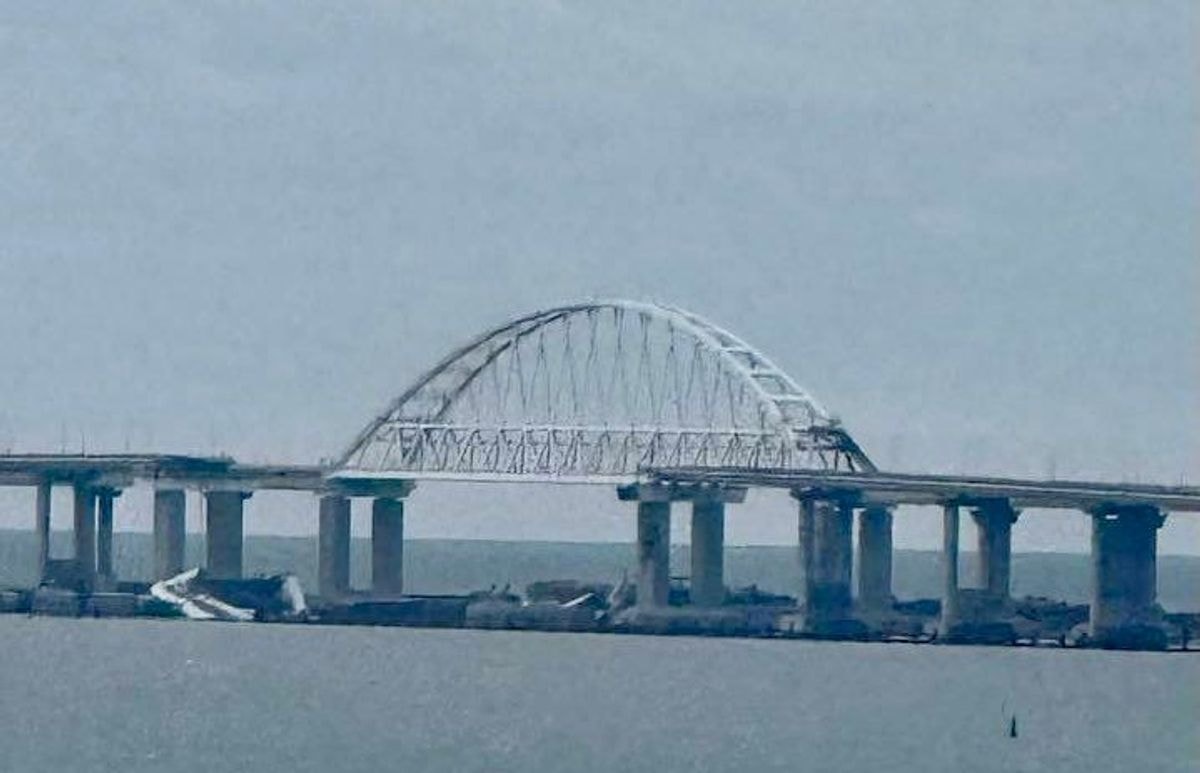
A section of the Crimean Bridge collapsed into the Kerch Strait after a Ukrainian overnight strike on Nov. 17, in the heaviest blow so far to the most visible symbol of Russia's illegal annexation of Ukrainian Crimea.
President Volodymyr Zelensky said on Nov. 17 that the strike was the seventh phase of a multi-week operation.
"Today — at a critical stage of the operation — the Palianytsia drones performed exemplarily, striking the vehicular section of the bridge, while Neptune missiles, along with Ruta and FP-5 drones, struck the railway section. Using the Flamingo system, our forces executed a precision strike," Zelensky said.
Ukraine's Security Service (SBU) confirmed in a statement that "one of the metal arches and the automobile span under it were completely destroyed."
The bridge is the physical manifestation of Moscow's illegal claim over Crimea. With weapons produced domestically, Ukraine has inflicted enough damage to make holding the peninsula more difficult and costly, in a public showcase of resistance to Russian attempts to consolidate territorial gains in international negotiations.
"For (Russian President Vladimir) Putin, it is a significant setback in cultivating the image of a constant winner — and there is nothing worse in his mafia-style regime than coming across as a loser and eventually a liability to the system," Tomas Jermalavicius, Head of Studies at the International Centre for Defense and Security, told the Kyiv Independent.
To celebrate the opening of the newly-built bridge in May 2018, Putin drove across it in a Russian Kamaz truck. After today's strike, the only bridge connecting Russia to the Russian-occupied Crimean Peninsula is closed to road and rail traffic. It is likely to remain so for a long time, according to experts.
"Restoring this section will take not just months, but a year or even longer," Andrii Kharuk, an aviation expert, told the Kyiv Independent. "This effectively turns Crimea from a peninsula into an island."

A monument to annexation
Russia began construction of the bridge over the Kerch Strait, which connects the Sea of Azov with the Black Sea, in 2016, two years after it illegally occupied and annexed Ukrainian Crimea.
Moscow awarded the $4 billion project to Stroigazmontazh (SGM), a company owned by Putin's old friend and judo partner Arkady Rotenberg. According to the Moscow Times, SGM had no prior experience in building bridges, but Rotenberg called the project "important for the country."
Russia delayed several domestic infrastructure projects to redirect funds and engineering capacity to the Crimean Bridge, most notably a bridge over the Lena River intended to connect Yakutsk, the capital of Russia’s Siberian Sakha Republic, to the national road and rail network.
At 19 kilometers (12 miles), the Crimean Bridge became the longest bridge on the European continent, connecting Russia’s Krasnodar Krai with occupied Crimea. It was opened four years after construction started, as a monument to Russia’s disregard of Ukraine's territorial sovereignty and a symbol of the Kremlin's effective control over Crimea.

On Dec. 17, 2018, United Nations General Assembly Resolution 73/194 explicitly condemned the building and opening of Russia's bridge for facilitating "the further militarization of Crimea."
The EU, U.S., U.K., Canada, Australia, and Switzerland all considered the bridge a tool to consolidate Russia's illegal annexation of Crimea and subsequently introduced sanctions, including asset freezes, travel bans, and business prohibitions, against the contractors involved in building the bridge.
The bridge's defenses also became a point of pride for Moscow. Russia surrounded the structure with air defense systems and anti-naval drone barriers, especially after its full-scale invasion made the bridge a valuable target for Ukraine.
"Russians have been persuading the whole world for years that the Crimean Bridge is one of the most protected objects on the planet. Today, parts of it are on the seabed," the SBU said on Nov. 17.
Jermalavicius confirmed that Ukraine's latest successful strike has psychological and political implications for the Kremlin.
"Given that the bridge was Putin's crown jewel in consolidating — both physically and cognitively — the illegal control over Crimea, its loss — even if temporary — will reverberate through the regime's image of control, power, and potency," he said.

A lifeline
Before Russia's full-scale invasion, the bridge was the only way to reliably supply Crimea by road and rail from Russia.
Following the full-scale invasion, Russia merged Ukrainian highways with Russian roads to connect Russia's Rostov-on-Don with Simferopol in occupied Crimea through the roughly 700-kilometer (about 435 miles) long Novorossiya highway cutting through occupied Kherson, Zaporizhzhia, and Donetsk oblasts.
Emil Kastehelmi, an analyst at the Finland-based Black Bird Group, told the Kyiv Independent that most of the heavy traffic switched from the Crimean Bridge to the land route.
"Even if regular heavier traffic goes another route, (the bridge) would have served as an emergency route if (Russia) had to transport something very quickly, but of course, that option is now gone," Kastehelmi said.
While the land bridge through occupied territory became a key military logistics vein for Russia, the Ukrainian middle-strike campaign has made traveling the road dangerous work for Russian personnel.
read also
"From a military perspective, the Crimean Bridge is the fastest route for transferring reinforcements to Crimea. Until now, it has also been relatively safe, unlike the Novorossiya highway running through occupied Ukrainian territory, where Ukrainian drones are constantly hunting for targets," Kharuk said.
Beyond military use, the Crimean Bridge was also the safer route back to Russia for hundreds of thousands of Russian settlers who moved to Crimea since the Russian annexation.
"Growing isolation of the occupied peninsula will certainly weigh on the minds of the illegal Russian settlers or those seeking to relocate there and thus may shape the public sentiment around the future sustainability of Moscow's imperial ambitions," Jermalavicius said. "It is one thing to brag about a successful annexation but quite another when it becomes a major burden and headache to the entire regime and occupational authorities."
A domestic achievement
The successful strike on the bridge, however, is not just a dent in Russia’s imperial ambition. Jermalavicius called the strike the payoff for strategic patience and operational persistence.
It is also a showcase of Ukraine's rapid military-industrial development amid Russia's war.
Ukrainian forces used several different weapons systems over several weeks, Zelensky said, including the Ukrainian-built Neptune cruise missile, Palianytsia drone, and the FP-5 Flamingo, a cruise missile built by Ukrainian defense manufacturer Fire Point.
Zelensky said the Flamingo's communication link worked "right up to the final seconds."
Proving the worth of these Ukrainian-produced systems comes at a time when Ukraine is repeatedly constrained by limitations in foreign-supplied systems, such as the speed restrictions imposed on the Starshield satellite communication system.
As Moscow and Washington discuss the terms of a possible settlement to Russia’s war in Ukraine, Kyiv has used its domestic systems to achieve strategic results on the ground.
"The timing is politically fortuitous as it strengthens Ukraine's hand in pressing Russia to negotiate the end of the war by gradually re-engineering fait accompli around a strategic asset. For Moscow, to use a Russian expression, Crimea is increasingly like a suitcase without a handle: one cannot really carry it around, but pity to abandon it either," Jermalavicius said.
Poland's Foreign Minister Radoslaw Sikorski also publicly commented on the Ukrainian strike on social media platform X.
"Looks like Ukraine has cards," Sikorski said.