He fled Maduro's Venezuela. Now he leads Ukraine's South American battalion.
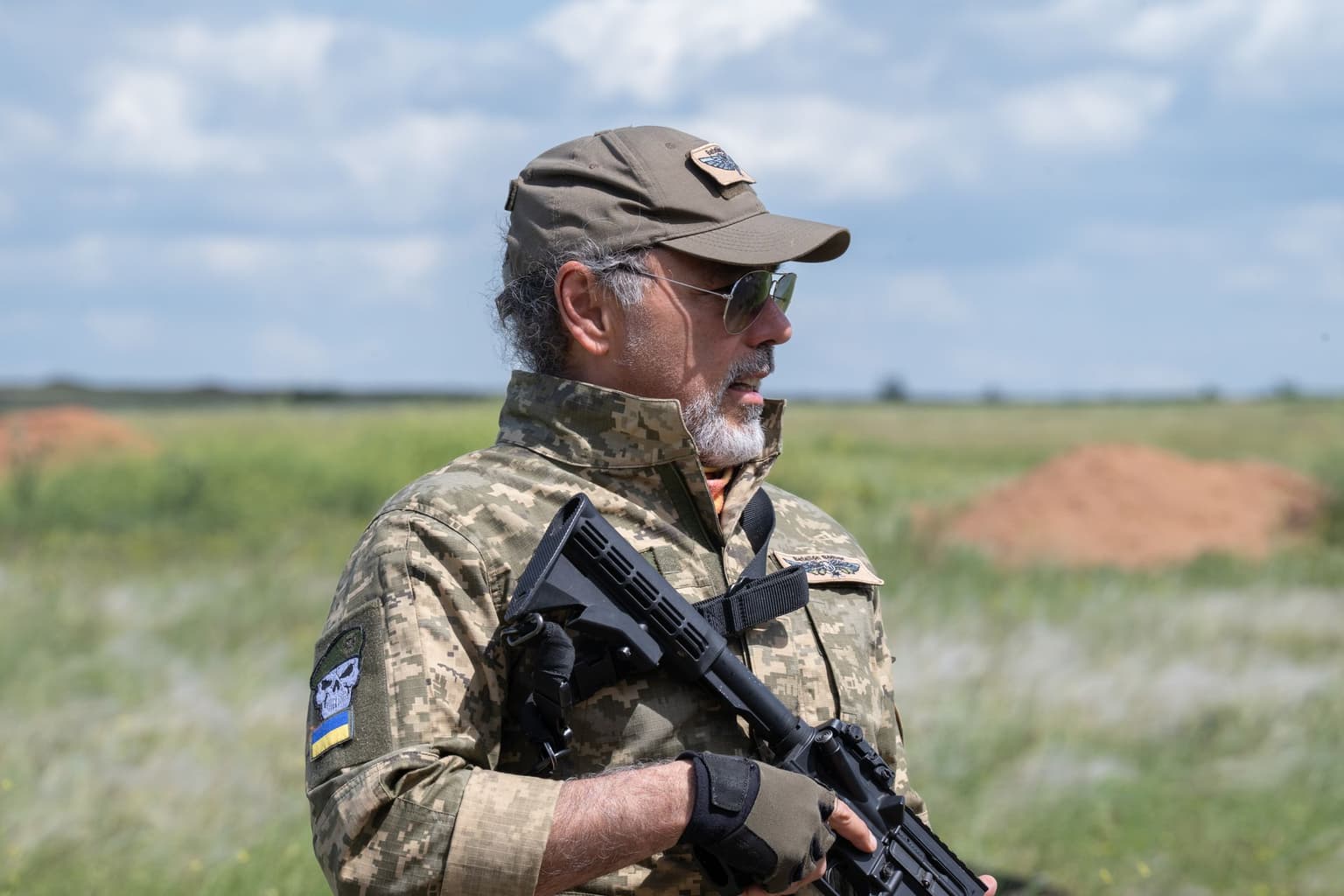
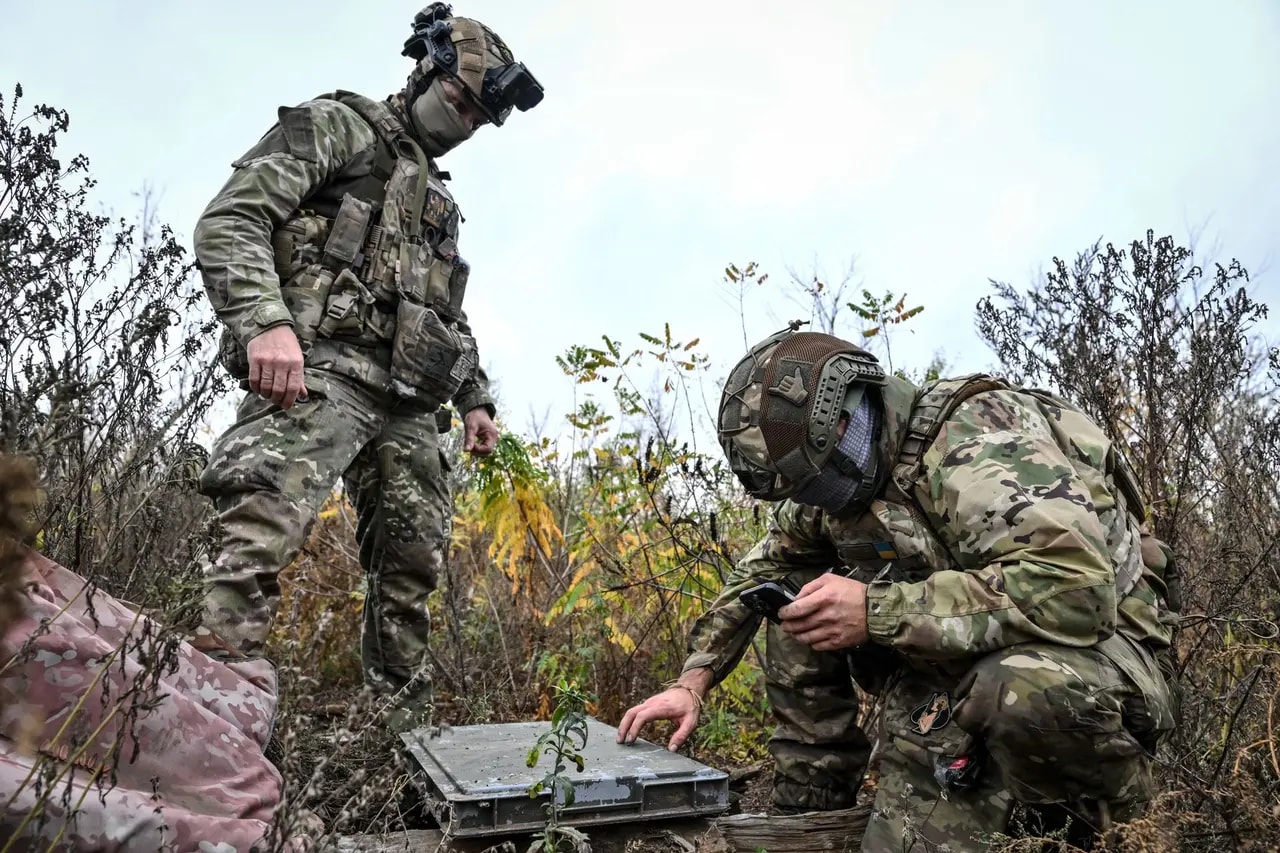
Colonel Jose David Chaparro takes part in a routine infantry training session in Mykolaiv Oblast, Ukraine, in May 2026. (Nastassia Kantorowicz Torres/ The Kyiv Independent)
 on Google
At a military training site in Mykolaiv Oblast, Col. Jose David Chaparro, call sign "Katana," does one-arm push-ups with his team. The 59-year-old Venezuelan commands the Bolivar Battalion, a drone unit within the Security Service of Ukraine’s Special Operations Center "A" (Alpha).
"Remember, if you control your breathing, you control it all," he tells the soldiers who struggle to hold a plank position.
He quizzes them on drones. "Apart from pornography, you can also review drone tactics online," he says, and the group laughs.
After training, three recruits are formally inducted into the battalion. Chaparro taps each new member on the shoulder with a katana, the traditional Japanese sword that is also his call sign.
Three years after its founding, the Bolivar Battalion has grown to about 250 soldiers. Most are Colombian, along with a few Chileans, Venezuelans, Italians, Germans, and Portuguese. As Ukraine intensifies recruitment of foreign volunteers, many from Latin America, Chaparro has become more critical of the approach. His unit offers a window into Ukraine's growing reliance on foreign volunteers, and the challenges that come with the recruitment push.

Chaparro was born and raised in San Cristobal, Venezuela. He came to Kyiv in 1989 for a postgraduate law degree and lived through the collapse of the Soviet Union before returning to Venezuela in the late 1990s, where he eventually worked in the government.
From 2001 to 2005, he served as acting consul in Moscow. During that time, he says, the gap between the government's ideology and his own democratic values widened so far that he resigned and returned to Venezuela once again.

In 2013, Chaparro joined students and other protesters who took to the streets and built barricades in San Cristobal, tired of injustices, political repression, food shortages, inflation, and insecurity. By early 2014, the social uprising, known as guarimbas, had spread across Venezuela, and the government of Nicolas Maduro violently cracked down on the protesters. Chaparro's opposition to the regime forced him to flee to Ukraine with his family between 2013 and 2014, he says.
Once in Kyiv, Chaparro joined the barricades once again at Ukraine's EuroMaidan Revolution. Venezuela and Ukraine, he says, "share a mutual enemy: Russia." Moscow backed the governments of Hugo Chavez and Maduro as they repressed dissent in Venezuela.
When Russia's full-scale invasion started in 2022, Chaparro volunteered in the Territorial Defense Forces.
"I knew the enemy very well," he says.

In 2023, he founded the Bolivar Battalion, named after Simon Bolivar, who led Venezuela, Colombia, and Ecuador in their fight for independence from Spanish colonial rule. In 2025, the battalion was integrated into the SBU.
"The first rule I heard from the colonel: stay alive," says a Colombian soldier with the call sign "Billy," who has served under Chaparro for more than a year. He transferred from another battalion, where he says he felt he was being sent on combat missions to die. He knew Chaparro recruited differently and required soldiers to train for a couple of months before signing a contract, unpaid but with living costs covered.

Lt. Col. Kostiantyn Milevskyi, head of the Ground Forces department that coordinates foreigners' military service, says that pre-contract training for soldiers is unusual and probably specific to special operations units, yet he cannot confirm it.
For Chaparro, training ensures his soldiers are committed to the cause and able to fight. Billy says that Chaparro looks after every one of his soldiers. They trust him, Billy says, because they know he will not send them on a mission he would not take on himself. Chaparro is not required to accompany his soldiers to the front line, but he does.
The battalion now operates a range of drones, from first-person-view (FPV) strike drones to fixed-wing reconnaissance drones. It fights in Donetsk, Kherson, and Zaporizhzhia oblasts. Chaparro says that no soldier has been killed in action since the battalion switched to drone warfare 15 months ago.

Chaparro says Ukrainians have welcomed him with open arms and see him as "just another Ukrainian." But within the military, he says, he has at times faced hostility because he is Latino.
A soldier with the call sign "Aries" recalls a racist remark a senior Ukrainian officer made to Chaparro, telling him to "get out of the house and take your Indians with you." Aries says Chaparro defended his soldiers and nearly got into trouble himself. "Not everyone will stand up for you like that," Aries says.
Military analyst Viktor Kevliuk from the Centre for Defence Strategies estimates that between 10,000 and 16,000 foreign volunteers serve across Ukraine's armed forces. South Americans make up 40%, the largest regional group, he says.
"For Ukrainian society, all of them, they are heroes and will be heroes up to the end of their days."
Kevliuk says foreign volunteers have proven especially valuable amid Ukraine's mobilization problems and an estimated 200,000 absent-without-leave cases as of early 2026, which he attributes partly to combat exhaustion and resistance to conscription among Ukrainians who did not volunteer.
"While foreign fighters help partially alleviate manpower shortages," he says, "they do not offer a systemic solution to Ukraine's broader personnel crisis."
Ukraine's approach to recruiting foreigners has changed considerably since 2022, when it waived visa entry requirements for foreign volunteers. Once in Ukraine, however, many foreign volunteers faced bureaucratic uncertainty over residency, documentation, and their long-term legal status.
In late 2025, the government announced several reforms to change the situation for foreign volunteers. Some, such as pay raises for infantry and noncombat roles, affect every service member, but others were specific to foreign volunteers.

Among the reforms was the formalization of combatant status, so a foreign national can obtain veteran status on the same terms as a Ukrainian. Combined with a residency permit introduced this year, that status opens a path to Ukrainian citizenship.
Since January, Ukraine also permits multiple citizenship for nationals of a government-approved list of countries, meaning some foreigners can see military service as a path to migration without giving up their original citizenship.
"Many, he says, "come looking for a future, or for money, or for opportunities," but have no military experience."
On June 12, then-Defense Minister Mykhailo Fedorov wrote that reforms aimed at filling 30% to 50% of assault and infantry positions with foreigners would begin rolling out.
Milevskyi says the recruitment process has been deliberately streamlined. The biggest change is financial: Ukraine now covers recruits' travel costs to the country. "No one is giving them money. Ukraine is just paying for tickets, or renting the plane," he says. Once enough recruits sign up to fill a plane, flights are chartered from cities such as Bogota, Colombia, according to him.
Chaparro does not believe the Defense Ministry's recent reforms solve the problem of recruiting qualified soldiers. The challenge, he says, is attracting professional soldiers and retaining them. The South Americans now arriving in Ukraine "are in the most part, frauds," he says.
"They say they can operate a drone, throw a grenade with three hands, yet deliver nothing," he says. Many, he says, "come looking for a future, or for money, or for opportunities," but have no military experience.

Chaparro says the volunteers he fought alongside in 2022 were experienced professionals, and the gap between them and the new arrivals is "like the difference between the moon and the earth."
Milevskyi sees it differently. He says recruits must submit documents "which prove they served in the police, that they were in touch with the army." Asked whether inexperienced recruits were being sent to the front within days, he called it "rumors."
Colombians make up a large share of foreign volunteers, he says, "because of the lifestyle in Colombia and because the salary in the Ukrainian army is double, triple, four times more than they can imagine in Colombia."
Billy says money was not his reason to come and fight for Ukraine. "Money was never the driving factor for me. As a professional soldier I always knew I would come one day," he says. He sees it as his military duty.

Aries, like Billy, was a professional soldier in Colombia. He followed the war and saw TikTok videos saying Ukraine's armed forces needed more troops. Bored with working odd jobs in Spain, he traveled to Ukraine and enlisted. "I like the military life," he says.
A soldier with the call sign "Valera," one of the few women in the battalion, says she came to Ukraine "to fight for what is right and be part of the change." She says money is a secondary motivator.
Chaparro sits at a table, laughing, drinking an espresso, and sharing chicken nuggets with his soldiers. He treats them to food and drinks at a gas station in Mykolaiv Oblast to celebrate the three new members.
"For Ukrainian society, all of them, they are heroes and will be heroes up to the end of their days," Milevskyi says of foreign volunteers.