Ukraine war latest: Russia strikes 3 Kyiv bridges in massive aerial assault on Ukraine, at least 9 dead
 on Google

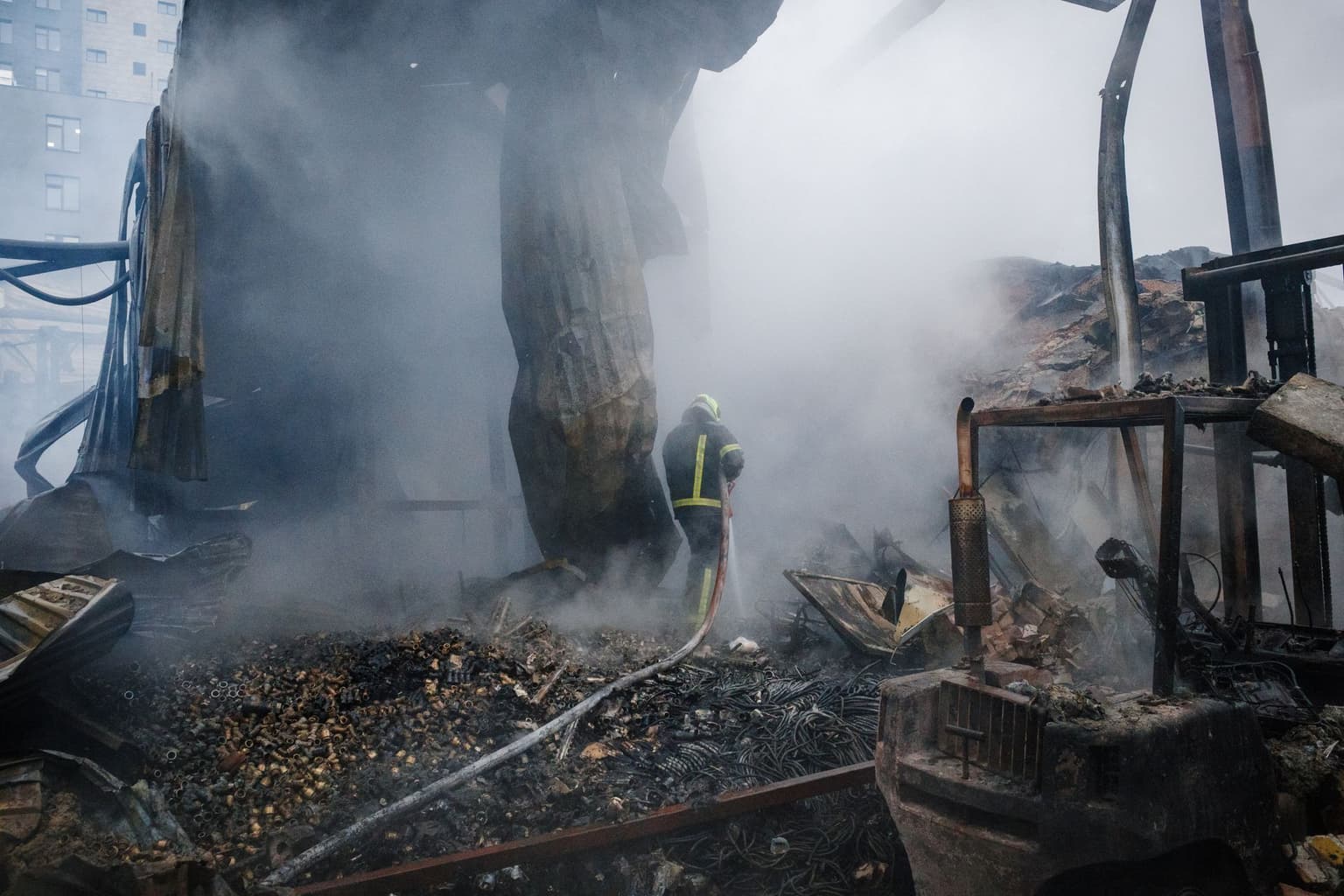
Key developments on Nov. 20:
- 3 Kyiv bridges struck in massive Russian aerial assault on Ukraine, at least 9 dead
- 2 Russian Kh-101 missiles, drone, fall in Poland during Russian attack on Ukraine
- Ukraine deploys experimental laser air defense system in Kyiv
- At least 1,144 children killed or injured in Ukraine during Russia's war this year, UNICEF says
- Estonia to close road borders with Russia in response to 'sustained aggression' against Europe
- Russia targets Europe's largest substation in mass energy attack on Ukraine
- Ukraine strikes key Druzhba oil pipeline station in Russia's Tatarstan, General Staff confirms
A huge, hours-long Russian missile and drone attack on Ukraine overnight on Nov. 20 has killed at least nine people, disrupted electricity, heating and water supplies, and damaged three bridges in Kyiv.
President Volodymyr Zelensky described the assault as "one of the biggest attacks" on Ukraine.
"This time, the attack tactics were particularly insidious, with several groups of missiles launched at intervals of 20 to 30 minutes to complicate firefighting, clearing debris, and recovery efforts," Zelensky said.
Kyiv Mayor Vitali Klitschko urged residents not to drive, saying the Podilsko-Voskresenskyi, Southern, and Darnytskyi bridges were damaged in the attack.
At around 3 p.m. local time, the mayor announced that traffic from the western to the eastern bank of the Dnipro River had been restored via the Podilsko-Voskresenskyi bridge. 3. Damage assessments are still underway on the Darnytskyi Bridge, while traffic on the Pivdennyi Bridge remains partially restricted, as it has been in recent days, Klitschko said.
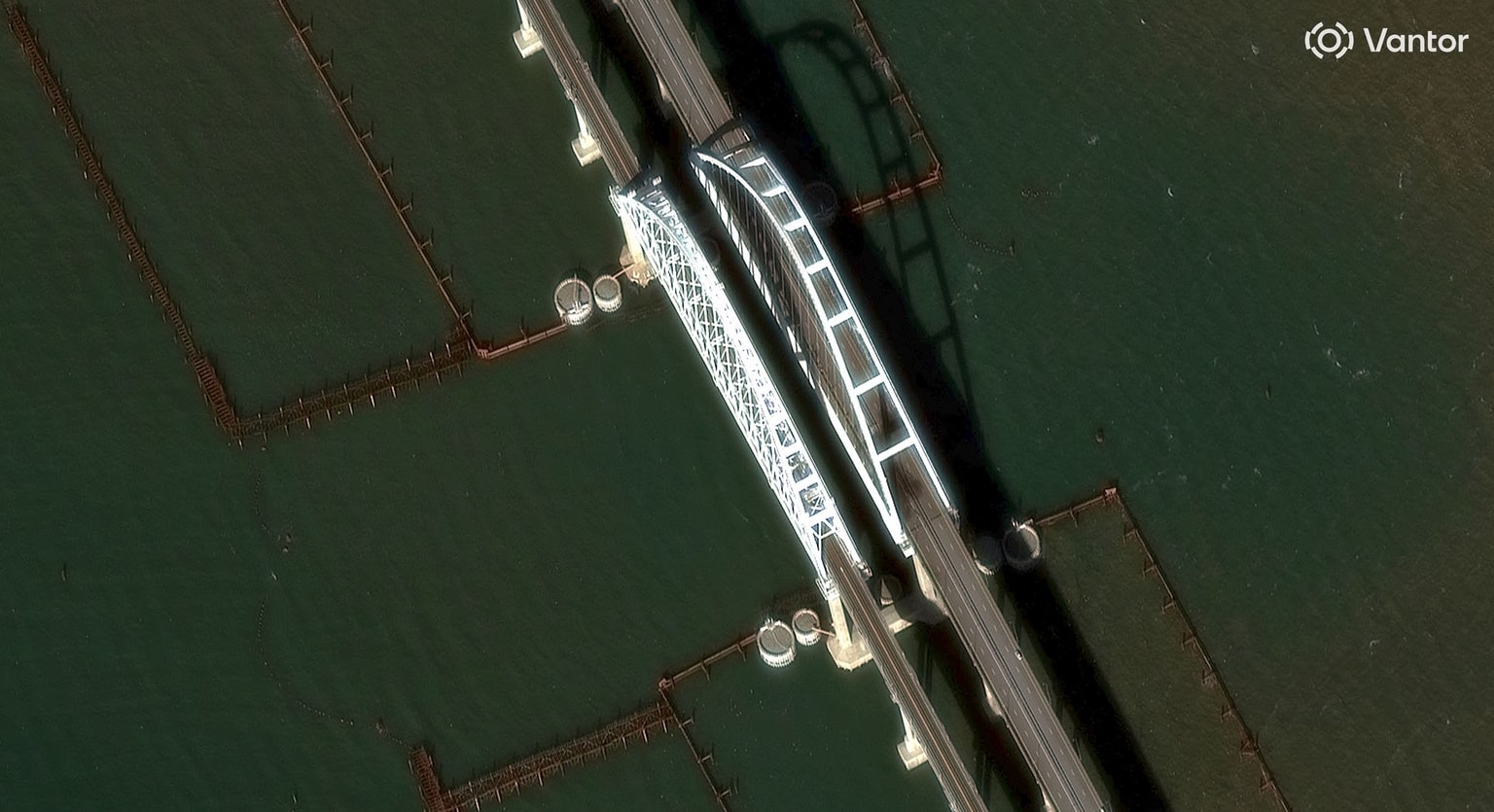
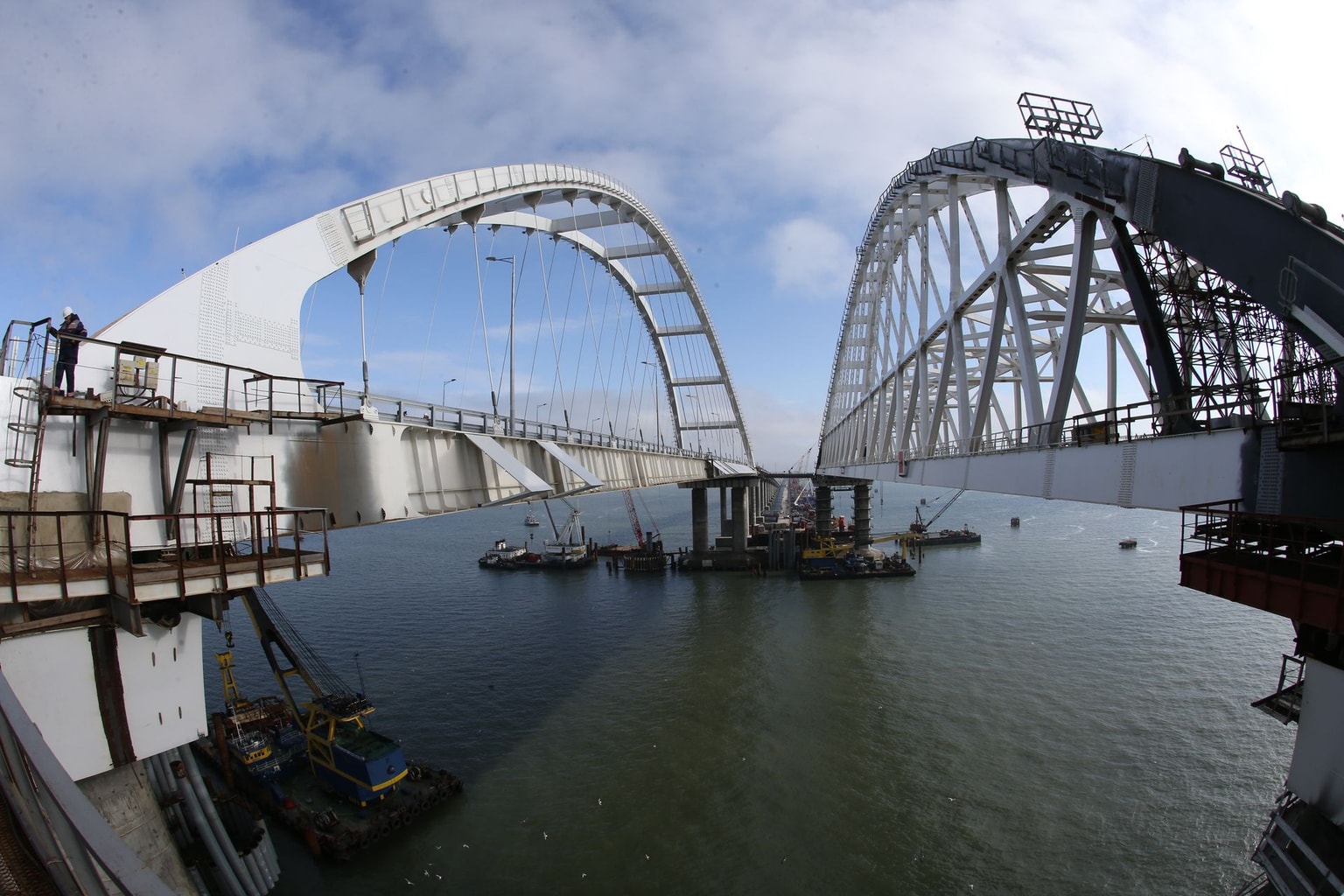
The mass assault comes a day after Russian President Vladimir Putin vowed "retaliation" for Ukraine's devastating strikes on the Crimean Bridge which collapsed an entire section of the crossing overnight on Nov. 17.
As the aggressor in the war, Russian strikes on Ukraine cannot be "retaliatory" in nature. Ukraine's strikes inside Russia and Russian-occupied territory are inherently defensive.
Seven people were killed in Kyiv and another 17 injured, Klitschko said in a post on social media. A further two people were killed in other oblasts, according to Prime Minister Serhii Koretskyi.
Ivan Vyhivskyi, Ukraine's interior minister, said that 30 people were injured in the attack across Ukraine. As of 1 p.m., over 500 rescuers and police officers were still involved in dealing with the consequences of the Russian attack, he added.
Ukraine's Air Force said Russian forces launched 84 cruise missiles, and 404 attack drones, while President Volodymyr Zelensky added that the attack also involved 27 ballistic missiles. Ukraine's air defenses shot down or suppressed three ballistic missiles, 79 cruise missiles, and 380 drones. Strikes were recorded at 23 locations.
Zelensky also said Ukrainian forces struck three Russian ballistic missile launchers overnight, destroying one, while the extent of damage to the other two was still being assessed.
The overnight attack involved cruise missiles launched from Tu-160 strategic bombers, among the largest warplanes in operation and capable of carrying conventional and nuclear weaponry.
Besides Kyiv, strikes and explosions were reported across the country, including the far-western Lviv and Ivano-Frankivsk oblasts, the southern city of Kryvyi Rih, the northeastern Kharkiv Oblast, and the eastern city of Dnipro.
Two Russian Kh-101 missiles and a jet-powered drone fell on the territory of Poland during the attack, Polish authorities reported.
2 Russian Kh-101 missiles, drone, fall in Poland during Russian attack on Ukraine
Polish Defense Minister Wladyslaw Kosiniak-Kamysz said at a press conference that two missiles and a jet-powered drone fell on Polish territory during Russia's overnight attack on Nov. 20, Polish broadcaster RMF24 reported.
The missiles came down at Nowy Lipowiec and Rudnik nad Sanem, while the jet-powered drone fell at Molodycz, RMF24 said, citing Kosiniak-Kamysz.
"This attack of the Russian Federation on the territory of Ukraine with impact on Poland was one of the largest since the beginning of the full-scale war in Ukraine," Kosiniak-Kamysz said.
The minister added that the timing was deliberate, given the current military exercises of the so-called Coalition of the Willing, involving British and French troops, in Poland.
Kosiniak-Kamysz also called for additional NATO aircraft to help protect Polish airspace, specifically requesting airborne early warning and control (AWACS) aircraft and F-35 fighter jets, Polish defense outlet Defence24 reported on Nov. 20.
"We need even greater support," the minister said.
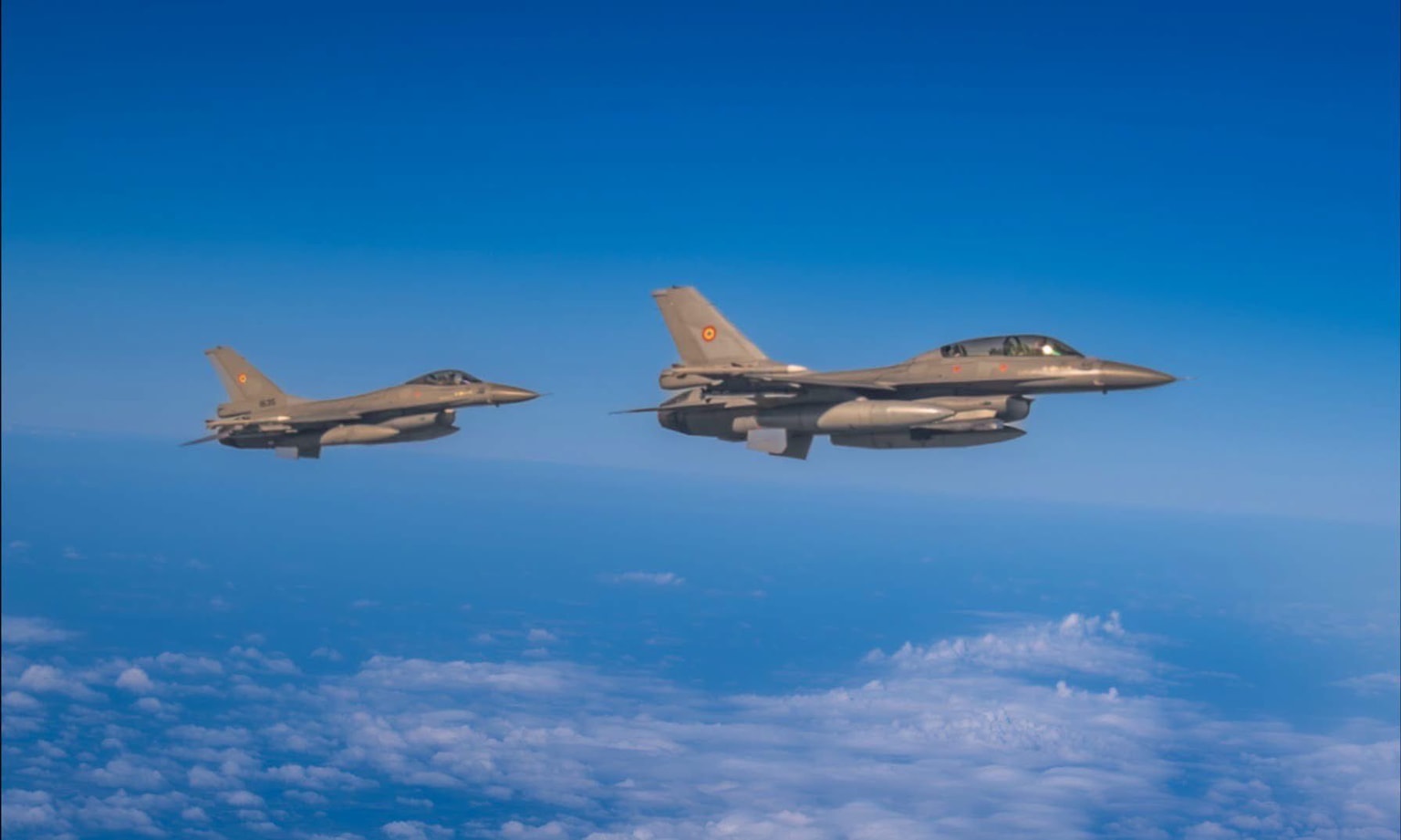
During the overnight attack, two Swedish Gripen fighter jets and a Dutch aerial refueling aircraft were deployed to support Poland's air defense operations, according to Kosiniak-Kamysz.
Polish Prime Minister Donald Tusk said on X on Nov. 20 that he had convened a meeting with ministers, military officials and security service chiefs in response to the airspace violation.
NATO Secretary General Mark Rutte condemned Russia's attack following a conversation with Polish Prime Minister Donald Tusk and stressed that the alliance would continue to support Ukraine.
"This incident is clearly dangerous — a consequence of Russia's ongoing war against Ukraine. I condemn Russia’s attacks as well as its ongoing war," Rutte wrote on X.
U.S. President Donald Trump downplayed Russian incursions into Polish territory while speaking by phone with Fox News White House correspondent Aishah Hasnie aboard Air Force One on Nov. 19.
"Putin has been landing drones in Poland and a couple of little missiles, by mistake," Trump said.
The remarks came as Trump dismissed criticism from Tusk over Trumps description of Russian President Vladimir Putin as "my friend" during a meeting of the two Presidents in China.
"God, protect us from such friends," Tusk wrote on X. Trump brushed off the criticism, saying he had known Putin for years.
Russia launched a mass overnight attack on Ukraine on Nov. 20, targeting several regions with drones and missiles, killing civilians and disrupting electricity, water and heating supplies, including in Kyiv.
read also
Ukraine deploys experimental laser air defense system in Kyiv
Ukraine's first air defense laser has been deployed to help protect Kyiv from Russian drones, according to one private air defense company — but the weapon has yet to engage its first target, leaving its effectiveness unproven.
In early November, the company, Carmine Sky, deployed its new "Blysk" laser system as part of Kyiv's air defenses. The company says the system can burn through the hull of a Shahed type drone in a matter of seconds.
The laser weapon could offer Ukraine a cheaper way to counter Russian drone attacks, requiring electricity rather than more costly interceptor drones or missiles. But the precision tracking of the target with a laser can be difficult against agile drones.
Ukraine's deployment of Blysk comes as laser weapons are increasingly being developed as a cheaper alternative to conventional air defense missiles. Among the most prominent examples is Israel's Iron Beam, one of the first high powered laser air defense systems to enter military service.
Developed by Israeli defense company Rafael, Iron Beam was delivered to the Israeli military in December 2025 following years of development and testing. The 100 kilowatt system is designed to intercept drones, rockets and mortar shells at distances of up to 10 kilometers.
By comparison, Ukraine's Blysk has a reported power output of four kilowatts and an effective range of up to one kilometer.
The deployment of the laser comes under Ukraine’s experimental private air defense program. Launched by the Defense Ministry, the program authorizes companies to form air defense groups under the Air Force’s operational control.
At least 1,144 children killed or injured in Ukraine during Russia's war this year, UNICEF says
At least 1,144 children were killed or injured in Ukraine between January and October 2026, the highest number of verified child casualties in the last three years of Russia's war, UNICEF said on Nov. 20 — recognized as World Children's Day.
As fighting along the front line remains largely entrenched, Russia's long-range strikes continue to hit Ukrainian cities and civilian infrastructure across the country, putting children, including those far from the front lines, at risk.
UNICEF published its numbers on World Children's Day as a huge, hours-long Russian missile and drone attack on Ukraine overnight on Nov. 20 killed at least nine people, disrupted electricity, heating and water supplies, and damaged three bridges in Kyiv.
"Children have been paying an unacceptable price for this war for too long. Every child killed is a life and future lost, and every child injured may face lasting physical and psychological consequences. Children must be protected, wherever they are," said UNICEF Representative in Ukraine, Anne-Claire Dufay.
The figures, verified by the UN Human Rights Monitoring Mission in Ukraine, include 114 children killed and 1,030 injured, an average of more than three children killed or injured every day.
The number of children killed in Ukraine this year has already exceeded the total for all of 2025 by more than 20%, while the number of injured children has risen by almost 60%, UNICEF said.
In October alone, child casualties rose by 150% compared with the same month last year, reaching at least 146, UNICEF said.
On Nov. 7, a Russian ballistic missile attack on Kyiv damaged a kindergarten in the capital's Solomianskyi District, where 60 children were enrolled. The building was left unusable, forcing the children to attend elsewhere, UNICEF said.
UNICEF also explicitly mentioned the Russian strike on the village of Komyshuvakha in Zaporizhzhia Oblast that killed at least 72 people on Nov. 2.
On Nov. 2, Russian forces carried out ten aerial bomb strikes, first using FAB-500 bombs, before deploying a FAB-3000 — a 3-ton bomb containing nearly 1.5 tons of explosives with a blast radius of up to 250 meters to attack a school building serving as a humanitarian aid center while residents were receiving aid.
For weeks, as police and rescue workers dug through the rubble searching for survivors and to recover bodies, Russian forces shelled Komyshuvakha eleven times. Nine of those attacks were directly on the site of the rescue operations, Ukraine's Internal Affairs Minister Ivan Vyhivskyi said. These subsequent attacks injured three police officers and four rescue workers.
The threat extends beyond direct attacks. Verified strikes on energy infrastructure in Ukraine have reached their highest level since the start of the full-scale war, with 78% more attacks recorded in 2026 than throughout 2025, UNICEF said.
Last winter, nearly 2 million children in Ukraine were left without heat, electricity, and water as temperatures fell below minus 20 degrees Celsius, the agency added.
read also
Estonia to close road borders with Russia in response to 'sustained aggression' against Europe
Estonia will close all of its road border crossings with Russia on Dec. 1, the country's foreign ministry confirmed on Nov. 20.
The idea was proposed by the country's Foreign Minister Margus Tsahkna on Nov. 15 after an attempted arson attack against a drone company in Estonia the previous day, and has since been formally adopted by the government.
"Russia's hostile actions have consequences," Tsahkna said.
"We have previously stated that if these attacks continued, we would introduce additional security measures," he wrote.
The Estonian foreign ministry's announcement of the border closure included, by way of justification, a map showing Russian attacks covering the breadth of Europe.
Russia targets Europe's largest substation in mass energy attack on Ukraine
Russia targeted Europe's largest electrical substation in Ukraine as missiles and drones rained down on the country and its energy facilities overnight on Nov. 20, an energy official told the Kyiv Independent on condition of anonymity.
Russia struck the massive Western Ukrainian (Zakhidnoukrainska) 750-kV substation, one of the most critical nodes in Ukraine's energy network, the energy official said. The severity of the damage has not been made public.
Russia's recent energy attacks have largely focused on disconnecting Kyiv with combined missile and drone attacks. Western regions have been less affected by strikes on energy facilities this autumn, although authorities temporarily introduced some scheduled outages last month.
The Western Ukrainian substation transmits electricity from two nuclear power plants and two thermal power plants to oblasts in western Ukraine. It is also a gateway for electricity imports from the EU, which Ukraine relies on during emergencies.
The strikes overnight forced the country’s nuclear power plants to reduce electricity generation, First Deputy Energy Minister Artem Nekrasov said.
Nekrasov said the plants would gradually return to normal operations after damaged power networks are restored.
Repair crews have begun work where security conditions allow, but repeated strikes on repaired facilities and ongoing air raid alerts are slowing recovery efforts, he said.
As of the morning of Nov. 20, parts of Kyiv and 10 regions were without electricity following the attacks. Emergency power outages were also introduced in several regions, including Lviv, Zakarpattia and Ivano-Frankivsk.
The attack left residents of Lviv, Zakarpattia, and Ivano-Frankivsk oblasts without power as rolling outages were implemented in western Ukraine to stabilize the grid, Ukrenergo, Ukraine's state grid operator, announced on Telegram.
Oleksandr Kharchenko, Director of the Energy Industry Research Center, told the Kyiv Independent that he does not currently see a significant effect.
"If the substation is heavily damaged, it can decrease Ukraine's ability to import electricity (from the EU), but not on a critical level," he added.
Ukraine's Air Force said Russian forces launched an unspecified number of ballistic missiles, 84 cruise missiles, and 404 attack drones. Ukraine's air defenses three ballistic missiles, 79 cruise missiles, and 380 drones. Strikes were recorded at 23 locations.
Ukraine strikes key Druzhba oil pipeline station in Russia's Tatarstan, General Staff confirms
Ukrainian forces struck a major oil pumping station in Russia's Tatarstan Republic on Nov. 19, damaging three large oil storage tanks, the General Staff confirmed on Nov. 20.
The Kaleykino Oil Pumping Station, located near the city of Almetyevsk, more than 1,000 kilometers (621 miles) from the Ukrainian front line, is a key hub in Russia's oil transportation network, supplying crude oil to refineries and the Druzhba pipeline system.
According to the General Staff, Ukrainian forces struck three oil storage tanks at the Kaleykino-1 facility, with one catching fire and two others sustaining damage. Each tank has a capacity of 50,000 cubic meters of oil, making them among the largest storage facilities of their kind in Russia.
The station receives and blends crude oil from different Russian regions before distributing it to refineries and the Druzhba pipeline, which carries Russian oil to European markets.
The extent to which the attack disrupted the station's operations remains unclear.
Earlier on Nov. 19, Ukrainian monitoring channel Exilenova+ reported explosions and a fire at the facility, citing eyewitness accounts.