Ukrainian parliament passes bill to strengthen asset disclosure rules for security officials
 on Google

The Ukrainian parliament on Nov. 24 passed the first reading of a bill seeking to require Security Service (SBU) officials not engaged in military missions to file asset declarations during Russia’s full-scale invasion.
Most top SBU officials would also have to file asset declarations, and they would have to be public, according to the bill.
Russia’s full-scale invasion enabled Security Service officials to either not file asset declarations at all or hide them from the public for security reasons. This dealt a blow to the agency's transparency and accountability.
To become law, the asset declarations bill must be passed by parliament in the second reading and signed by the president.
The bill was submitted to parliament by President Volodymyr Zelensky in response to a large-scale corruption investigation by the National Anti-Corruption Bureau (NABU) known as Operation Carthage.
According to investigators, the group included senior officials from the Security Service of Ukraine (SBU), the police, and the Prosecutor General's Office.
According to the bill, employees of the National Guard, State Border Guard, the State Security Department, and the State Service for Special Communications and Information Protection not engaged in combat would also have to file asset declarations.
Apart from top SBU officials, most other top officials, including law enforcement staff and judges, would also have to file declarations, and they would have to be public, according to the bill.
However, some law enforcement employees’ asset declarations can still be hidden for security reasons.
The bill is a response to a sweeping investigation by the National Anti-Corruption Bureau (NABU) and the Specialized Anti-Corruption Prosecutor's Office (SAPO), known as Operation Carthage, into scam call centers. The probe led to the ouster of Prosecutor General Ruslan Kravchenko, who fled Ukraine in September, and implicated senior officials in his office.
The alleged criminal network extended far beyond call-center scams. According to Ukraine's anti-corruption agencies, the network also trafficked drugs, produced counterfeit currency, and used violence to intimidate critics and opponents.
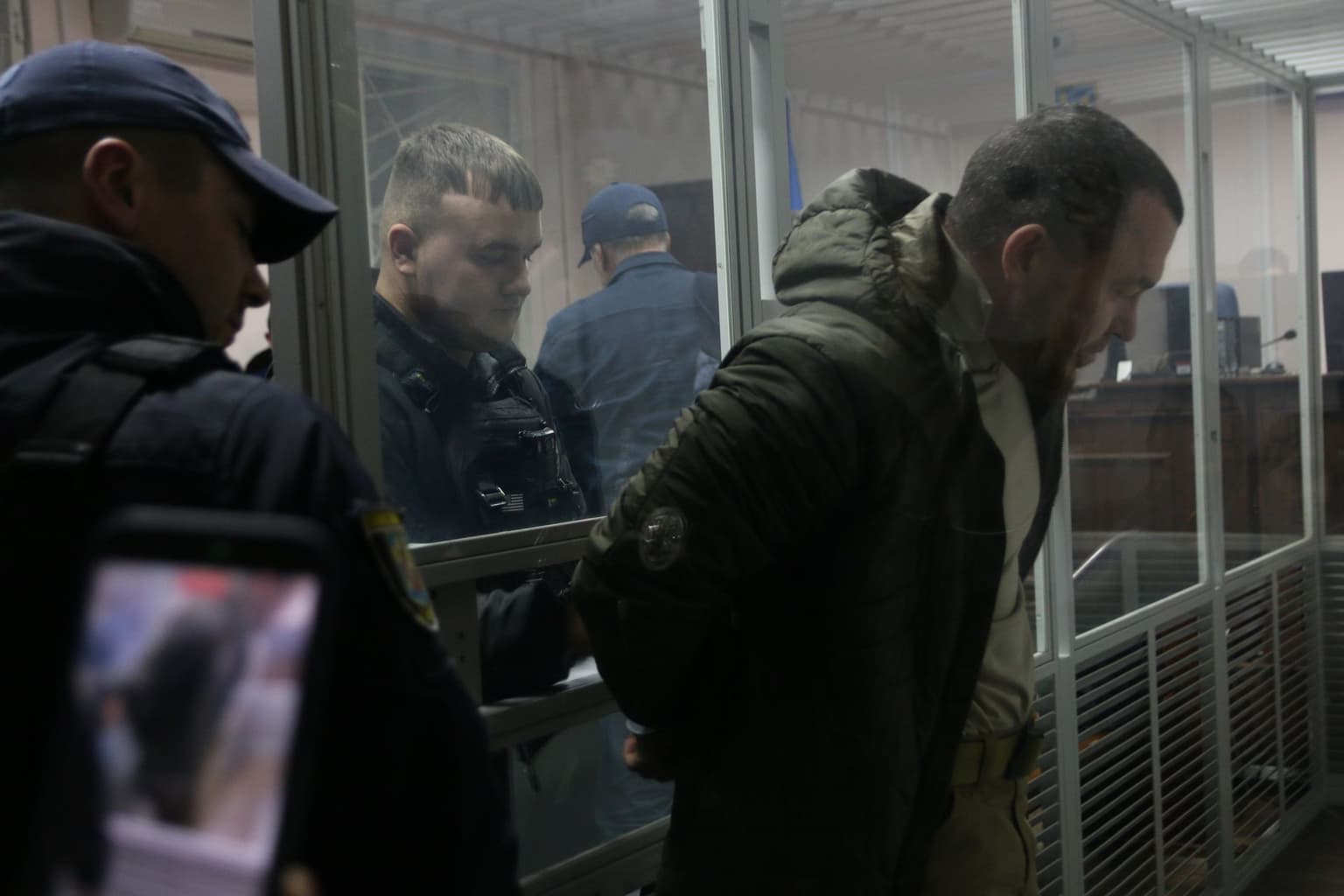
Serhii Duka, the first deputy head of the Security Service's Department for the Protection of National Statehood, was also charged with complicity in organized crime as part of the Carthage case.
Investigators say Duka advised Andrii Osipov, one of the alleged leaders of the criminal group, on how to evade detection and arranged contacts with senior officials at other law enforcement agencies, including the Prosecutor General's Office.
The criminal network was run by Osipov and Russian-born Yehor Burkin, reportedly the founder of the transnational drug trafficking ring known as Khimprom, according to the NABU. Recordings released by the NABU suggest that Burkin maintained contact with Russia's Federal Security Service (FSB) even during Russia's all-out war.
In 2024, the SBU's Department for the Protection of National Statehood, where Duka worked, illegally surveilled journalists from the media outlet Bihus.info. The NABU tapes show Burkin and Osipov discussing a possible acid attack on or kidnapping of the outlet's founder, Denys Bihus, over its investigation of their activities.