Investigation: How Russians with criminal records obtained Romanian passports by posing as Ukrainians
Russian citizens, including those linked to Russia’s war machine and terrorist groups, can travel and operate freely within the EU with their new Romanian passports.
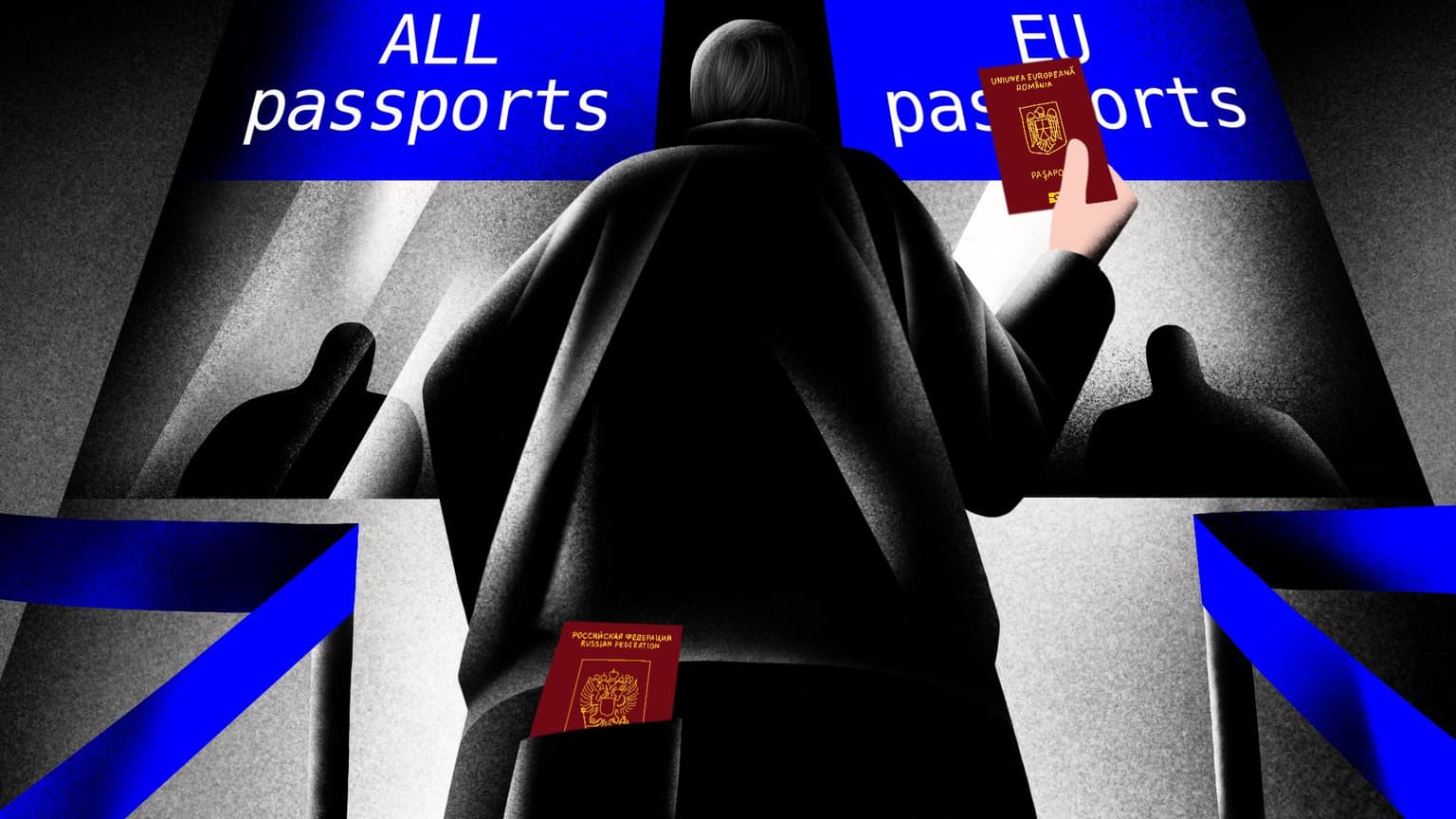
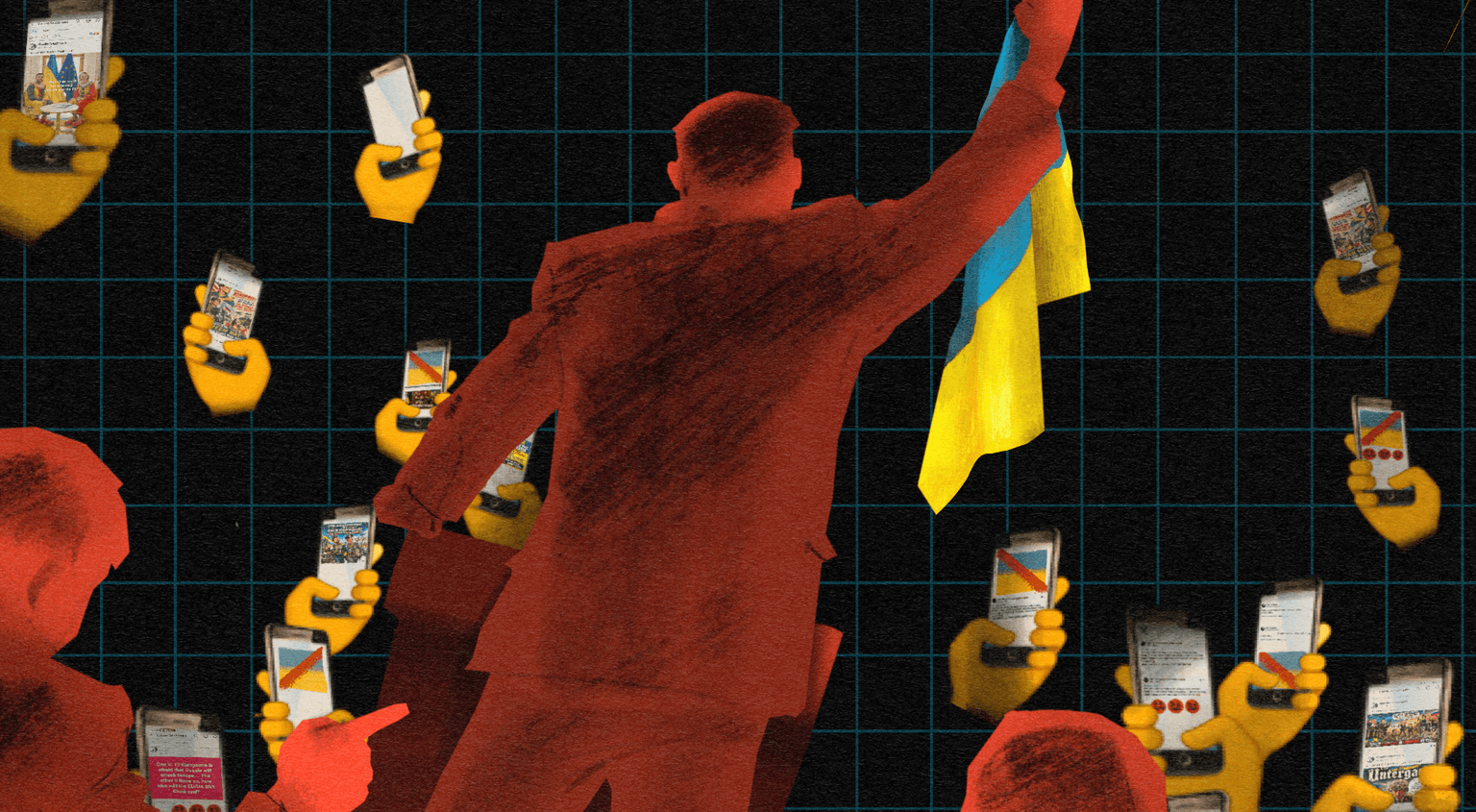
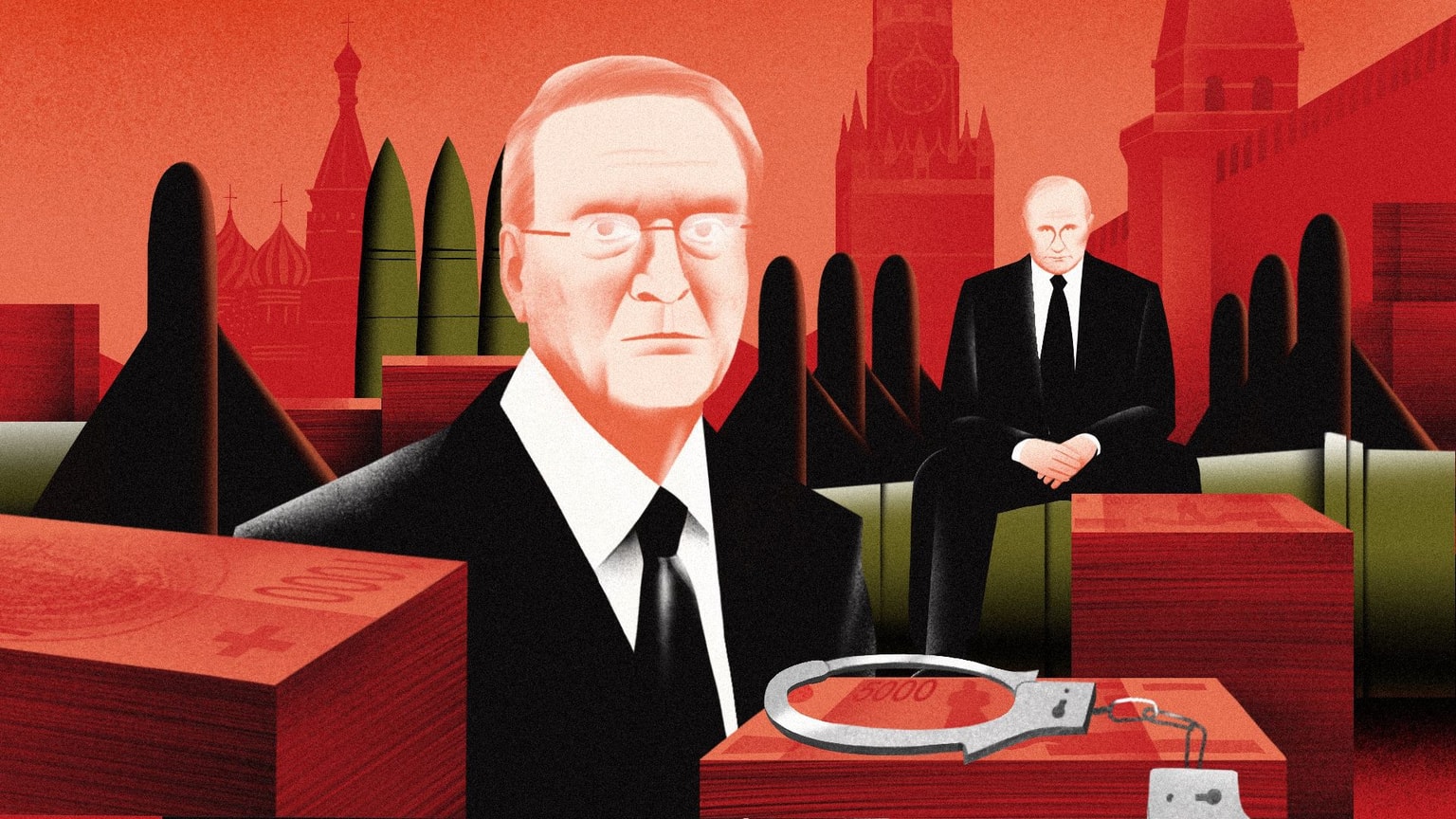
The Kyiv Independent investigation reveals how Russian citizens obtained EU passports by posing as Ukrainians. (Nataliia Shulga / The Kyiv Independent)
 on Google
Editor's note: This investigation is a collaboration between the Kyiv Independent, Public Record (Romania), Cu Sens (Moldova), Follow the Money (the Netherlands), Le Monde (France), and the Investigative Center of Ján Kuciak (Slovakia).
Key findings
- Romania's unique citizenship laws have opened the door to a large-scale scheme granting EU citizenship to foreigners based on forged documents.
- The scheme has been investigated by Romanian authorities. Separately, a Romanian court is hearing over 800 civil cases to annul identity documents obtained with forged papers.
- As part of the investigation, partner newsrooms obtained and reviewed in person the court files of 55 cases involving disputed identity documents.
- The Kyiv Independent and partner newsrooms found that in more than 30 of the cases, the beneficiaries were Russian citizens, including people sanctioned by Ukraine for their ties to Russia’s war machine or to organized crime.
- At least eight Russian citizens posed as Ukrainians to obtain Romanian documents, and did so during Russia’s war against Ukraine. All had help from the same notary in Moldova.
- Romania recently charged at least 16 Russian citizens with using forged documents to obtain Romanian passports, but they may remain beyond prosecutors’ reach.
Hundreds of new Romanian citizens are not Romanian at all.
In recent years, hundreds of foreigners — many of them Russians — have exploited Bucharest's repatriation process to obtain authentic Romanian passports via forged citizenship certificates, according to Romanian authorities.
A Romanian passport comes with EU citizenship — and a right to live, work, and travel visa-free across the continent and beyond.
These suspect identity records are now being challenged in court in civil lawsuits, while law enforcement simultaneously pursues a large criminal investigation to uncover the organized groups behind the fraudulent document scheme.
The Kyiv Independent and its partner newsrooms in five countries reviewed civil court records for 55 people who, according to Romanian authorities, obtained genuine Romanian birth certificates using forged papers. More than 30 of them turned out to be Russian citizens. At least some of them, this investigation found, went on to obtain Romanian passports.
For Russian citizens who have never enjoyed visa-free travel in Europe — and were hit with new visa restrictions after the start of the full-scale invasion — Romanian passports offered a way to evade sanctions and access the privileges of the EU.
To obtain these valuable documents, some Russians even pretended to be Ukrainians. This investigation found eight cases where Russian citizens used questionable Ukrainian passports and fake Romanian citizenship certificates to obtain authentic Romanian identity documents in 2023 and 2024 — during Russia's full-scale war against Ukraine.
Among the Russians who posed as Ukrainians on their way to EU passports, the Kyiv Independent identified a member of a powerful clan in Chechnya, the then-head of a Russian state-owned explosives manufacturer, and a man named in reports linking him to organized crime.
How the scheme worked in Romania
Fraudulent schemes to obtain Romanian passports exploit a legitimate legal route to citizenship.
Romania offers repatriation to descendants of people who lost their citizenship against their will. Most of them lived in regions the country lost in 1940, and which are now part of Moldova and Ukraine.
If a person can prove their familial link to these lost lands, they have a right to a Romanian citizenship certificate.
The fraud lies in the documents used to claim this right.
Such schemes typically begin with a forged genealogy document, likely issued in a third country, that links the applicant to ancestors from former Romanian territories.
Previous findings by Romanian prosecutors showed that Russians, Ukrainians, and Moldovans have used forged genealogy documents to obtain genuine Romanian citizenship certificates.
In more recent cases, prosecutors say, the citizenship certificates themselves have been forged. This shortcut can shave years off the application process and, crucially, bypasses criminal background checks.
The fraudsters then use the forged citizenship certificate to obtain a series of authentic Romanian identity documents: a birth certificate transcribed into the Romanian civil registry, an ID card, and a passport.
The fraudulent networks rely on middlemen and Romanian clerks, and they may operate behind a seemingly legitimate public face: private migration agencies, whose ads have flooded Russian social media since the full-scale invasion of Ukraine and the tightening of EU visa rules for Russian citizens.
According to a Romanian lawyer who has represented clients in dozens of annulment cases in Romania, the fake citizenship scheme can cost between roughly 50,000 and 70,000 euros ($55,000 to $77,000) per person. The lawyer spoke to Le Monde on condition of anonymity because of the sensitivity of the subject.
Russian ‘Romanians’ in the court files
Eight Russian citizens, including a sanctioned defense-industry executive and a man linked to organized crime, obtained Romanian documents using questionable Ukrainian identity papers.
The annulment lawsuits filed by Romanian authorities list each person’s date and place of birth and their parents’ names, details that helped the Kyiv Independent identify them.
One is Mairbek Abdulazizov, a member of a family at the heart of the regime of Chechen dictator Ramzan Kadyrov, the warlord who has called himself "Putin's foot soldier." Kadyrov’s forces have fought in Russia’s full-scale invasion of Ukraine, and Ukrainian prosecutors have brought multiple war crimes charges against Kadyrov and his fighters.
In Chechnya, Mairbek Abdulazizov advises the director of the Regional Compulsory Health Insurance Fund. This happens to be his own brother, Denilbek Abdulazizov, who has run the fund since 2007, when Kadyrov formally came to power.
The fund controls the money for Chechnya’s state-funded health care and, according to the Russian outlet Novaya Gazeta, serves as a channel for large, opaque financial flows in the region.
In 2024, Kadyrov awarded Mairbek Abdulazizov the Order of Kadyrov, Chechnya's highest state award.

The Abdulazizovs keep power in the family. Another brother, Sharpudi Abdulazizov, is Chechnya’s environment minister, and a nephew, Turpal-Ali Abdulazizov, heads the administration of the family’s native Vedensky district.
Another Russian named in the Romanian files is Dmitrii Rudenko, who spent more than a decade in Moscow's defense industry.
Until April 2025, he headed the state-owned Special Design and Technological Bureau Tekhnolog, which develops explosives for Russian tank ammunition and missile systems. In October 2026, the EU added the bureau to its sanctions list, citing its role in Russia's military-industrial complex. Ukraine sanctioned both the bureau and Rudenko in 2023.
The court proceedings challenge the Romanian records not only of Rudenko but also of his ex-wife and children.
While Rudenko worked in Russia’s defense industry, his family appears to have been building a life in Europe — despite Russia’s anti-Western rhetoric, it’s a common feature of many wealthy Russian families linked to the country’s war effort. He has traveled to France repeatedly since 2022 and transferred at least 700,000 euros abroad, Russian media reported, citing investigators.
Documents obtained by Le Monde, a partner in this investigation, show that Rudenko's former wife, Natalia Zelentsova, bought two apartments in Beausoleil in 2014 and 2015, while still officially married to him. The couple divorced in 2017 but kept traveling together, according to leaked Russian customs and flight records.
In October 2022, months after Russia launched its full-scale invasion, Zelentsova reportedly applied for asylum or residency in France, and she has not returned to Russia since. Rudenko’s son from a previous marriage, Andrey, is listed in the French telephone directory at the building where, according to French property records, Zelentsova owns two apartments.
Rudenko's position in Russia has also become precarious. In February 2025, he was arrested on charges of embezzlement and money laundering. No further details of his case have been made public.


Another name in the files points to Russia's criminal underworld.
Nurutdin Dadaev, a Russian citizen from Dagestan, landed on Ukraine’s sanctions list in 2021 along with his brother. Ukrainian media reported that the list targeted so-called “thieves in law,” the elites of the post-Soviet criminal world. Russia itself had already flagged Dadaev: in 2020, its financial crime watchdog added him to its list of terrorists and extremists.
Another Russian who appeared in the files is Islam Gadzhiev, from Makhachkala, Dagestan’s capital. A man by that name has been mentioned in Russian media over unpaid property taxes.
The remaining four names belong to Russian businessmen: Beslan Magomadov, a former regional director at mobile operator VimpelCom; investment firm employee Aleksandr Efimov; Aleksei Bogachev, who has run about a dozen companies in Samara; and Shamil Musaev, owner of a trading and transportation company in Dagestan. Musaev shares an address in a small village in Romania with Nurutdin Dadaev.
Russians disguised as Ukrainian citizens
The Romanian court files show that these men used questionable Russian birth certificates and fake Romanian citizenship certificates in their quest for an EU passport.
But they also hold another surprise: these eight Russian citizens applied as Ukrainians.
Abdulazizov, member of Chechen strongman Ramzan Kadyrov's inner circle, submitted a copy of a Ukrainian passport for foreign travel, a copy of a Ukrainian ID card, and an address in Kyiv. Both Ukrainian documents claim to have been issued in November 2020, more than a year before the Russian full-scale invasion.
Abdulazizov’s Russian passport is not mentioned anywhere in his Romanian application. In other words, he presented himself to Romania as a Ukrainian citizen.
Russian national Dmitrii Rudenko also applied as a Ukrainian citizen, submitting a Ukrainian passport for foreign travel and an ID card, both dated May 2020.
At the time these documents were supposedly issued, Rudenko was running a Russian state defense company developing explosives and chemicals for military use in St. Petersburg.
According to Mara Dorofte, a Romanian financial crime risk expert, applicants may have used Ukrainian passports to avoid the closer scrutiny Romanian authorities apply to Russian citizens.
“Romanian authorities publicly declared that they will impose higher scrutiny to requests for Romanian passports and identity cards coming from Russian citizens, checking for EU and U.S. sanctions nexus more closely,” she said.
The other six individuals also succeeded in hiding that they were Russian citizens living in Russia. Even Nurutdin Dadaev, who has been under Ukrainian sanctions along with his brother since 2021 over alleged links to criminal groups, applied for Romanian documents using a Ukrainian passport.
So, are their Ukrainian documents genuine?
Shamil Musaev, Islam Gadzhiev and Mairbek Abdulazizov, whom the Kyiv Independent reached by phone, all denied ever obtaining Ukrainian passports.
“I’m not ready to answer right now,” Aleksei Bogachev said when asked about his Ukrainian passport, adding that he “didn’t use anything anywhere.”
The others could not be reached and did not respond to written requests for comment.
Ukraine’s State Migration Service provides an online tool that can confirm whether a passport or ID card number has been declared invalid. Only two of the eight Ukrainian passport numbers in the Romanian files have been invalidated: those of the sanctioned Nurutdin Dadaev and the Russian businessman Beslan Magomadov.

The Ukrainian ID cards listed in Rudenko’s, Efimov’s, and Bogachev’s files in Romania have also been declared invalid. Abdulazizov’s, by contrast, does not appear among the invalid documents.
One detail, however, raises serious questions. With the help of a documentation expert, the Kyiv Independent analyzed the machine-readable zone on the copy of Abdulazizov’s Ukrainian passport for foreign travel submitted to the Romanian authorities. None of its five check digits matches the result produced by the algorithm set by the International Civil Aviation Organization (ICAO).
According to Viktoria Kulykovska, head of the Laboratory of Handwriting and Technical Document Examination at the Kyiv Research Institute of Forensic Expertise, this alone does not prove forgery. But a passport like this could not have been used to cross a border: once scanned at border control, it would have triggered a data integrity error.
“According to ICAO requirements and Ukrainian law, a passport containing technical errors or discrepancies in the machine-readable zone is considered unusable, and border guards have the right to confiscate such a passport,” Kulykovska said.
Natalia Naumenko, head of the State Migration Service of Ukraine, declined in a written response to comment on the passports allegedly obtained by specific Russian citizens, citing privacy and data-protection laws.
In a phone interview with the Kyiv Independent, Mariia Harnyk, director of the service’s Department for Citizenship, Passport Issuance and Registration, repeated that position.
Harnyk has run the department since 2019, a period that covers almost all of the documents in question. Prior to that, she served as the department's deputy head.
Maksym Sokoliuk, who headed the State Migration Service from 2015 to 2021, declined to discuss with the Kyiv Independent how the passports might have been obtained during his tenure.
Ukrainian law offers foreigners two main routes to citizenship: by territorial origin, if they or their close relatives were born in or permanently lived on Ukrainian territory before 1991, or by naturalization, after at least five years of continuous residence in the country.
None of the eight Russian citizens in the Romanian citizenship case appears to meet either requirement. If Ukraine did issue passports in their names, the passports themselves may have been obtained in breach of Ukrainian law.
Ukrainian law enforcement has previously exposed officials who helped foreigners obtain citizenship illegally, though on a smaller scale than in Romania. In one such case, a Foreign Ministry official was charged with selling Ukrainian passports to Russian citizens after the full-scale invasion, allowing them to travel to the EU without a visa.
Posing as Ukrainians, the Russian citizens gave contact addresses in various regions of Ukraine in their Romanian files.
The Kyiv Independent checked several of them, and none held up. Rudenko listed the address of a Kyiv university, while Abdulazizov’s turned out to be a plot of land.
Unsurprisingly, the Romanian court notices sent to both men at these addresses came back undelivered.

Documents that don’t add up
The lawsuits filed by Bucharest’s Sector 6 authorities indicate that the eight Russian citizens posing as Ukrainians also took part in the fake citizenship scheme: their citizenship certificates were not genuine.
The documents reveal another anomaly: their Russian birth certificates were translated and certified only after the citizenship certificates had supposedly been issued. That sequence would be impossible in a genuine application, which is another sign the citizenship was never legitimately granted.

The Russian birth certificate submitted by Mairbek Abdulazizov is not the original but a duplicate. The certificate claims it was issued in Moscow in 2019, 36 years after his birth and far from Makhkety, the Chechen village where he was born.
The Russian certificate lists his father as Gagauz and his mother as Moldovan, two ethnic groups associated with Moldova. This contradicts the public biography of Abdulazizov’s father. According to Chechen media, he too spent his childhood in Makhkety and witnessed the 1944 deportation of the village’s residents to the Kazakh SSR. In public statements, he referred to the Chechens, not the Gagauz, as “my people.”
The Kyiv Independent also found that the father’s patronymic on the certificate does not match his real one.
Abdulazizov’s Romanian citizenship certificate, dated 2023, also turned out to be forged. It cites an order by the National Authority for Citizenship (ANC) president as the basis for granting him citizenship, but his name does not appear in that order. According to the lawsuit, it does not appear in any other ANC order either. In other words, the citizenship certificate "exists" on paper, but no order ever authorized it — a strong indication that the document is fake.

The certificate’s geography is also odd. It states that it was issued by the Romanian Consulate General in Istanbul, where Abdulazizov supposedly took his oath of allegiance to Romania on June 7, 2023 — the final step before obtaining a citizenship certificate. The round seal stamped on it, however, belongs to the Romanian Embassy in Bratislava, some 1,200 kilometers away.
“This citizenship certificate can not be considered valid or authentic,” the lawsuit filed by Bucharest’s Sector 6 authorities concludes.
Romanian authorities reached the same conclusion about Rudenko’s citizenship certificate: no ANC order authorized it, no application was ever filed, and in reality Rudenko never took the oath of allegiance. According to the court hearing, the citizenship document is neither valid nor authentic and Rudenko cannot be considered a Romanian citizen.

Several other certificates bear similar hallmarks, and Istanbul appears to have been the “citizenship factory’s” favorite address. And Aleksandr Efimov and Aleksei Bogachev even share a certificate number, another sign of forgery.
At the next stage of the scheme, the fake Romanian citizenship certificates were used to obtain authentic Romanian birth certificates. From there, Romanian ID cards and passports were only a step away.
For these Russian citizens, the birth certificates were the first genuine Romanian documents in their files. They were issued in 2023 and 2024, which suggests that this is when the scheme was in full swing.
The timing coincided with the EU’s moves to tighten visa requirements for Russian citizens traveling to the bloc. By then, the EU had already suspended its visa facilitation agreement with Russia, and several member states had barred most Russian tourists from entering. A Romanian passport would have let its Russian holders bypass these restrictions.
Beyond travel, the passport can also help them face less scrutiny when opening bank accounts, setting up companies, or registering residency in another EU country.
Mara Dorofte says that in many cases “the other (Russian) citizenship cannot be verified, if not self-declared, within the banking or other financial services system.”
What the Russian men say about their Romanian papers
The Romanian civil court records do not say whether these eight men achieved what appears to have been their ultimate goal: a Romanian passport. Some of them, however, confirmed to the Kyiv Independent by phone that they had.
Shamil Musaev, who owns a company called VIP-Trans in Dagestan, told the Kyiv Independent that he had used his Romanian passport several times between 2023 and 2025 to travel within the EU. He said he had visited Romania three or four times, as well as Spain and France, and that he runs a goods transport business in Romania.
Musaev said he was unaware of the lawsuit challenging his Romanian documents and seemed alarmed that he might no longer be able to use his passport. He said he had obtained Romanian citizenship because his great-grandmother had been a Romanian citizen.

Unlike Musaev, Islam Gadzhiev, another resident of Dagestan, told the Kyiv Independent that he knew about the court case challenging his Romanian documents and that his lawyer was handling it. He said little else, except that he had not used his Romanian passport to travel in the EU, including Romania.
Mairbek Abdulazizov denied to the Kyiv Independent that he held Romanian citizenship or a Romanian passport, but only after learning that he was talking to journalists.
Aleksei Bogachev declined to comment. The remaining four Russian citizens could not be reached by phone and did not respond to requests sent by email or through messaging apps.
From a Chisinau notary to a Bucharest counter
One strange detail runs through all eight cases: they all shared the same notary in Moldova, Carolina Hanganu. She certified the translations of their duplicate Russian birth certificates from Russian into Romanian.
Within weeks of being certified by Carolina Hanganu, the eight men’s Russian birth certificates were transcribed into the Romanian civil registry.
What are the odds that eight unrelated men, in a country of over 140 million people, would all turn to the same notary — and not at home in Russia, but in neighboring Moldova?
From Chechnya and Dagestan, from Moscow and St. Petersburg, they traveled to Chisinau to have copies of their birth certificates certified by Carolina Hanganu. How had they even heard of her?
Musaev and Gadzhiev told the Kyiv Independent they could not recall her name, how they had learned of her services, or who had referred them.
In a written response to Cu Sens, one of the media partners in this investigation, Carolina Hanganu said she was not authorized to give interviews, citing the notary’s duty of professional secrecy.

Romanian law enforcement has previously reported cross-border networks that forge documents to obtain Romanian passports, involving Romanian officials as well as people from Russia, Ukraine, and Moldova.
In a criminal case opened in Bucharest in December 2024, prosecutors say unidentified forgers produced 89 fake citizenship certificates between 2022 and 2024, which were then used to obtain Romanian birth certificates and ID cards. Rudenko’s family is named in the case file.
According to prosecutors’ records obtained by Public Record and Follow the Money, partners in this investigation, some Romanian clerks falsely recorded foreign applicants as present and stated that they had photographed them in person.
Prosecutors say a Romanian middleman, Florea Covaci, appeared at government counters on behalf of 50 Russian applicants who were not in Romania at the time. He also allegedly arranged, for a fee, Romanian addresses where foreign applicants could register, and used a contact in a local records office to search restricted databases.
Covaci, who was charged in December 2025, has told prosecutors he considers himself innocent.

In an interview with reporters, Covaci confirmed that he filled in applications for foreign clients, collected their documents under powers of attorney, and registered dozens of them at his own address and at several addresses in Bucharest. He said clients paid him only with small favors, such as medicines, food, and money for petrol. He denied filing papers without the applicants present, paying officials, or knowing that any of the citizenship certificates were forged.
In September and October, prosecutors charged at least sixteen Russian citizens, alleging they had used forged Romanian citizenship certificates to obtain official documents. At least some have reportedly been charged in absentia because they are outside Romania.
Over the past two years, Romania has also tightened its controls over the issuance of identity documents. Yet passports already in circulation, even revoked ones, can still be used for certain operations, such as opening bank accounts in the EU, experts say.
While Ukraine was fighting for its survival, Romania's passport pipeline quietly gave Russians what Western sanctions were meant to deny them: unrestricted access to Europe.
Note: Andrei Popoviciu (Follow the Money), Ana Poenariu and Bianca Albu (Public Record), Adela Sevciuc (Cu Sens), Marine Leduc (Le Monde) and Lukáš Diko (Investigative Center of Ján Kuciak) contributed to this investigation.
It was supported by a grant from Journalismfund Europe. The funders or any other of its partners are not responsible for the content published and any use made of it.
Note from the authors:
Hi, we’re Alisa and Linda, the authors of this piece.
It took us months to gather the evidence, and even longer to accept what we found: That even as Russia is trying to destroy Ukraine, Russians pose as Ukrainians to obtain European passports.
Thank you for reading! If you'd like to support our investigative work, consider becoming a member of the Kyiv Independent. Together, we can do more.