Suspects in high-profile case discussed acid attack on Ukraine's top investigative journalist
 on Google

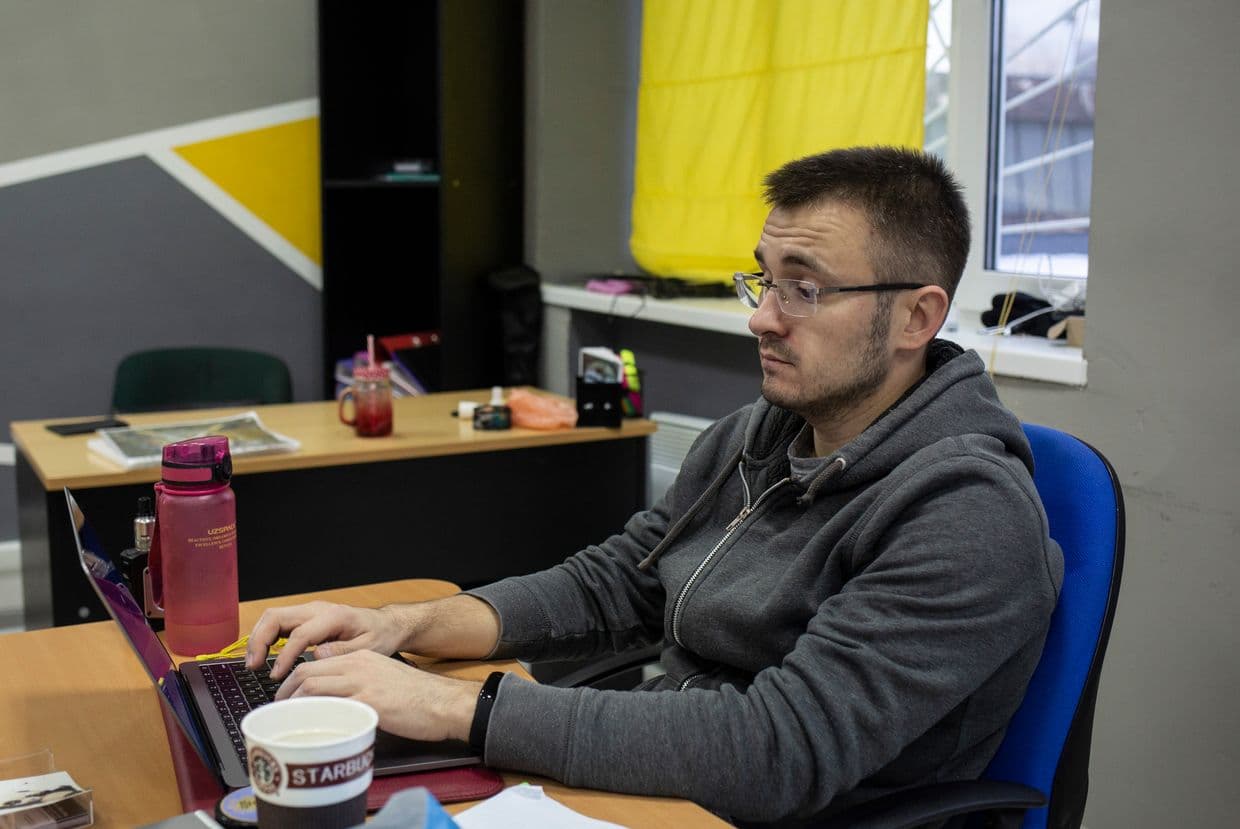
Tapes released by Ukraine's anti-graft agency in a high-profile criminal case feature suspects contemplating physical attacks against Ukrainian journalist Denys Bihus in retaliation for his media outlet's investigations into illegal businesses.
Two people can be heard discussing kidnapping Bihus or dousing him with acid in an attempt to intimidate the founder of Bihus.Info, an outlet known for investigating high-level corruption.
The tapes were published on Nov. 4 by the National Anti-Corruption Bureau (NABU) as part of a broader probe into a criminal group accused of "systematically bribing" senior law enforcement officials to secure protection for illegal businesses, including scam call centers.
The newly exposed scheme involved senior officials from the Security Service of Ukraine (SBU), the National Police, and the Prosecutor General's Office, as well as "members of criminal groups," according to the investigation.
“Let me f*** him up, because if that rat doesn't film anything about us today, he'll do it in six months – but if we splash acid on his f***ing face, he'll be not so presentable," one of the suspects, nicknamed "Mexican," said on the tapes released by NABU.
The alleged criminal group's leaders were later identified by the media as Andrii Osipov and Yehor Burkin. In the recordings published by NABU, they were referred to as "Criminal" and "Mexican," respectively. Russian-born Burkin is reportedly the founder of the transnational drug ring known as Khimprom.
Bihus, who now serves in the military, commented on the revelations, saying that he expected nothing less from a "gangster," though adding that the acid idea was surprising "even" to him. But the contemplated attack was not the worst part of the released tapes, he said.
"What you don't expect is top officials in all (law enforcement) agencies blatantly working for these 'gangsters from the 90s'," added the journalist.
The threats were linked to the investigation that Bihus.info published in March, exposing U420, a retail chain selling synthetic cannabinoids and psychotropic substances at purported "souvenir shops." The police soon announced that they traced the chain back to Khimprom and Burkin.
Journalists sent items purchased from the shops to the Interior Ministry’s laboratory, and it later confirmed the presence of illegal substances in the products.
"It's as if law enforcement is not a problem for them. But journalists — they are. That's why they plan to intimidate us, threaten us, and 'douse us with acid,'" Svitlana Stetsenko, a Bihus.info journalist who helped expose U420's activities, told the Kyiv Independent.
For her, hearing such threats against a colleague was shocking.
"What angers me the most personally is that on the recordings we hear this stark contrast: the drug syndicate is bargaining with law enforcement officials, including Minister K (Editor’s Note: Former Interior Minister Ihor Klymenko)," said Stetsenko.
read also
A symptom of a wider problem
Ukraine's anti-corruption agencies on Nov. 5 charged five members of the alleged criminal group involved in protecting scam call centers, drug trafficking, and counterfeiting foreign currency in a case implicating senior law enforcement officials.
The case is part of NABU's operation "Carthage," which in September brought down then-Prosecutor General Ruslan Kravchenko, who fled the country after his dismissal.
Oksana Romaniuk, head of the Institute of Mass Information (IMI), a Ukrainian press freedom watchdog, found the released recordings "absolutely disturbing."
"Discussing an acid attack against a well-known journalist is not just a threat against one individual; it's an attack on press freedom as a whole," Romaniuk told the Kyiv Independent.
This is not the first time Bihus.Info has faced pressure for the outlet’s investigative work. In January 2024, employees from the Security Service of Ukraine (SBU) surveilled the outlet's journalists, going as far as installing hidden cameras in their hotel rooms and releasing the videos.
An investigation was subsequently launched, but no progress has been made in two years, according to IMI.
From the beginning, Bihus said he was skeptical that the case would ever be solved, adding that previous investigations were simply "stretched for the time long enough for everything to be forgotten."
In its Freedom of Speech Barometer, IMI documented 69 freedom-of-speech violations committed by Ukrainian nationals or institutions during the first eight months of 2026.
These included mainly "obstruction of lawful reporting and denial of access to information," but also cyberattacks, death threats, and judicial pressure.
Romaniuk added that her greatest concern is the potential relationship between criminals' interests and law enforcement agencies.
"Press freedom cannot be guaranteed if those responsible for protecting journalists may themselves be connected to the threats," she said in a comment to the Kyiv Independent.
For years, Ukrainian journalists and activists have faced various forms of pressure when uncovering corruption involving government officials.
In July 2018, Kateryna Handziuk, a Ukrainian anti-corruption activist, was doused with sulfuric acid outside her apartment building in Kherson. She suffered severe chemical burns and underwent multiple surgeries, but eventually succumbed to her injuries in November that year.
An investigation into Handziuk's murder eventually resulted in the conviction of Vladyslav Manher, a former chair of the Kherson Oblast Council, and Oleksii Levin, a former aide to one of the council's members. Both were sentenced to 10 years in prison.
On Nov. 5, the European Court of Human Rights (ECHR) ruled that Ukraine was responsible for the attack and violated Handziuk’s right to life and freedom of expression, and that investigators had failed to properly examine whether others had ordered it.
The most notorious case of violence against a journalist in Ukraine remains that of Georgiy Gongadze, founder of the media outlet Ukrainska Pravda.
In 2000, he was abducted and later found murdered near Kyiv, triggering a public outrage against the suspected involvement of Ukrainian authorities.
Over a decade later, in 2013, a former official within the Interior Ministry, Oleksii Pukach, was sentenced to life imprisonment for Gongadze's murder, although human rights advocates and Gongadze's family maintain that multiple high-ranking officials were involved in ordering the assassination.
"Exposing corruption is always a high-risk endeavor, because you're exposing those who have power and resources — which, in this case, outweigh those of journalists. So, from the very start, you understand that there might be a 'response,'" said Stetsenko.