Why Bulgaria, Czechia, Hungary, and Slovakia are complicating the latest EU push for a Ukraine loan
 on Google

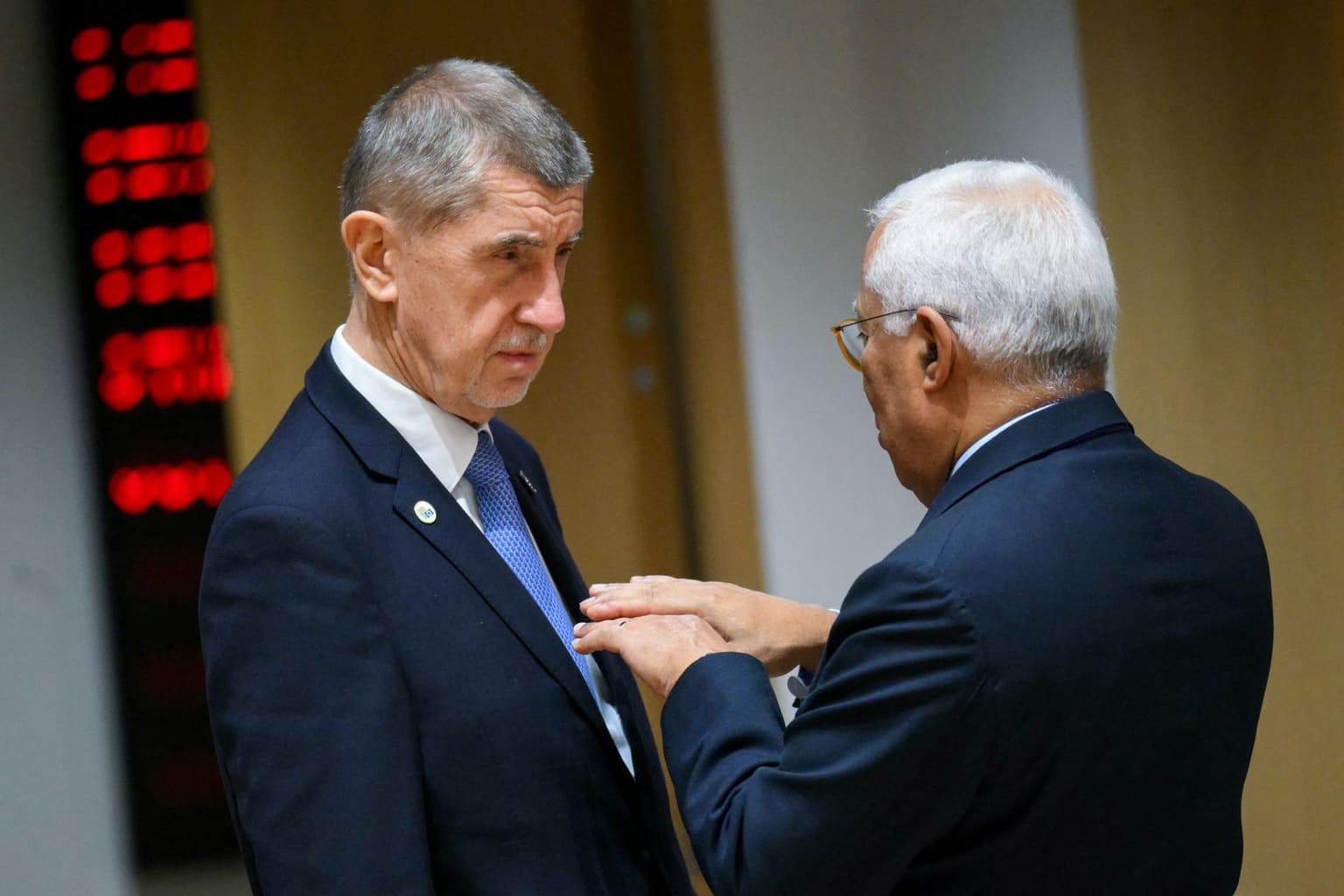
BRUSSELS, Belgium — EU leaders failed to significantly advance key talks on financial support for Ukraine and the bloc's next multi-year budget at Nov. 26-27 summit in Brussels, with four EU countries preventing agreement on a key loan for Kyiv.
For Ukraine, leaders both had to grapple with how to provide long-term financial support in the 2028-2034 budget, as well as approve a 45 billion euro ($49 billion) loan proposed by the European Commission, which would help fill a projected 70 billion euro hole in Kyiv's 2027 budget.
"24 member states supported the proposal... we will revert to this question in December," said European Council President Antonio Costa, at a press conference in the early hours of Nov. 27.
The three hold-out countries among the EU's 27 countries are understood to be Czechia, Hungary, and Slovakia, which have each expressed reservations about the proposed loan.
Costa listed Bulgaria as among the 24, but said they "will participate only on the non-military component, with a focus on regions with its national minority."
The 45 billion euros as proposed by the Commission would be divided between 25 billion euros ($27 billion) on defense needs and 20 billion euros ($22 billion) on wider budgetary support.
But the loan itself functions as a single borrowing action from the EU on the markets. It is not treated as two distinct debts to repay, one for defense spending and one not.
Likewise, there is no clarity on how Bulgaria could only contribute in areas where there is a Bulgarian-speaking minority in Ukraine in practice.
If approved, the loan would be provided to Ukraine's national government, and spent on national spending priorities defined by Kyiv.
Hungary, Czechia, and Slovakia, the remaining hold-outs, hope to repeat the opt-out they secured on a previous EU loan of 90 billion euros ($99 billion), approved for Kyiv in April.
But a long list of leaders made clear ahead of the leaders' summit that they will not support countries opting out of support for Ukraine.
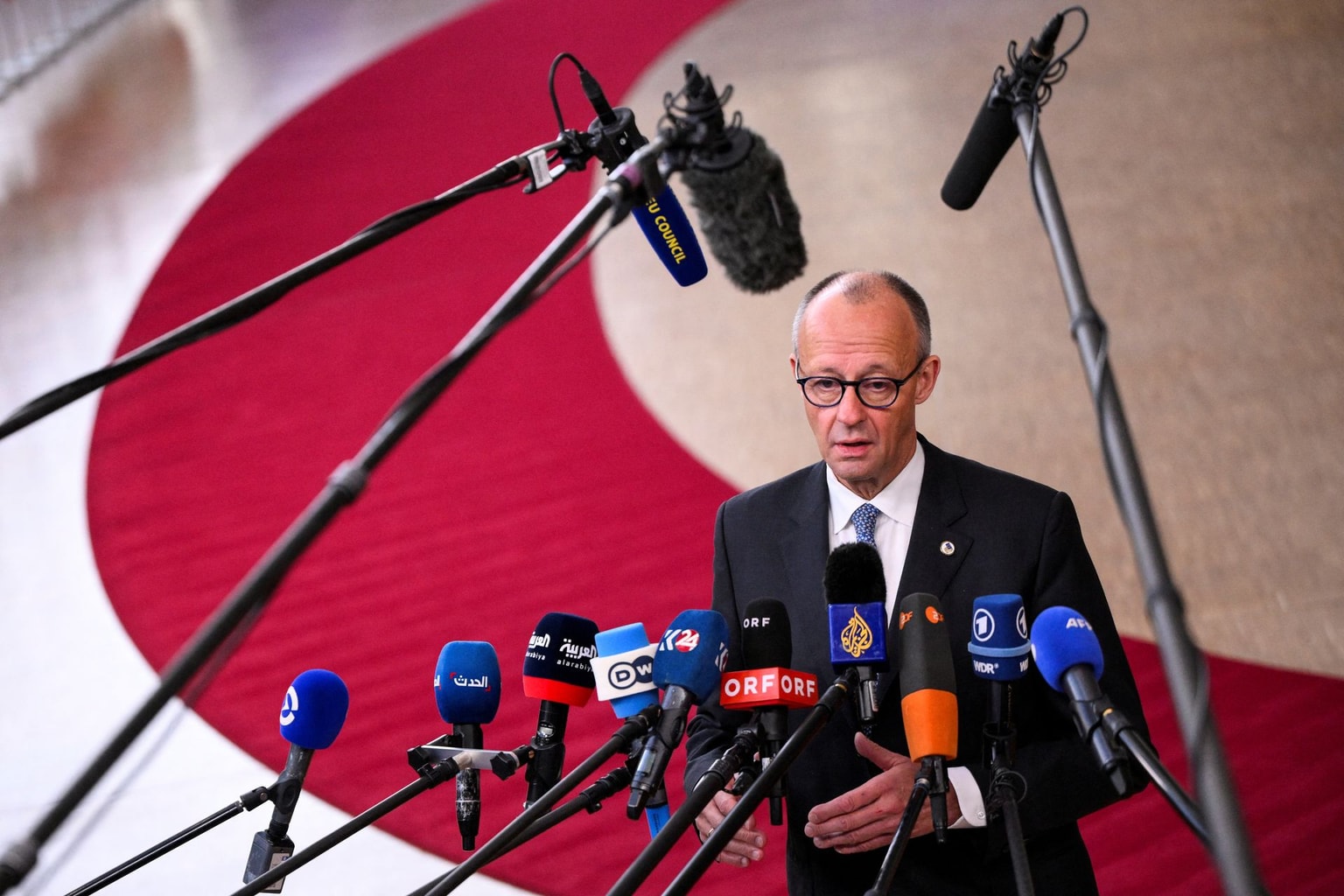
And at the end of the summit, German Chancellor Friedrich Merz repeated his position that "support for Ukraine has to be borne by the European Union, and all of them (member states)."
But Czech Prime Minister Andrej Babis called Merz's attempts to force that position through "completely absurd," in remarks to journalists made ahead of the EU leaders' summit.
The leaders of Hungary and Slovakia, Peter Magyar and Robert Fico, seem to be positioning themselves similarly to Bulgaria.
"Of course there should be solidarity with a country at war, but the member state should decide what the money should go to," Magyar said at a press conference at the end of the leaders' summit.
But while Bulgaria agreed to support the loan, with Sofia supporting only the civilian component, Magyar expressed uncertainty about how that split could work and be upheld.
Fico told Slovakia's European Affairs committee on Nov. 25, the day before the summit, that he also thinks "every country should have the right to express its own form of solidarity with Ukraine."
He called the idea of countries being able to contribute only to the civilian part of the loan "a kind of trick on the part of the Commission."
Countries opting out of military support "are supposed to be satisfied with the fact that they would contribute only to the second part of the loan. But that is not how it works," Fico said.
"It is like an execution, where those who shoot are given blank bullets, but one of them has a live round. You do not know which one has the blank round," Fico added by way of analogy.
The European Commission has not expressed a position on this topic, and drafted the legal text underpinning the loan on the basis that all 27 EU countries would participate.
"I am pleased that there is wide support for our proposal ... now it is in the Council's hand to finalize the work and we will of course be supportive," was all that European Commission President Ursula von der Leyen said on the topic at a post-summit press conference.
Fico also cast doubts on the wider principle of providing financial support to Ukraine.
He said he was not "entirely convinced that giving money to Ukraine is the right thing to do," because of "the massive corruption scandals that regularly shake Ukraine, as well as shocking estimates of how much of this money is actually stolen."
Fico provided no numbers to support his claim.
For the defense spending portion of the loans to Ukraine — which covers two-thirds of the total — Kyiv has to submit shopping lists to the EU before making purchases and provide receipts post-purchase to receive funds.
Fico added that for him, the 45 billion loan is "not a loan in the real sense of the word. It is a pure grant, because the European Commission's documents explicitly state that the loan will be repaid by Ukraine only after Russia pays war reparations to Ukraine."
"We all know very well that nothing of the sort will happen," Fico added.
On this last point, Fico could have a point, though the Commission proposals also mention that in the scenario where Russia does not agree to pay reparations, the more than 200 billion euros in Russian immobilized assets held in the bloc "may" be used.
If those assets are not used in that scenario, the EU would be liable for paying the entire amount.
And for Babis, he expressed fear that the amounts required to support Ukraine in the long run could spiral.
"I want to ask what the goal is. Every year we will pay Ukraine 135 billion euros. Until when? How many years? 10, 20, 30? What kind of strategy is this?" Babis asked, in remarks to journalists made ahead of the EU leaders' summit.