The controversial Ukrainian website deciding who counts as an enemy of state
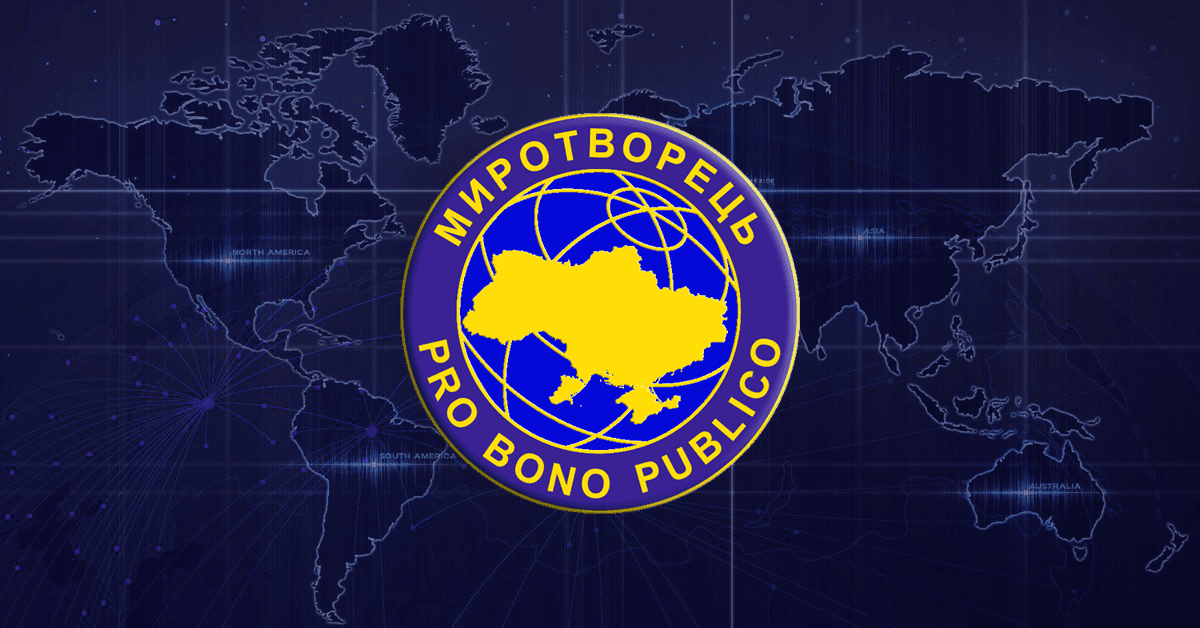
A screenshot of the website of Myrotvorets, a Ukrainian site founded in 2014 that publishes a database of people it says support Russia's aggression against Ukraine. (Myrotvorets)
 on Google
Over the past month, a Ukrainian website's decision to expose Italian lawmakers for their pro-Russian statements has sparked an international scandal.
But the controversy has also highlighted a deeper problem with the website itself.
Founded in 2014 to identify people supporting Russia’s aggression against Ukraine, the Myrotvorets website has evolved into a controversial database with no clearly defined allegiance or transparent methodology.
Alongside genuine Russian collaborators, propagandists, and war criminals, the site has listed pro-Ukrainian journalists, politicians critical of the authorities, and public figures who have consistently opposed Russia’s aggression.
Some of them later received threats and viewed the website as a blacklist designed to intimidate them.
Myrotvorets had previously been accused of having ties to the Ukrainian authorities under ex-President Petro Poroshenko. The administration of his successor, Volodymyr Zelensky, who has himself faced criticism from the site, denies any such links.
Mykyta Poturayev, a lawmaker from Zelensky's Servant of the People party, praised Myrotvorets for identifying genuine pro-Russian figures and war criminals. However, he stressed that "unfortunately Myrotvorets is not a verified source."

"There is no way to independently verify its findings or the information in its database based on its methodology," he said.
"If you want to avoid controversy and have your work taken seriously, you should have a clear procedure for determining who gets added to your database."
Political analyst Volodymyr Fesenko went further, arguing that the controversies surrounding the site meant Myrotvorets "has done more harm than good to Ukraine's interests, particularly its international interests."
Myrotvorets declined to comment. The Kyiv Independent has also requested comment from the President's Office and will publish its response once received.
Italian scandal
In 2017, Myrotvorets added Mateo Salvini, who is now an Italian deputy prime minister from the right-wing Lega party, to its list, due to his support for Russia’s illegal annexation of Ukraine's Crimea and his visit to the occupied peninsula in 2014.
On Nov. 16, 2026, Myrotvorets also listed seven members of the European Parliament from the Italian populist party Five Star Movement.
The lawmakers have made pro-Russian statements and opposed Italian aid to Ukraine.
The decision prompted a backlash from Italy, with Salvini calling for removing Italian citizens from Myrotvorets' database and banning the site. Italian Prime Minister Georgia Meloni has also protested against the move.

Ukraine's Foreign Ministry has argued that Myrotvorets has no links to the Ukrainian authorities.
Salvini's name was removed from the site amid the recent scandal, but the European MPs' names remained.
"These publications can harm us because they spark controversies and unfortunately play into the hands of political forces that may oppose support for Ukraine," Fesenko said. "That support may continue, but it could be scaled back or temporarily suspended. That's exactly what (Russian President Vladimir) Putin wants — to sow discord between Ukraine and Italy."
Poturayev argued that he considers Italy's reaction excessive, but he can "understand it because the incident has undoubtedly been exploited in Italy's budget debate, which does Ukraine no favors."
"Regardless of who currently runs this website, I believe that such crises in relations with the countries of Europe, which are among Ukraine's main donors, are absolutely not in our national interest," he added.
A website out of control
Scandals around Myrotvorets go back to its creation in 2014.
Under Poroshenko, Myrotvorets was accused of having links to the Ukrainian authorities.
Heorhiy Tuka, head of the Narodny Tyl (People's Rearguard) volunteer group helping the military, announced the website's creation in 2014 and said it was one of the group's projects.
Tuka, a long-time Poroshenko supporter, served as governor of Luhansk Oblast from 2015 to 2016 and as deputy minister for the occupied territories from 2016 to 2018.
"Myrotvorets does not deny that I was involved with it," Tuka told the Kyiv Independent. "What Myrotvorets denies, and rightly so, is that I own or control the website or exert any influence over it. I have never run the website or managed its team. But it is a fact that I have supported them in the past and continue to support them today, and I make no bones about it."
Myrotvorets was also actively promoted by Anton Herashchenko, an aide to then Interior Minister Arsen Avakov.
"The Interior Ministry, the Security Service of Ukraine (SBU), intelligence agencies and the Border Guard Service have long used information from the Myrotvorets site to gather intelligence, launch criminal investigations and obtain court orders to detain and arrest separatists and terrorists," Herashchenko wrote in 2014.
Herashchenko declined to comment for the story, while Tuka said Herashchenko was not a founder or owner of Myrotvorets but had also helped its team. Avakov's spokesperson Natalia Stativko declined to comment, and Poroshenko's spokesperson Sviatoslav Tsegolko did not respond to a request for comment.

Given Myrotvorets' initial support for Poroshenko and opposition to Zelensky, it is not clear if it has cooperated with the authorities since the latter became president in 2019.
"When the website was set up, I think there were some ties (between Myrotvorets and) the Ukrainian authorities," Fesenko said. "That's when the perception emerged that the website was a tool of the Ukrainian authorities. I think the ties persisted for a while, including during the early years of Zelensky's presidency, when Avakov was still a minister."
Avakov was interior minister until 2021.
Myrotvorets has denied being run by Tuka or Herashchenko or being linked to Poroshenko, Avakov or the Ukrainian authorities in general.

Currently, Myrotvorets is headed by Roman Zaitsev, who says he is a former Security Service (SBU) employee. Zaitsev denied having links to or working with the government.
The Kyiv Independent has requested comments from the SBU and military intelligence (HUR) and will publish their responses once they are received.
Targeting journalists and critics under Poroshenko
In 2016, Myrotvorets prompted a scandal by publishing the names and personal data of thousands of Ukrainian and foreign journalists accredited in Russia and with Russian proxies in eastern Ukraine, accusing them of collaboration with the Kremlin. Specifically, journalists from Reuters, BBC, CNN, Agence France-Presse, Associated Press and other international outlets, as well as Roman Tsymbaliuk, a Ukrainian journalist critical of the Kremlin, were affected.
The Committee to Protect Journalists condemned the publication, interpreting it as an assault on free speech.
At the time, Myrotvorets was also accused of being used as a political tool by Poroshenko and Avakov.
Ex-Georgian President Mikhail Saakashvili's name was added to Myrotvorets' database in 2017 for allegedly illegally crossing the Ukrainian border and preparing a "coup d'etat" against the Ukrainian government.

Saakashvili, a pro-Western politician and one of Putin's most prominent foes, moved to Ukraine in 2015 but later fell out with then President Poroshenko. He also accused Poroshenko and Avakov of corruption.
Saakashvili was stripped of his Ukrainian citizenship, prosecuted and then deported by the Ukrainian authorities in 2018 in what he believes to be an unlawful political vendetta.
He returned to Georgia in 2021 and was jailed by the Georgian authorities in what he also believes to be political persecution.
During the 2019 presidential election campaign, Myrotvorets added to its database Olena Zelenska, the wife of then presidential candidate Volodymyr Zelensky. She was listed for reposting in 2014 a post by the Russian propaganda outlet LifeNews offering a reward for video footage of Ukrainian troop movements.

The move was widely seen as an attempt to help Poroshenko win the election.
Zelenska explained that she had shared the post to express outrage at Russian propaganda, but Facebook at the time often hid comments accompanying reposts from the feed. Her other posts during this period were pro-Ukrainian and critical of Russia’s aggression.
Myrotvorets removed Zelenska from its database the next day.
Controversies during Zelensky's presidency
The controversies continued under Zelensky.
In 2020, Ukrainian investigative journalist Denys Bihus was also added to the database for allegedly "undermining trust in Ukrainian state institutions" and spreading "false information."

The decision to list Bihus followed his media outlet's high-profile investigations into the alleged corruption of Poroshenko, Avakov and Zelensky allies.
In 2022, Myrotvorets also listed Sevhil Musayeva, chief editor of Ukrainska Pravda, saying that her media outlet had published a story according to which a former Ukrainian human rights ombudsman had made up some Russian war crimes in addition to reporting their genuine war crimes. Musayeva also received death threats at the time.
Musayeva and Ukrainska Pravda have consistently supported Ukraine and opposed Russia’s aggression. The outlet has been under constant pressure from both the Poroshenko and Zelensky administrations as it criticized top-level corruption.

"(The reason behind the move) was their criticism of the authorities, which the administrators of the Myrotvorets website perceived as an attack on Ukrainian statehood," Yaroslav Yurchyshyn, a lawmaker from the Holos opposition party, told the Kyiv Independent.
"This once again demonstrates that, while Myrotvorets' ties to the Ukrainian authorities may not be entirely direct, they certainly exist, as critics of the government can also end up on the Myrotvorets list."
Yurchyshyn also argued that "a website of this nature, with this kind of content, cannot be off the radar of the security services."
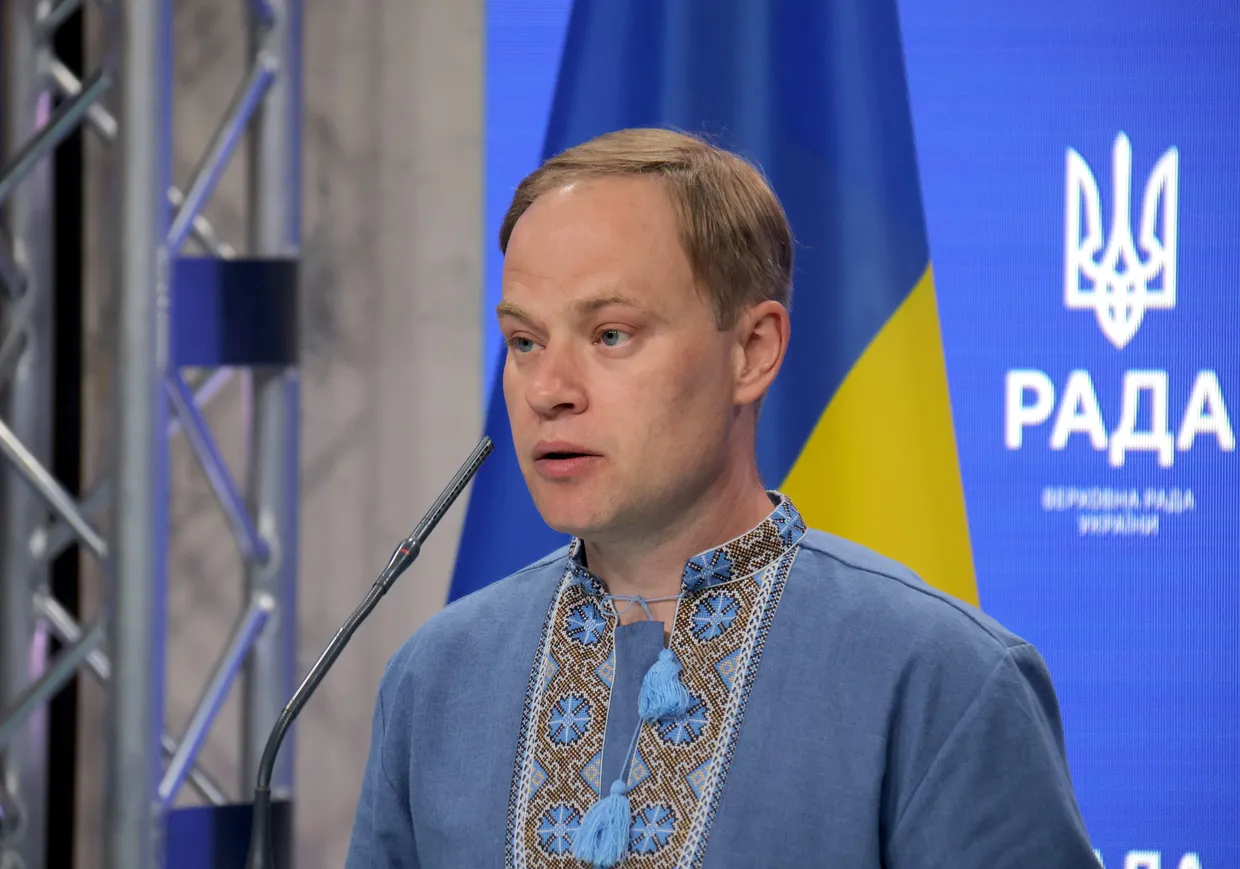
"If they know about it but take no action to prevent provocations like the one we saw on that occasion or to protect journalists' rights, that raises questions," he added.
"Putting journalists on a list of alleged Russian agents under martial law is a form of pressure and could amount to intimidation. Given the lack of action, I conclude that the website must have some ties to law enforcement agencies, if not to the security services themselves."
Possible solutions
Analysts and lawmakers argue that, to address the controversies around Myrotvorets, the authorities should first identify the site's owners.
Poturayev said that there are no legal grounds to ban Myrotvorets but argued that he had long pushed for greater transparency concerning the owners of Ukrainian websites.
"We simply don't know who is behind this site or why these people have monopolized and effectively appropriated the authority to act on behalf of the state, labeling people as enemies of Ukraine, essentially branding them with a black mark," Fesenko said.
"The public deserves to know who these people are and why they have taken it upon themselves to perform this function."
Yurchyshyn also argued that "Myrotvorets definitely needs to be brought within some kind of regulatory framework."
"Its owners should be identified, and the website should be registered as a media outlet," he said. "We could then look at mechanisms for holding it accountable, particularly when it comes to verifying information and ensuring its accuracy."