Days before key summit, EU countries want to help Ukraine, but can't agree on how
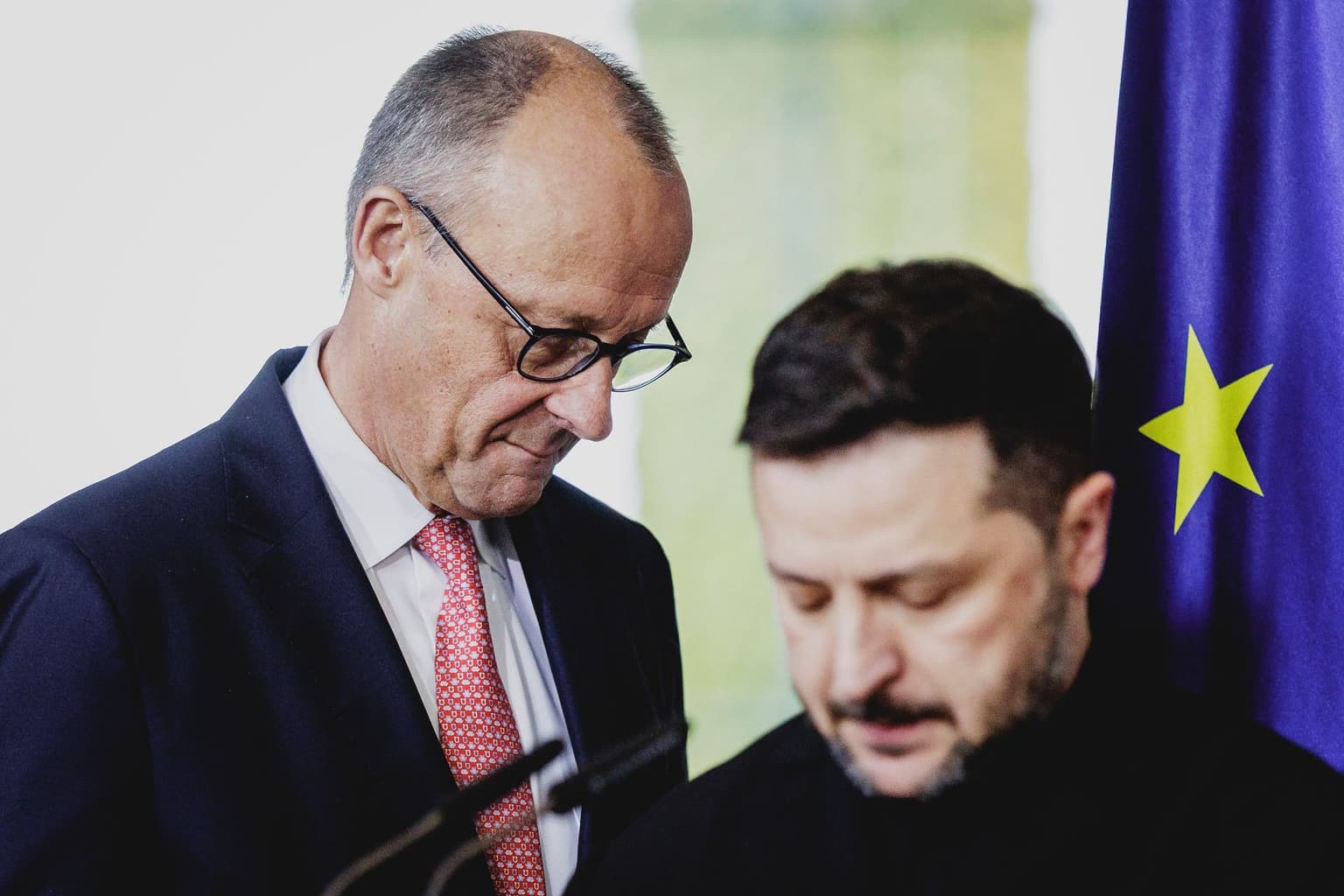
German Chancellor Friedrich Merz and President Volodymyr Zelensky during a joint press conference in Berlin, Nov. 3, 2026 in Berlin, Germany. (Florian Gaertner/Photothek via Getty Images)
 on Google
BRUSSELS, Belgium — Ukraine support has emerged as a rare point of consensus for EU countries otherwise at loggerheads over the future size and shape of the bloc's next long-term budget, but confusion reigns over every aspect of that support for Kyiv, according to several dispatches back to national capitals seen by the Kyiv Independent on Nov. 24.
EU leaders are set to meet Nov. 26-27 to discuss long-term financial support for Ukraine, and the bloc's budget for 2028-2034, but national ambassadors held a first discussion on Nov. 24.
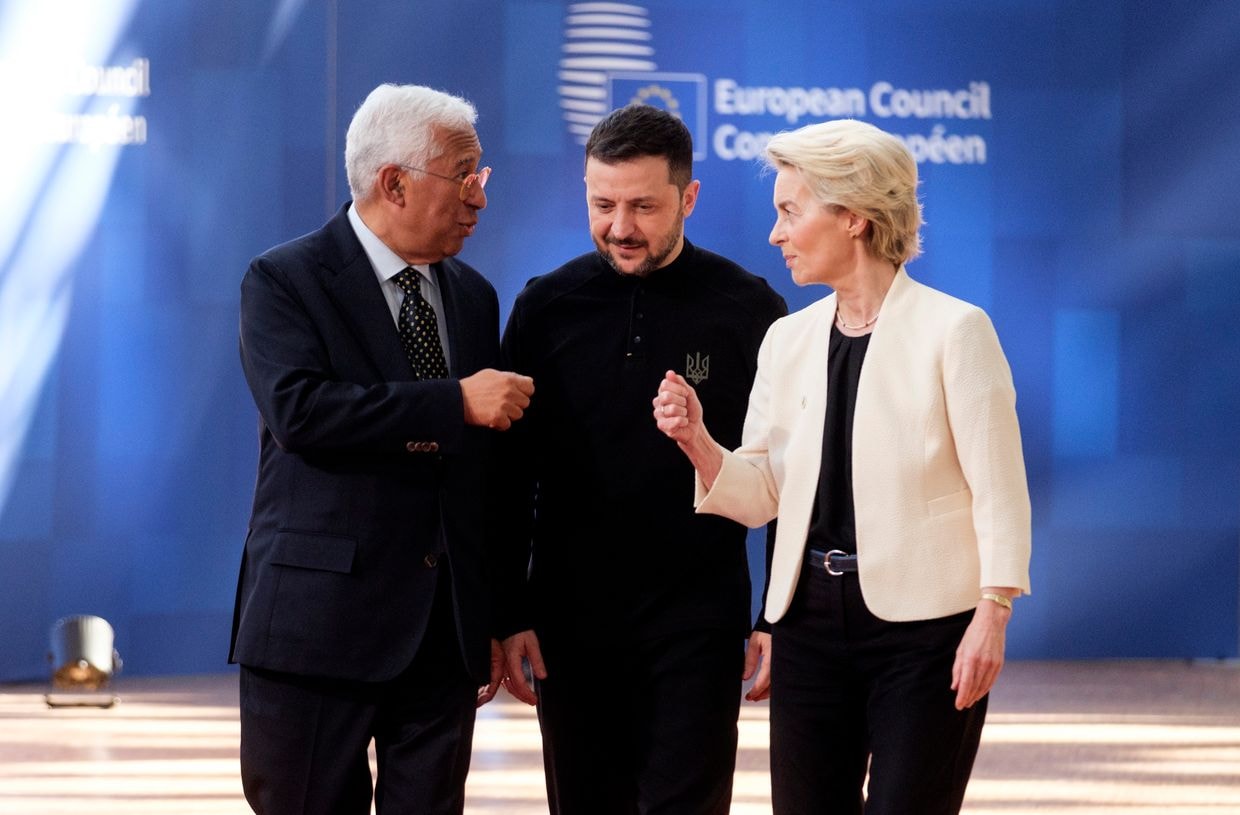
Feeding into that discussion were a new European Commission proposal to lend Kyiv 45 billion euros ($49 billion) in 2027, and a new compromise budget proposal by European Council President Antonio Costa.
One EU country's notes back to its national capital read that there was "broad recognition" of the need for an agreement on financing Ukraine, and no country seems to outright oppose the 100 billion euros earmarked for Kyiv in the budget proposal.
But that's where agreement seems to end.
Another country's notes, confirmed by a second EU country, mention Estonia saying the 100 billion euros ($110 billion) foreseen would be an "absolute minimum," but for some countries what that total would and would not include was unclear.
The latest budget proposal says the "borrowing cost subsidy" — interest payments on EU loans to Ukraine — would be provided "in addition" to the ceilings foreseen in the budget.
Put plainly, the budget would allocate 100 billion euros for Ukraine, and any interest payments the bloc pays on other loans it has given to Kyiv would be paid separately from that amount.
But two sets of national notes mention Italy and Bulgaria as questioning if that was really the case.
The answer to that question, which can only be conclusively determined unanimously by EU countries, is the difference between more than half of the proposed amount being immediately consumed by servicing debt, or not.
A separate European Commission analysis, first reported on by the Kyiv Independent, expects 55.4 billion euros needed to cover interest payments on existing loans to Ukraine during the next budget cycle.
But if the 55.4 billion euros are to be paid separately, nowhere is it specified exactly how.
In the member state discussions, Austria is said to have rejected creating a bespoke special instrument for this, even as they advocated "robust, multi-year" support for Ukraine.
Finland backed the Austrian position on the need for all countries to step up, a position that has also been publicly expressed by German Chancellor Friedrich Merz.
Though here too, not all countries necessarily agree.
Three EU countries: Hungary, Czechia, and Slovakia, opted out of the EU's 90 billion euro ($99 billion) loan to Ukraine, finalized in April.
EU diplomats expected Bulgaria to join that group of four for the latest 45 billion-euro proposal.
But publicly, only Slovakia's Prime Minister Robert Fico has spoken out, while claiming that Hungary shares his view.

Czech Prime Minister Andrej Babis ruled out contributing to new borrowing for Ukraine as well, but that at the last leaders' summit in October, before the latest proposal was made.
The notes seen by the Kyiv Independent seem to paint a more nuanced picture.
Hungary is described as having "reservations," by one country, while another said Hungary and Czechia each emphasize that it is for heads of government to decide if they will help cover Ukraine's loan costs.
The same two countries were mentioned, alongside possibly Greece and Slovenia — according to one country's notes — as wanting to ensure the conversations on support for Ukraine and the wider EU budget, would be kept separate.
However, Merz had previously suggested the two issues should move together, and in the meeting that position was apparently supported vocally by Sweden.
And as to when EU countries might be able to agree on everything, the end-of-2026 deadline still seems to be the consensus.
The bloc really wants to avoid making the budget and Ukraine support hostage to election campaigns taking place in several countries through 2027.
However, France apparently warned in the Nov. 24 meeting that political pressure was mounting in Paris not to agree to any deal before the country's April presidential election.
If negotiations continue into January, then for Paris an agreement before the election will no longer be possible.