Ukraine advances EU membership bid with 4 of 6 integration to-do lists unlocked
 on Google

Editor's note: this article was updated with comments made at a press conference following the opening of the two enlargement clusters.
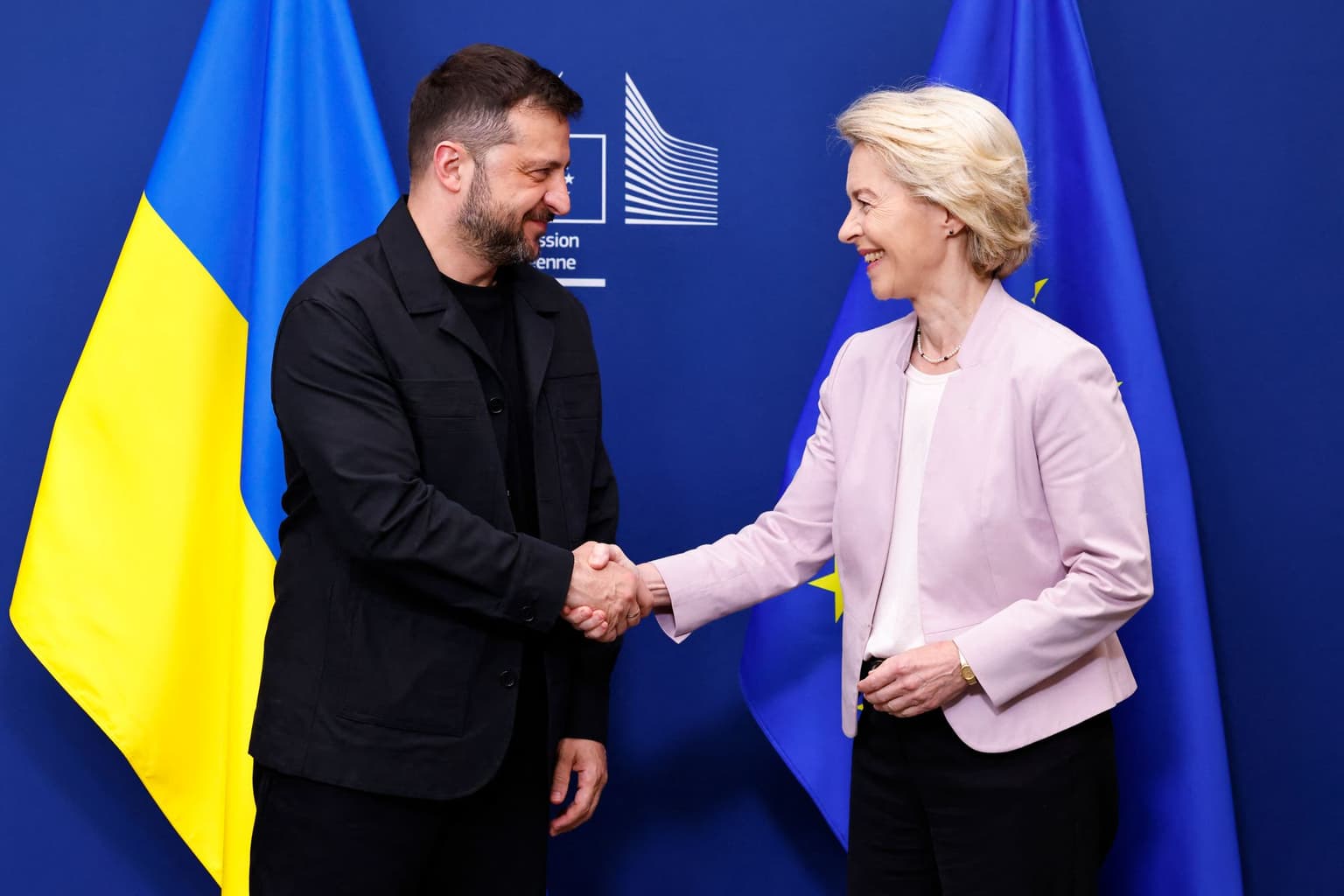
LUXEMBOURG — Ukraine celebrated the opening of two more EU enlargement clusters at a ceremony in Luxembourg on Oct. 13, a key milestone in the process to eventually become a member state.
Ukraine and Moldova have been advancing their EU membership bids in tandem and are currently trying to open all six of the bloc's enlargement clusters — to-do lists of reforms that must be completed to join the bloc.
"We welcome the continued momentum on Ukraine's candidacy, now the majority of clusters are open, following a prolonged period without movement," said Thomas Byrne, Ireland's Europe Minister, who is chairing enlargement discussions until the end of 2026
On Oct. 13, Ukraine and Moldova unlocked clusters 2 and 3, titled "internal market" and "competitiveness" respectively. They are the two largest clusters by number of policy files.
"Behind these technical names will be real benefits for Ukrainians," said the EU's Enlargement Commissioner Marta Kos.
Among the benefits Kos mentioned: more support for businesses, better working conditions, better consumer protection, and more investments and jobs.
"Ukraine is fully committed to the reforms required for membership and intends to move through this work as quickly as possible," said Deputy Prime Minister for European Integration Vsevolod Chentsov.
The move was made possible the day after the Verkhovna Rada, Ukraine's parliament, passed a law bolstering the rights of the country's Hungarian-speaking minority — a demand that Hungary had said must be fulfilled before it would allow further progress.
In June, Kyiv and Chisinau opened the first cluster, on the rule of law, followed by another on external relations in July.
That leaves only two clusters remaining to be opened, which the European Commission and the Irish Council Presidency of the EU hope to be done with by the end of 2026.
The two remaining clusters risk being harder to get through, as they encompass sectors of the economy such as agriculture and transport, where Ukraine has a competitive edge, and some EU countries fear losing out.
However, two potential opponents, France and Poland, reiterated their support on Oct. 13 for opening all six clusters.
On Oct. 6, the European Commission issued a set of proposals on the future of EU enlargement, which also suggested that Ukraine's agricultural sector would require special treatment, to be handled during the enlargement process rather than used as a block on progress.
Kos told the Kyiv Independent ahead of the opening of the clusters that "once Ukraine will be so far that we will think of what will go in the accession treaty, we will put down the solutions for both sides."
Kos was clear that the process needs to both protect European farmers and help Ukraine export to feed the world, all while Kyiv adopts EU standards.
But Kos' mention of the accession treaty, which is only being drafted near the very end of the EU enlargement process, indicates that she does not expect the strength of Ukraine's agricultural sector to be used as a reason to block progress at this stage.