Ukraine's parliament passes minority schools bill to appease Hungary, advance EU talks
 on Google
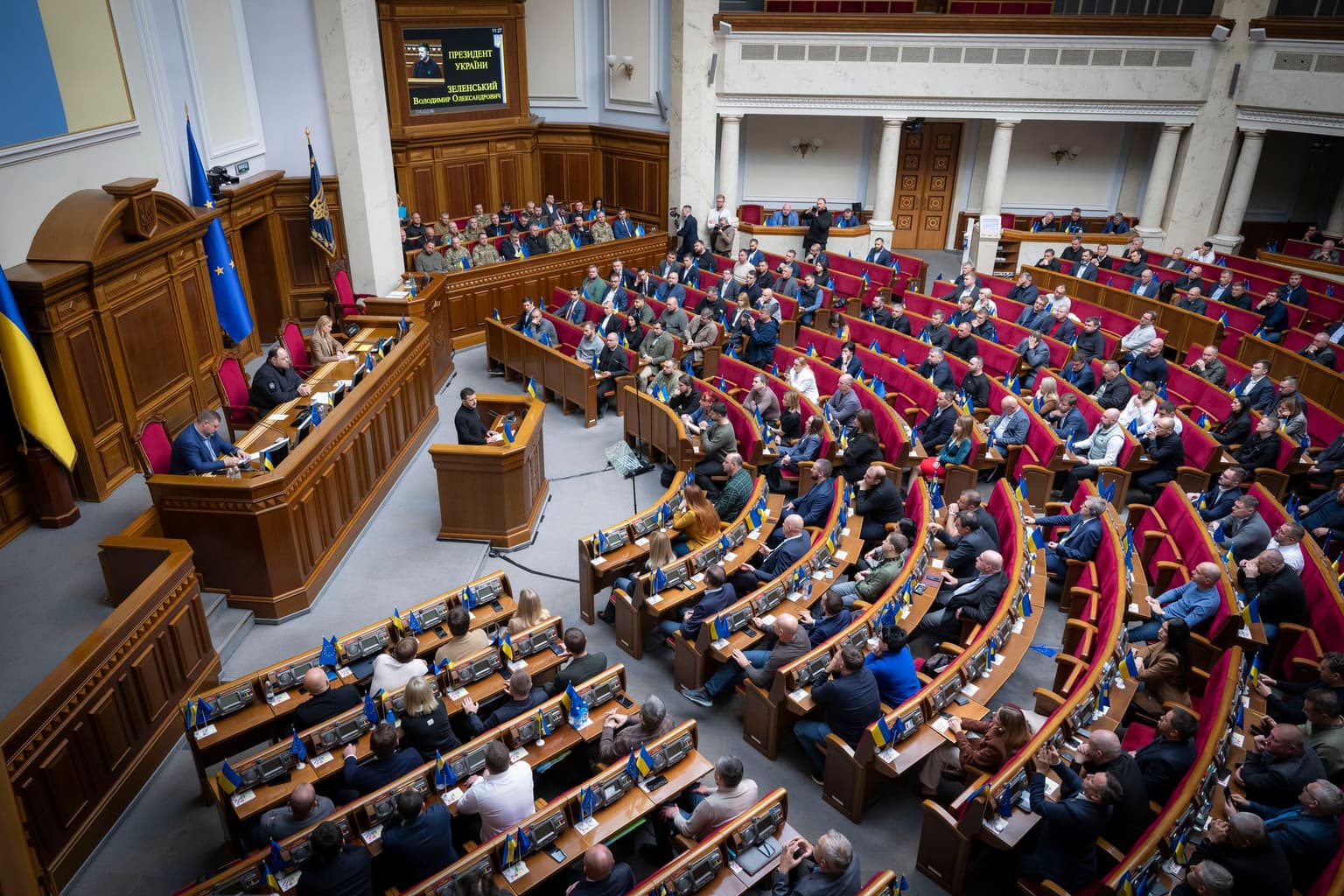
The parliament on Oct. 12 passed a bill reinforcing the educational rights of Ukraine's national minorities, a step that Hungary demanded before allowing Kyiv's EU talks to move forward.
The vote paves the way for the EU to formally open two more accession clusters with Ukraine and Moldova at a meeting in Luxembourg on Oct. 13.
The bill passed with the support of 266 lawmakers, according to lawmaker Yaroslav Zhelezniak. It still requires a presidential signature to become law.
The law would give Ukraine's Hungarian-speaking community and other EU-language national minorities more room to use their language in education. Roughly 80,000 ethnic Hungarians live in Ukraine's westernmost Zakarpattia Oblast.
According to the new legislation, schools where more than 50% of pupils study in the relevant minority language may be granted special status, and the head or deputy head of such a school must be proficient in that language, among other measures outlined in the bill.
The bill "is the result of the bilateral agreement, which we negotiated with the Ukrainian side in May and June," Hungarian Foreign Minister Anita Orban told journalists ahead of a foreign ministers' meeting in Luxembourg, calling the legislation a step toward advancing Kyiv's EU talks.
"I would like to take this opportunity to thank everyone on both sides, Hungarian and Ukrainian experts and politicians, who made this possible," the minister said ahead of the parliament's vote.
The bill covers official EU languages but not Russian, reflecting Kyiv's ongoing push to remove Russian from official and public spaces and counter decades of Moscow-imposed Russification.
Hungary's Kremlin-friendly former Prime Minister Viktor Orban spent years blocking Ukraine's EU accession talks, claiming Kyiv failed to protect the rights of its Hungarian minority.
The victory of Peter Magyar's pro-European Tisza party in the Hungarian parliamentary elections in April provided new impetus to resolve the issue.
In early summer, Kyiv and Budapest announced an agreement on the educational, linguistic, and cultural rights of Ukraine's Hungarian minority.
Hungary then lifted its veto on Kyiv's EU accession talks, allowing the launch of clusters one and six — lists of reforms focused on democratic institutions and the rule of law, and on external relations, respectively — in June and July.
The agreement also allowed Moldova's accession talks to move forward, as the EU has politically linked the membership bids of Kyiv and Chisinau.
But Budapest later blocked the launch of additional clusters until Kyiv begins implementing changes under the agreement, starting with educational rights.
Ukraine expects that the passage of the law will help unblock two more clusters, addressing internal market and competitiveness — a step that was preliminarily cleared by EU envoys on Oct. 7.
Ambassadors of the 27 EU countries must now decide whether to open the next clusters at a meeting of permanent representatives later on Oct. 12.
A European diplomat told the Kyiv Independent that unless Budapest raises any new concerns regarding the vote, it is broadly expected that the envoys will reach a consensus.
This will clear the way for the formal opening of the clusters at the Intergovernmental Conference on Oct. 13.
Kyiv aims to have all six accession clusters open by the end of the year.