Ukraine war latest: Ukraine pushing to produce homegrown ballistic defense system 'within a year,' Zelensky says
 on Google
Key developments on April 20:
- Ukraine pushing to produce home-grown ballistic defense system 'within a year,' Zelensky says
- Russian preschools, schools, universities have spent over $213 million on 'educational' drones since 2022, media reports
- Top Defense Ministry advisor injured in allegedly targeted Russian drone strike
- Europol hackathon identifies 45 more Ukrainian children forcibly deported to Russia
- Ukraine's long-range strikes inflicted billions of dollars in Russian oil revenue losses in March, Zelensky says
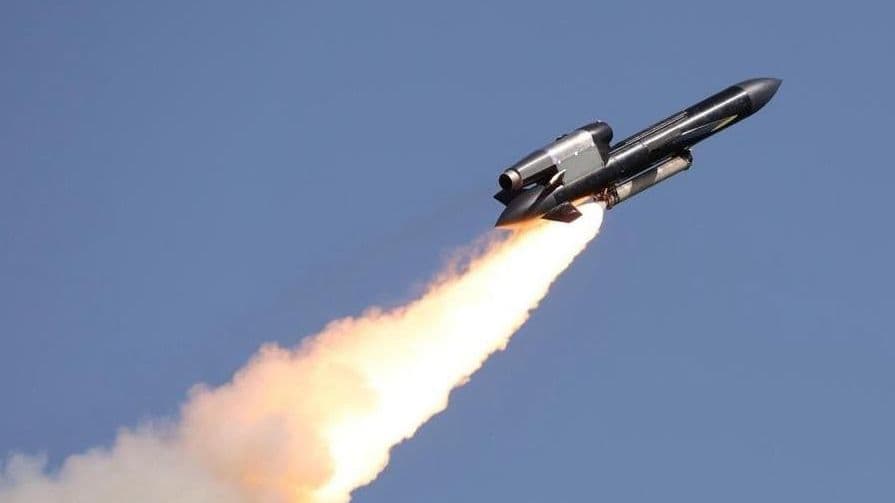
Ukraine, with support from its European partners, aims to develop an anti-ballistic missile air defense system "within a year," seeking to reduce its reliance on the U.S.-made Patriot system, President Volodymyr Zelensky said on April 19 on national television.
Kyiv's intention to pursue such a system is not new, but the announcement marks the first time officials have attached such an ambitious timeline to the effort.
"I believe, and my idea is that we should have a European anti-ballistic missile defense system. We are in talks with several countries and are working in this direction," Zelensky said.
"We need to build our own anti-ballistic missile defense system within a year."
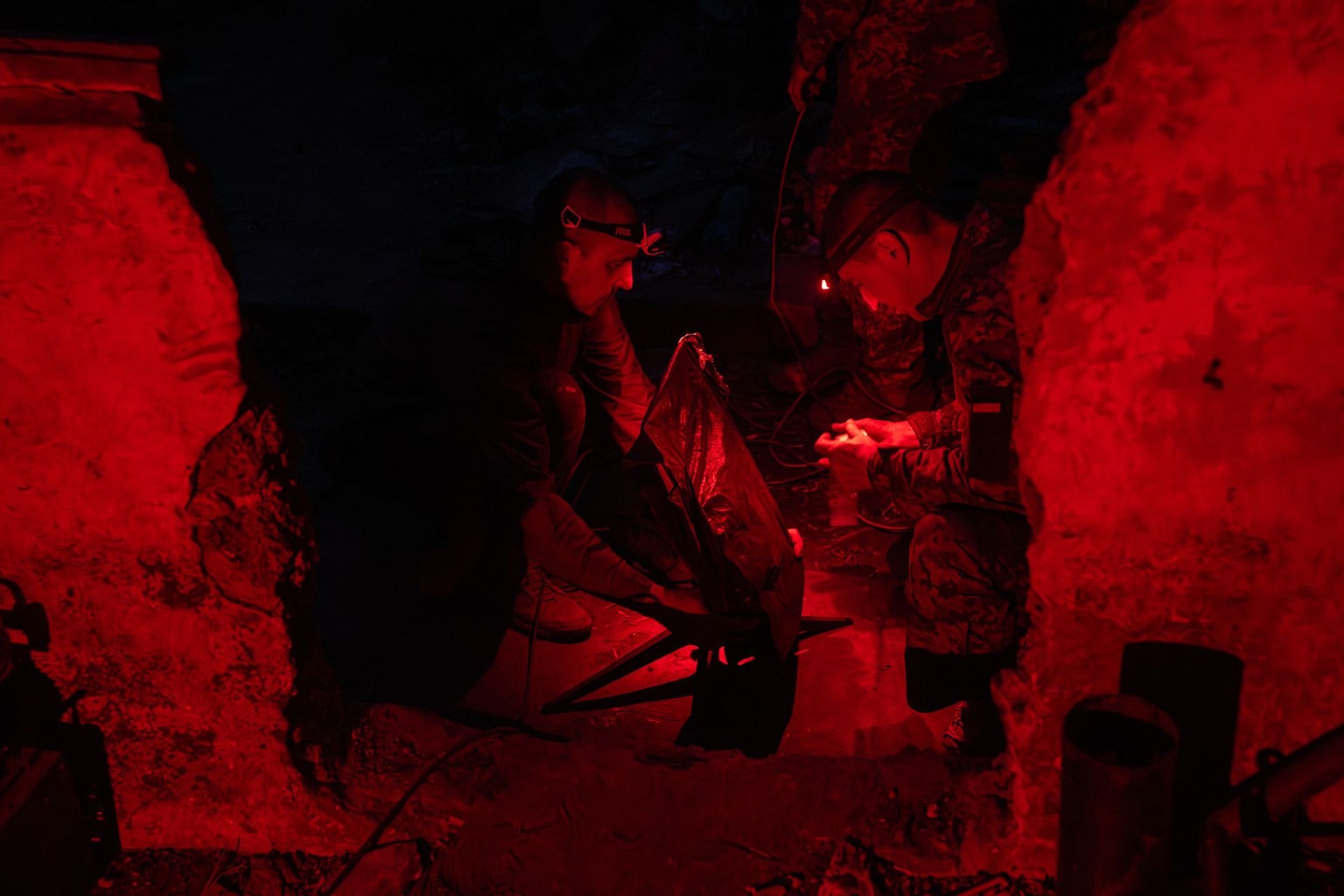
On April 6, Ukrainian defense giant Fire Point announced plans to produce a low-cost Patriot alternative by the end of 2027.
Fire Point, which also produces the Flamingo cruise missile, is developing new Ukrainian ballistic missile models, a technology that Ukraine has so far been unable to produce at scale.
Zelensky acknowledged the challenge but said producing such a system within a year was "realistic," arguing the primary constraint is access to key components.
First delivered to Ukraine under the Biden administration in spring 2023, the advanced Patriot remains the only surface-to-air missile system in Ukraine's arsenal capable of countering Moscow's ballistic missile threat.
After a mass missile attack pounded Ukraine on April 16, Zelensky tasked the commander of the Air Force to contact those of Ukraine's partners who had promised more interceptor missiles, including for the Patriot system.
"It is important to fulfil every promise of aid to Ukraine on time," Zelensky wrote.
Russian preschools, schools, universities have spent over $213 million on 'educational' drones since 2022, media reports
Russian educational institutions — all the way from universities down to preschools — have spent a total of over sixteen billion rubles ($213 million) on drones of various shapes and sizes for "educational purposes," Russian independent media outlet Novaya Gazeta Europe reported on April 20.
The figure, calculated in an investigation by the outlet, comes as Russia continues to militarize its society, with a specific focus on children, preparing the next generations for joining the country's future wars.
Before the full-scale war, the figure for drones bought stood at only 350 million rubles (around $4.7 million at current rates) per year, the piece wrote, with most of that sum coming from technical colleges.
Now, drones are being bought even by kindergartens, including the "Little Light" preschool in Tyumen Oblast, and the "Pearl" kindergarten in the far eastern city of Yuzhno-Sakhalinsk.
While schoolchildren are often taught how to fly drones at a young age in Russia, the article pointed out that it is not possible to determine what exactly the drones bought would be used for.
One of the main recipients of contracts to provide educational institutions with drones, the article wrote, was St Petersburg company Geoscan, linked directly to a foundation chaired by none other than Yekaterina Tikhonova, daughter of Russian president Vladimir Putin.
Moscow's effort to militarize and indoctrinate its young people into preparedness to fight Ukraine and Russia's other "enemies" in the West continues to deepen, also reaching Russian-occupied territoriesinside Ukraine and the Ukrainian children living there.

Top Defense Ministry advisor injured in allegedly targeted Russian drone strike
Military communications expert and Defense Ministry advisor Serhii Beskrestnov was injured in what he said was a targeted Russian drone strike on his home outside Kyiv overnight on April 20.
Four jet-powered Shahed-type drones targeted Beskrestnov's home in Kyiv Oblast, he wrote on Facebook the following morning, posting a defiant selfie from hospital. He did not disclose the severity of his injuries.
"This is the first time I've seen the enemy try to eliminate someone using Shahed-type drones in such a targeted manner," Beskrestnov said on national television.
Earlier, Kyiv Oblast authorities reported that a 51-year-old man, the same age as Beskretnov, had been injured in a drone attack and was in stable condition.
Ukrainian forces shot down two drones using interceptors, but two others reached the outskirts of Kyiv, Beskrestnov said. Beskrestnov added that his house and cars were destroyed in the attack.
The Defense Ministry advisor also said there is already confirmation that the drones were controlled from Russia, adding that, according to his data, about 20% of Russian Shahed-type drones are controlled online via a mesh network.
Better known by his callsign "Flash," Beskrestnov is the owner of the popular Telegram channel "Serhii Flash: Everything About Technology," where he writes about important new developments in drones, communications, electronic warfare, and other technologies used by both sides on the battlefield.
In January 2026, Beskrestnov was appointed as an advisor to Ukraine's Defense Minister Mykhailo Fedorov, specializing in technology issues.
If Beskrestnov's claims are correct, the attack would be a rare case of an almost successful Russian assassination attempt on a senior Ukrainian official.
Ukraine's security services, in contrast, have carried out several successful assassination operations inside Russia, including that of General and chemical weapons specialist Igor Kirillov, who was killed by an exploding scooter in late 2024.
Europol hackathon identifies 45 more Ukrainian children forcibly deported to Russia
An international open-source investigation coordinated by Europol in The Hague has uncovered information on 45 children who were forcibly transferred or deported by Russia from occupied areas of Ukraine, the organization said on April 20.
The two-day operation, held on April 16-17, brought together 40 experts from 18 countries, alongside the International Criminal Court and several non-governmental partners.
According to Europol, the team produced 45 reports containing leads that could help locate the children and identify people or structures involved in their transfer.
The material gathered includes possible transportation routes, individuals who may have enabled the deportations such as orphanage directors, military units that may have assisted, camps or facilities where children were taken, and online platforms that may contain photographs of the children.
Investigators also collected information suggesting that some deported children may now be linked to Russian military units.
Europol's hackathon is part of a wider effort to document and investigate the deportation of Ukrainian children from occupied territories to Russia and Belarus.
The agency said the digital investigation techniques used during the event are designed to support ongoing Ukrainian investigations by turning scattered online traces into actionable leads.
Ukrainian authorities say more than 19,500 children have been forcibly removed since Russia's full-scale invasion began in 2022.
This was the third such Europol-led event, and the second specifically focused on Ukrainian children who were forcibly transferred or deported.
read also
Ukraine's long-range strikes inflicted billions of dollars in Russian oil revenue losses in March, Zelensky says
Ukrainian estimates show that long-range strikes on Russian oil infrastructure inflicted at least $2.3 billion in lost oil revenue for Russia in March alone, President Volodymyr Zelensky said on April 19.
"I am grateful to all our warriors for their precision," Zelensky said in his evening address. "We will continue this work in April," Zelensky said just one day after Ukraine's military struck another four oil industry facilities overnight on April 18.
Ukraine has increased strikes on Russian oil infrastructure in recent months, as it aims to reduce the Kremlin's most important revenue source — given a boost by the skyrocketing oil prices that have followed the war in Iran.
In March, long-range Ukrainian drone attacks and shadow fleet tanker seizures reportedly disabled about 40% of Russia's oil export capacity.
Brent crude oil, a widely used global benchmark, rose to near $120 a barrel in March, prices last seen in 2022 after Russia's full-scale invasion of Ukraine. Prices fell by 10% to below $90 a barrel on April 17, after the ten-day ceasefire between Israel and Lebanon came into effect.
Despite increased Russian oil profits, the U.S. Treasury Department extended the temporary waiver on Russian oil sanctions on April 17 allowing countries to purchase Russian oil stranded at sea until May 16. The Trump administration has justified the waivers as a measure to alleviate surging oil prices following the U.S.-Israeli war in Iran.
The International Monetary Fund (IMF) on April 14 upgraded Russia's growth forecasts for 2026 by 0.3% off the back of higher energy prices. The fund now forecasts that Russia's economy will grow by 1.1% in 2026.
"The main driver of the upgrade to Russia's growth this year comes from an increase in the price of oil and gas," Alfred Kammer, director of the European Department at the IMF, said during a press conference on Europe's economy on April 17.
Note from the author:
Ukraine War Latest is put together by the Kyiv Independent news desk team, who keep you informed 24 hours a day, seven days a week. If you value our work and want to ensure we have the resources to continue, join the Kyiv Independent community.