Ukraine's long-range strikes inflicted billions of dollars in Russian oil revenue losses in March, Zelensky says
 on Google
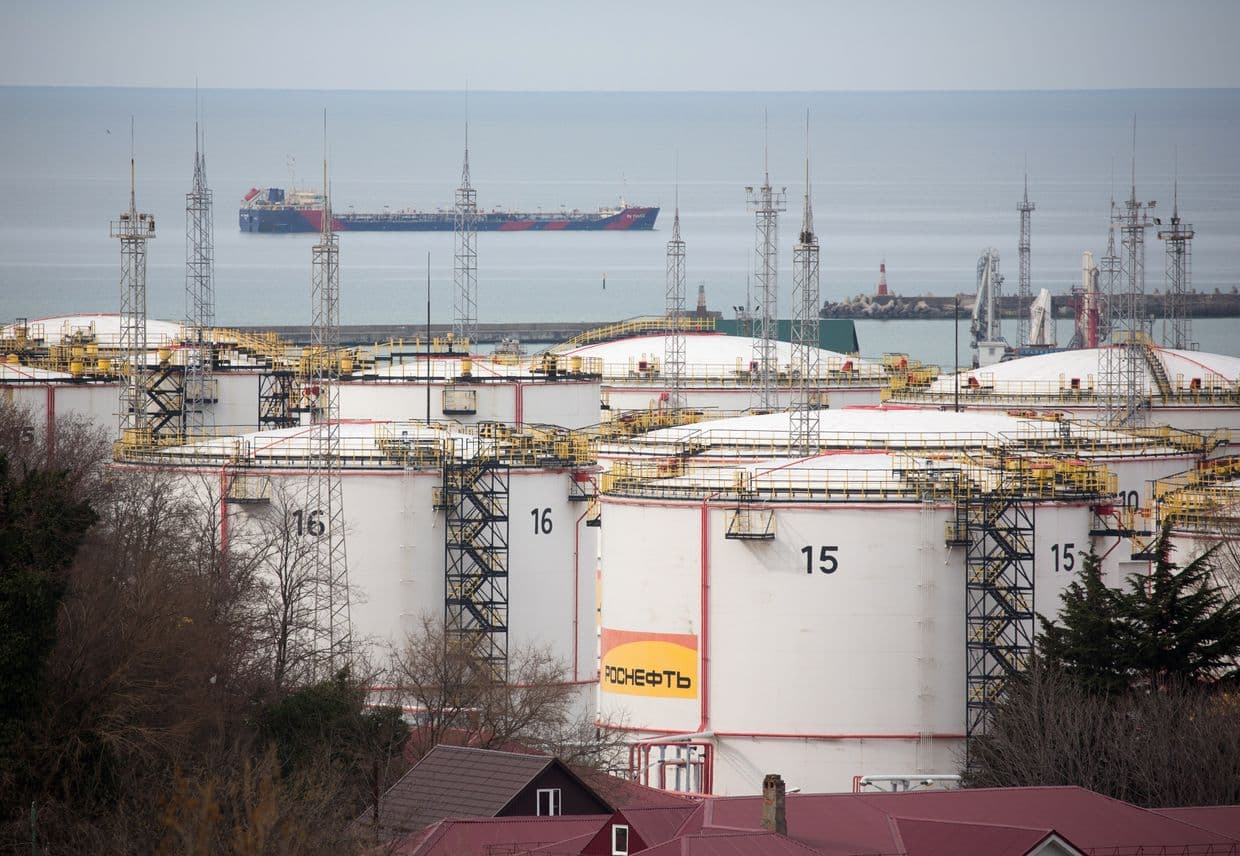
Ukrainian estimates show that long-range strikes on Russian oil infrastructure inflicted at least $2.3 billion in lost oil revenue for Russia in March alone, President Volodymyr Zelensky said on April 19.
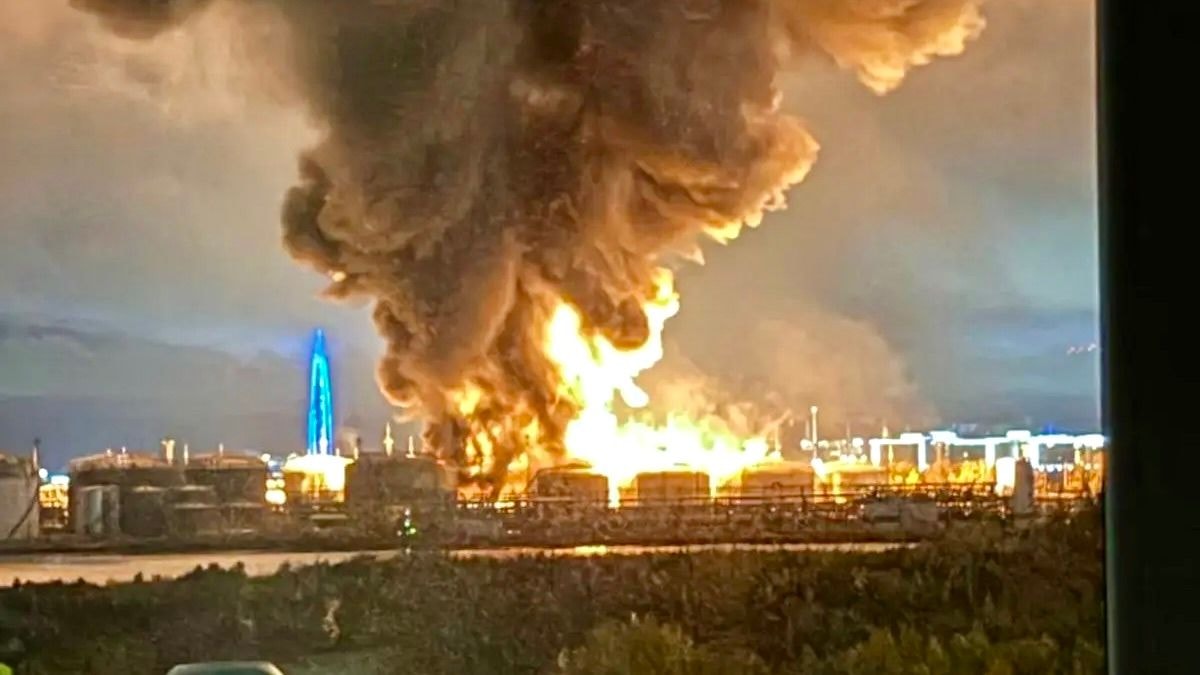
"I am grateful to all our warriors for their precision," Zelensky said in his evening address. "We will continue this work in April," Zelensky said just one day after Ukraine's military struck another four oil industry facilities overnight on April 18.
Ukraine has increased strikes on Russian oil infrastructure in recent months, as it aims to reduce the Kremlin's most important revenue source — given a boost by the skyrocketing oil prices that have followed the war in Iran.
In March, long-range Ukrainian drone attacks and shadow fleet tanker seizures reportedly disabled about 40% of Russia's oil export capacity.
Brent crude oil, a widely used global benchmark, rose to near $120 a barrel in March, prices last seen in 2022 after Russia's full-scale invasion of Ukraine. Prices fell by 10% to below $90 a barrel on April 17, after the ten-day ceasefire between Israel and Lebanon came into effect.
Despite increased Russian oil profits, the U.S. Treasury Department extended the temporary waiver on Russian oil sanctions on April 17 allowing countries to purchase Russian oil stranded at sea until May 16. The Trump administration has justified the waivers as a measure to alleviate surging oil prices following the U.S.-Israeli war in Iran.
In an interview with NBC's "Meet the Press" on April 19, U.S. Ambassador to the United Nations Mike Waltz denied that the waiver served as a reward for Moscow, calling the notion "ridiculous."
Responding to the waiver in his evening address, Zelensky denounced the renewal to ease oil sanctions.
"This decision will bring no real benefit to diplomacy – and every dollar from oil only encourages Russia to continue the war," Zelensky said. "But even with this money, they will not solve (Russia's) problems."
The International Monetary Fund (IMF) on April 14 upgraded Russia's growth forecasts for 2026 by 0.3% off the back of higher energy prices. The fund now forecasts that Russia's economy will grow by 1.1% in 2026.
"The main driver of the upgrade to Russia's growth this year comes from an increase in the price of oil and gas," Alfred Kammer, director of the European Department at the IMF, said during a press conference on Europe's economy on April 17.