American military unit would lose to Ukrainian one – former US Marine who fought in Ukraine
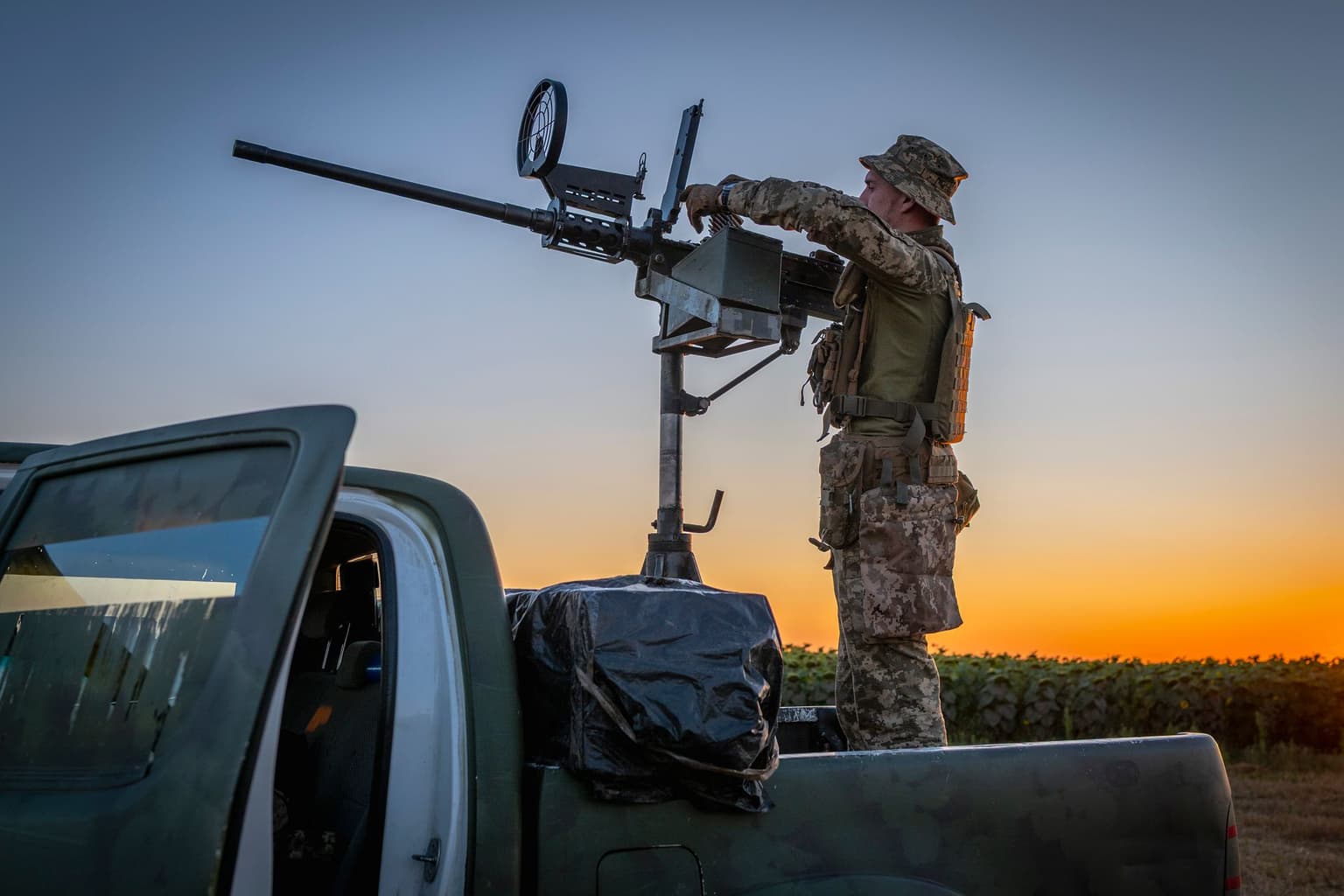
Ukrainian servicemen of a mobile anti-aircraft group work on a pickup truck with a machine gun on Aug. 13, 2025 in Chernihiv Oblast, Ukraine. (Dan Bashakov/Global Images Ukraine via Getty Images)
 on Google
Issac Olvera
Former U.S. Marine Corps officer
I spent 14 years in the U.S. military. My period of service, 2003-2017, covered its most active era in recent memory. Facing enemies in Iraq and Afghanistan, working with allies in the Pacific and in Europe.
I commanded an infantry company, and I planned operations for a Regiment. I know the U.S. military well, and, years later, I fought in Ukraine.
My Ukrainian chapter started in 2022, when I volunteered to fight in Ukraine. I used many of the same weapons in both places: Javelins, mortars, machine guns, artillery, and aviation. After fighting on both sides of modern war, I learned an uncomfortable truth: an American infantry company loses against a Ukrainian one.
That is hard to hear, because Americans are proud of their military. I am, too, but reality does not care about our pride or ego.
As commander of a Marine weapons company, I fought in the best-equipped military in history. In Iraq and Afghanistan, we had overwhelming advantages: air superiority, artillery, logistics, intelligence, and money. We won almost every tactical engagement. It was not surprising, as we fought insurgents armed mostly with RPGs, machine guns, and improvised bombs. Our success was overdetermined.
Ukraine has been the opposite.
The force I joined in March 2022 was ill-equipped, crudely organized, and minimally trained. It was understandable, as Ukraine was expanding rapidly. Most armies would break under that pressure, yet Ukraine had to do it while facing an existential threat. We faced a much larger military, equipped with tanks, heavy artillery, and cruise missiles, all backed by a top-ten economy that was 40 kilometers (25 miles) away from the government building.
The laws of conventional geopolitics said Ukraine should collapse. Prominent "experts" predicted Kyiv would fall within days. At the time, even I was hopeful, but not optimistic.
The outcome defied convention and predictions. Ukraine held, and then it fought back. In September 2022, Ukraine liberated about 12,000 square kilometers (4,600 square miles) and more than 500 settlements in the Kharkiv counteroffensive.
Two months later, it liberated Kherson, the only regional capital Russia captured after the full-scale invasion. In 2024, Ukrainian forces even seized territory inside Russia, another feat geopolitical orthodoxy had dismissed as impossible. It is 2026, and the underdog of Europe is still holding — four years longer than expected. Today, Ukraine can attack Moscow and Russian oil refineries thousands of miles from the border.
Russia still occupies about 20% of Ukraine, but that is significantly less territory than it held in the spring of 2022.
From all this, the "professional analysts" in the West drew the wrong lesson: that Moscow's invasion had failed because its army was weaker than expected. The correct lesson is that Ukraine proved far stronger than predicted.
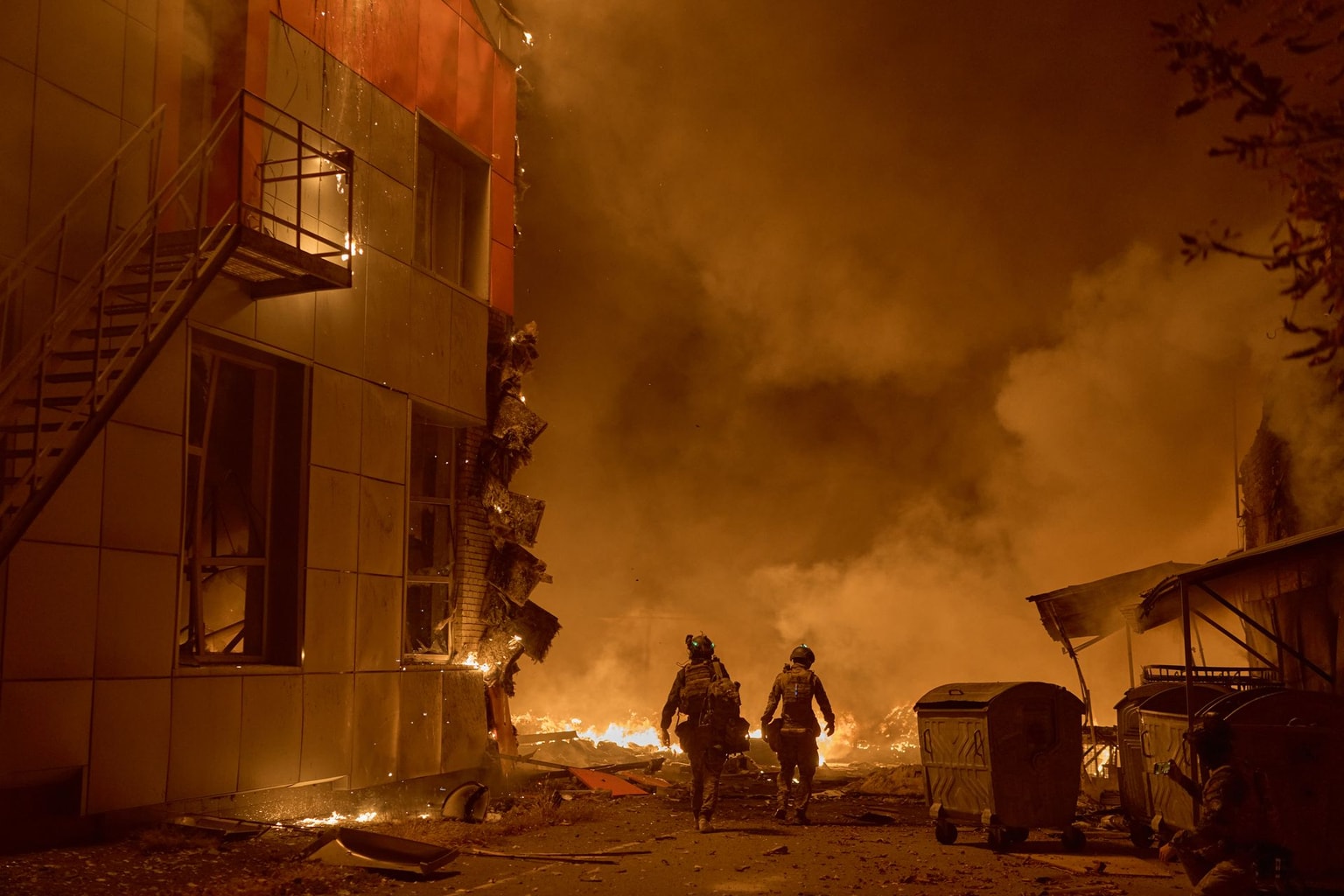
Ukrainians have endured because they adapted to the hardest combat environment in history. Modern war has changed faster than NATO has evolved. The battlefield is now saturated with drones. Anything moving on the surface can be found in seconds by a drone operator miles away. Almost anything found can be hit.
In this meatgrinder, the infantry survives underground, in bunkers connected by tunnels. And surface positions are covered with fishing nets.
The best weapons against the drones hunting overhead are electromagnetic waves, or electronic warfare (EW): jamming their navigation, blinding their sensors, and disrupting their communications with the pilot.
A $500 FPV drone flown by a 20-year-old soldier in a basement can destroy equipment worth millions commanded by a veteran officer with 20 years of experience. Cheap systems increasingly force expensive, sophisticated platforms to hide or skip the fight altogether, because the risk of losing them is too high.

The front lines in Ukraine show us the present and future of war. It is World War I and World War III at the same time: trenches and robots.
Today in Ukraine, battlefield lessons travel from the front line to engineers and manufacturers in weeks, not years. Ukraine produced five million drones in 2025. This year, it plans to produce more than eight million drones and plans to field 50,000 ground combat robots.
By comparison, the 32 nations that make up NATO combined produced fewer than a million drones and, at best, a mere 2,000 ground combat robots. On the other hand, the league of authoritarian nations can produce 15-18 million drones. Without Ukraine, NATO has no chance.
The alliance still has immense strengths: money, logistics, intelligence, and industry. But NATO spent decades preparing for the wrong war. It built itself around Cold War assumptions, then counterinsurgency, and it bet on systems that are marvels of engineering, but take years to design, billions to build, and decades to deliver.
I experienced this approach first-hand. In Iraq, during one training exercise, we fired fiber-optic-guided missiles, called TOWs, at a tank. The first missile exploded in mid-air, while the second flew erratically and destroyed nothing but dirt.
We still took TOWs to war, uncertain if the next missile we fired would detonate itself on its way to a target in Fallujah. In Ukraine today, a weapon with such unreliable performance does not make it to the front.
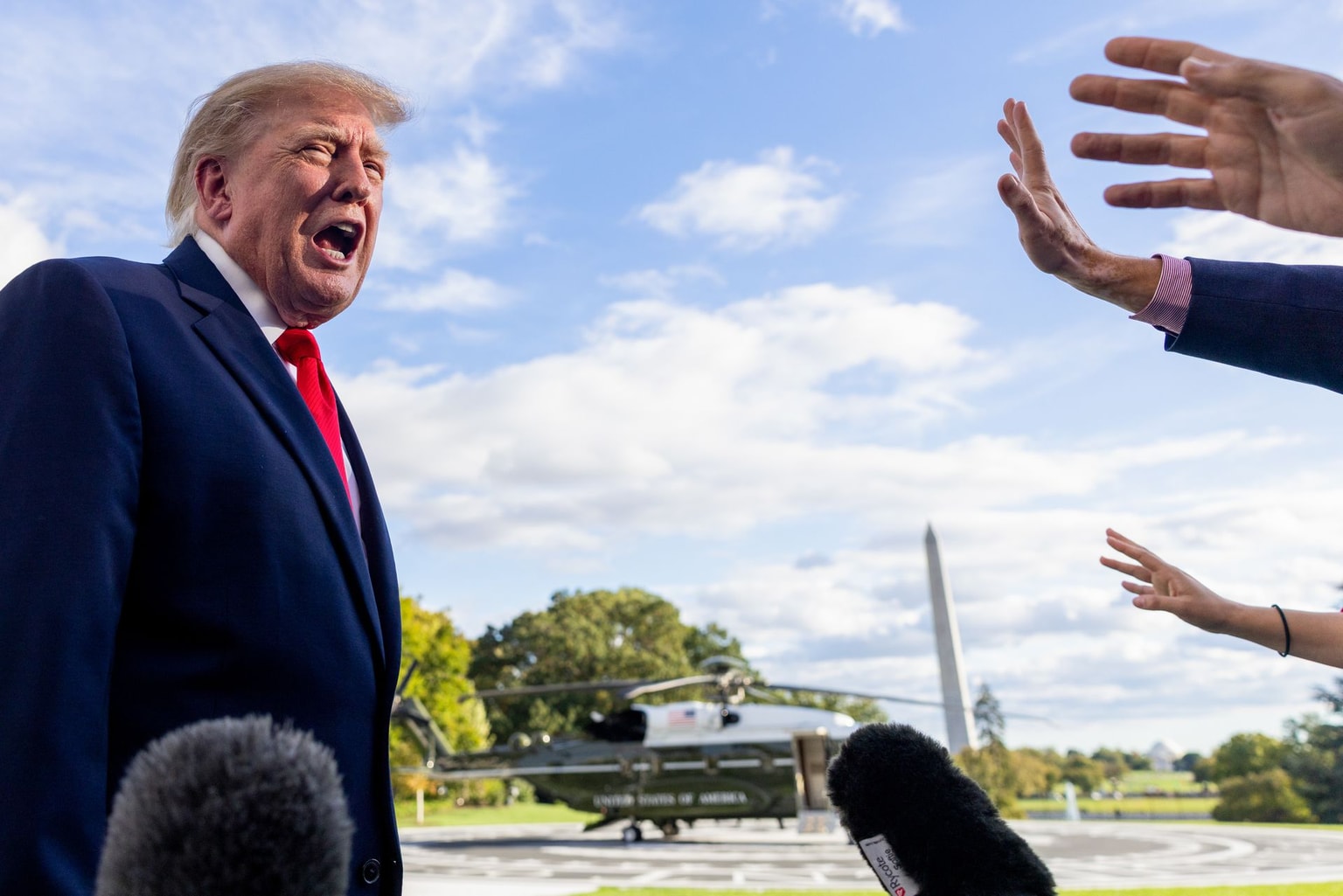
President Donald Trump recently said the United States does not need Ukraine because America has "the best drones in the world."
That statement reflects a dangerous arrogance that still exists in Western militaries: the illusion that a large military budget produces military superiority and that effective weapons must be expensive and take years to develop.
While much of NATO still debates how to defend against drones or secure a shipping lane, Ukraine already knows. They've spent four years intercepting Iranian drones, neutralizing Russia's Black Sea fleet, adapting to electronic warfare, and coding software to track it all in real time.
Ukrainian soldiers are the most combat-tested military of the free world. Without Ukraine, NATO is an expensive showpiece that would break when it is finally tested.
The West has the golden opportunity to reap the benefits of its painful experience at minimal cost. I don't want an American military unit to lose in the next era of war. This is why supporting and embracing Ukraine is an imperative for NATO's dominance.
Editor's note: The opinions expressed in the op-ed section are those of the authors and do not purport to reflect the views of the Kyiv Independent.