Ukraine's path to EU runs through this small Hungarian community in Carpathians
Hungary has blocked Ukraine's EU path before. This time, Budapest may genuinely want to find a way through.
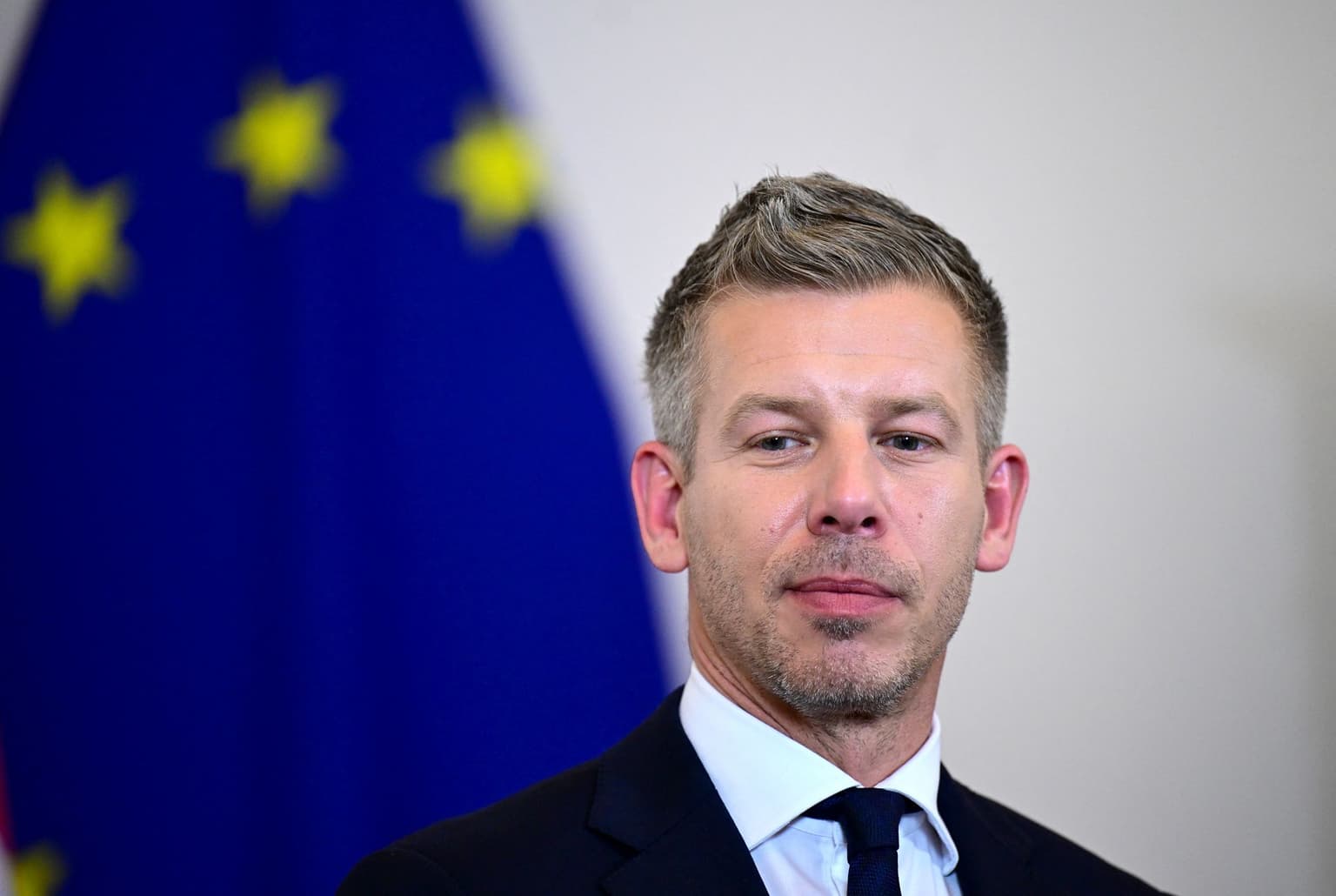
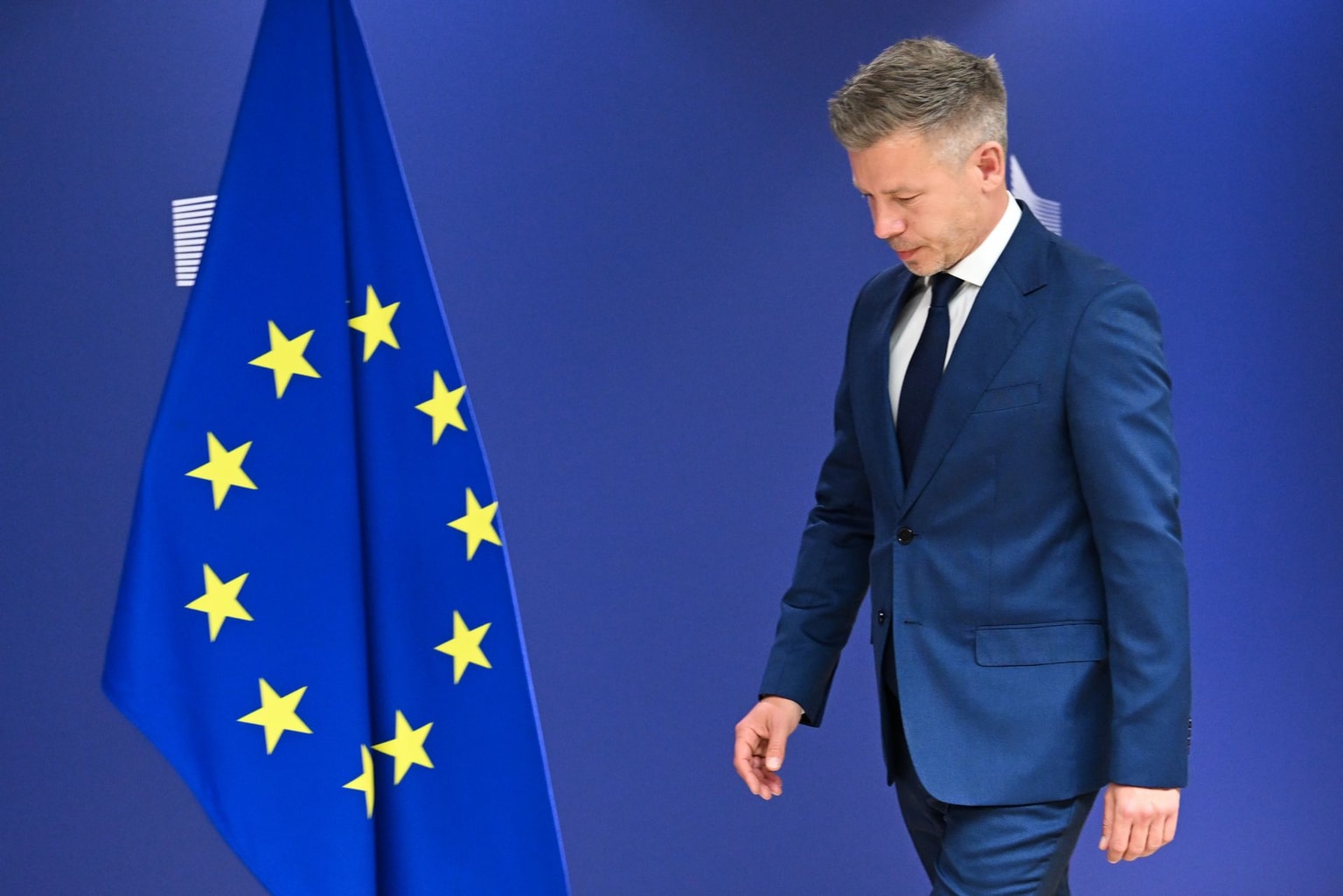
Hungarian Prime Minister Péter Magyar during an interview in Vienna, Austria, on May 21, 2026. (Roland Schlager / APA / AFP / Getty Images)
 on Google
Soon after taking office, Hungary's Prime Minister Peter Magyar appeared ready to normalize bilateral relations with Ukraine.
Soon, however, the newly elected prime minister played his predecessor's tune, declaring that the Hungarian minority in Ukraine's Zakarpattia Oblast "lacks basic rights," and complaining that its linguistic and cultural freedoms are being curtailed.
Magyar signaled he would obstruct the launch of Ukraine's formal EU accession talks until the issue is resolved — potentially blocking the process Kyiv hoped to restart after the ousting of Hungary's ex-Prime Minister Viktor Orban.
The Kyiv Independent explains why Magyar's comments are intended for a domestic audience and what his government actually wants from Ukraine.
What are Hungary's demands?
According to Magyar, Ukraine's Hungarian minority must enjoy linguistic, cultural, and other rights on par with other minorities in the EU.
In public, he has been rather vague — and, in some cases, misleading — about which specific changes Ukraine should adopt.
While Kyiv and Budapest renewed talks on minority rights after they had been frozen for months under Orban, they have kept details under tight wraps.
Still, we can glean some sense of what Budapest wants.

"We have outlined our position in 11 points," Magyar said in an interview with the Polish newspaper Rzeczpospolita.
These demands reportedly largely echo those pressed by Orban's government.
The bulk of the 11-point list, which was first handed to Ukraine in January 2024, focused on the rights of the Hungarian minority in education.
Demands included restoring the formal status of Hungarian-language minority schools, allowing universities to choose their language of instruction, or providing Hungarian-language versions of standardized school tests.
In effect, Budapest's demands would give ethnic Hungarians in Ukraine's Zakarpattia Oblast a chance to complete a greater share of their education in Hungarian.
Hungary also sought to expand the area of "traditionally minority" regions, which are granted special status that allows the use of Hungarian in public services and education.
One demand focused on the use of Hungarian in politics: removing the requirement for elected officials to be proficient in Ukrainian or — most controversially — guaranteeing parliamentary representation for the Hungarian minority.
Csilla Fedinec, senior research fellow at HUN-REN Center for Social Sciences in Budapest, says many of these points would "require not just legal amendments, but a conceptual revision of language and constitutional policy."
Particularly difficult, she argues, would be implementing minority parliamentary representation, which has never existed in Ukraine as an automatic right.
According to reporting by the Suspilne broadcaster on May 28, nine out of 11 points have been agreed upon following the second round of talks.
Yet to be resolved are the issues of parliamentary representation and changes to Ukraine's "cultural autonomy" provisions, which grant minorities autonomy in areas ranging from education to cultural development and public symbols.
What's the actual situation among the Hungarian community?
Ukraine's Hungarian community is mostly concentrated in Zakarpattia Oblast, a western region bordering Hungary, Slovakia, Romania, and Poland.
While 150,000 residents declared themselves ethnic Hungarians in the 2001 census, many have since emigrated.
Their number is believed to have dropped to around 70,000-80,000, or well under 0.05% of Ukraine's total population.
The community became the focal point of a diplomatic spat between Kyiv and Budapest over Ukraine's 2017 education reforms.
This revised legislation required Ukrainian to be the language of instruction in all core subjects in secondary schools and above, but allowed recognized national minority languages to be the main language in primary schools.
Further tensions arose over the 2019 law that prioritized the Ukrainian language in public administration, media, and other spheres.
Kyiv's reasoning was effectively twofold: reversing decades of Russification across Ukraine and ensuring that members of national minorities have a strong command of Ukrainian, allowing them to better integrate into society.
The legislation prompted a diplomatic onslaught from Hungary and was used by Orban to justify blocking EU accession talks.
But in practice, the implementation of the 2017 language laws in Zakarpattia was "repeatedly postponed, and later certain provisions were revised," Fedinec says.
The result was a sort of softened, "hybrid model" that tries to strike a balance between state policy and minority rights concerns, she adds.

Ukraine has removed some of the most contentious aspects of the legislation as part of its EU accession process, a development lauded by the European Commission.
This contrasts with Magyar's claim that there has been no significant change on Ukraine's part regarding language laws.
Magyar's "first statements on the Hungarian minority can be a little surprising," says Thomas Laffitte, researcher at the Brussels Institute for Geopolitics.
"For example, he wrote… that higher education and high-school graduation can only happen in Ukrainian, which is not true."
Regarding the Hungarian minority in Ukraine, some concerns about the 2017 language laws were warranted, Fedinec says.
But most of the current criticism "is exaggerated or based on outdated or inaccurate perceptions," she added, calling Magyar's claim that Hungarians lack basic human rights "a political exaggeration."
"In Ukraine, the Hungarian minority has guaranteed rights to language, education, and cultural life, which are enshrined in legislation and implemented in practice," Fedinec argues.
"The issue is rather about debates over the scope and forms of implementation of these rights, not their absence."
Why does it matter?
Without Hungary's approval, Kyiv cannot open the so-called EU negotiation clusters, hampering Ukraine's push to open all six by June.
But while Magyar seemingly maintains Orban's course on the Hungarian minority, there are reasons for optimism.
Much like his predecessor, Magyar — a self-proclaimed conservative — cast himself as the true defender of the Hungarian nation, including those living beyond Hungary's borders, Laffitte explains.
The difference is that Orban was not interested in resolving the issue of Zakarpattia's Hungarians — merely in antagonizing Kyiv for domestic political goals, he adds.
Magyar, in turn, is positioning himself as a constructive partner within the EU. He has also denounced Russia over strikes against Zakarpattia, something his predecessor has never done.
"Reuniting" Hungarian minorities abroad with their "homeland" via EU enlargement has also been a long-term goal of Hungarian diplomacy, according to Laffitte.
"The main difference is that (Magyar's government) are actually interested in finding a solution," he adds.
Sybiha and Hungarian Foreign Minister Anita Orban were relatively upbeat about progress so far — as was Brussels.

The European Commission welcomed "the ongoing bilateral engagement between Ukraine and Hungary on issues related to national minorities."
"We are confident that the remaining issues can be addressed through continued dialogue," a Commission spokesperson told the Kyiv Independent. "We stand ready to facilitate and support this work as necessary."
Ukrainian and Hungarian experts are set to continue expert-level discussions this week.
Should this format prove fruitful and address Budapest's concerns, Magyar said, a meeting with President Volodymyr Zelensky "to open a new chapter in our relations" may follow.
Note from the author:
Hi, this is Martin Fornusek, one of the authors of this article.
I hope you enjoyed this article. In our team, we believe fact-based and truthful reporting should be available to all — that's why we don't use any paywall.
If you'd like to help us provide you with more in-depth coverage of Ukraine's struggle against Russian aggression, European politics, and other topics, please consider joining the Kyiv Independent community.