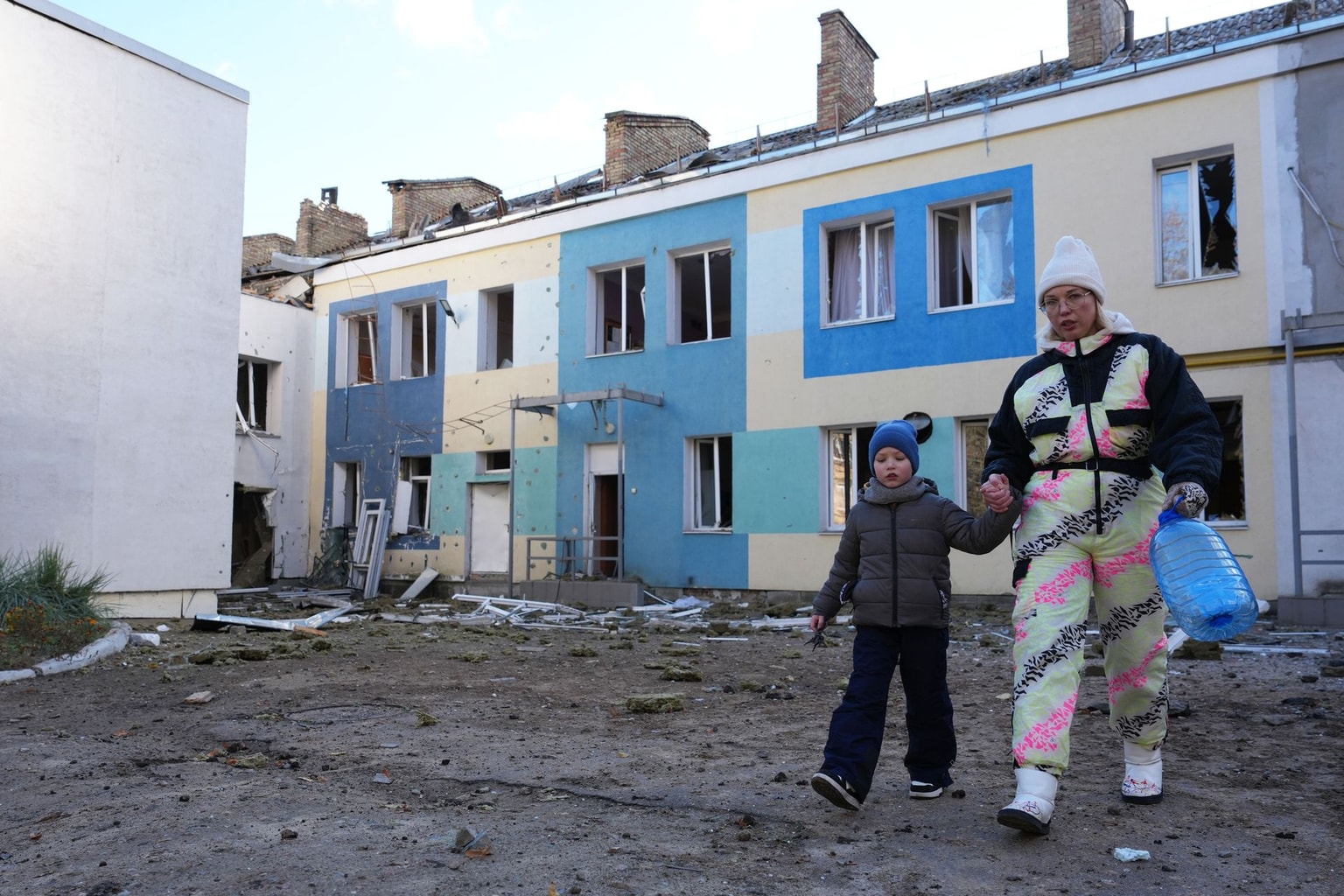
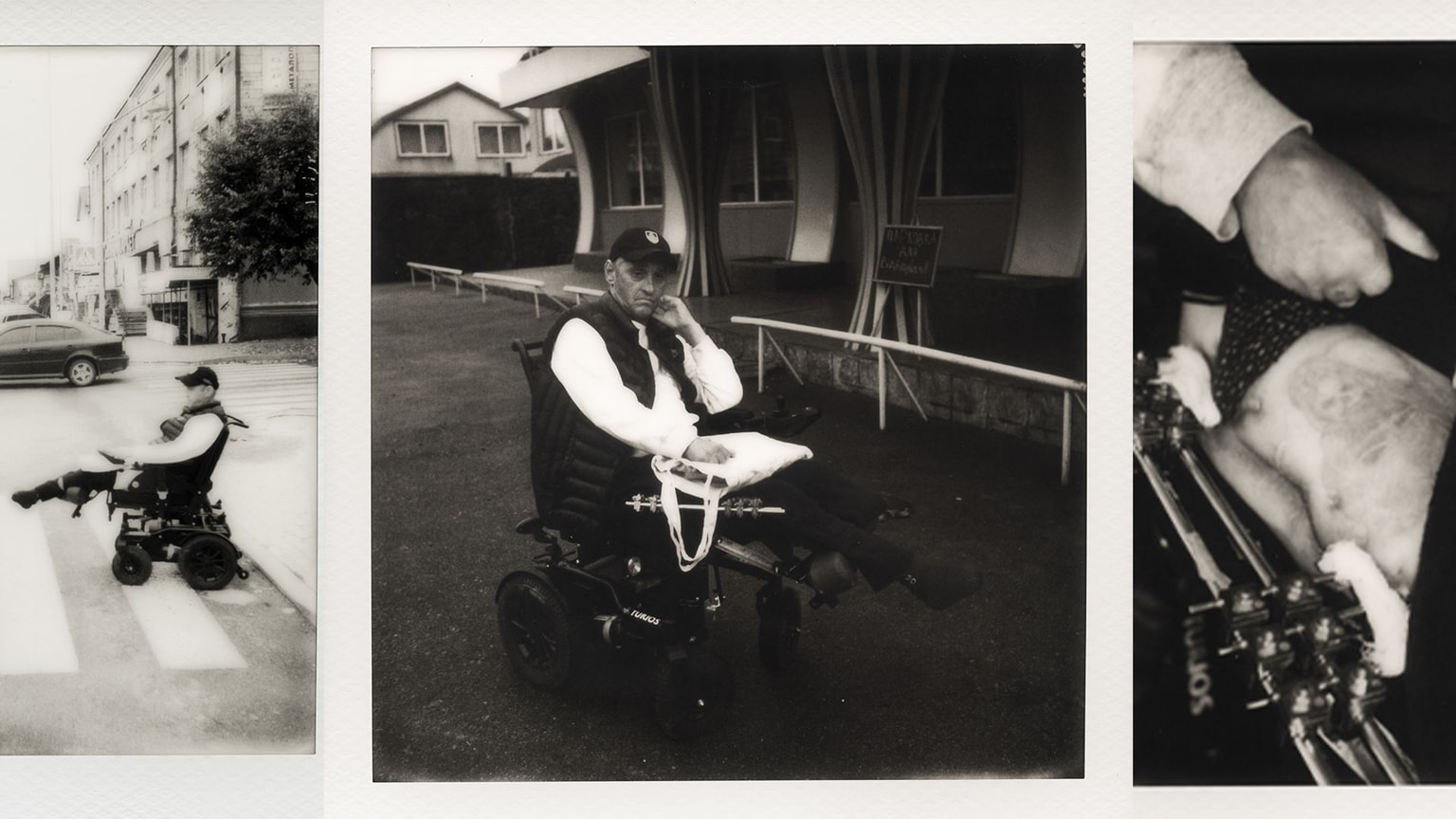
'We don't count on anyone' – How Ukraine's internally displaced people struggle for housing
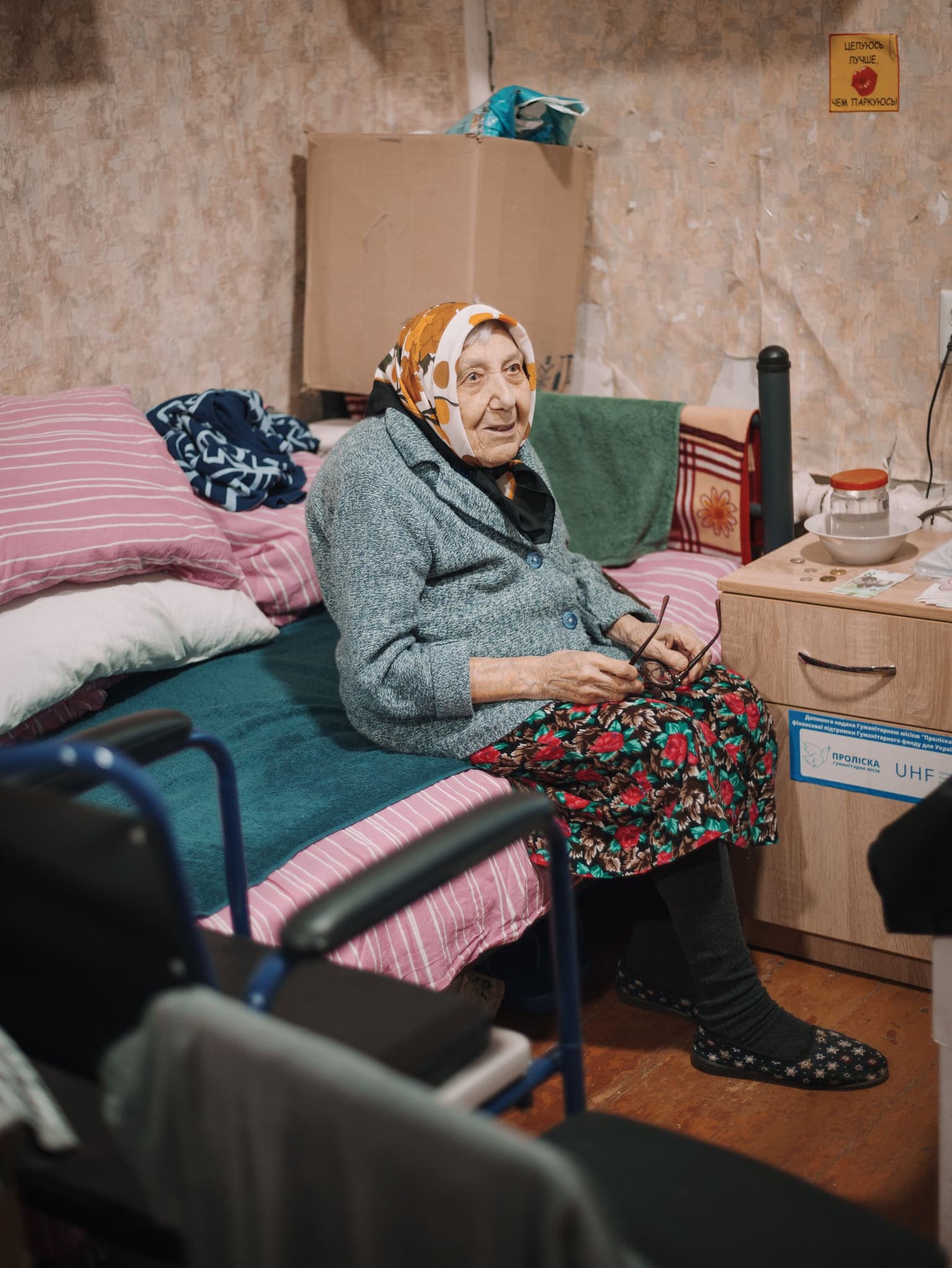
Baba Masha, long term shelter in Dnipro, Ukraine.
 on Google
In 2024, Veronika Chumak, a volunteer in the central Ukrainian city of Dnipro in Dnipropetrovsk Oblast, received a phone call from a chaplain. "I've got nine grandmas, all over ninety, and nobody wants to take them in," he said. The women had been evacuated from the town of Novohrodivka in Donetsk Oblast.
Chumak heads the charitable foundation "1+1 – and you are no longer alone" that provides social support to children and veterans. Up until that point, she had no experience in running a shelter for internally displaced people (IDPs), let alone for vulnerable people of that age.
Nonetheless, she found two empty dormitory rooms in Dnipro and arranged to rent them. The elderly women arrived the next day, and Chumak helped them to settle in.
Within a couple of weeks, other volunteers evacuating vulnerable residents from front-line territories heard about Chumak's new shelter. By the end of August, over a hundred people had arrived, and Chumak's charity was renting an entire dormitory.
Today, the dormitory houses 148 people, all either elderly, with disabilities, or with severe mental health conditions. 80% of them have no family at all. What unites most residents is their inability to access state compensation for their lost homes.
As Russia’s war displaces more people every day, the situation for those who evacuated from their homes as far back as 2014 has often failed to stabilize as government aid remains out of reach.

Displaced
According to the UN International Organization for Migration, about 3.9 million people were displaced within Ukraine as of June 2026. One solution to this mass displacement is the state's "eVidnovlennia" ("eRecovery") program.
As of August, about 250,000 families had received eVidnovlennia compensation, such as money to pay for blown-out windows, or even a certificate worth the assessed value of a totally destroyed home, which can be used to purchase a new house or apartment, according to Censor.net, citing the Ministry of Restoration, Infrastructure and Transport of Ukraine. These certificates, however, function as a promise of money rather than as direct monetary compensation.
Over 88,000 families had received housing certificates as of August, but the government said it still seeks funding for more than 60,000 of these families.
Many of the 2.15 million IDPs from occupied territories alone, however, fall outside the scheme's eligibility criteria. Some lack necessary documentation, while others may have never officially owned property to begin with.
"While a 2024 bill meant to categorize all homes under occupation as officially destroyed, thus entitling their owners to compensation, it has not yet received the presidential signature."
Following Ukraine's independence from the Soviet Union, many people, especially in rural communities, were given their own property unofficially but never completed any documentation, believing it was only needed to sell the property.
For a significant number of people, though, the main reason for exclusion from the scheme is that their home was occupied when they applied, as the compensation scheme only covers areas under Ukrainian control. The government said this was due to the inaccessibility of the houses, which a commission must assess.
In 2025, Olena Shulyak, head of the governing Servant of the People party and chair of the parliamentary committee on Organization of State Power, Local Self-Government, Regional Development and Urban Planning, said that any legislative decision regarding compensation payments for lost property must ultimately be dependent on the state's financial capabilities.

While a 2024 bill meant to categorize all homes under occupation as officially destroyed, thus entitling their owners to compensation, it has not yet received the presidential signature.
IDPs from occupied territories with either combat veteran status or war-related disabilities are an exception, entitled to a housing voucher worth Hr 2 million (about $44,000) to purchase new property from December 2025.
By mid-2026, 39,000 such voucher applications had been submitted, of which 30,000 were approved, but just 3,296 had been funded, the government said.
In October, the government announced 36,804 applications for housing vouchers still required funding. An expected additional 80 million euros of funding from the Council of Europe Development Bank will cover only 2,000 of those applications.
Those ineligible for either program face an uncertain future. Some live in shelters, such as those run by Chumak. Others save up to purchase property, often in dire condition, to create some semblance of stability. Still more rent privately, falling victim to surging rents across Ukraine.
Ineligible
Iryna Cherkasova, 43, is one such person. Originally from Luhansk, she fled the Russian occupation of her home in the spring of 2014, along with her then one-month-old daughter, Masha. They eventually rented an apartment in Sievierodonetsk, a city in Luhansk Oblast under Ukrainian control at the time. During this time, Masha was diagnosed with special needs.

When Russia launched its full-scale invasion in February 2022, Sievierodonetsk immediately came under attack, and Cherkasova, her husband, and her daughter spent three weeks hiding in a basement. They fled to Dnipro, bringing only their documents and their cat.
For two years, the family lived in a shelter, sharing a 50-square-meter room with two other families, their only furniture being bunk beds and a cupboard. Cherkasova experienced bouts of depression, exacerbated by a video of their home in Sievierodonetsk taken by a neighbor.

"While I still had some hope – maybe they'll recapture it, they'll return it – I lived on enthusiasm, on and on. But when I saw a video of our old apartment, with it just standing open, everything carried out… The carpets (were) trampled, everything, everywhere… It was just horrific. And it all hit me again. I think I cried for two weeks."
Eventually, Cherkasova secured work and moved out to a rented apartment. With her apartment in Luhansk under occupation, she remains ineligible for state compensation.
"We don't count on anyone at all, (there's) no hope. Everything we do is under our own steam. This is how I managed the first time, and it was the same the second time… You can stand around, waiting for something – but life is happening now. You have to live now," she told the Kyiv Independent.
Tetiana Bilenko, a 66-year-old librarian from Bakhmut, Donetsk Oblast, fled her apartment with her adult son and her cat in spring 2022. Her son owned a large house in Bakhmut's suburbs. They intended to return within a couple of weeks.

First, they moved to Zhovti Vody, a small city west of Dnipro, where they could live rent-free in an empty apartment. However, the apartment's owners soon decided to sell, and Tetiana and her son rented a small apartment in Dnipro.
For Bilenko and her former neighbors, there is no hope of returning to Bakhmut. Russian forces razed the city to the ground before its occupation in 2023. Beyond the destruction itself, extensive unexploded ordnance and landmines also make the city uninhabitable
Nonetheless, most of Bakhmut's former residents are unable to claim compensation because their city has been occupied.
Meanwhile, residents of Chasiv Yar, a twenty-minute drive from Bakhmut, are eligible to apply for housing certificates while fighting continues in their city.

"I just don't understand it," Bilenko said, "why is there one law for some citizens and another for others? There shouldn't be, in a state where it is written that everyone has equal rights to housing."
Opposite the 1960s apartment block where they live stands a tall new-build. Should she and her son both receive compensation for their homes in Bakhmut, they could combine them and buy an apartment there.
"This uncertainty is unbearable – they've left us hanging, with no footing. They can say what they want at group therapy sessions, but in the end I always say: for us, money matters, so we can have that footing. Money matters to us… as stability."
Sheltered
In Dnipro, Chumak wants to provide as much stability as she can. Of those in her care, half have already suffered strokes and heart attacks, or struggle with high blood pressure, due to stress, she said
"Right now, we are living in paradise," said Nataliia Loboda, 68, a retired teacher from Kolomiitsi, a village in the east of Dnipropetrovsk Oblast. "This is paradise for us. Yes, there's shooting, and things flying overhead, but we have nothing to complain about. But this is a place of temporary stay. If they start shelling Dnipro, (a government official) could come and say, 'we're responsible for you, we'll put you somewhere [else]'… That's what I'm afraid of."

Housed two or three to a room, residents only pay for utility bills, generally out of a Hr 2,000 to 3,000 ($44 to $66) monthly payment they receive from the state as IDPs. Different charitable organizations and grants cover all other costs. Chumak raised Hr 250,000 (about $5,500) via her personal Instagram account to build new showers.
"The building is in a terrible state," Chumak told the Kyiv Independent, "Wherever you patch, whatever you do, the walls crumble. With the help of partner organizations, we (repaired) the roof, and they provided us with furniture. But when you put new furniture on an old floor, it doesn't improve that old floor."
Trying
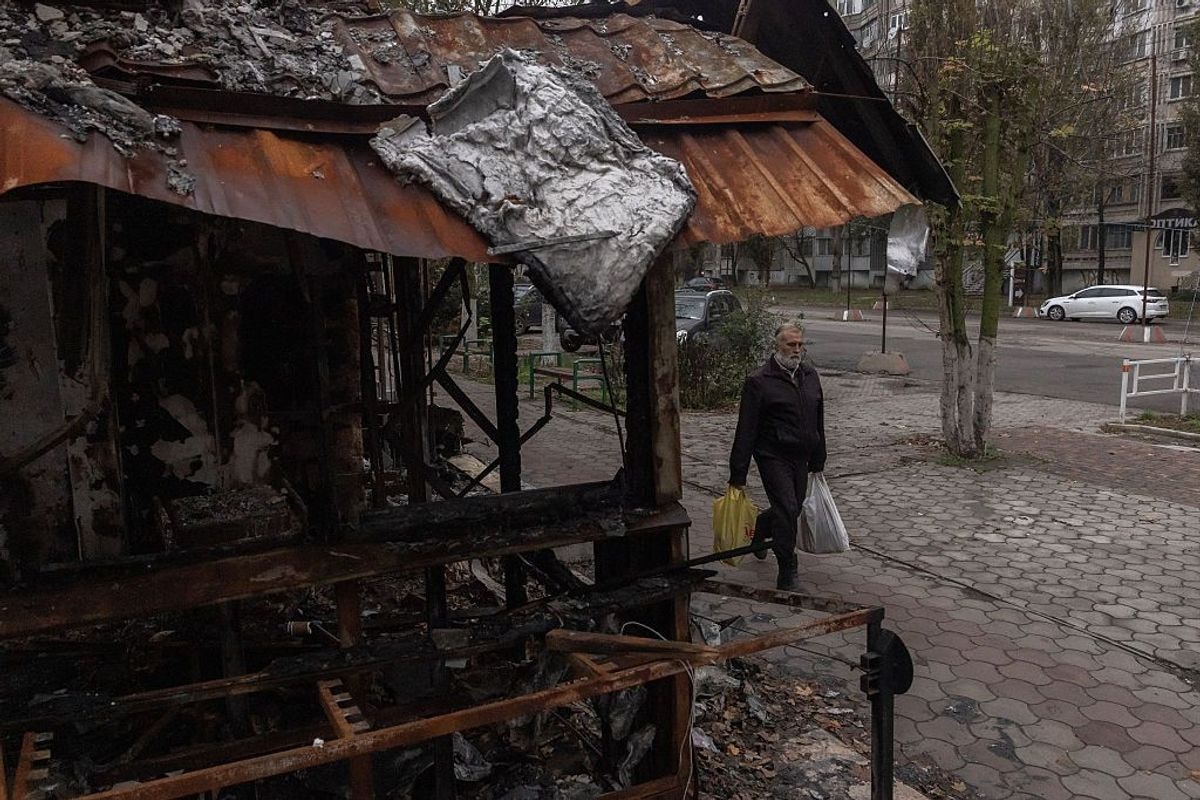
Some in the shelter remain ineligible for compensation not because their cities have been razed and occupied – but because their homes, despite being on the front line, have somehow avoided destruction.
In this case, residents said they were advised that their home is still salvageable and thus can only receive compensation in the form of repair support, even if their home is in areas of active fighting.
"Our people even ask soldiers who've been given grenades to throw them into their homes to destroy them," Loboda told the Kyiv Independent.

In other cases, residents do not have a way to confirm whether their home has been destroyed. While Loboda's village remains in Ukrainian hands, it is totally inaccessible.
In the nearby Myrnohrad community, the local administration publishes bi-weekly lists of homes newly confirmed as destroyed. Local military administrations often help their displaced residents gather information about their homes, collecting drone footage or satellite imagery.
The process is, however, inconsistent and imperfect, with every community operating differently depending on the military situation in the area and the administration's capabilities and priorities.
As demand for compensation continues to outstrip availability markedly, some even make the journey to occupied territory via Russia to sell any property that may still be standing. They hope to ensure the means necessary to build a new life, IDPs who want to stay anonymous for security reasons told the Kyiv Independent.

The journey requires traveling via Moscow, where Russia subjects people to interrogation and filtration, before obtaining a Russian passport, which occupation authorities increasingly treat as a de facto requirement for registering or selling property. The whole process can take months, at the risk of deportation or detention.
Others choose to build a semblance of stability with what little they have in Ukrainian-controlled territory. Last year, Cherkasova and her husband purchased a dilapidated house in the Carpathian Mountains, in Ukraine's far west. They have not yet visited the property, but their neighbors there, relatives displaced from Luhansk Oblast, are helping to prepare it for their eventual move.
"That's how we all live," Cherkasova said, "from displaced person to displaced person."