Neighbors from hell — How one Oleshky family survived living next to Russian soldiers
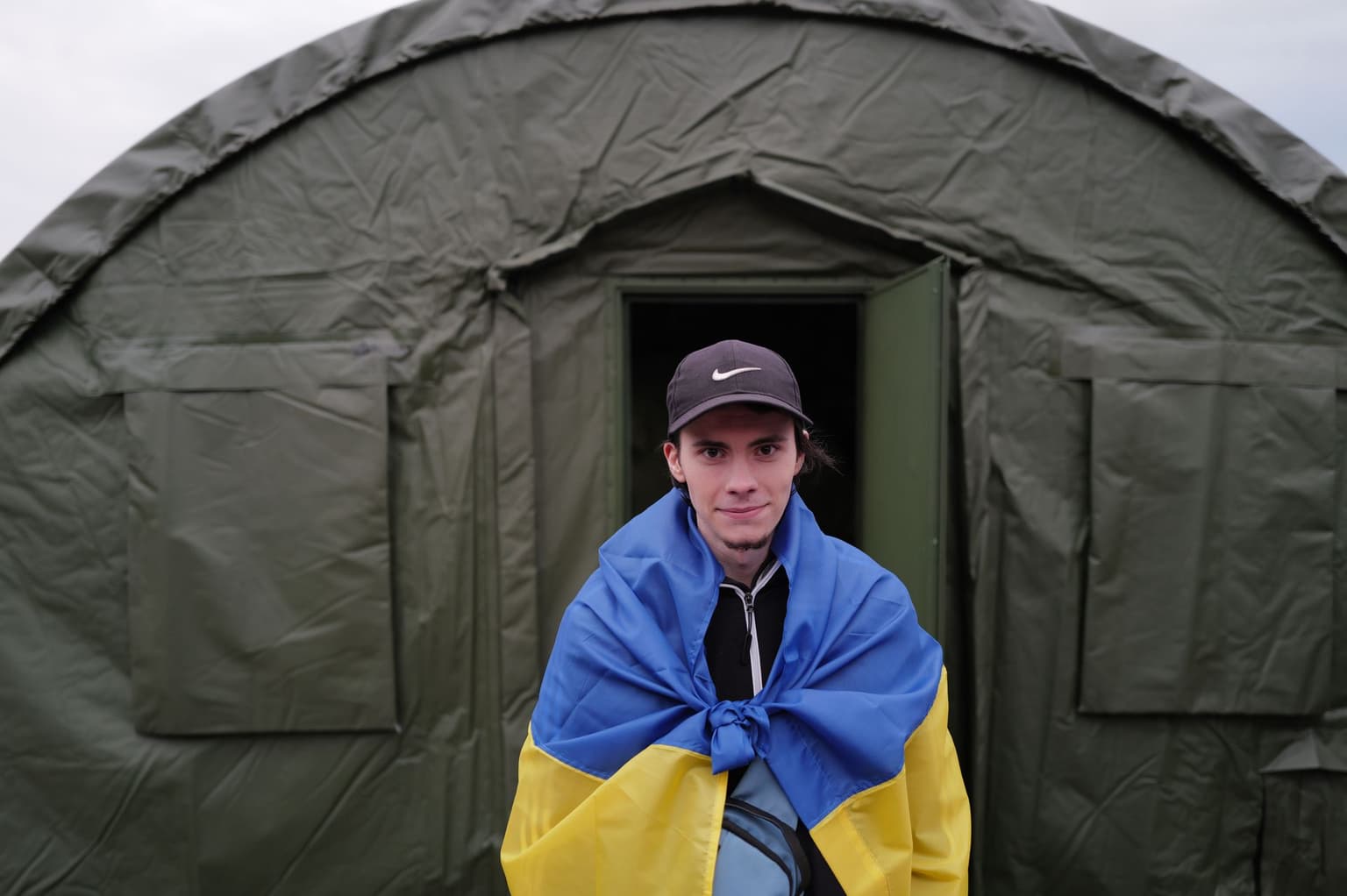
Vladyslav Samarsky stands at the Ukraine-Belarus border in Chernihiv Oblast, Ukraine, after a day-long humanitarian mission on Oct. 31, 2026. (Viacheslav Ratynskyi/The Kyiv Independent)
 on Google
For years, the Samarsky family lived in the embattled, occupied Oleshky alongside neighbors no one wished to have — Russian soldiers.
Serhii Samarsky, his wife Olha Liutikova, and their son Vladyslav remained in the town after Russian forces occupied it during the early stages of its full-scale invasion until October 2026, when a humanitarian mission, mediated by U.S. first lady Melania Trump, allowed them to be evacuated.
Together, they survived relentless air attacks, cold winters without heating or electricity, severe food shortages, life in an apartment building full of Russian soldiers, and interrogations by the Russia’s Federal Security Service (FSB).
"Nobody wants to live under occupation. It's death. You can't do anything. You're afraid that you could take a single step and a (Russian soldier) might come and do whatever he wants to you," Olha said.
They made the difficult decision to stay because they were caring for Serhii's mother, who had stage-four cancer, and his father, who had suffered a stroke. Both his parents passed away about a year ago.
"The Samarsky family never expected their hometown to come under Russian occupation for years."
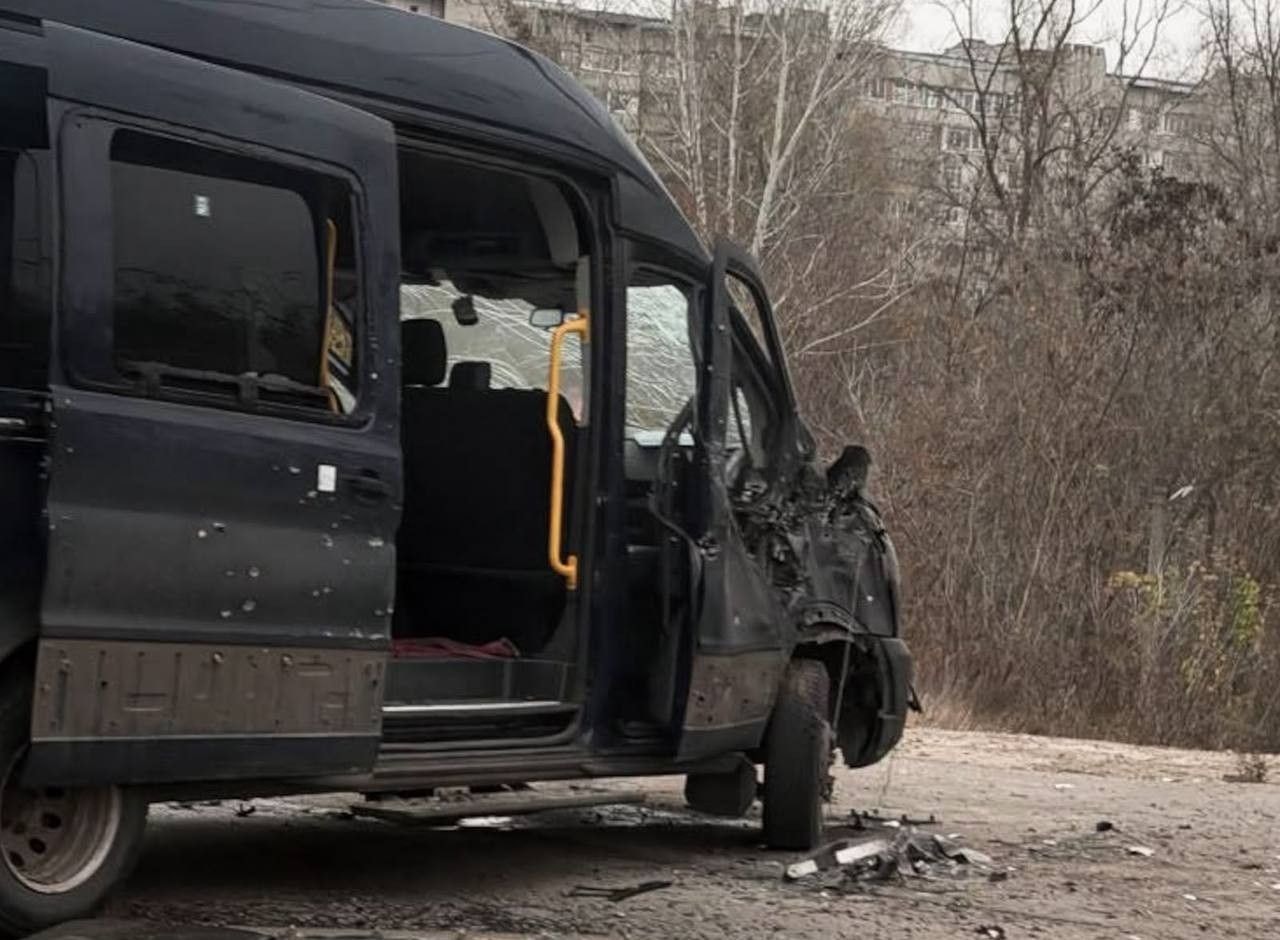
By the time the family could consider leaving, life in Oleshky had become increasingly dangerous. While drones flew above their heads day and night, the routes leading from the town had been mined by Russian forces.
With the humanitarian evacuation, they finally reached Ukrainian-controlled territory in late October. When the Kyiv Independent spoke with Olha, Serhii, and Vladyslav at the Belarus-Ukraine border, they were holding cups of warm tea, blue-and-yellow Ukrainian flags draped over their shoulders.

A 'lovely town'
Before Russia occupied parts of Kherson Oblast, the Samarsky family had a calm life in their small town with a nearby river and forest.
"The people are really lovely. We have such a close-knit community. We used to get together a lot. If anyone needed help, we'd always help one another out. It's such a lovely, bright, kind little town," Olha said.
She fondly remembered how, on holidays and special occasions, the community would gather as one, and, amidst the celebrations, Olha would play the violin.

Serhii worked as a car mechanic and Vladyslav studied in college.
Olha worked for 14 years at the Oleshky Specialized Boarding School, caring for children with disabilities. After the occupation, Russia forcibly displaced children from this school. According to an investigation by the Reckoning Project and New Lines, Russia moved a total of 84 disabled people from Oleshky.
The Samarsky family never expected their hometown to be occupied by Russia for years.
Life alongside Russian soldiers
After Russian forces established control over Oleshky, Russian soldiers gradually filled the multi-story apartment building where the family lived, occupying flats and houses left empty by those residents who managed to escape.
"Russian soldiers launched drones directly from the residential building they lived in."
In Oleshky, civilians lived amid a Russian military presence and strikes on the city from both Ukrainian and Russian forces.
Russian troops have used towns and villages on the eastern bank of the Dnipro River in Kherson Oblast to launch attacks across the river, including on Kherson, which Ukrainian forces liberated in November 2022.
Given Oleshky's proximity to Ukrainian-held territory, Russian forces have stationed artillery, mortars, and landmines inside residential areas, according to Oleksandr Tolokonnikov, deputy head of the Kherson Regional Military Administration.
Tolokonnikov told the Kyiv Independent in April that the continued presence of civilians helps shield Russian positions from Ukrainian strikes.
The Samarsky family said Russian soldiers launched drones directly from the residential building they lived in.
"(The soldiers) were so stupid, they flew drones which crashed into the bushes. Then (they) would climb all over that fence and through the bushes, looking for those drones. We were standing on the balcony watching this farce," Olha said.
The family never knew when soldiers might barge into their home or what actions they might take. Russian soldiers detained Olha and Serhii and held them in a basement for three days. Their son Vladyslav barely ever left their home.
"(They interrogated us) because we wanted to live in Ukraine," she said. "It's a miracle (they let us go)."
Olha said even going outside to a grocery store could be dangerous. She tried not to enter a shop while soldiers were inside.
"When a drone was flying, we could tell which trajectory it was following. But when a Russian soldier is in front of you, drunk, in some incomprehensible state, you don't know what his reaction will be," Olha said. "Something might not (be to his liking) — your clothing in blue or yellow, or a Ukrainian word. And that's it."
Serhii said that Russian soldiers were persecuting children who were studying online in Ukrainian schools.
"They broke into houses and tortured people," Serhii said.
The Kakhovka dam disaster
The humanitarian situation in Oleshky worsened in June 2023, after the city was flooded during the Dnipro River flood caused by Russian troops' destruction of the Kakhovka dam. Many residents lost their homes and documents in the flooding.

Around 500 Oleshky residents reportedly died in the flood, though volunteers at the time estimated some 2,000 people were missing.
Built on higher ground, the Samarskys' five-story building was spared by the floodwaters, but the family witnessed the devastation up close. They welcomed affected neighbors into their apartment and offered refuge to families along with their children and pets.
"We invited (people who suffered) to stay with us. We were crammed in, on top of one another. These people had lost everything," Olha said.

She added that some people were then evacuated to Ukrainian-controlled territory by boat, as rescue volunteer teams helped people deal with the consequences of the flood.
Surviving winters without heating and electricity
As the Russian occupation dragged on, even the most basic aspects of daily life became a struggle for the family.
They spent winters without heating or electricity, forced to rely on a gasoline-powered generator and flashlights.
"Oh, we had such a cold winter, my goodness, and the temperatures were so far below zero," Olha recalled.


"We slept in three jackets and went outside in them… It was so hard for me to wash the dishes. The water was so cold that my hands turned blue. Oh my God, it was such a nightmare."
Food also became increasingly scarce. The last food delivery by vehicle was on May 26, according to Ukraine's Human Rights Ombudsman, Dmytro Lubinets.
Some residents risked cycling to the neighboring settlement Radensk — a dangerous journey due to Russian mines along the roads.
When supplies ran out, the family survived on home-grown zucchini, grains, and canned food. They also received packages from Ukrainian soldiers, who delivered food by drones to residents trapped in Oleshky.
But receiving humanitarian support from Ukraine came with severe risks.
To protect themselves, the family concealed any signs of the food's origin. Upon receiving sacks of grain, they immediately put the supplies into jars and stripped away all packaging and labels written in Ukrainian.
"We quickly stuffed all those papers and bundles into our dressing gowns because we were really scared that if the (Russian soldiers) came in, they'd see them and we'd be done for," said Olha.
read also
Leaving home
Throughout the years of occupation, the family had hoped to remain in Oleshky until it came back under Ukrainian control. The hope of being liberated by Ukraine helped them survive all the horrors, they said.
But the deteriorating security situation and the damage to their apartment building eventually forced them to move into a friend's detached house. Their final decision to leave the town came after Lubinets announced that he would travel to Oleshky to oversee the humanitarian evacuation in person.
They could take only one bag per person and their two cats, Tiomka and Marusiia, with them. Vladyslav photographed their family albums and saved the pictures on his phone as they could not bring the heavy volumes with them.


The journey itself was "terrifying," and the family was glad that they were not stopped at any of the Russian checkpoints along the road during the evacuation.
"You can't imagine what a relief it is. You see, that checkpoint — it's like death. It really is death… Every single checkpoint we passed was like facing our own death. It's unbelievable. So this evacuation… it's some sort of miracle," Olha said.
After finally reaching Ukrainian-controlled territory, the family traveled to Kyiv, where they stayed in a hospital. They plan to settle in Hansen Town, a charitable housing project for people displaced by Russia's war.
read also
'We're free'
Olha recalled their first evening walk through the Ukrainian capital. For the first time in years, they could walk outside, see people going about their lives, and enjoy the evening lights in residential buildings, without worrying about Russian soldiers.
"We're free. We were walking along, thinking, 'there are cars here, people, and the lights are on in the houses.' It's brilliant."

But there are still people in Oleshky willing to leave. Olha said they were too afraid to evacuate because they did not trust Russia to adhere to the ceasefire. While Ukraine is willing to continue rescuing civilians in endangered areas, the Kremlin publicly ruled out further humanitarian operations in the foreseeable future.
Although the Samarskys have left Oleshky for now, they have not given up on their hope to return.
"There's a (Ukrainian) flag we took to the city center at the beginning of the occupation and waved while shouting that Oleshky is Ukraine. That big three-meter flag. It's hidden now, and it'll just be waiting for us there."