'I screamed, everyone screamed' — Kyiv Oblast town still in shock a week after devastating Russian drone strike
 on Google

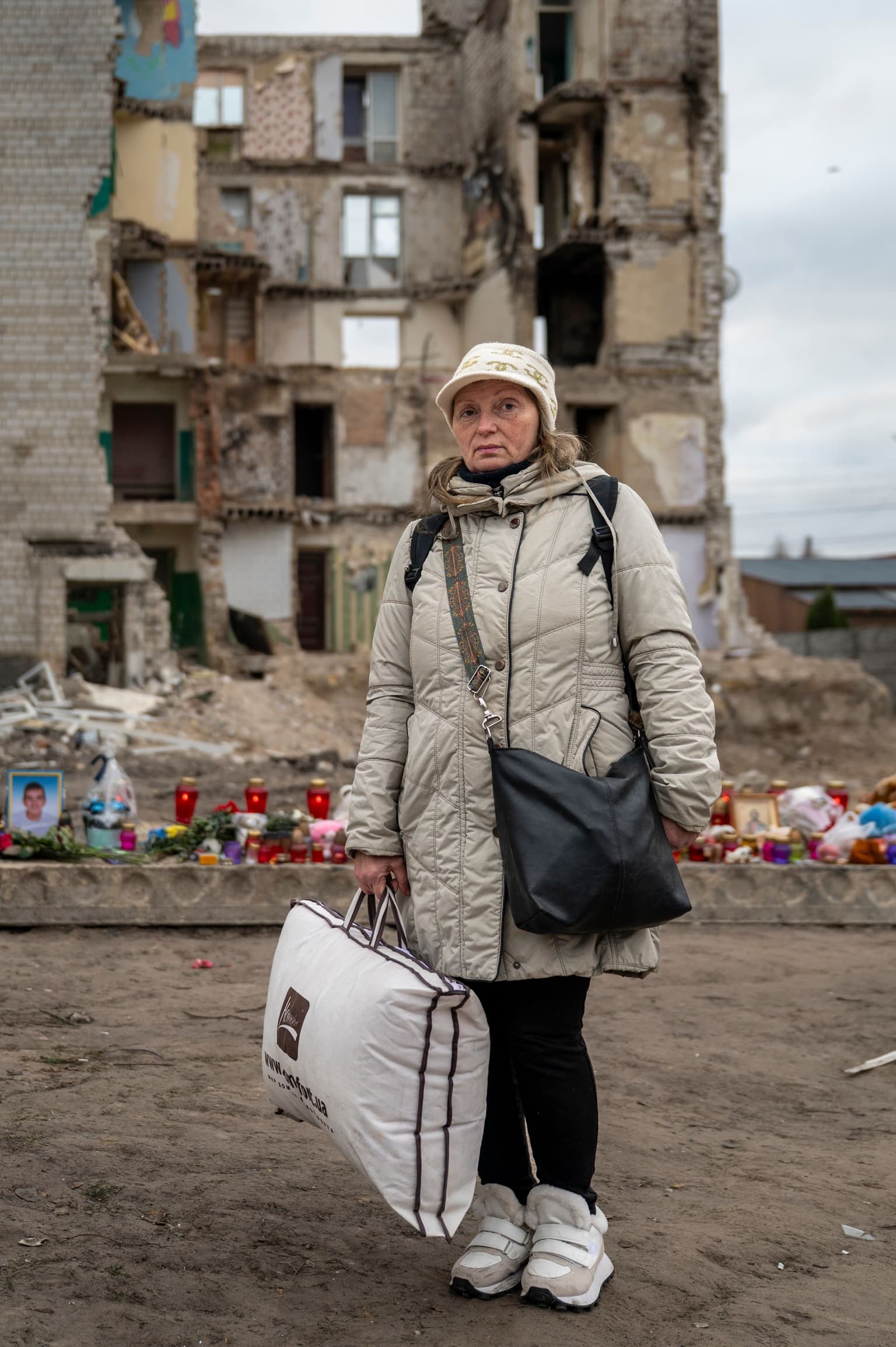
DYMER, Kyiv Oblast — Nataliia Lavreniuk burst into tears when she stopped by her apartment building in the town of Dymer, which had been hit by a Russian drone a week earlier.
"We shared bread with (neighbors) during occupation, and now they are gone. It's very scary, such a tragedy," the 52-year-old told the Kyiv Independent, looking up at her damaged apartment and fighting back tears as she spoke.
"It was a Sunday, everyone was sleeping… Life was split into two, half there (dead), half here (still alive)."
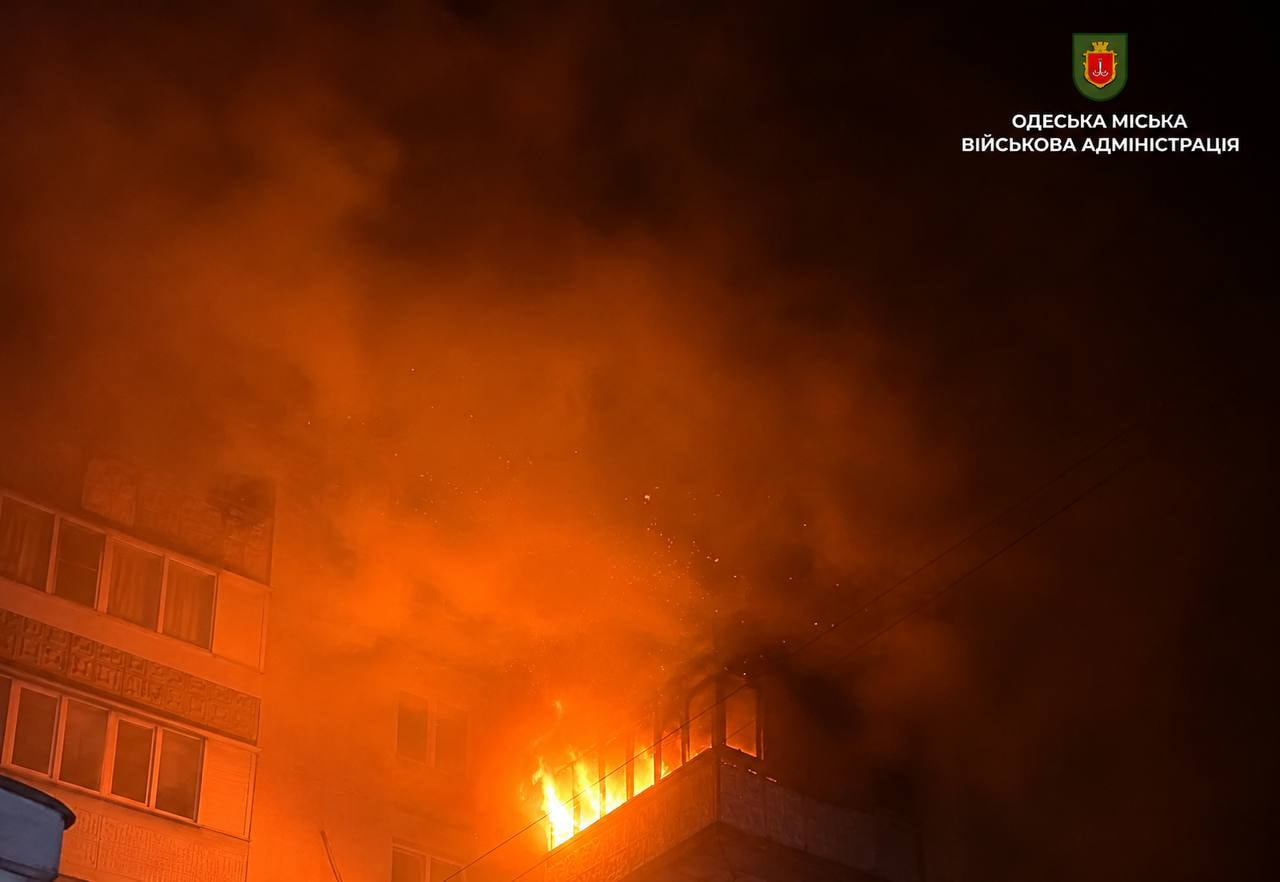
A Russian drone hit the five-story apartment building in the quiet town of Dymer in Kyiv Oblast early on Nov. 22, killing 12 people, including an 11-year-old girl. The attack caused a fire and collapsed a section of the gray brick building from the top floor, trapping people under the rubble for hours.
Located about an hour's drive north of Kyiv, Dymer is a small town of around 5,000 people. Once a sleepy town, it had gradually grown livelier as more young people moved in and restaurants and cafes opened.
Lavreniuk lived on the top floor with her 31-year-old son and had to be rescued from the balcony. She vividly remembers the moment of the attack, which occurred at 4:23 a.m. on a Sunday morning while people were asleep. Her apartment still stands but was severely damaged.
"I remember a loud explosion and all the glass fell (on me) and a blast wave swept through the apartment," Lavreniuk said.
"And then I heard screams; I screamed, everyone screamed, I was covered in glass and cut all over."

Lavreniuk and her son slept in separate rooms, so they each left the apartment on their own. Her son tried to run through thick smoke down the stairs, not realizing they had collapsed. He fell from the fifth floor, landing on a stove on the third floor, before crawling down through the rubble.
Lavreniuk heard him yell that he was alive, but was stuck on the balcony trying not to breathe in the toxic smoke for half an hour until the rescuers reached her.
Russian attacks such as this on Kyiv and its surrounding oblast have intensified since late summer, often targeting critical infrastructure in attempts to pressure Ukrainians as the temperatures drop in winter. With Russia scaling up the number of drones and missiles used in attacks on Ukraine, air defenses are increasingly overwhelmed in their efforts to prevent deadly attacks on civilians.
Lavreniuk's family survived, but she is still in shock at the deaths of 12 neighbors, all of whom she knew well. She said there had always been a family-like atmosphere in the apartment building, with people helping each other, especially during a brief Russian occupation in 2022. Though originally from the now Russian-occupied town of Siversk in eastern Donetsk Oblast, she found a new home in Dymer 15 years ago, surrounded by welcoming neighbors.
Lavreniuk remembers seeing some of those who died just the day before the attack, outside the apartment building or in nearby shops as they went about their daily lives.
Once Lavreniuk was evacuated from her apartment, she stood outside with the families of those still missing until dark, waiting for news.
"We didn't feel cold or anything, we just stood and waited," Lavreniuk said.
"There weren't any emotions, just emptiness and a hope that maybe someone would still be alive. But every time (a body was found) the hope died — it was really hard."

The first body to be pulled out was a 35-year-old woman named Yuliia, who was killed with her parents at the epicenter of the drone attack on the apartment building. It was her birthday, according to local residents.
Lavreniuk said that Yuliia's parents' bodies were blown apart, and DNA testing was needed to identify them.
The rescuers then found the body of 18-year-old Roman Kostenko, whom Lavreniuk remembers as a three-year-old when he first moved into the apartment building with his mother.
Pointing at a blue-walled room on the fourth floor with a pink butterfly painted on it, she said he had drawn it with his mother when he was a child and "now only a wing of the butterfly remains and he is gone."
"He was still so small (when he moved here) and went to the kindergarten and we saw him grow up," Lavreniuk, who works in a bakery, said.
"He loved riding a scooter, he was so cheerful and very positive, so bright."

Kostenko's stepfather, Arkadii Kozenko, told the Kyiv Independent while waiting for the rescuers to find him on Nov. 22 that he was supposed to go to his internship on that day.
A playground that stood outside the now partially destroyed apartment building is also gone, replaced by a makeshift memorial to the 12 people killed in the strike, a red lamp honoring each victim.
Paying tribute
On a Saturday afternoon, Nov. 28, almost a week after the deadly drone strike, Dymer's residents stopped by the attack site to pay tribute to the victims, leaving flowers, toys, and candles in front of the 12 red lamps. Shock and disbelief gripped the locals, with some standing silently as they gazed at the missing section of the apartment building.
Among them was retiree Tamara Pavlenko, who said she comes to the building with her husband almost every day, as she used to before the attack. Her mother lived in the building before she passed away about a decade ago, so she had grown close to families who lived there. Her husband, Boris, was a teacher before retirement and taught three generations of families in the neighborhood, including some of the survivors of the attack.
Pavlenko was particularly shocked by the death of 11-year-old Kira Bovtunenko, who regularly visited her house not far away with her grandmother. Bovtunenko's mother brought her from Kyiv to the grandmother's apartment in Dymer about two weeks prior to the attack due to the intensified Russian bombardment of the capital, according to Pavlenko.
Pavlenko can still hear the excited voice of the 11-year-old girl calling out, "Look, it's Aunt Tamara!" to her mother and grandmother outside the apartment building.. Pavlenko said Kira liked raspberries and the flowers growing in her garden.
"And her excited shout is still with me today," Pavlenko said, trying to hold back tears on the same spot where the little girl excitedly called out to her only a few weeks ago.
"I think about her every day and remember her every day."
Both the 11-year-old girl and her mother were killed in the strike.
"Destroying children. It's horrific… I have such hatred, such hatred that I cannot convey with words," the 76-year-old said.
"What bad things have Ukrainians ever done to Russians that they hate us so much, hate our culture so much, and hate our language?"

A minibus later pulled up at the attack site on Nov. 28. A group of around 20 women was honoring their late colleague, 48-year-old Yuliia Kosenko, from a kindergarten after her funeral. They stood in front of the building for some time, with some bursting into tears and others trying to comfort them.
The most difficult part of trying to process the attack is that there was nothing they could do to help the victims, a resident named Oleksandr, who serves in the military and has asked not to disclose his full name due to his work, said.
Oleksandr's wife went into labor right before the drone attack, so he drove her to a maternity hospital at around 4:35 a.m., narrowly escaping the strike. She gave birth to a boy named Tymur around noon that day.
Nearly a week after the drone attack, Oleksandr stopped by the apartment to see the damage as other residents in his section of the building, which was further from the epicenter of the blast, tried to restore the gas supply.
Oleksandr said that it was his parents' apartment and he has lived there since birth. He remembers playing soccer with the other kids growing up outside the building. He loved that more young people were moving into the building and that the atmosphere had become livelier. One of the victims, 35-year-old Yuliia, was his classmate.
"Everyone knows each other, it (was) like a big family," Oleksandr said.
Although the windows in his apartment were blown out, Oleksandr hopes to move back home with his wife and newborn son.
"We don't give up, we are at war," Oleksandr said.