Oleshky residents reach Ukrainian-controlled territory after escaping Russian occupation
 on Google

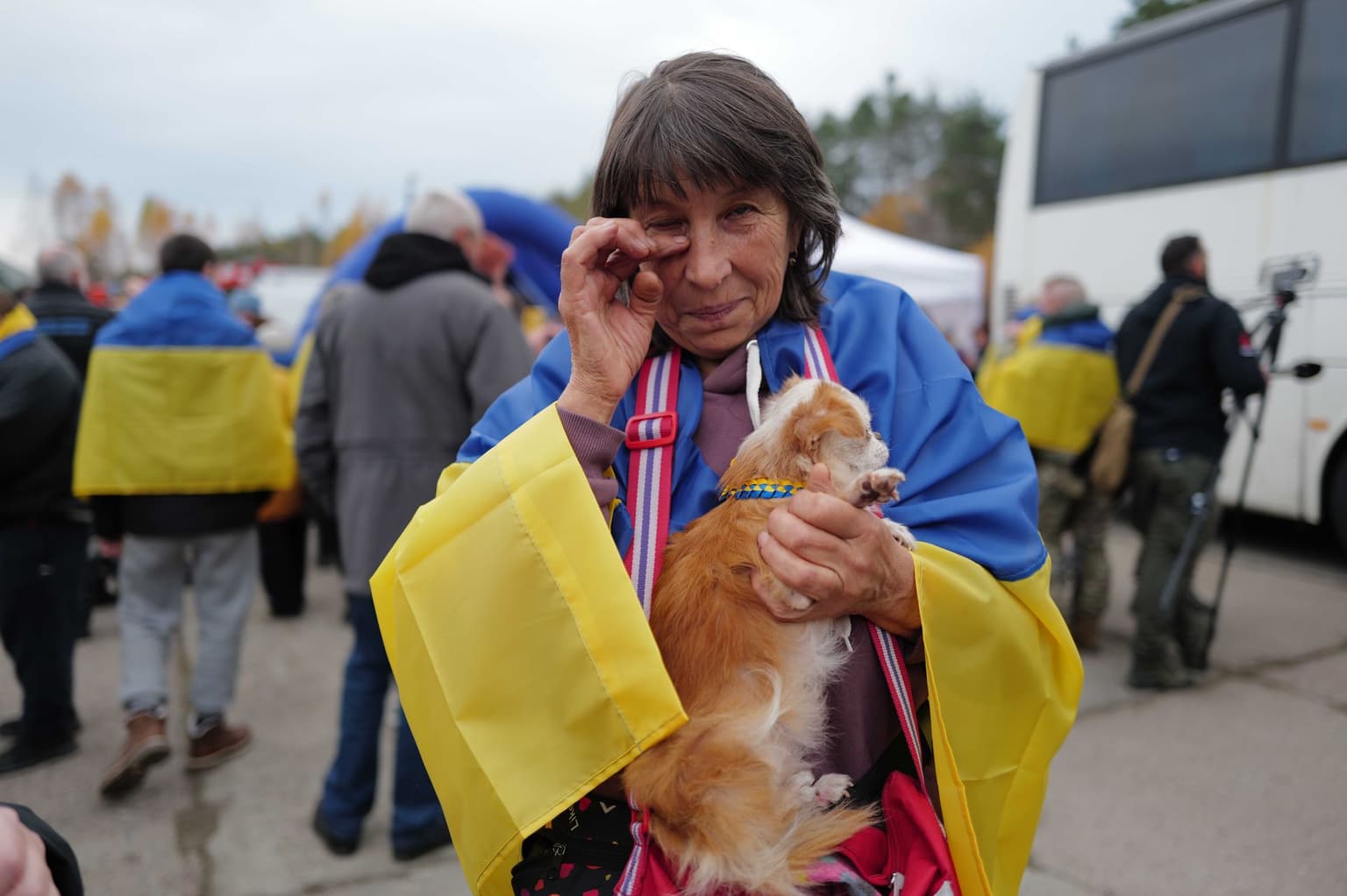
CHERNIHIV OBLAST — Evacuees from the Russian-occupied city of Oleshky have reached Ukrainian-controlled territory on Oct. 31 after an arduous 19-hour journey.
The city's residents, who had been trapped in a worsening humanitarian crisis for months on end, arrived to an emotional reception at the border crossing with Belarus by relatives, health workers with ambulances, aid organizations, police, and media.
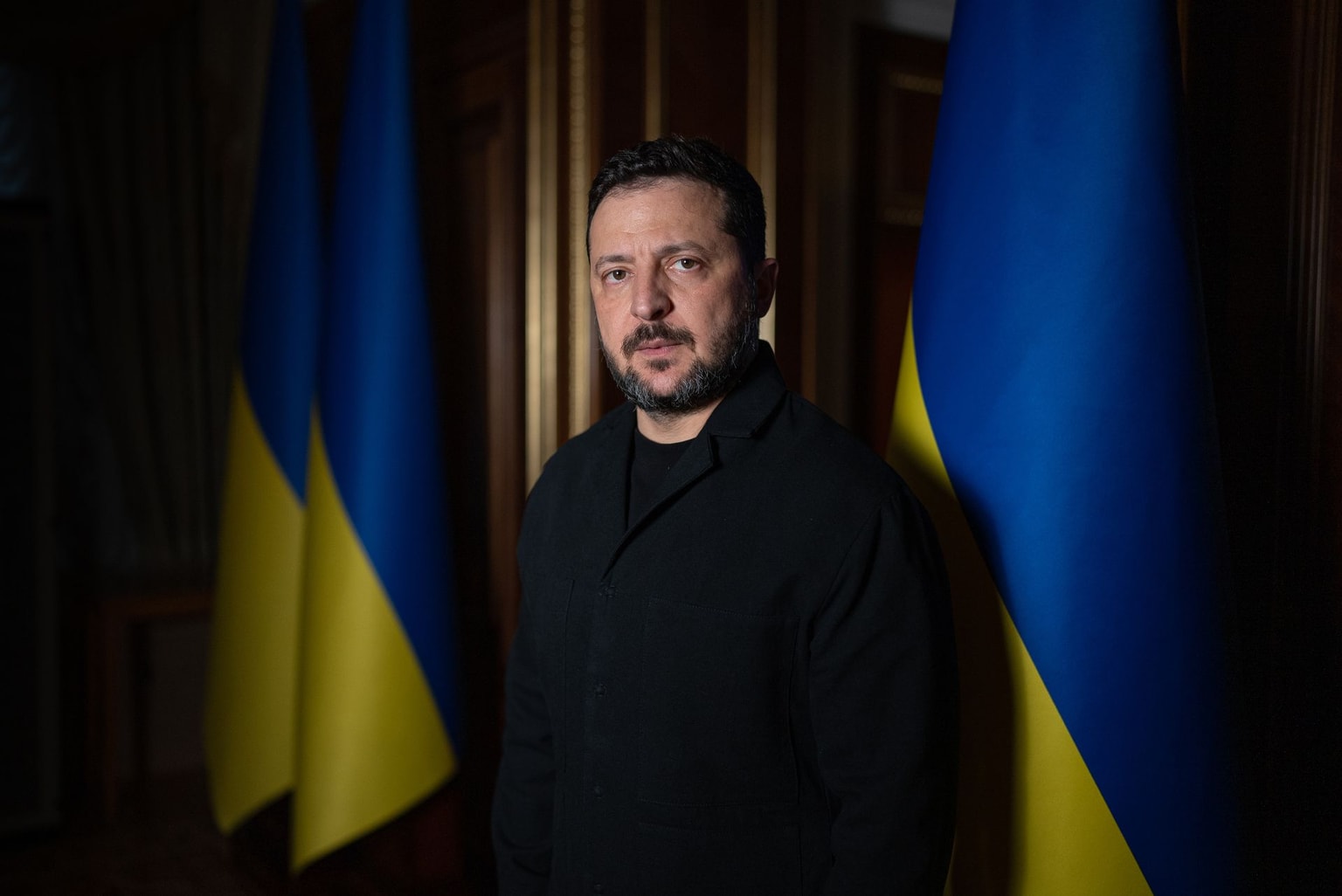
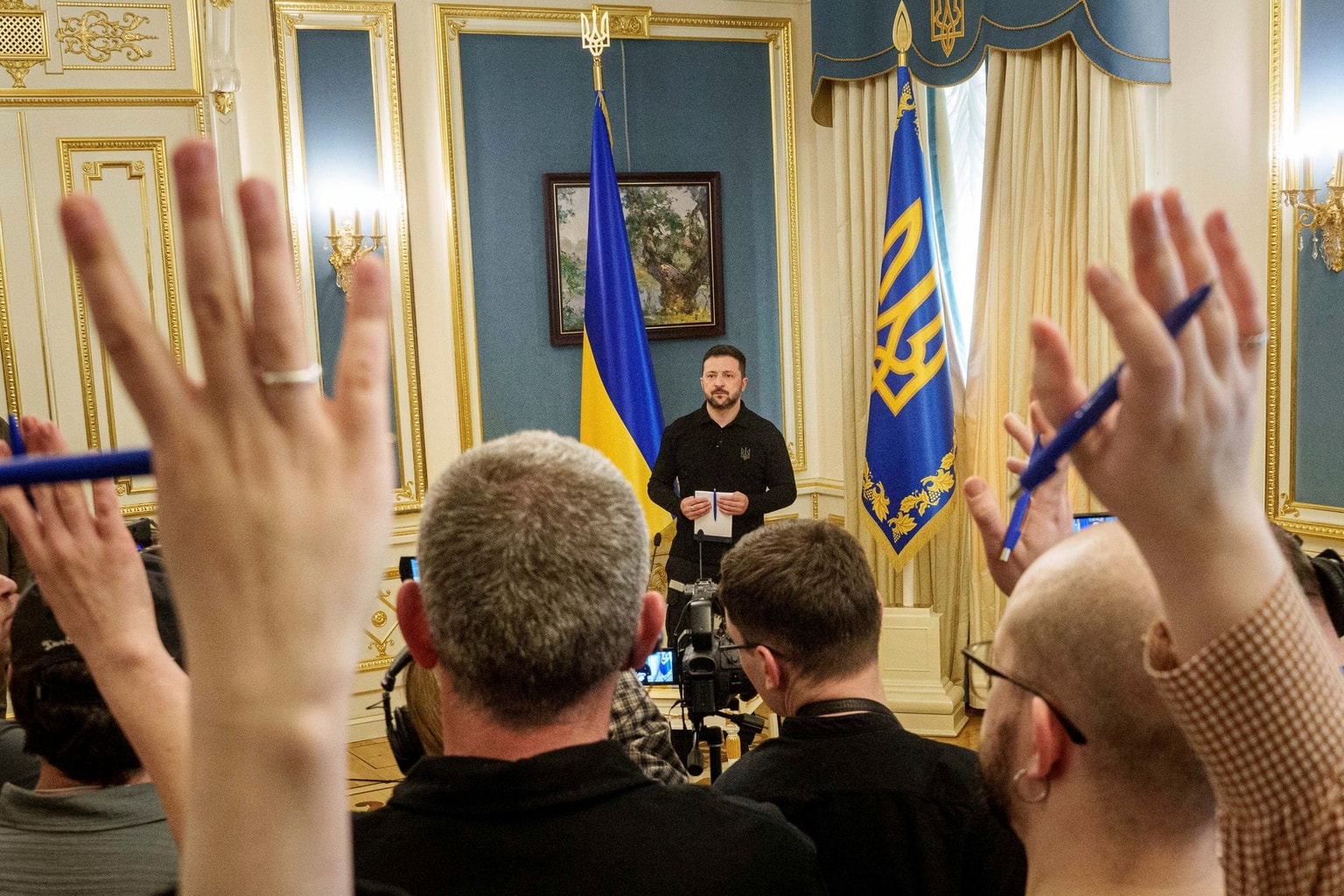
President Volodymyr Zelensky confirmed the mission was successful, thanking all parties involved, including U.S. First Lady Melania Trump.
"When there is the attention of the world, there is the salvation of people," Zelensky wrote.
"Further de-escalation steps and a real approach to peace are also needed."
Disembarking the buses to step on Ukrainian-controlled soil for the first time in years, many residents failed broke out in tears.
Liudmyla Burychenko, 39, said she always had faith that residents would eventually be evacuated, and decided to leave Oleshky as soon as the opportunity presented itself. She arrived with her husband, Valentyn. Their son had left the occupied town earlier.
“There were drones there flying around (in recent months). We took shelter in the basement,” Burychenko told the Kyiv Independent.
Ukraine's Human Rights Ombudsman Dmytro Lubinets, and Russia's Commissioner for Human Rights Yana Lantratova, had coordinated the operation.
"This is an extraordinarily important moment," Lubinets wrote upon arrival in Ukraine.
"Behind us are difficult negotiations, agreements, preparations and an enormous amount of work. But most importantly, the people who have waited so long to be rescued are finally safe."


According to the Ombudsman, the oldest evacuee was 94 years old, while the youngest had only recently turned one.
Officials have not yet disclosed the exact number of those evacuated to Ukrainian-controlled territory, citing security reasons amid the highly sensitive operation.
The evacuation followed a temporary ceasefire agreement reached between Ukraine and Russia, with mediation by U.S. First Lady Melania Trump. The arrangement was intended to allow humanitarian aid deliveries and the departure of civilians wishing to leave Oleshky.
According to Lubinets, the ceasefire will last until 11 p.m., making it the longest halt to the fighting in any area since the full-scale invasion began in 2022.
This is the largest publicly-known humanitarian operation involving civilians from Russian-occupied Ukrainian territories.
Ukraine has regularly facilitated the return of its citizens, including children, from occupied areas, but the Oleshky mission was unprecedented, both in its scale and in the role played by a U.S.-mediated ceasefire in Kherson Oblast to allow civilians to leave safely.
Some relatives who spoke to the Kyiv Independent said their loved ones had stayed in Russian-occupied Oleshky out of fear of Russian filtration checks.
Holding her young daughter in her arms, Iryna Mohylna waited for her godfather to return. She last spoke to him on Oct. 27 and later saw a video of him boarding an evacuation plane.
"It's the pain of what has happened and of what is still to come… I understand his age and why he chose not to leave. He spent his whole life working, building something for himself, and now he has to leave it all behind. It's impossible to put into words."


The first leg of the day-long journey was to Armiansk in occupied Crimea, where residents could choose whether to go to Russia or Ukraine.
According to Newsmax journalist Alex Salvi, who was one of the only non-Russian journalists granted access to the mission inside Oleshky itself, the approximately 750 people who registered for evacuation were split between 11 buses going to Ukraine, and only four taking those who chose Russia.
From Armiansk, the buses took residents to Anapa in Russia's Krasnodar Krai, where they boarded four planes to Belarus, according to David Arakhamia, head of President Volodymyr Zelensky's parliamentary faction.
The planes carrying the evacuees landed in Gomel in Belarus, from where they were brought to Ukrainian-controlled territory.
For years, Oleshky residents were trapped in the embattled town with the Russian soldiers stationed among civilian houses. The town, located on the eastern bank of the Dnipro River across from the Ukrainian-controlled city of Kherson, has been under Russian occupation since the early days of Moscow's full-scale invasion.
In recent months, residents faced severe shortages of food, drinking water, electricity, and medical supplies. Russian forces had effectively blockaded the town, preventing humanitarian organizations from delivering aid.

Andrii Zhydenko, director of Chernihiv Regional Hospital, said that more than 30 employees from the hospital were waiting to assist the evacuees, with transfers to Kyiv hospitals available if needed.
"It's a celebration because we're bringing our Ukrainians home," Zhydenko told reporters. "You know how much they suffered there. It is simply genocide in the 21st century."
For many of those leaving Oleshky, the evacuation offered a way out of a worsening humanitarian crisis that had made survival increasingly difficult.
According to Mohylna, the blockade of Oleshky began in earnest in October last year, and by December, supplies and groceries were no longer being brought into the city.
"It was survival. Traveling around the city was very dangerous because of the mines," she said.
"I was talking on the phone with my godfather and I heard an explosion from the sound. Then I read in a telegram that a person had been blown up by a mine."
Mined roads, constant drone attacks, and Russian interrogations at checkpoints made independent evacuation extremely dangerous. In September, one person was killed and four others were injured by landmines while attempting to flee the area, according to the head of the exiled Oleshky City Military Administration, Tetiana Hasanenko.
Before the war, Oleshky had a population of around 24,000. By October, only around 2,000 people, including nearly 50 children, were believed to remain there, according to Ukrainian officials.
How did Russia act on the ground?
The evacuation was accompanied by a significant Russian media presence, with numerous Russian journalists attending the operation, compared with only two Ukrainian and two American journalists.
Russia also appeared to be seeking to present a carefully staged picture of the humanitarian mission. According to Oleshky residents interviewed by the Media Initiative for Human Rights (MIHR), Russian forces selected an evacuation route that avoided the town's most heavily destroyed areas, while clearing the road of debris, damaged military equipment, and rubble ahead of the operation.
One resident told MIHR that Russian forces were effectively creating an image for American television that "it's not that terrible in Oleshky," despite entire neighborhoods having been reduced to ruin.
Kseniia Arkhipova, an evacuation volunteer from Oleshky who is now based in Ukrainian-controlled territory, said that Russia had violated the terms of the agreement by starting the evacuation early.

Footage broadcast by TASS also appears to show civilians being moved with only Russian forces present and before the agreed-upon date of departure, Oct. 30. TASS also showed interviews with people it claimed were evacuated from Oleshky on Oct. 29.
The Russian-installed head of occupied Kherson Oblast, Volodymyr Saldo, claimed on Oct. 27 that residents would have a choice — either to stay in Russia or to travel to Ukrainian-controlled territory "to reunite with their families."
Foreign Minister Andrii Sybiha previously warned that Russia is preparing to stage "dozens" of videos, and President Volodymyr Zelensky said on Oct. 25 that Russia will likely "do everything it can to clear the roads in such a way that these people head toward Russia and remain there."
A source familiar with the events unfolding on the ground, speaking to the Kyiv Independent on condition of anonymity, said on Oct. 29 that Russia was already taking steps to ensure as few people as possible left for Ukraine.
They said that patients at the city's only functioning hospital were being registered and told they faced filtration if they left, Russian forces had refused to go house-to-house to inform sick and immobile people that the evacuation was happening, and those living in outlying villages had been told they could be shot if they approached the assembly point.
Some residents expressed fears in local Telegram chats that they could be taken to "concentration camps."