News from occupied Ukraine: Military delivers aid by drone to occupied Oleshky in second operation
 on Google

This weekly update from the Kyiv Independent aims to shed light on the situation facing Ukrainians living under Russian occupation and the ever-tightening control of information imposed by the Kremlin.
Key news as of Oct. 4:
- Ukrainian forces deliver nearly 4 tons of aid by drone to occupied Oleshky in second operation
- Ukraine's military strikes Russian military targets in occupied parts of Donetsk, Zaporizhzhia, Luhansk oblasts
- Ukraine returned 41 civilians from occupied territories through Volyn border crossing in August and September, ombudsman said
- Ukraine, over 50 allies sign pledge on return of Ukrainian children abducted by Russia
- UK sanctions 7 Russians over deportation, indoctrination of Ukrainian children
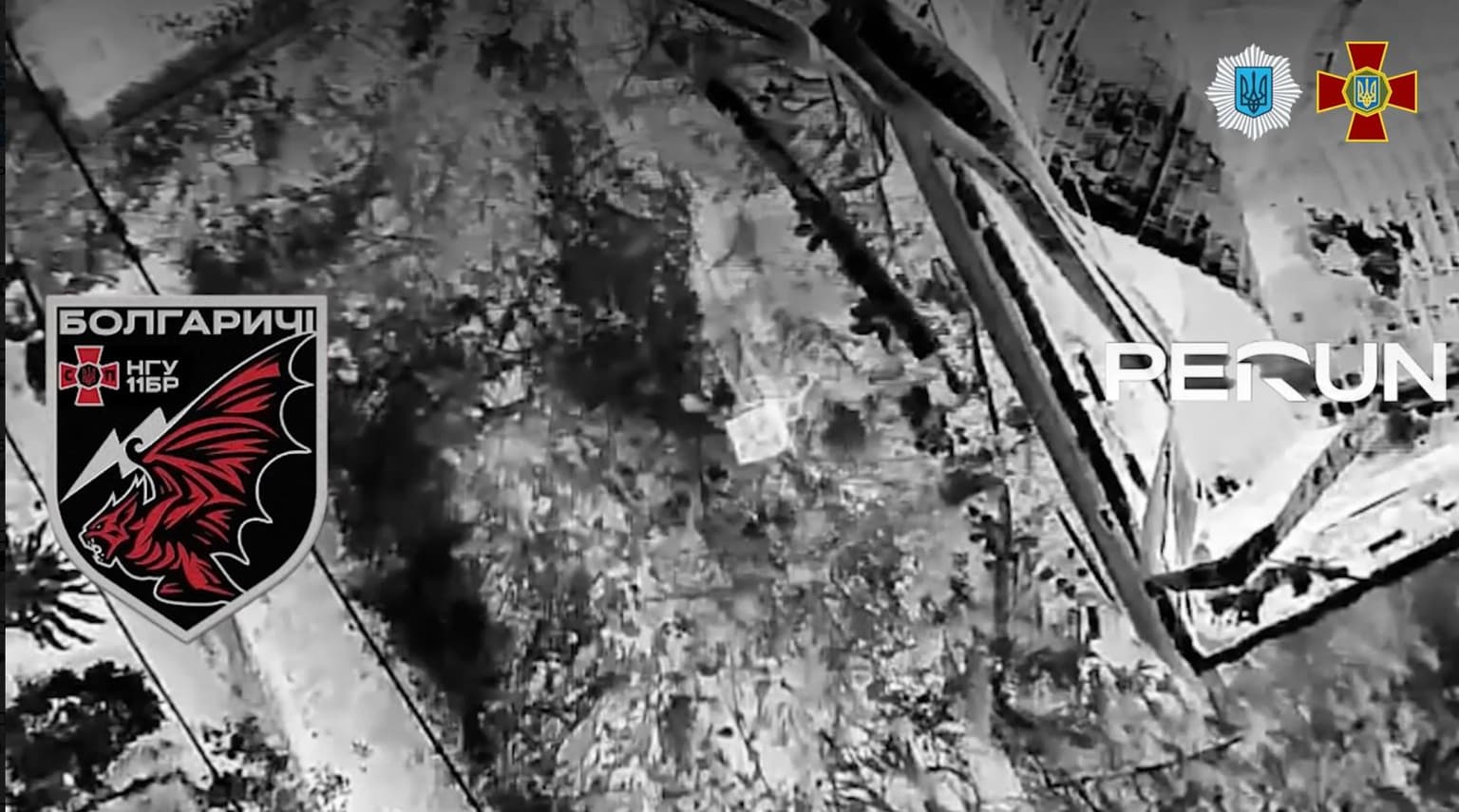
Ukrainian forces delivered nearly four metric tons of humanitarian aid by drone to Russian-occupied Oleshky in Kherson Oblast overnight on Oct. 4, Ukraine's Interior Ministry said.
The operation was the second large-scale drone delivery to the occupied city, where residents have faced severe shortages of food, water, and medicine.
Oleshky in Kherson Oblast has been under Russian occupation since the early days of the full-scale invasion. Mines, constant drone attacks, and interrogations by Russian troops at checkpoints make it impossible to evacuate safely.
Nearly 400 packages containing food, medical supplies, and kits for children were transported into Oleshky, according to the ministry. The National Guard said all of the packages successfully reached the city.
The operation involved troops from the National Guard's 11th Mykhailo Hrushevskyi Brigade and 34th Kherson Regiment, working alongside the 30th Marine Corps, the 34th Borysfen Marine Brigade, and the State Border Guard Service's 79th Detachment.
During the operation, a drone crew from the Perun unit also evacuated six animals from Russian-occupied territory, the Interior Ministry said.
The delivery follows a similar operation in late September, when Ukrainian forces transported around four metric tons of food into Oleshky by drone after conventional humanitarian deliveries became effectively impossible.
Russian forces have also confiscated some of the food delivered by Ukrainian drones, Tetiana Hasanenko, head of the Oleshky City Military Administration, said earlier this week.
According to Hasanenko, residents found with non-Russian products have also been questioned over possible cooperation with the Ukrainian military.
Ukraine's Foreign Ministry said that around 2,000 people, including nearly 50 children, remained in the occupied town with severely limited access to food, drinking water, electricity, and other basic services.
The humanitarian situation in Oleshky has drawn growing international concern. On Sept. 25, Council of Europe Commissioner for Human Rights Michael O'Flaherty warned that civilians, including children, were struggling to access food, medicine, medical care, clean water, and electricity, and that some could face a serious risk to their lives.
O'Flaherty said international humanitarian law requires an occupying power to ensure civilians have access to food and medical supplies and to facilitate humanitarian assistance.
read also
Ukraine's military strikes Russian military targets in occupied parts of Donetsk, Zaporizhzhia, Luhansk oblasts
Ukraine's military struck several Russian military targets in occupied parts of Donetsk, Zaporizhzhia, and Luhansk oblasts on Oct. 3 and overnight on Oct. 4, the General Staff said.
In Zaporizhzhia Oblast, Ukrainian forces struck a Russian Buk-M3 air defense system.
In Donetsk Oblast, near the city of Dobetsk, the military hit a site used to store, prepare, and launch Russian attack drones. They also struck Russian military telecommunications hubs near Hirnyk, Yasynuvata, and Donetsk.
In Luhansk Oblast, Ukrainian forces struck Russian repair units near Vesela Tarasivka and Lysychansk.
The strikes are part of a series of attacks on Russian military infrastructure in occupied Ukrainian territories.
Ukraine returned 41 civilians from occupied territories through Volyn border crossing in August and September, ombudsman said
Forty-one Ukrainian citizens, including four children and five teenagers, returned from Russian-occupied territories through a Volyn border crossing in August and September, Ukrainian human rights ombudsman Dmytro Lubinets said on Oct. 2.
Among those returned was a family that had reunited after their father had been released from Russian captivity, Lubinets said. Their eldest son had also been held captive since April 17, 2022. The mother and youngest son, meanwhile, were earlier confined to a facility against their will and subjected to forced treatment under the pretext of receiving medical care by occupation authorities, Lubinets said.
A young medical worker had been returned to Ukraine shortly before she would have been mobilized into Russia's armed forces, Lubinets also said.
The fate of thousands of Ukrainians currently in captivity, as well as those living under occupation, remains uncertain. Ukrainian authorities say up to 16,000 Ukrainians are considered missing, while Russia is holding thousands of Ukrainian civilians in detention.
Located in Ukraine's northwestern Volyn Oblast, the Volyn humanitarian corridor is the only working checkpoint between Ukraine and Belarus and is almost exclusively used by people escaping the occupied territories.
The last direct route from Russia to Ukraine through a checkpoint in Sumy Oblast was closed in August 2024 amid escalating Russian attacks in the oblast.
Given that the territory of Belarus was used by Russia to launch its full-scale invasion, the area around the crossing is heavily fortified with mines and anti-tank hedgehogs.
Read more about the process of leaving the occupied territories through the Volyn corridor in the earlier reporting of the Kyiv Independent.
Ukraine, over 50 allies sign pledge on return of Ukrainian children abducted by Russia
Fifty countries and four other organizations signed a pledge on Sept. 29 calling for the return of Ukrainian prisoners of war (POWs), unlawfully detained civilians, and children abducted by Russia.
The pledge condemned Russia's forced militarization of Ukrainian children living in Russian-occupied territory as Moscow continues to wage its war against Ukraine.
"We also express concern about the militarization of children in the temporarily occupied territories of Ukraine by the Russian Federation. These actions have serious negative consequences for their identity, well-being, family unity, human rights and fundamental freedoms," the Toronto Pledge says.
Austria, Denmark, Hungary, Japan, and the United Kingdom are among the signatories alongside organizations including the Council of Europe and the European Union.
Norwegian Foreign Ministry State Secretary Eivind Vad Petersson noted that Russia's treatment of Ukrainians is a systemic issue that must receive a systemic response.
Canadian Foreign Minister Anita Anand said that new technology and methods, including artificial intelligence and working with third countries as intermediaries, must be utilized as "gaps remain" in efforts to return Ukrainians home.
UK sanctions 7 Russians over deportation, indoctrination of Ukrainian children
The U.K. sanctioned seven Russian individuals involved in the forced deportation and re-education of Ukrainian children from occupied territories on Oct. 1, the Ukrainian President's initiative, Bring Kids Back, said on Oct. 2.
Russia is militarizing Ukrainian children and youth in the occupied territories, removing their Ukrainian identity to "raise future soldiers" and involve them in the fight against their own people.
Russia has abducted tens of thousands of Ukrainian children since the start of the full-scale invasion. As of September 2026, Ukraine's Justice Ministry has officially confirmed 20,610 cases of deportation, though Ukrainian officials estimate the real total could number in the hundreds of thousands.
According to Bring Kids Back's press release, the sanctions target Artur Orlov, head of Russia's Movement of the First, a state-backed organization for children and young people, as well as five heads of its regional branches in occupied parts of Donetsk, Luhansk, Kherson, and Zaporizhzhia oblasts and Crimea.
The Movement of the First was established in 2022 at the initiative of Russian President Vladimir Putin and has more than 344,600 members in occupied Ukrainian territories, according to a report from an Organization for Security and Co-operation in Europe (OSCE) expert mission.
Russia's abduction of Ukrainian children could constitute an act of genocide, according to the U.N.'s Genocide Convention, which lists "forcibly transferring children of the group to another group" as one of the five acts that fall under the definition
In 2023, the International Criminal Court issued arrest warrants for Putin and Maria Lvova-Belova, Russia's Commissioner for Children's Rights, for their role in state-sanctioned child abductions.
The U.K. announced the sanctions on Oct. 1 as part of a wider package targeting 31 individuals over Russia's war against Ukraine. The package also includes eight people accused of involvement in arbitrary detention, torture, and ill-treatment of civilians in Russian-occupied Ukrainian territories, including Kherson and Zaporizhzhia oblasts.
"We are targeting both the revenues that help sustain Russia's aggression and the perpetrators of horrendous crimes against Ukrainian civilians, including children. The UK will not flinch in our support for Ukraine," UK Minister for Europe Lord Wood of Anfield said.