Investigation: Inside Russia's FSB prison system in Crimea
The Kyiv Independent uncovered how two new pretrial detention centers in occupied Crimea became part of a system of unlawful detention of Ukrainian civilians — and who likely heads one of the secretive facilities.

The Kyiv Independent has revealed how two new pretrial detention centers in occupied Crimea are used to unlawfully detain Ukrainian civilians. (The Kyiv Independent)
 on Google
Two new Russian pretrial detention centers in occupied Crimea form part of a system in which Ukrainian civilians are held for months without formal charges, access to lawyers, or family contact, and detainees report torture and abuse under the watch of Russia’s Federal Security Service (FSB), a new investigation by the Kyiv Independent reveals.
Former detainees told the Kyiv Independent that their relatives sometimes did not know whether their abducted loved ones were still alive.
Russia's Federal Penitentiary Service formally operates one of the new facilities, Pretrial Detention Center No. 2 (SIZO No. 2) in Simferopol, but testimony gathered by the Kyiv Independent indicates the FSB has special access to it. The other facility, SIZO No. 8, officially came under FSB control in March 2026, and information about its head was classified.
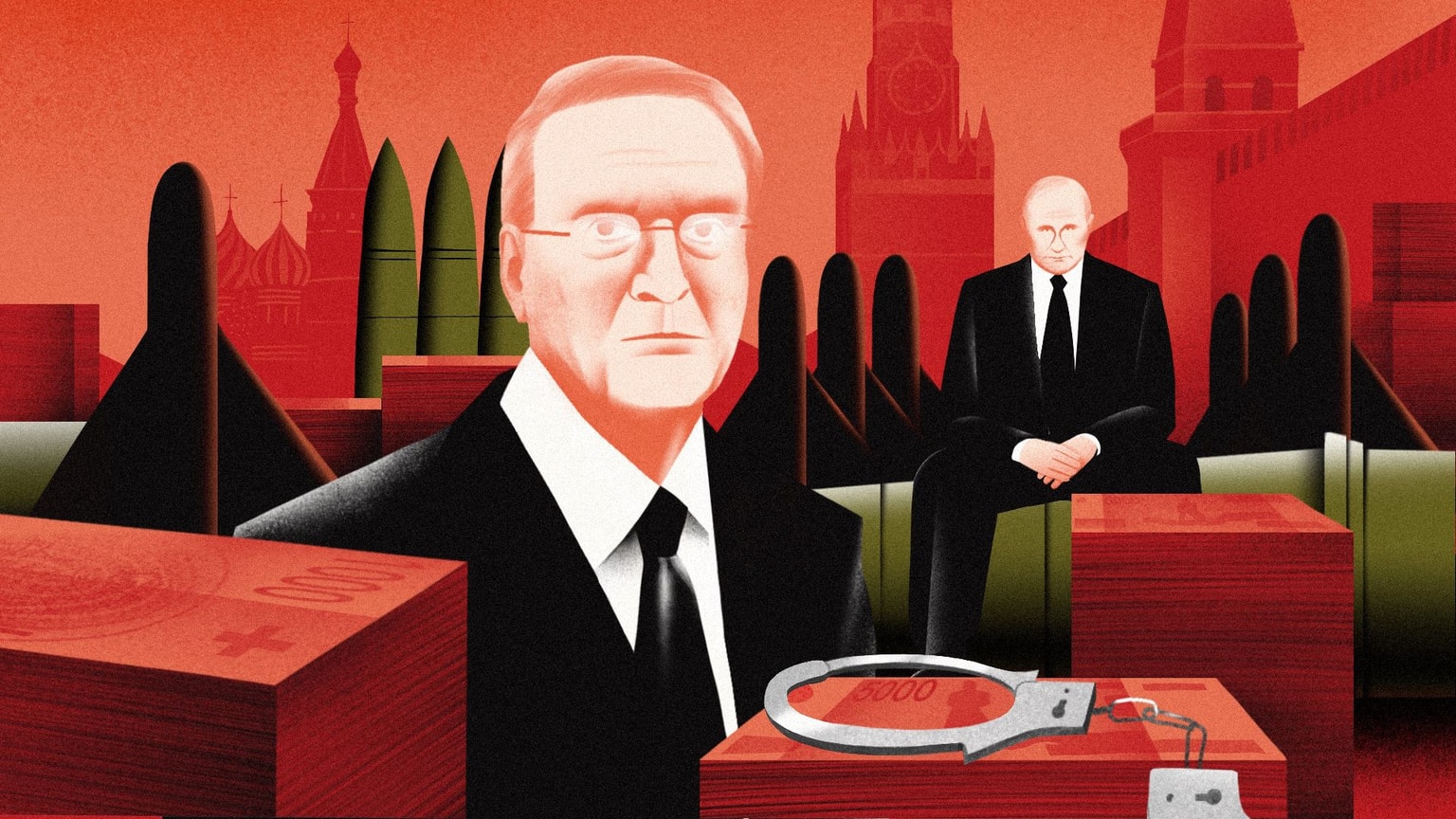
The Kyiv Independent found that Anton Panin, a former FSB investigator who had worked on a politically motivated case against Crimean Tatar activists, likely remained in charge of the facility despite his official dismissal.

For this investigation, the Kyiv Independent interviewed 13 former detainees of SIZO No. 2, obtained testimony from three other detainees through their lawyers and legal advisers, and spoke to about two dozen relatives of civilians held by Russia. Reporters also analyzed official responses from Russian agencies, leaked data, satellite imagery, and documents from both detention centers.
The gathered material shows how Russia turned the system of political persecution it had been building in Crimea since 2014 into a hub for the unlawful detention of Ukrainian civilians, primarily from Kherson and Zaporizhzhia oblasts, after its full-scale invasion.
'That's how my business trip began'
Anatolii, whose name has been changed for security reasons, spent three and a half years in Russian torture sites and Russian-controlled prisons in Kherson Oblast and Crimea. He left the occupied territories in April 2026.
Anatolii lived with his family in southern Ukraine and ran a business. "I never served in the military. I never fought. We lived in our own bubble," he said.
After Russia occupied his hometown in 2022, local Ukrainian authorities asked him to help evacuate wounded Ukrainian soldiers from a local hospital that also treated Russian troops. Anatolii took them into his home, treated them, hid them, and later helped them cross a river to Ukrainian-controlled territory. He stayed in contact with the Ukrainian side afterward.
"They immediately hit me and shoved a pistol against my back below my shoulder blade. After that, I knew I wouldn't lift my head again."
In August 2022, armed men wearing black uniforms arrived at his home in several cars.
"I didn't even have time to work out how many of them there were. They immediately beat me, blindfolded me with plastic wrap, and restrained me. That's how my 'business trip' began," he said.
His captors held him in makeshift torture sites in southern Ukraine, where they gave him electric shocks, choked him, poured water over his face, pulled out his fingernails, and burned his fingers and ears. They forced him to name the people he had been in contact with in Ukraine. Anatolii suspected that Russian police and FSB officers were among his interrogators and torturers. After some time, they gave him documents to sign.
"They would put papers on the table and show me where to sign," he said. "Once, I lifted my head slightly to see the title of a document. They immediately hit me and shoved a pistol against my back below my shoulder blade. After that, I knew I wouldn't lift my head again. I don't know what I signed."
Afterward, they took him to Crimea, to the recently opened SIZO No. 2 in Simferopol.
An established system
Mykola Polozov, a Russian lawyer in exile who defended Ukrainian political prisoners in Crimea, said that Russia has used the peninsula as a testing ground for different forms of repression against civilians since 2014.
The Crimean Tatar activist Nariman Dzhelyal, now Ukraine's ambassador to Turkey, went through that system. In September 2021, Russian authorities detained him together with brothers Asan and Aziz Akhtemov on charges of sabotaging a gas pipeline.
Dzhelyal linked his persecution to his participation in the Crimea Platform political forum in Kyiv, where participants discussed ending the Russian occupation.

Polozov, one of Dzhelyal's lawyers, called the case against his client politically motivated and crudely fabricated.
"As for the Akhtemov brothers, unfortunately, they were subjected to a horrific practice used by Russian security forces: torture to extract the testimony they wanted," Polozov said.
In court, Asan Akhtemov said he had been tortured and denied access to a lawyer before his interrogation. One of the FSB investigators who conducted those initial interrogations of Asan Akhtemov was Anton Panin, who denied the claims.
Russian authorities placed Dzhelyal and the Akhtemov brothers in SIZO No. 1 in Simferopol, where Russia has held political prisoners since 2014. At the start of the full-scale invasion, Dzhelyal recalled, part of one floor was cleared to make room for civilians brought from Kherson and Zaporizhzhia oblasts.

"Shortly afterward, we all learned that a floor in the detention center's women's block had been cleared. Metal plates had been welded over the windows. We heard about how badly they were being treated and sometimes saw them," Dzhelyal said.
In the fall of 2022, SIZO No. 2 opened in Simferopol after corruption delayed its construction, relieving the overcrowded SIZO No. 1. Anatolii was transferred there along with others detained in Kherson and Zaporizhzhia oblasts.
'A regime designed to destroy people'
Anatolii described SIZO No. 2 as a new four-story building. The "intake," the usually harsh process of admitting detainees to the facility, took place on the first floor. Cells and interrogation rooms were on the floors above.
Former detainees interviewed by the Kyiv Independent said guards watched them constantly, denied them adequate medical care, never turned off the lights in their cells, and allowed them to wash for just five minutes once a week. Those who did not finish in time were forced to run back to their cells naked and were shocked with stun guns. Guards set dogs on the prisoners, forced them to learn the Russian national anthem, and beat them constantly.

According to Anatolii, some of the torture took place in a room without video surveillance, where staff took all the detainees from one cell, threw them to the floor, and beat them with electric-shock batons.
The prison authorities forced prisoners to move through the facility in a position known as the "swallow" — bent over, with their arms twisted behind their backs and raised high. Prisoners also had to line up in this position whenever a guard opened the cell's peephole.
"My record was 274 seconds. I counted because it made things easier. Then I just collapsed — my body couldn't take it, and my legs gave out," Anatolii said.
The Kyiv Independent identified the specific detention center employees responsible for this regime and sent former detainees photographs of those identified.
"I’ll never forget this man. He knew exactly where to hit — where the liver was, where the kidneys were."
Several witnesses identified Russian national Zhanat Akhmetov, who was deputy head of the regime department at SIZO No. 2 in 2023, according to leaked documents published by the Ukrainian cyber collective KibOrg. He moved to Crimea after the occupation and first worked at SIZO No. 1.
"I’ll never forget this man. He knew exactly where to hit — where the liver was, where the kidneys were," Anatolii said.

Leonid Kovekh, a Ukrainian citizen who continued working in Crimea after the occupation, headed the regime department. Some former prisoners said he supervised torture and participated in it personally.
Nikolai Ryabov, a lieutenant colonel in the Federal Penitentiary Service and the first head of SIZO No. 2, was dismissed after corruption accusations in 2023. One of the detainees accused him of beatings. He was replaced by Anton Horkun, a defector and former Ukrainian police officer.
'Everything depends on the FSB'
Witnesses drew particular attention to a separate section of the third floor. The windows there had been painted over, and detainees were guarded not only by regular staff but also by unidentified people in masks and green uniforms.
Former detainees said prisoners held there were called "the frozen," or "prisoners without charges." They faced no formal charges, had no contact with their families or access to lawyers, and some did not even know where they were. Such detention, in complete isolation from the outside world, is known as incommunicado detention. Anatolii spent about six months in these conditions.
"My family didn't know what had happened to me or where I was. They were even told I was dead," he said.
The Kyiv Independent reviewed dozens of responses from Russian agencies to relatives and lawyers of missing civilians. In many cases, neither the Federal Penitentiary Service nor the FSB's Crimea directorate confirmed that the missing people were in their custody.
In one instance, though, the FSB directorate wrote to the father of a woman abducted in Kherson, "The individual opposed the special military operation. … The individual is being held in accordance with applicable law." It later became clear the woman had been held incommunicado at SIZO No. 2.
After the start of the full-scale invasion, Russia created a parallel system of detention based on secret decrees issued by Vladimir Putin, according to Polozov. Ukrainian human rights advocates said the FSB needs only an order from a local FSB chief to imprison someone for opposing Russia's war, and that facilities run by the Federal Penitentiary Service must help isolate those detainees.
International humanitarian law does allow an occupying power to intern civilians it believes pose a security threat, but only under strict conditions. These include the right to appeal and regular reviews of the ruling, and confinement in designated internment facilities rather than ordinary pretrial detention centers or prisons.
In a September 2025 report, the U.N. Human Rights Office said it was not aware that Russia had established and applied such a procedure for those detained in occupied Ukraine.
SIZO No. 2 is formally part of the Federal Penitentiary Service. Yet former detainees' testimony indicated that the FSB had special access to the facility. Anatolii recalled an interrogation conducted by a man who, by all indications, was an FSB officer. Before it began, the surveillance camera was covered with cardboard.

Several former detainees also independently described an employee who, they said, served as a link between the detention center administration and the FSB: Yaragi Kurbanov, a Russian national from Dagestan.
The Kyiv Independent established that Kurbanov worked at both SIZO No. 1 and SIZO No. 2. One witness claimed that Kurbanov conducted interrogations, had copies of criminal case files, was responsible for prisoner transfers, and coordinated a special unit. The Kyiv Independent could not independently verify these claims.
Another former prisoner recalled that after he complained he had not been called in for questioning for four weeks, Kurbanov told him, "Nothing depends on me. Everything depends on the FSB."
Today, Crimea has a separate detention center officially under FSB control.
The eighth detention center
Tetiana Zelena learned of her older brother Serhii Lykhomanov's detention in December 2023. She had moved to Italy with her family after Russia's full-scale invasion.
Serhii had lived in Crimea for many years, serving on the peninsula after attending military school, and left the military for health reasons with the rank of major in 2007. Tetiana said he never returned to military service.
"His wife called me and said Serhii had been taken away. I felt the ground give way beneath my feet. I don't even remember that day," Tetiana said.
For two months, his family did not know where he was being held or why. When Serhii was brought home, ostensibly to verify his testimony, his relatives learned at least one thing — he was suspected of illegally possessing explosive devices.
The family hired a private lawyer for Serhii, but the lawyer was denied access to his client. The only response from the detention center was a statement in Serhii's handwriting, purportedly refusing the services of an independent lawyer. Eventually, the family determined Serhii was being held in SIZO No. 8 in Simferopol.
The detention center was registered roughly at the same time as SIZO No. 2 and at the same address, 4 Elevatornyi Lane in Simferopol. But it was unclear which of the buildings at the address housed it. Media reports suggested that SIZO No. 8 might occupy a separate floor of SIZO No. 2.
Former SIZO No. 2 detainees said the prison van picked up people from another building beyond the fence on the way to interrogations at the FSB directorate.
The Kyiv Independent sent a satellite image of the site to a former SIZO No. 8 detainee living in occupied territory. He pointed to the smallest of three structures on the site, near SIZO No. 2. A lawyer working in Crimea who had represented clients held at the facility corroborated his account.

Information in Russian registries also showed that SIZO No. 8 reported directly to the Federal Penitentiary Service's central office in Moscow, rather than to its Crimea directorate, unlike SIZO No. 2.
Seven similar facilities existed in Russia, which researchers who study the Russian security services call "FSB detention centers." The list included the notorious Lefortovo prison, under KGB control in Soviet times. The Crimean facility became the eighth.
A Russian law that took effect on Jan. 1, 2026, allowed the security services to establish and use their own pretrial detention centers for suspects in cases involving "state security." Authority for all but one of these detention centers was officially transferred to the FSB in March 2026.
"You end up with a closed-cycle operation: FSB operatives, an FSB investigator, and an FSB prison. That means complete control over a person," Polozov said. "There is no longer any need to negotiate with another agency. They can do everything themselves."
Apart from Serhii, the Kyiv Independent found information about only a few people held at SIZO No. 8 in open sources. They had been accused of treason or terrorism. A foreign volunteer who lived in Kherson was held incommunicado at the facility.
The prison chief
At the time of Serhii's detention, Rauf Idrisov, a Russian national, headed SIZO No. 8.
After the transfer of seven detention centers to FSB control, the names of their heads remained publicly available in Russian registries, the only exception being the facility in Crimea.
The Kyiv Independent found that Idrisov had been removed from his post two weeks before the detention center's official transfer to FSB control. Anton Panin, the former FSB investigator who had interrogated Asan Akhtemov in the gas pipeline sabotage case, replaced him. Panin, in turn, was officially dismissed the day before SIZO No. 8 came under FSB control, and public information about the facility's head disappeared.
Leaked Russian databases showed that Panin, 42, had previously worked for the FSB directorate in Altai Krai in Russia. He moved to occupied Crimea in 2017 and in 2021 received an award from Sergey Aksyonov, head of the Russian occupation authority in Crimea.

Using Panin's phone number, the Kyiv Independent found his profile on VKontakte, a popular Russian social network, where he used the name Anton Startsev. Through an app that shows how people have saved a phone number in their contacts, the Kyiv Independent found Panin's number labeled as "Anton FSB," "Panin FSB Investigation," and "Lieutenant Colonel Panin Anton Anatolyevich, FSB Investigator."
On Russia's procurement website, Panin was listed in tender documents as the person responsible for procurement at SIZO No. 8 in June 2024.
The Kyiv Independent also later obtained an exclusive document. It showed that Panin, as acting head of SIZO No. 8, signed a document in April 2025 confirming that a person was being held at the facility.
Through human rights advocates, sources in occupied Crimea also confirmed to the Kyiv Independent that Panin remained in charge of the detention center after its official transfer to the FSB in March 2026.
Registry information, documents, and source testimony together indicated that Panin likely heads the occupied peninsula's most secretive detention center.
Those still waiting
Anatolii's family learned he was alive only in the spring of 2023, when he managed to get word to them through a state-appointed lawyer. When the investigator called him in, he hoped Anatolii would confirm the testimony extracted from him under torture in Kherson Oblast.
"He put the documents in front of me and said, 'But you signed this.' I asked, 'Do you want me to tell you how I did it?' I told him. He turned away toward the window," Anatolii recalled.
He was tried for possession of weapons, although he said no evidence was presented to support the charge. By the time he was sentenced, he had spent almost the entire length of his sentence in custody.
Nariman Dzhelyal was sentenced to 17 years in a strict-regime penal colony and sent more than 5,000 kilometers (about 3,106 miles) away from Crimea. He was returned to Ukraine in 2024.
Asan and Aziz Akhtemov, sentenced to 15 and 13 years, respectively, remain imprisoned.
Tetiana Zelena does not know where her brother is being held now. Serhii Lykhomanov was convicted in two cases, for illegal possession of explosives, preparing a terrorist attack, and treason, and received two sentences of five and 15 years. He is likely being transferred from Crimea to a penal colony in Russia.
"But civilians aren't exchanged. [...] You have a better chance of winning the lottery."
"Whenever a long time goes by without any letters, I think: maybe they've taken him for an exchange. There’s always that hope," Tetiana said. "But civilians aren't exchanged. There's no mechanism. You have a better chance of winning the lottery."
Unlike prisoners of war, who are regularly returned through exchanges, civilians effectively remain without a functioning mechanism for their return. According to estimates by Ukraine's human rights ombudsman Dmytro Lubinets, Russia unlawfully holds about 16,000 Ukrainian civilians in about 200 detention sites in Russia and occupied parts of Ukraine. Only a few hundred people have been brought back.
Meanwhile, Russia continues to expand the prison infrastructure of the occupied peninsula. Russian authorities plan to build another pretrial detention center in Crimea with space for 1,500 people by 2030.