Ukraine war latest: Ukraine brings home 160 POWs in new exchange with Russia
 on Google

- Ukraine brings home 160 POWs in new exchange with Russia;
- EU to restrict protections for Ukrainian men, says it's at Kyiv's request;
- Russian-installed authorities in occupied Crimea announce state of emergency amid intensified Ukrainian drone attacks;
- Ukraine says it struck Russian military supply vessels, air defense systems in occupied Crimea.
A total of 160 Ukrainian prisoners of war (POWs) were released in the latest major exchange with Russia, President Volodymyr Zelensky said on June 26.
The Russian Defense Ministry confirmed that an exchange of 160 POWs from each side had taken place, Kremlin-controlled news agency RIA Novosti reported on June 26.
"We remember everyone who is in captivity," Zelensky said on social media, adding that all those released in the current exchange had been held by Russia since 2022.
"We check every last name. We must return everyone — both military and civilians."
The latest exchange comes a month and a half after U.S. President Donald Trump announced that the exchange would involve 1,000 POWs from each country returning home.
Ukraine said in May that it had provided Russia with "the List of 1,000" for the large-scale exchange, put together based on how long Ukrainian POWs had spent in captivity.
The previous exchange took place on June 5, with a total of 185 Ukrainian POWs returning from Russian captivity.
Regular POW swaps — in addition to the almost monthly repatriation of bodies — remain one of the few working Kyiv-Moscow channels since Russia launched its full-scale invasion of Ukraine in 2022. The swap came as the U.S.-initiated peace talks aimed at securing an end to the war continued to stall, with U.S. President Donald Trump appearing to be losing interest in Ukraine.
Among the Ukrainian POWs released on June 26 are soldiers who defended the Azovstal steel plant, the last Ukrainian stronghold in Mariupol, before the city fell to Russia in May 2022.
The POWs had been fighting as part of the Armed Forces of Ukraine, the State Special Transport Service, the National Guard, and the Border Guards, according to Zelensky.
EU to restrict protections for Ukrainian men, says it's at Kyiv's request
The EU announced on June 26 that it will extend protective measures for an additional year for the 4.4 million Ukrainians living in the bloc, but will no longer approve the entry of men of military age, following a request from the Ukrainian government.
The tightening of eligibility for so-called "temporary protection" is a rising trend across Europe, with Denmark having made the same adjustment the day before, and countries such as Czechia drafting laws on what Ukrainians under temporary protection can do.
The EU initiated temporary protection measures for Ukraine on the first day of Russia's full-scale invasion, but they have to be renewed on a yearly basis. Before the June 26 announcement, protections were set to expire in March 2027.
"We need clarity now (for Ukrainians in the EU)… this is why the prolongation we're doing is so early, rather than waiting for 2027 to do it," said Magnus Brunner, the EU's migration commissioner.
Protections will now be in place until March 2028, while EU countries debate how to shift the system in place for Ukrainians onto a more stable, longer-term footing.
The EU will, however, introduce a new restriction on military-age men, who are forbidden by national law from leaving Ukraine, from taking advantage of the temporary protection measures.
"This is what Ukraine has asked us to do," Brunner said.
So far, the Ukrainian Foreign Ministry and Ukraine's Mission to the EU did not answer the Kyiv's Independent's request to confirm Brunner's comments.
However, "Ukraine highly values the European Union’s intention to extend temporary protection for one year for Ukrainian citizens residing in EU Member States," reads a statement sent by the Ukrainian Mission.
The Ukrainian statement also describes the proposed changes as being "aimed at ensuring greater legal clarity and coherence between EU mechanisms and Ukrainian national legislation in the assessment of new applications."
The roll-out of restrictive measures on military-age men has already provoked a sharp rebuke from the Council of Europe's Human Rights Commissioner, Michael O'Flaherty, who says the change raises human rights concerns.
"Issues related to military service may trigger protection claims, and member states must ensure access to individualized assessments," reads a press release issued by O'Flaherty's office.
The new restrictions will not apply retroactively to men who have previously applied for temporary protection in the EU.
Commissioner Brunner mentioned that people no longer eligible under the EU's temporary protection framework for Ukraine could still apply for asylum under the more general method.
The new restrictions will enter force in a matter of weeks, as soon as EU countries formally adopt the measure and it is published in the official journal of EU law.
Russian-installed authorities in occupied Crimea announce state of emergency amid intensified Ukrainian drone attacks
Russian-installed authorities in Crimea announced a regional state of emergency on June 26 as Ukraine ramped up its long-range drone strike campaign on its occupied peninsula.
"The decision was made primarily to resolve issues of an economic nature," the Russian proxy leader in Sevastopol, Mikhail Razvozhayev, said in his June 26 Telegram statement.
"The legal regime of the state of emergency makes it possible to resolve issues of stable functioning of all spheres on which people's livelihoods depend as quickly as possible."
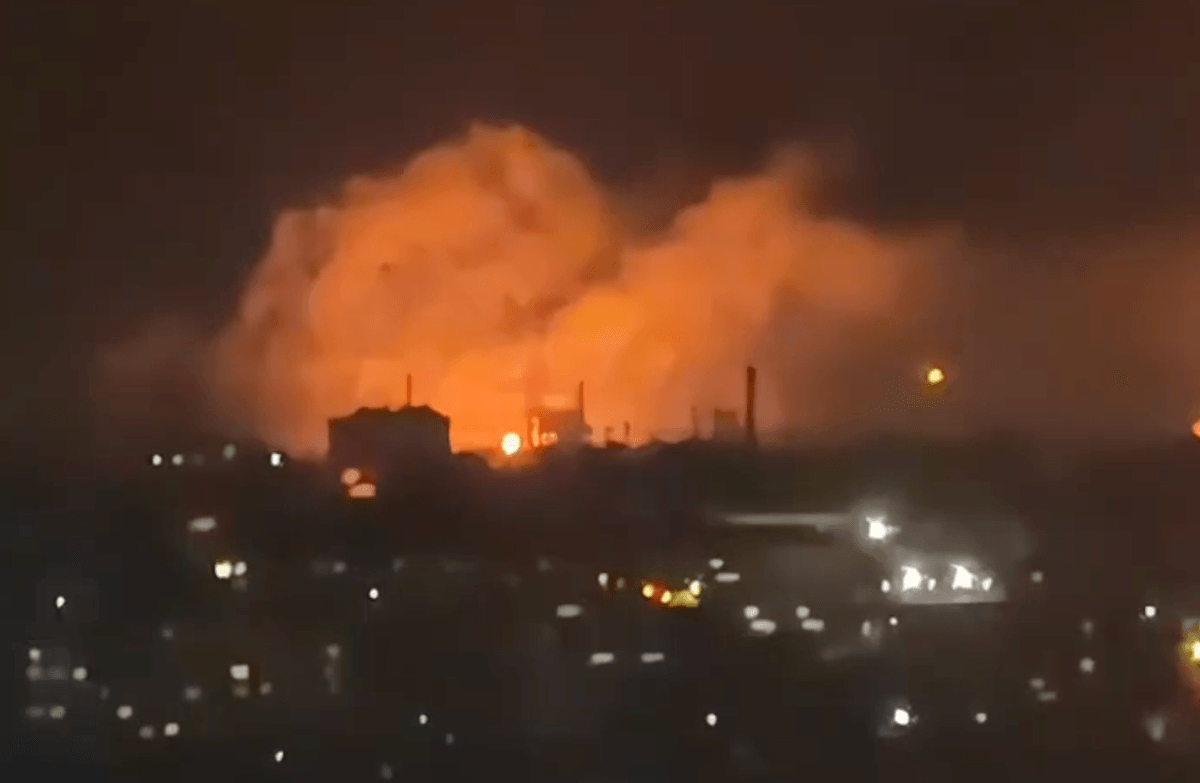
The measure comes a few days after large-scale Ukrainian drone strikes that hit a railway bridge across the North Crimean Canal, fuel facilities, and military infrastructure across occupied Crimea.
Widespread power outages in Crimea have left approximately half of the peninsula without electricity, occupation authority spokesperson Oleg Kryuchkov reported on June 23.
The attacks are part of Ukraine's broader effort to disrupt Russian military logistics in occupied Crimea, which has intensified in recent weeks. It is difficult to independently analyze the effect of the strikes on the Russian army's operations in southern Ukraine.
Moscow's declaration of a regional state of emergency is perhaps "the most significant demonstration yet of the effectiveness of Ukraine's extensive and systematic drone strikes" on strategic targets in Russia and across the Russian-occupied territories, according to Jenny Mathers, a senior lecturer in international politics at the U.K.'s Aberystwyth University.
"That strategy undermines Putin's attempts to shield most Russians — including those who have flocked to occupied Crimea as tourists or residents — from the impact of the war," Mathers told the Kyiv Independent.
"It also reveals the emptiness of Putin's claims that Russia is winning the war."
Razvozhayev said the decision on the state of emergency was made with Sergey Aksyonov, the Russian-installed governor of occupied Crimea. Razvozhayev said the energy supply situation in Crimea remains "difficult" and that the repair work is ongoing to completely restore power in Sevastopol in the coming days.
"It's clear Ukraine's mid-range strike campaign is causing significant problems for Russia, as evidenced by the thousands of people fleeing the peninsula," John Hardie, deputy director of the Russia Program at the Foundation for Defense of Democracies, told the Kyiv Independent.
"The Russians will, of course, seek to adapt to these strikes, but so far it seems they don't have a good answer."
Before Russia's illegal annexation and occupation of Crimea in 2014, the peninsula relied on mainland Ukraine for over 80% of its electricity. Russia constructed and modernized multiple thermal power plants to enable Crimean energy independence — but these facilities remain vulnerable to Ukrainian drones.
A wave of Ukrainian medium-range strikes has targeted Crimea in recent weeks. Kyiv aims to turn the peninsula "into an island" by striking Russian supply chains to isolate Crimea from mainland Russia, Defense Minister Mykhailo Fedorov said on June 17.
Ukraine says it struck Russian military supply vessels, air defense systems in occupied Crimea
Ukrainian long-range drone strikes hit Russia's military supply vessels in the city of Kerch and air defense systems in the Kerch Strait area in occupied Crimea, Ukraine's Security Service (SBU) said on June 26.
The strikes, which hit Project 15310 cable-laying ships the Volga and Vyatka and caused "a massive fire on board," were part of President Volodymyr Zelensky's 40-day operation to "exert pressure on Russia," according to the SBU. The agency said the Russian cargo-passenger ferry Petropavlovsk, which was 96% completed, was also struck.
"The SBU's systematic efforts to target Russian military infrastructure in the temporarily occupied Crimea deprive the enemy of the ability to use the peninsula as a logistical and military hub," the agency, among the Ukrainian branches of defense regularly conducting long-range strikes on Russian-occupied territories and deep inside Russia, said in its Telegram post.
Ukraine has intensified its long-range drone strikes on occupied Crimea in recent weeks, in a coordinated series of attacks to systematically isolate the peninsula from Russian supply lines while destroying critical infrastructure.
On June 25, President Volodymyr Zelensky said he approved a plan for Ukraine's State Security Service (SBU) to launch a 40-day operation to pressure Russia to end the war.
The SBU's report of the recent drone attacks comes as Russian-installed authorities in Crimea announce a regional state of emergency, signaling the impact of the strikes. Widespread power outages in Crimea have left approximately half of the peninsula without electricity, occupation authority spokesperson Oleg Kryuchkov reported on June 23.
"It's clear Ukraine's mid-range strike campaign is causing significant problems for Russia, as evidenced by the thousands of people fleeing the peninsula," John Hardie, deputy director of the Russia Program at the Foundation for Defense of Democracies, told the Kyiv Independent.
The SBU said on June 26 that the Volga and Vyatka ships, which were located at the Zatoka shipyard in Kerch, were built for the Russian Defense Ministry for underwater military reconnaissance. Worth hundreds of millions of dollars, these ships can also deploy contactless mines to target ships, undersea pipelines, cables, and other critical infrastructure, the SBU added.
The Kyiv Independent couldn't independently verify the SBU's claims. It remains difficult to independently assess the effect that the Ukrainian long-range strikes on occupied territories and inside Russia are having on the Russian combat capability on the battlefield.