Putin signs law imposing sweeping restrictions on Russians convicted in absentia
 on Google
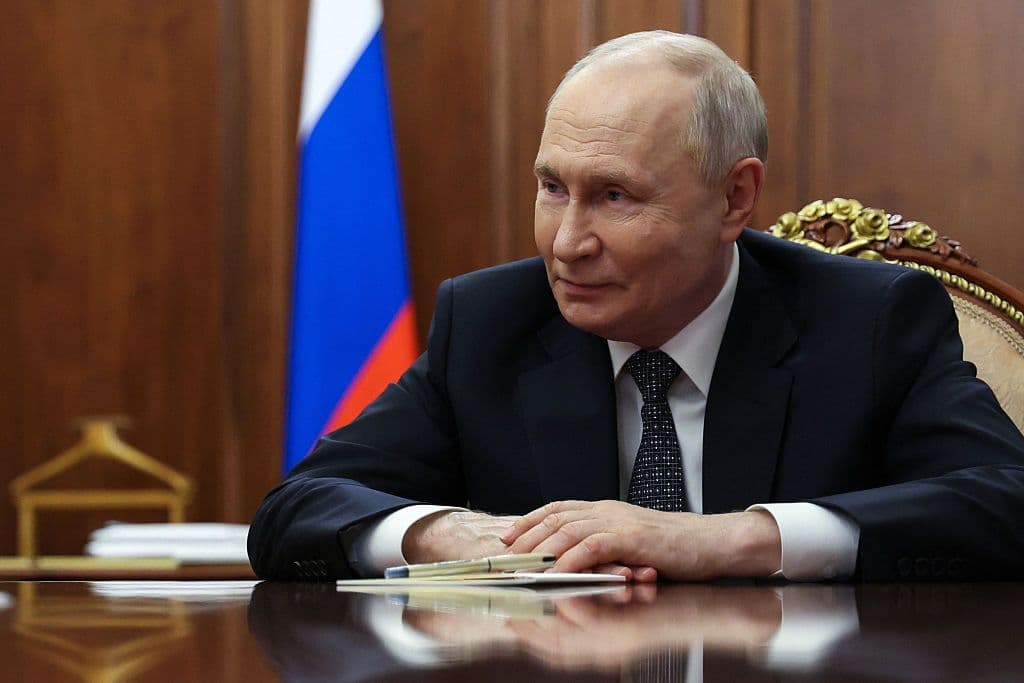
Russian President Vladimir Putin on Aug. 4 signed a law imposing sweeping financial, digital, and consular restrictions on Russian citizens living abroad who have been convicted in absentia, including under laws commonly used against Kremlin critics.
The law, which takes effect upon its official publication, applies to people outside Russia who authorities say are evading court-ordered sentences after being tried and convicted in their absence.
It covers convictions under any article of Russia's Criminal Code, as well as several administrative offenses frequently used against government critics. These include violating Russia's "foreign agents" law, participating in "undesirable" organizations, "discrediting" the Russian military, calling for sanctions against Russia, and challenging what Moscow considers Russia's territorial integrity.
Russia has used such laws to prosecute activists, journalists, opposition figures, and others who criticize the government or its war against Ukraine.
The legislation was approved by Russia's parliament in late July. Russian authorities say it is intended to prevent people living abroad from evading punishment while continuing to access Russian financial and government services.
Under the law, Russia's Justice Ministry will maintain a registry, or "blacklist," of people subject to the restrictions.
Those placed on the list will have their Russian bank accounts and other assets frozen. They will be barred from online banking and Gosuslugi, Russia's online government services portal, and prohibited from selling or transferring real estate and vehicles, obtaining loans, receiving certain state payments, or registering as self-employed.
The law also sharply limits access to Russian consular services abroad. Embassies and consulates will no longer issue passports or most other official documents to people on the list, although they may still provide certificates confirming that a person is alive.
Legal experts from First Department, a Russian human rights group that assists people facing politically motivated prosecution, said the restrictions are "similar to de facto deprivation of citizenship."
"The state retains jurisdiction and control over the individual, continues to demand the execution of punishment, but does not provide a significant portion of the rights that are usually associated with citizenship," the group wrote.