Denmark says it won't grant refugee protection to Ukrainians eligible for conscription
 on Google
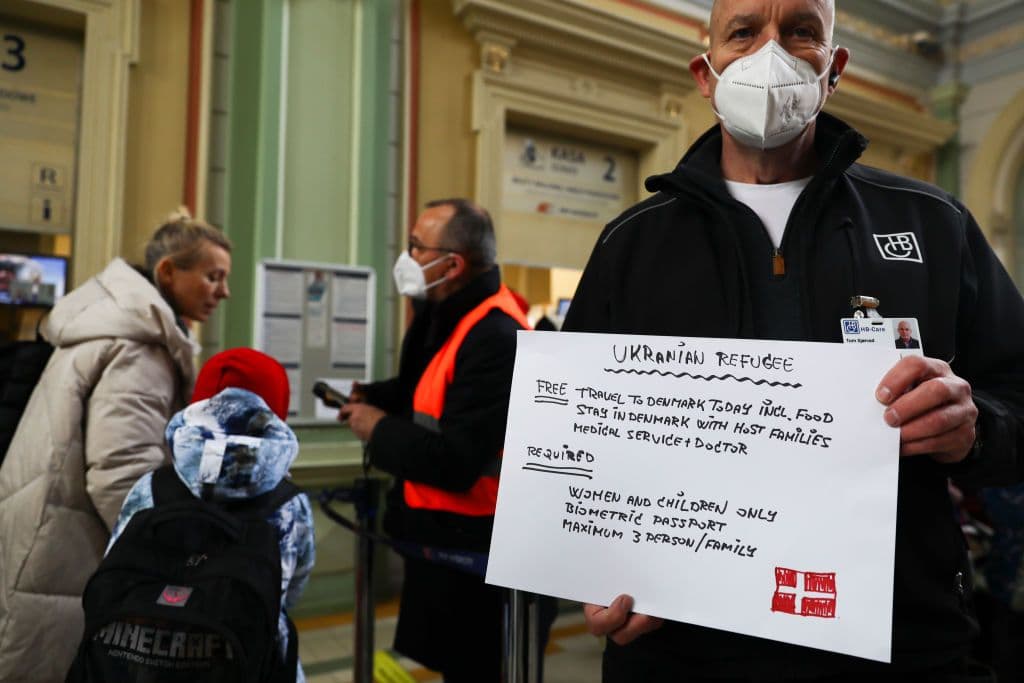
The Danish government said on June 25 that it would not grant refugee protection to Ukrainian men aged 23 to 60.
The planned legislative change is intended to stop Ukrainian men from avoiding conscription.
Ukrainian men aged 22 to 60 are prohibited from leaving the country, with some exception, and men aged 25 to 60 can be conscripted into the armed forces.
The announcement comes as the EU reviews the temporary protection measures that have been granted to Ukrainians since 2022. Several EU countries are considering national laws intended to restrict how temporary protection works for the 4 million Ukrainian refugees across Europe.
"Denmark stands firm with Ukraine in their fight for freedom. That is why we are now amending the Ukrainian special law, because it is not intended that our residence rules should be used to avoid mobilization," Danish Immigration Minister Morten Boedskov said.
The legal change means that men subject to Ukraine's mobilization rules will no longer be eligible to obtain a residence permit in Denmark. However, the 47,600 Ukrainians already in Denmark will be able to stay, according to a Danish government press release.
Men with an exemption from military service will also still be eligible for protection.
Copenhagen's move has already been criticized by the Council of Europe's Commissioner for Human Rights, Michael O’Flaherty, who characterized it as “an example of a broader trend toward restricting protection for the 4.3 million Ukrainians currently displaced in Europe."
O'Flaherty noted that blanket exclusions risk becoming human rights violations and that "issues related to conscription, including conscientious objection, can raise legitimate protection claims."
"Hosting states remain obliged to ensure access to individualized asylum and protection assessments for every Ukrainian seeking protection," O'Flaherty said.
Denmark's announcement comes as EU countries review the arrangements in place for Ukrainian refugees. The current system, the Temporary Protection Directive, has had to be renewed each year since it was first invoked in 2022.
It is expected to be renewed again in July, so that it remains in force until March 2028, but the EU is now considering how to shift protections for Ukrainians onto a more long-term legal basis.
That has not stopped several countries, including Germany, Poland, and Czechia, which host the largest Ukrainian communities, from tabling draft laws intended to weaken temporary protection measures.
While those countries still have to wait until the situation at the EU level is clarified, Denmark can already impose its restrictions due to an opt-out from European freedom, security, and justice rules, which it secured in the 1990s.